


Mitchel Field, NY – 1940


Men of the 18th Reconnaissance Squadron say cheese on October 12, 1940. Their B-18 does likewise. Although Mitchel Field shut down eons ago, the hangars seen still stand today.
VP-101, Philippines, 1941


Under the tropical skies of the Olongapo Seadrome on Subic Bay, men of Patrol Squadron 101 stand before one of their PBY-4 aircraft. When this photo was taken in late 1941, war clouds were gathering over the western Pacific. In response, VP-101 has hastily camouflaged their aircraft; this is easily seen on the OS2U Kingfisher on the right. Soon, the squadron would be at war. Very few of the men pictured will avoid death or capture in the coming weeks and months.
Here’s five feet of the 18th Fighter Interceptor Squadron


Five feet is the length of this photo, and given that I had to scan it in segments then stitch it all together, I would not have minded had the 18th FIS done its job with fewer men. That being said, it is a great shot of the entire squadron at Ladd AFB, Alaska, on July 18 1955, Major John “Buck” Rogers commanding. The following summer they moved to the somewhat less frigid Wurtsmith AFB in Michigan. F-89D Scorpions were the weapons of choice for the 18th in Alaska. One can be identified: 52-1839.
B-18A in the field
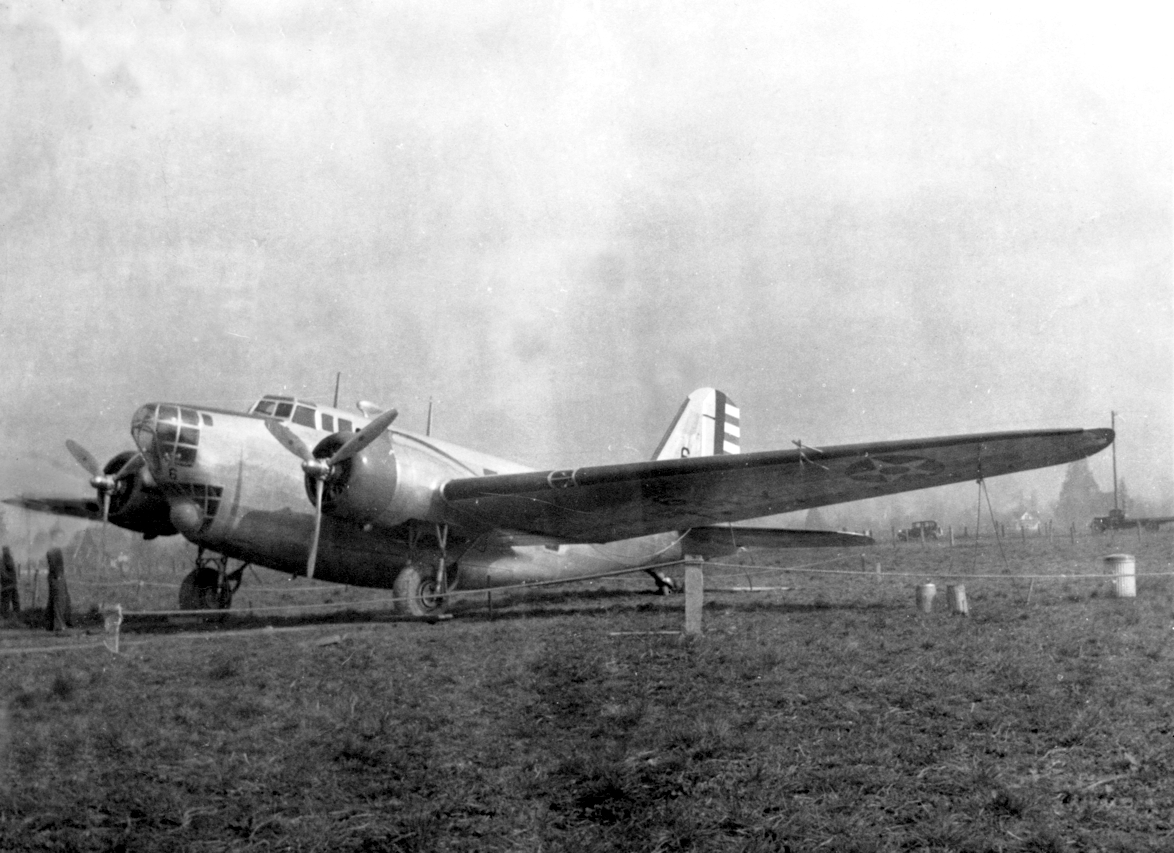
Judging by the pastoral setting, the highway in the background, and the fact the aircraft is roped off, it is safe to say that this B-18 is not on its home turf.
Sabre Dog in New Mexico
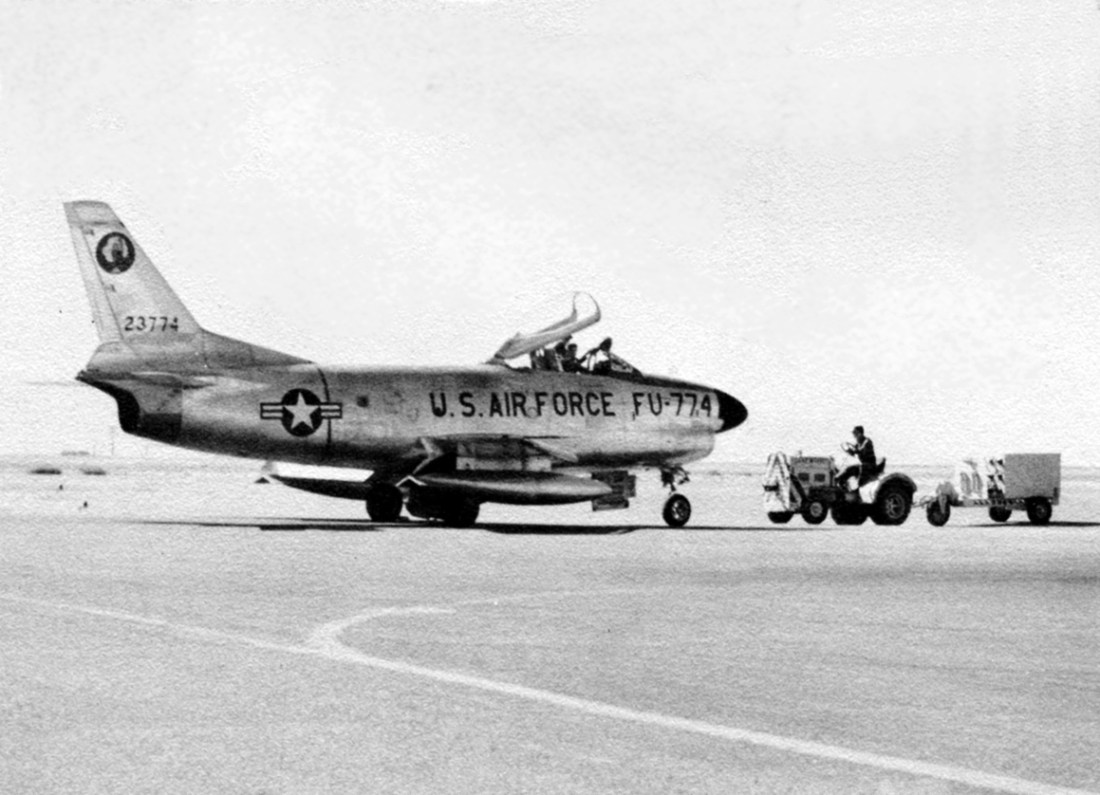
F-86D (52-3774) of the 93rd Fighter Interceptor Squadron in front of the alert barn at Kirtland AFB, New Mexico around about 1957. What was there to make it worth a man’s while to go up and intercept things you ask? Answer: New Mexico was home to all things atomic bomb.
More great ads!
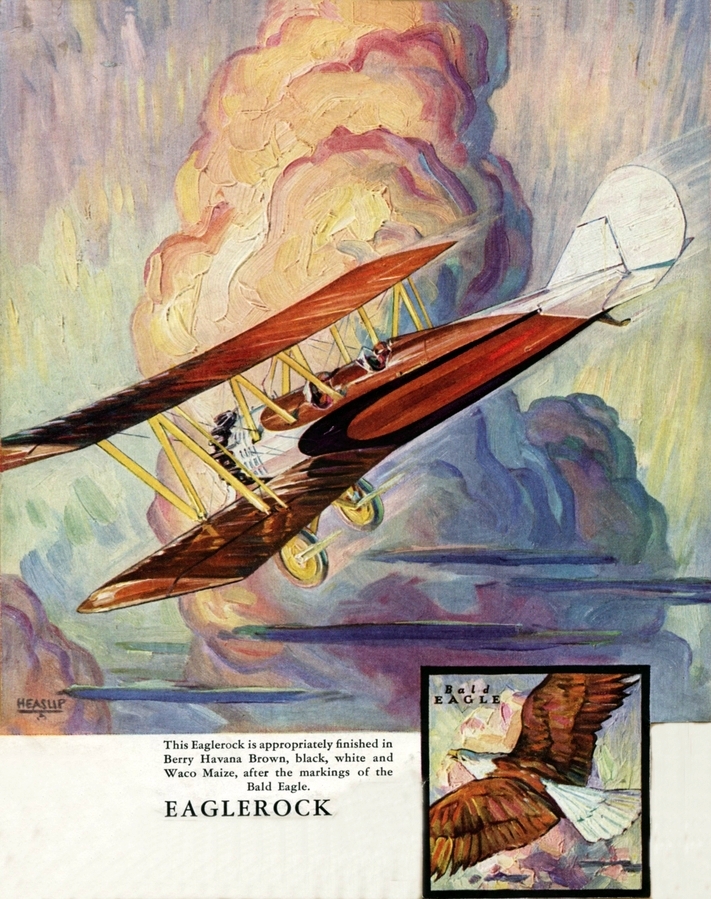


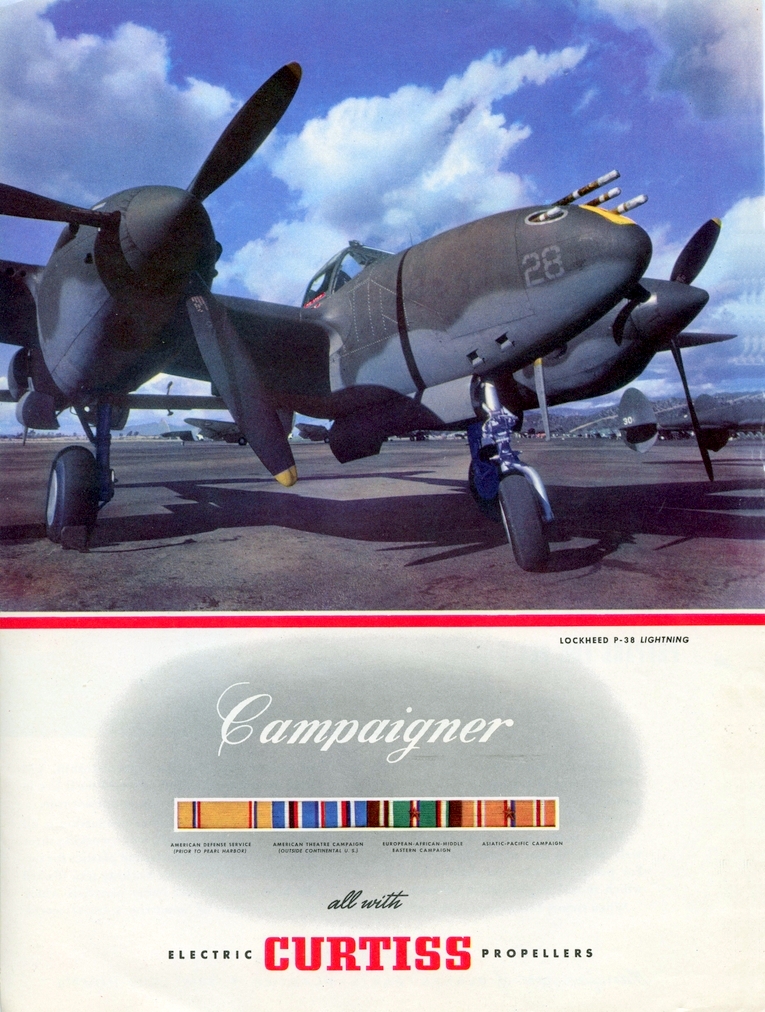
Patrol Squadron 3, 1937


Posing proudly before their PBY at NAS North Island in the fall of 1937 are the men of VP-3. Of additional interest are the large numbers of enlisted pilots (note the wings on their chests). VP-3 had already racked up some impressive achievements with their new patrol bombers.
The PBY shattered no existing speed records, but that being said, with its single wing, no landing gear, and a minimum of external braces all contributing to relatively low drag, the early PBY was, by 1937 standards, a speedy enough machine. Its rated top speed was only 170 knots, comparable to most fighter aircraft of the period, primarily biplanes with fixed landing gear.
Friends in a Friendly Land


I found this last week on eBay listed as a 1930s RAF photo. After receiving said picture, a closer examination showed it to be RAF, but it was taken in America during World War II (Note the “USA” titles worn by some of the men). Most who know a thing or two about WWII aviation also know that the airmen of many Allied nations trained in the United States during that time. With wide-open spaces, fair weather, and, most importantly, a noticeable lack of Luftwaffe fighters to distract you, the US was the logical place to learn the fundamentals of flight.
Men from Britain and other nations were welcomed, and by the time the program ended, thousands of airmen had been trained in what was obviously a very successful idea. To those who may disagree, I offer this: Name one man in the RAF who was shot down in American skies by Luftwaffe fighters.
I rest my case.
Hot “Dog”
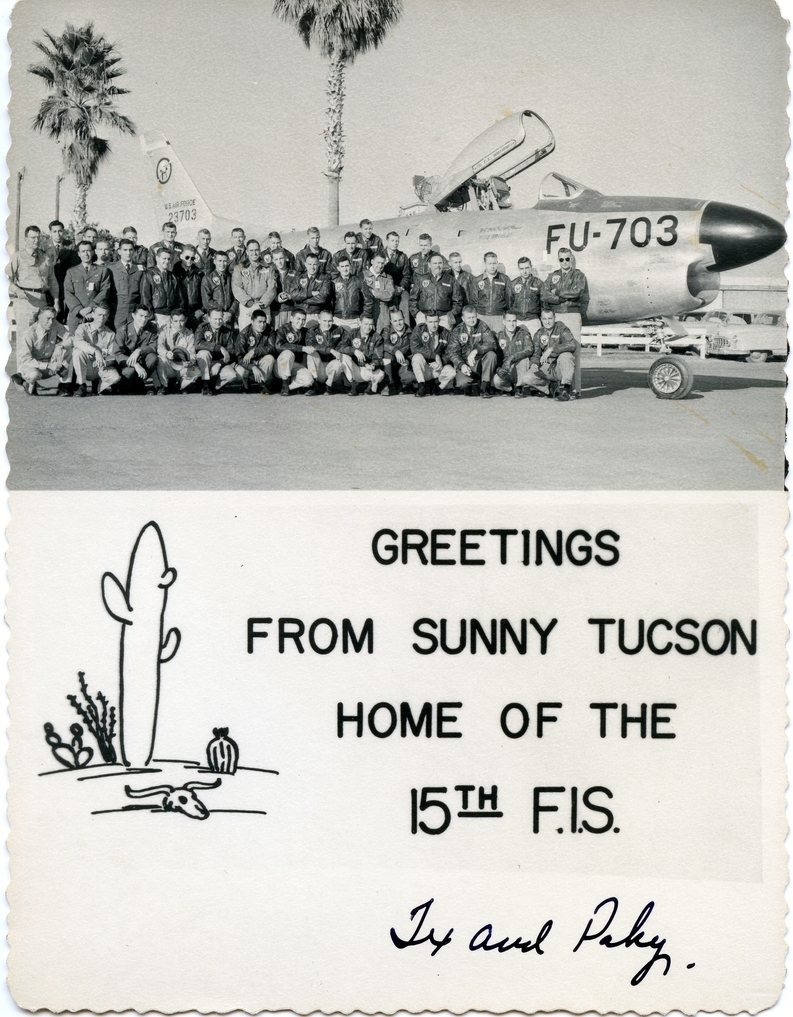

The “D” model of the famed F-86 Sabre was, of course, labeled the “Dog” model. However, this was not just for the phonetically proper D-for-Dog but for what that model’s radome did to alter the aircraft’s appearance. Compared to the previous Sabre models whose front end was an intake (comparisons were made between it and a fish with its mouth open), the addition of the black radome did indeed give the D model the look of some sort of canine.
The 15th Fighter Interceptor Squadron flew the F-86D from 1954-1957. The latter date coincides with that of this photo. Well, photo yes, but it is actually a postcard used by “Tex and Paky”.
PS. Get it?: Hot “Dog”…D Model…”Sunny Tucson”…(?) Yeah…
The 59th Fighter Interceptor Squadron of Goose Bay Air Base in the less than tropic land of Labrador, Canada, in 1957
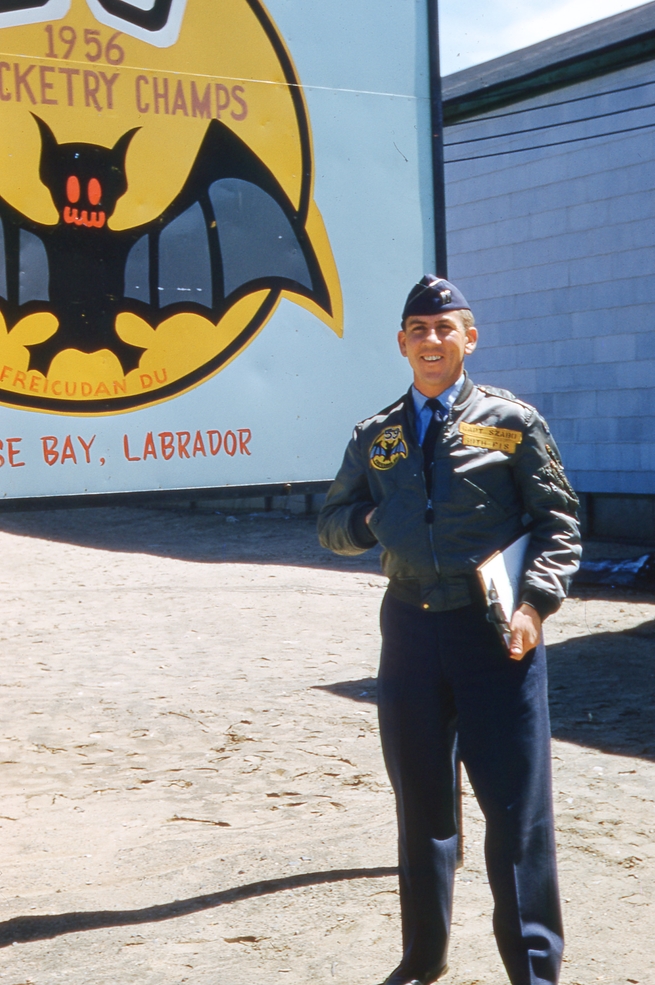
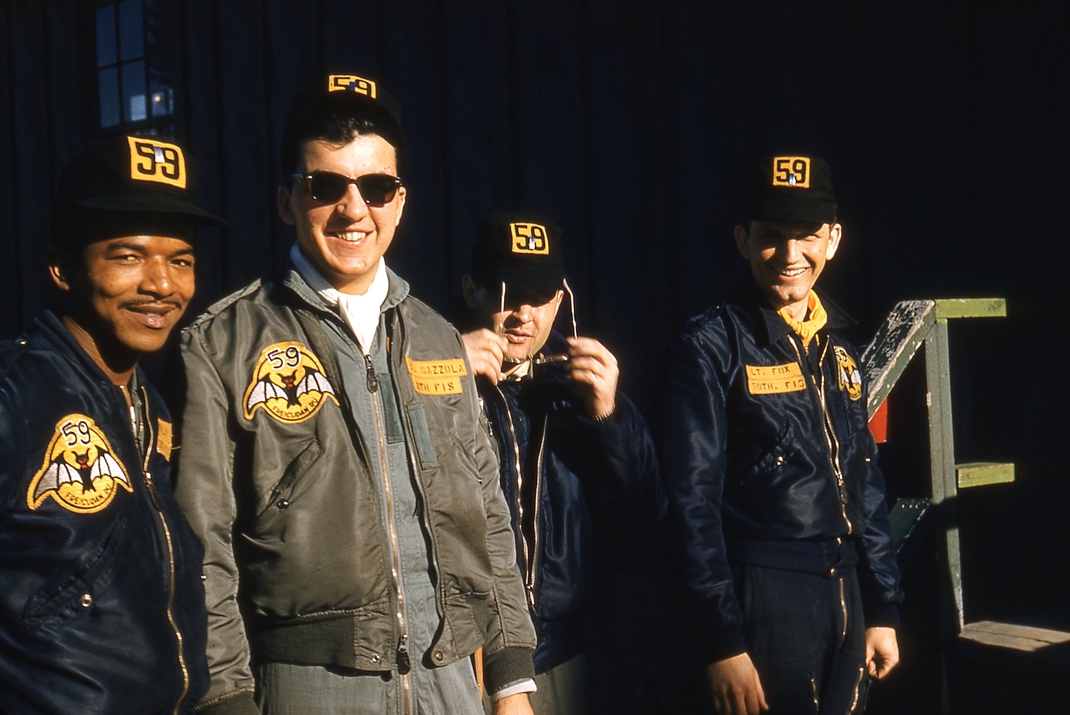
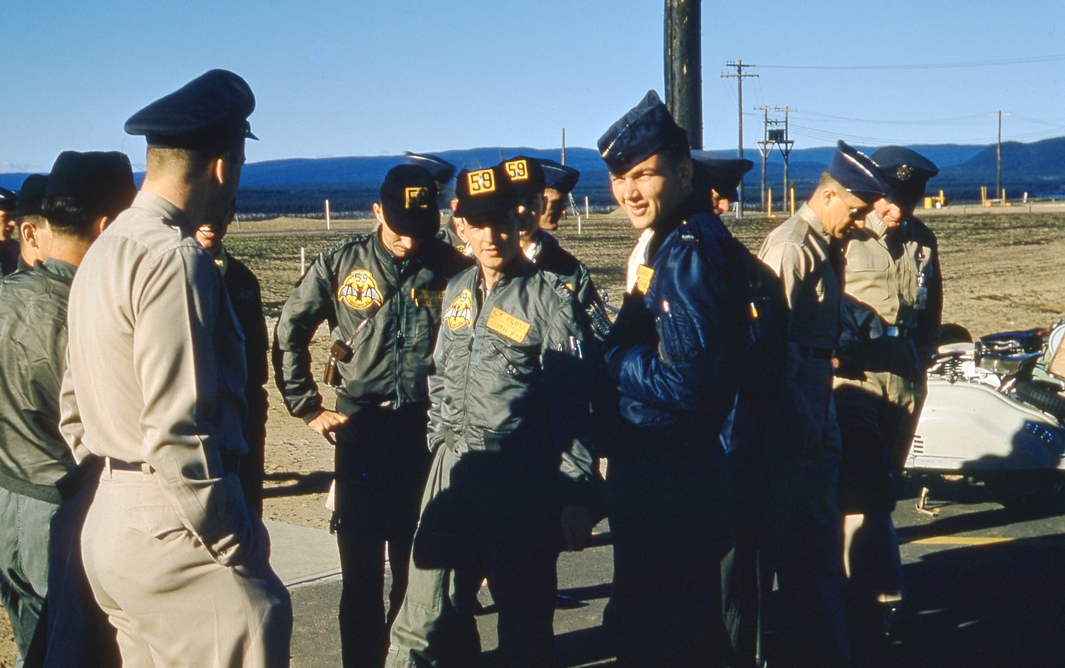
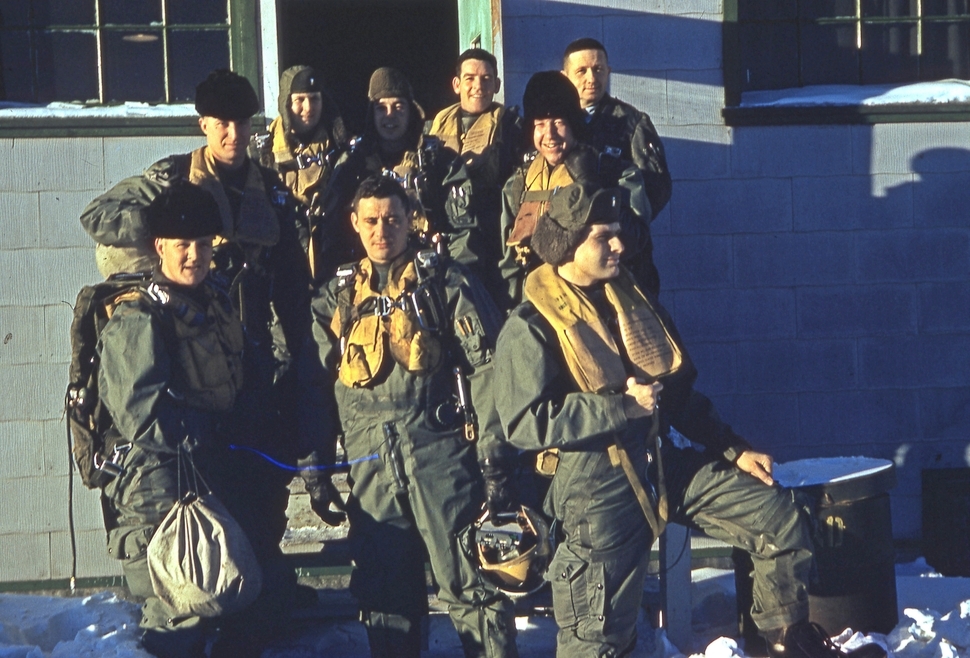
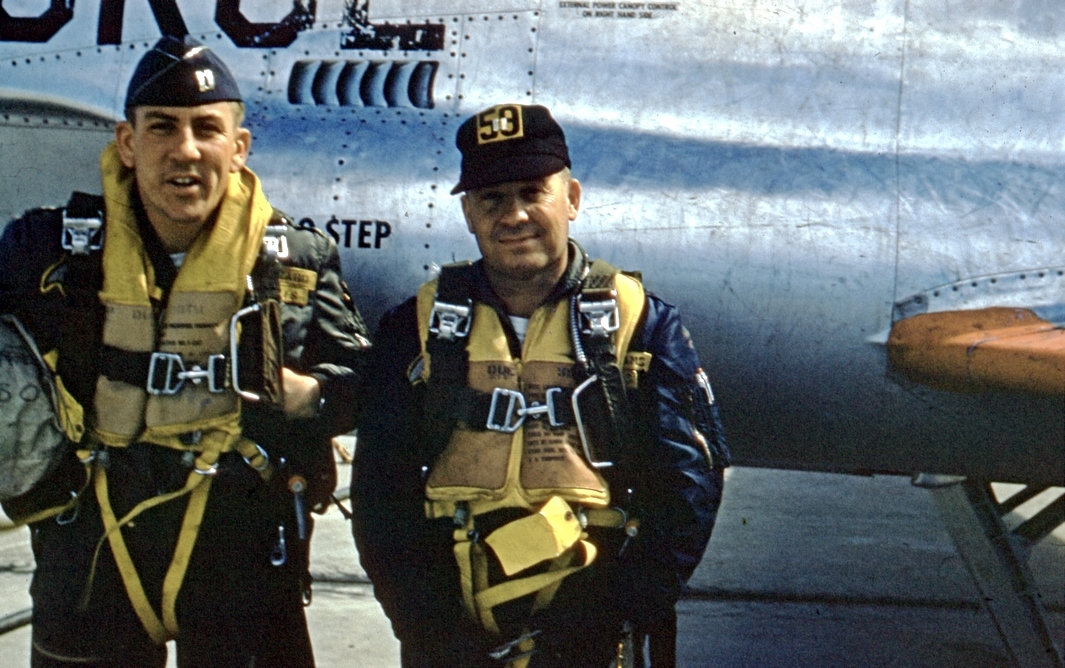

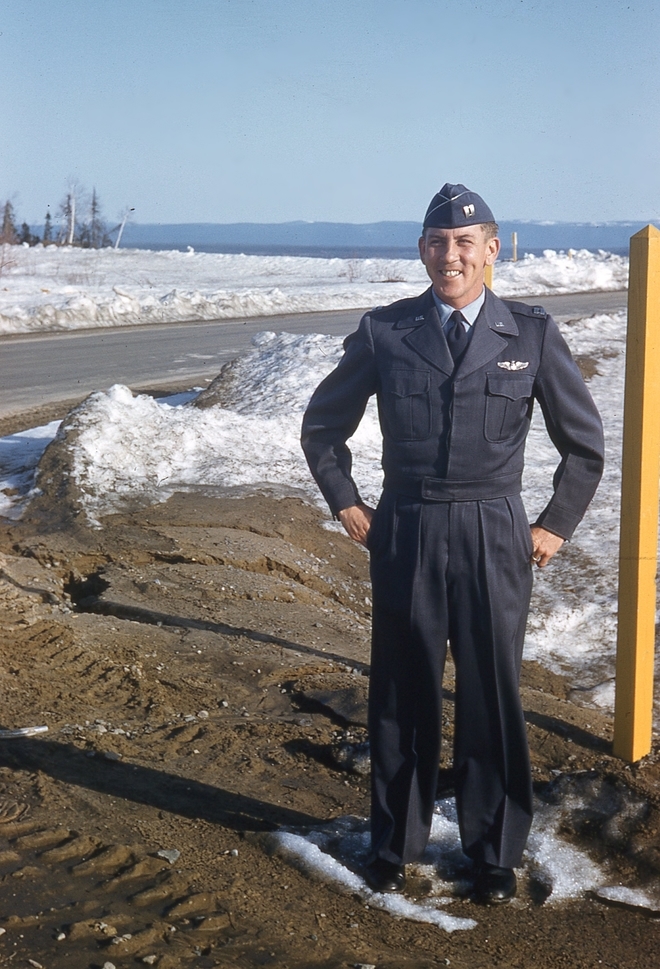
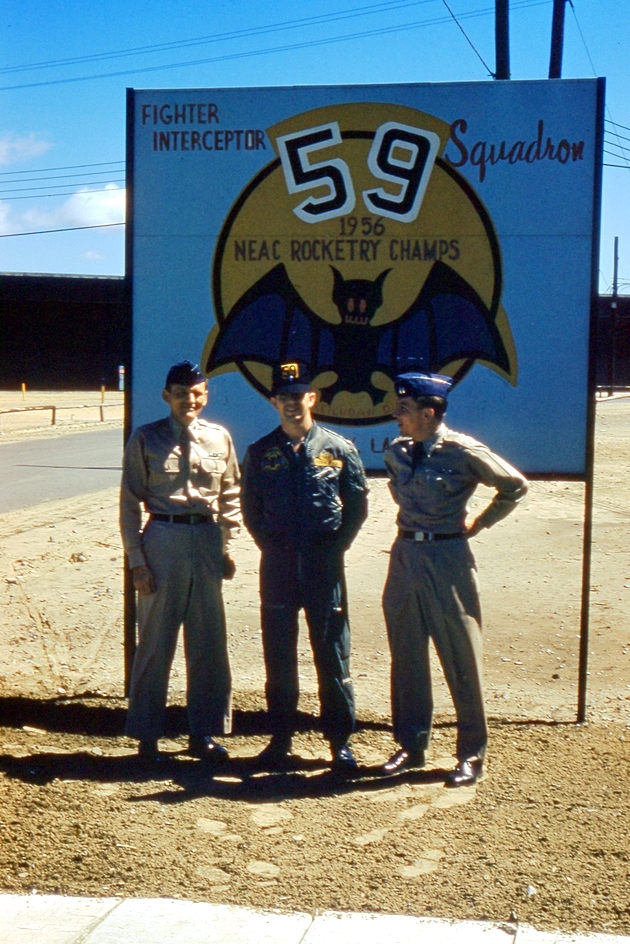
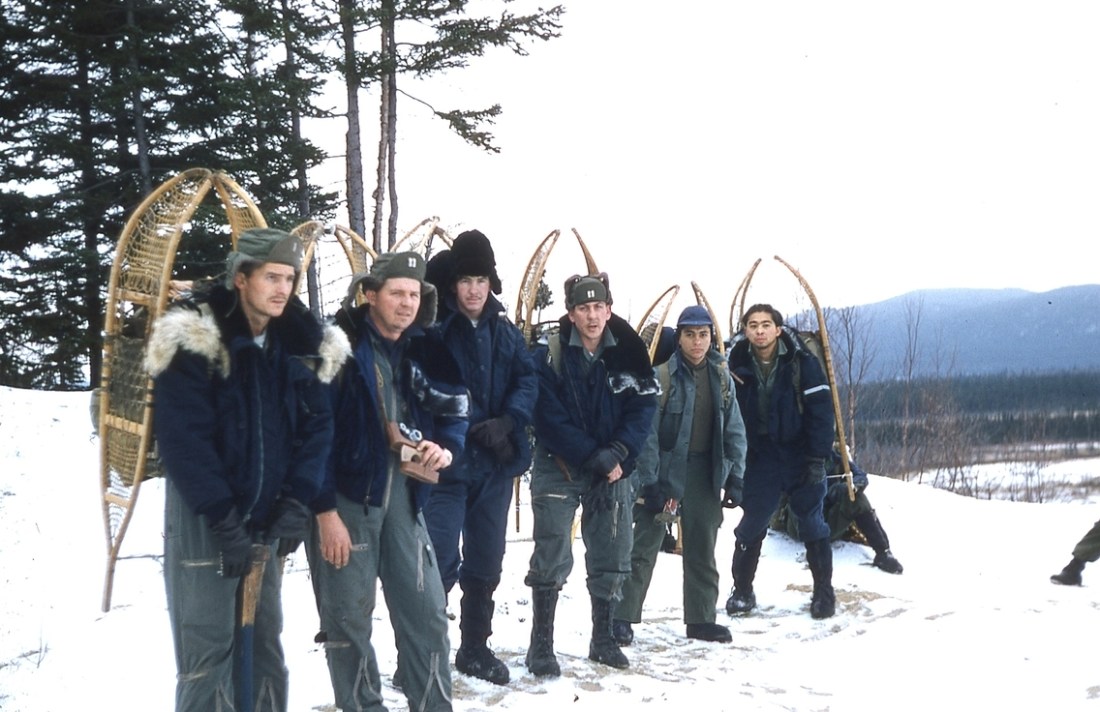
Who doesn’t look forward to a little refresher in the fine art of arctic survival? You can see the enthusiasm written all over their faces.
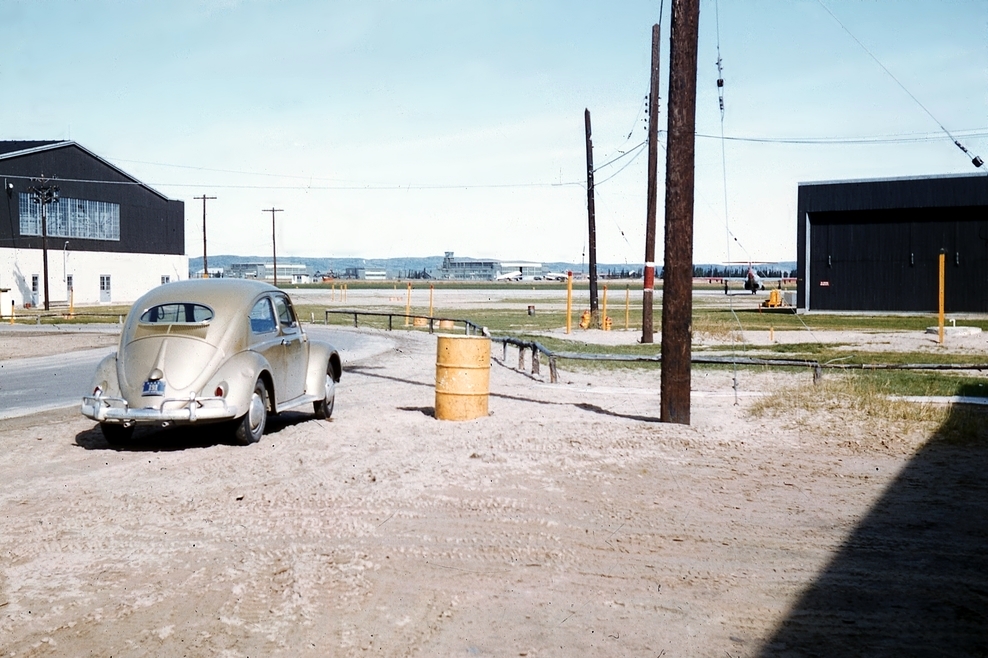
Classy VW Bug in front of 59th squadron ops. The alert barn is to the right with an F-89 Scorpion getting some sunshine.
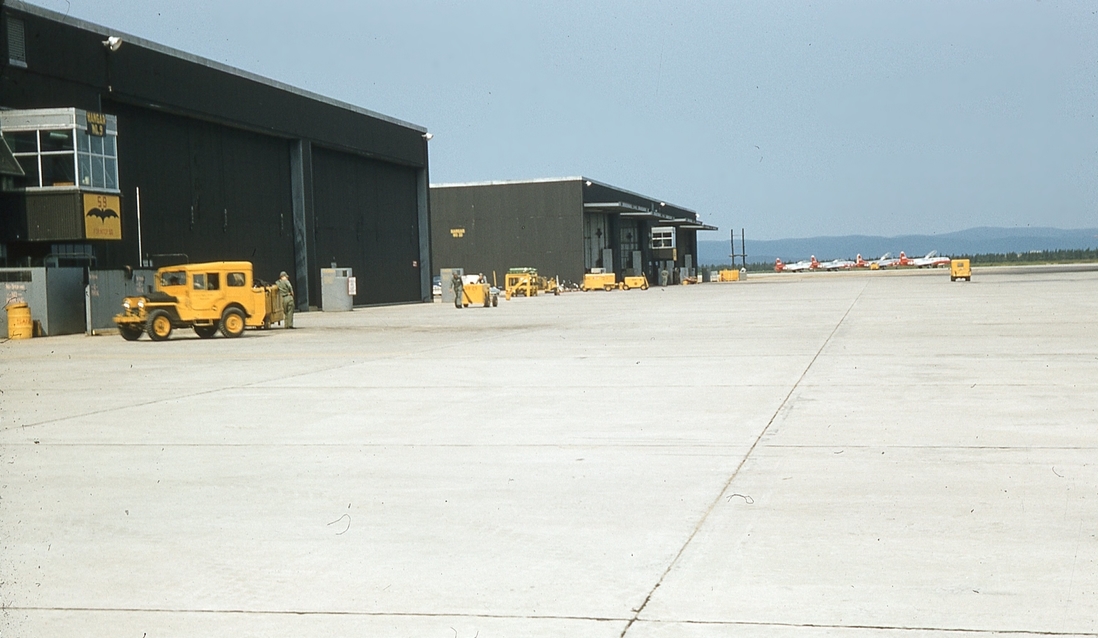
Goose Bay Air Base alert facility. T-33’s are lined up in the distance.

Although the C-118 and C-124 are hidden by snowbanks, the melting ice tells us that summer cannot be too far off. It will be warm, just not for very long.
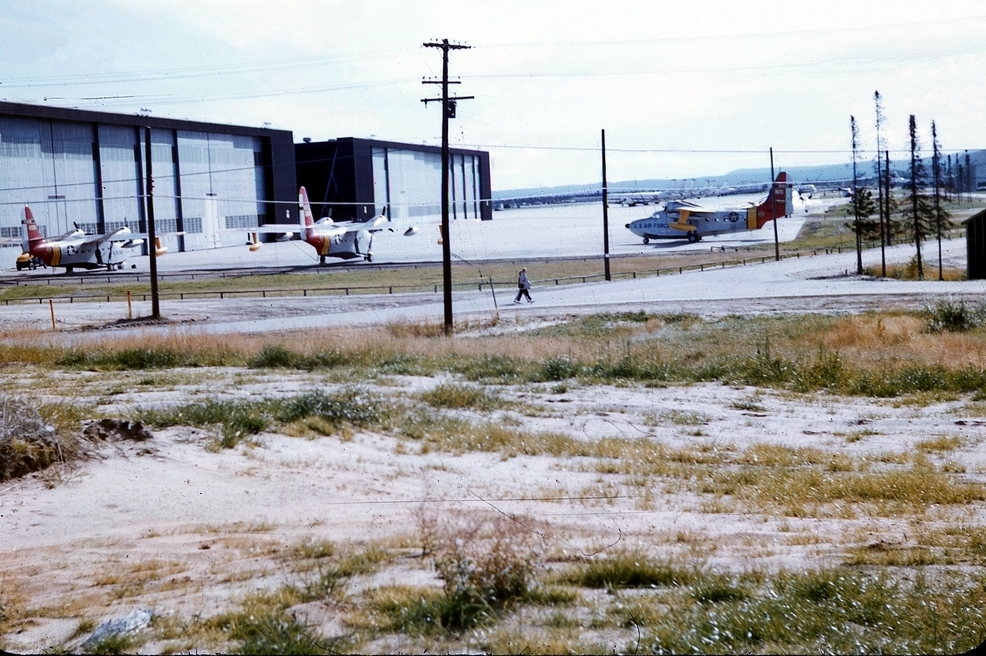
SA-16’s of the 54th Air Rescue Squadron are dwarfed by the SAC hangars at Goose Bay. These hangars, along with many of the other such buildings in these photos, are still in use today. When one looks at these photos, it is sometimes hard to believe they were taken over six decades ago. The aircraft are long scrapped or, if lucky, in a museum. The young men are now old – most around 90 years of age – but they will remain, for a least a few moments here, forever young.
USAF Firepower Demonstration
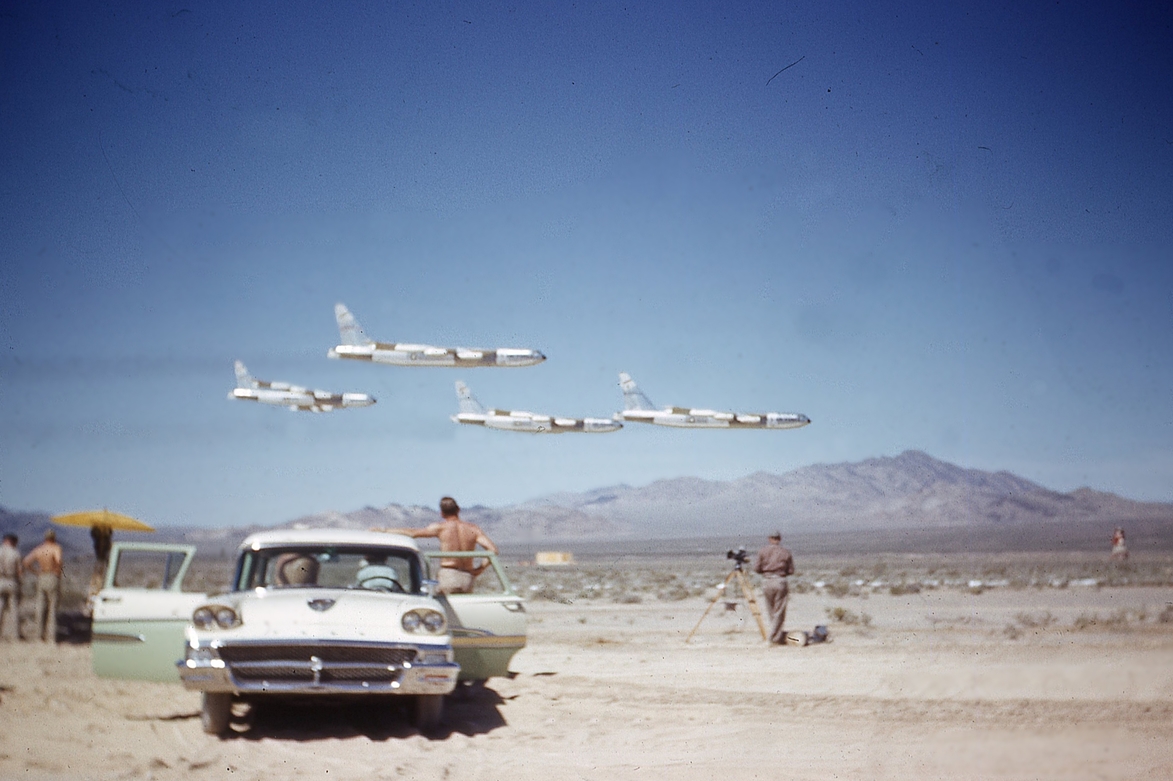
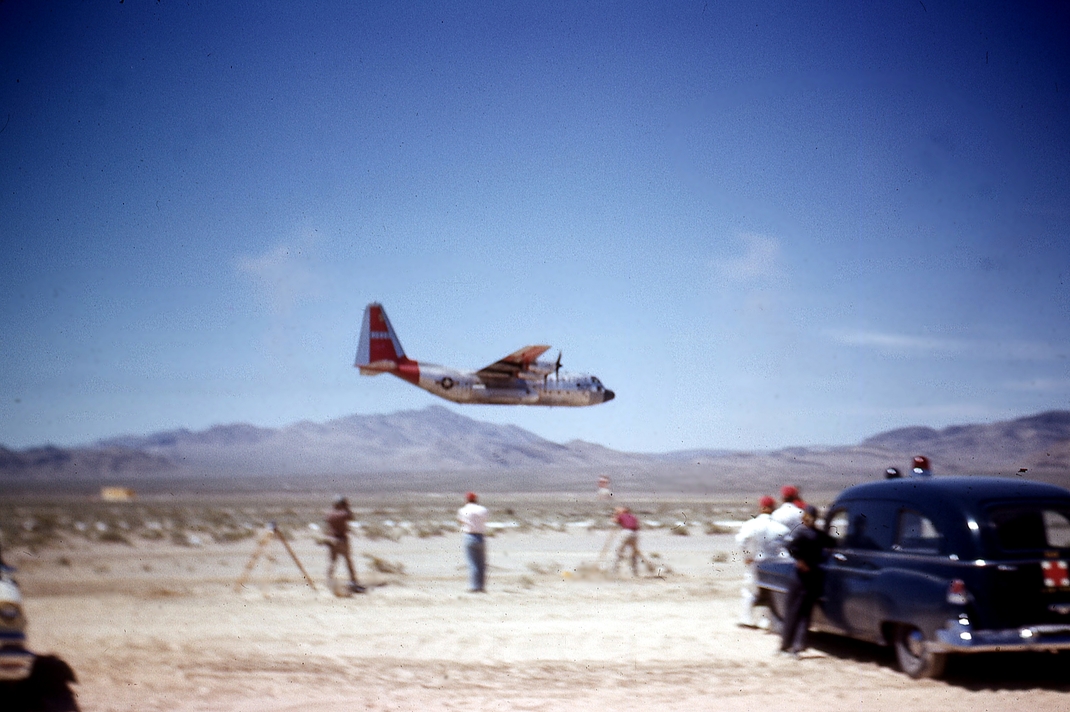

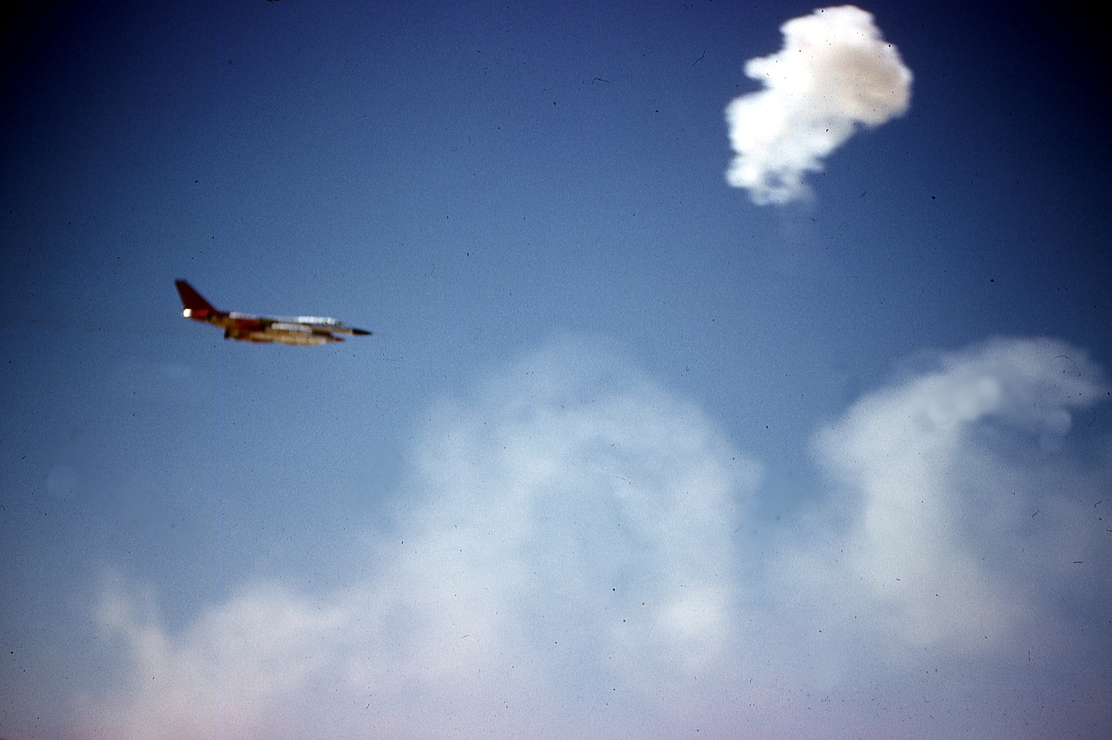
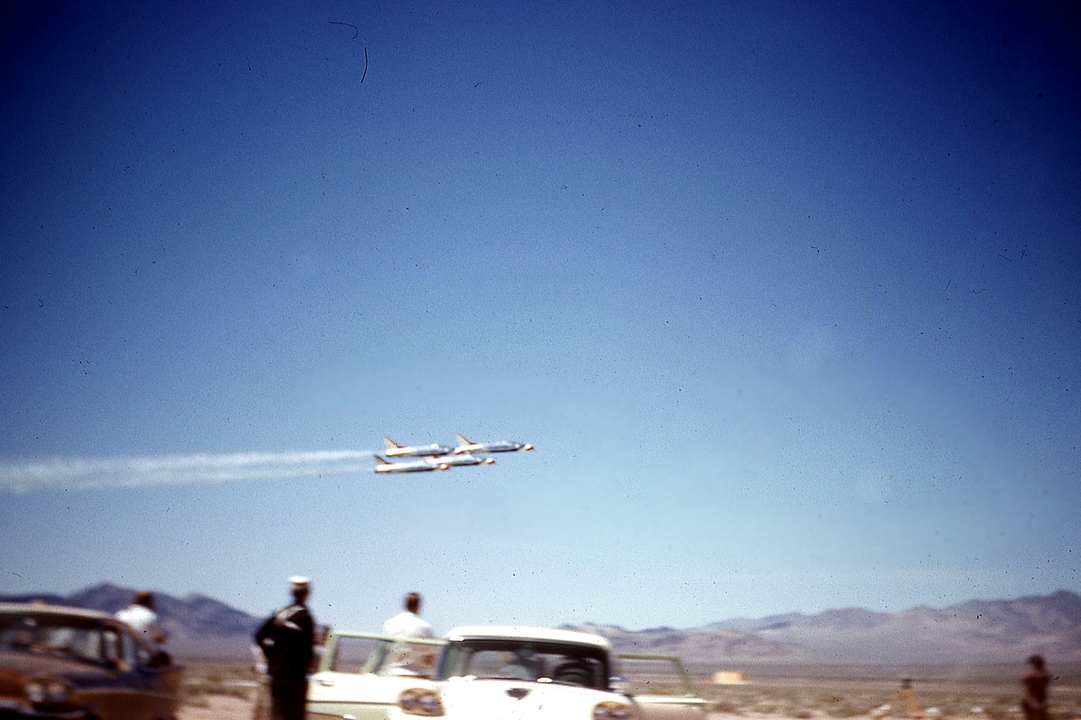

It’s the early 1960’s and the USAF is providing the taxpayers with a sample of the hardware they have available to deter anti-social behavior. We have B-52’s, the C-130, KC-135, B-58, and for the grand finale, the F-100’s of the USAF Thunderbirds. Oh, there is also a nifty two-tone 1958 Ford station wagon, and redheaded and blonde dames baking in the Nevada sun.
409 AW (F), RCAF

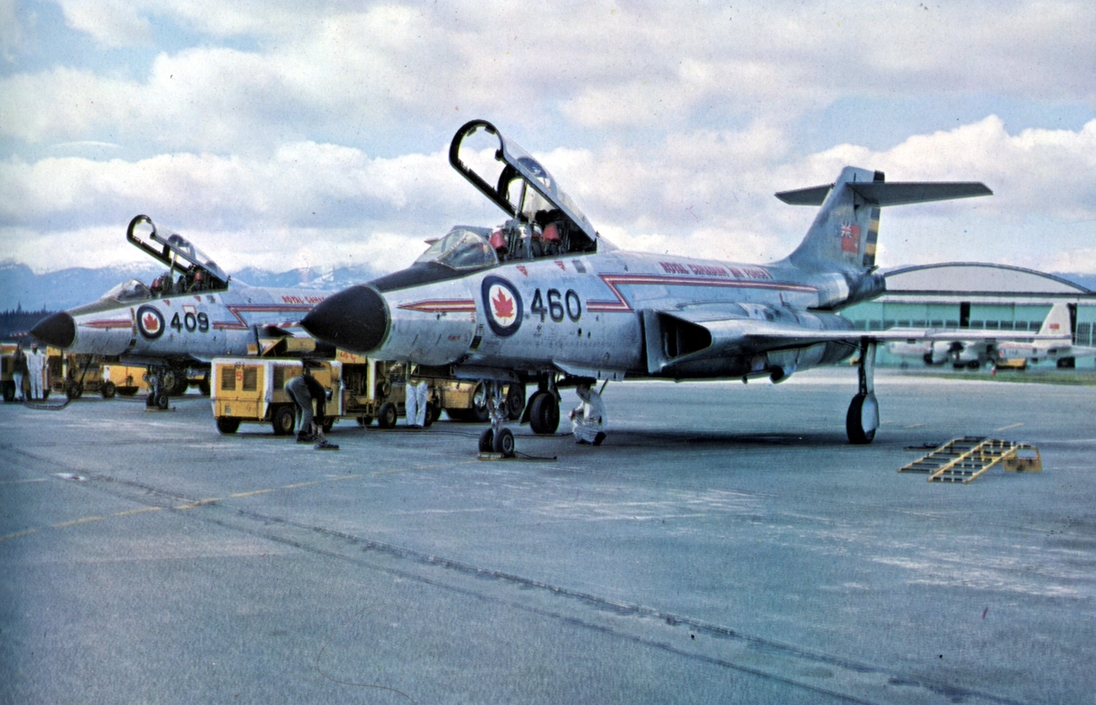
Flightline scenes at RCAF Station Comox in British Columbia circa 1963.
No. 409 All Weather Fighter Interceptor Squadron had traded their CF-100’s for the CF-101 Voodoo and these aircraft would remain a familiar sight in Canadian skies for decades to come.
Big plane = Big splash

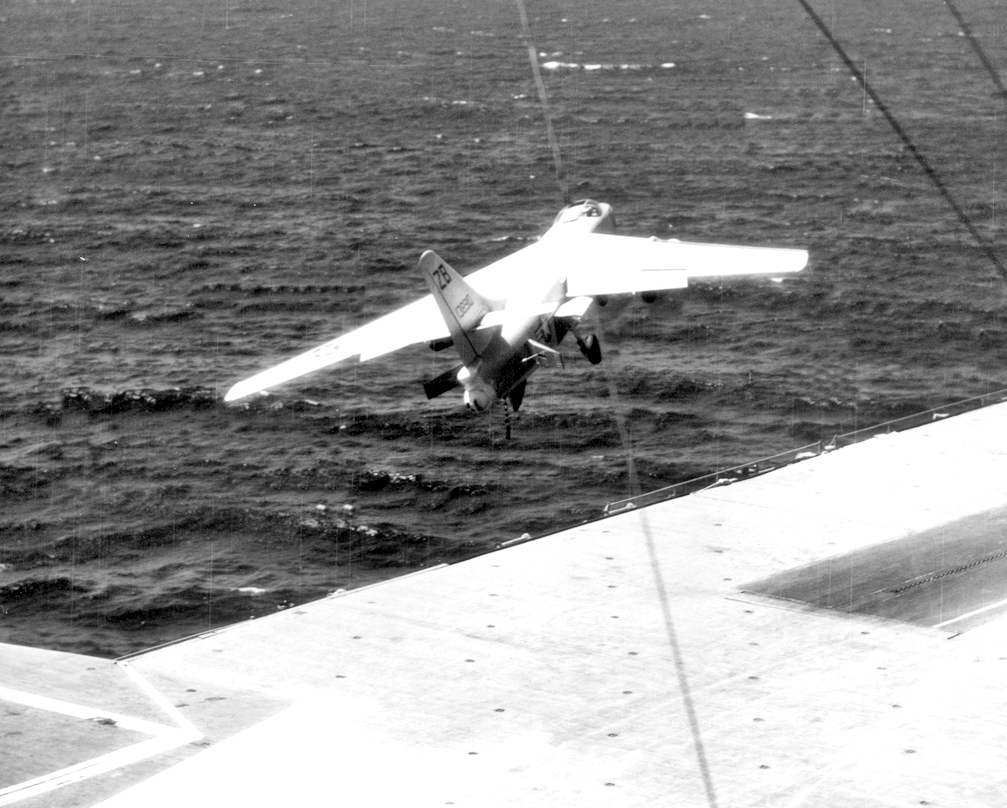


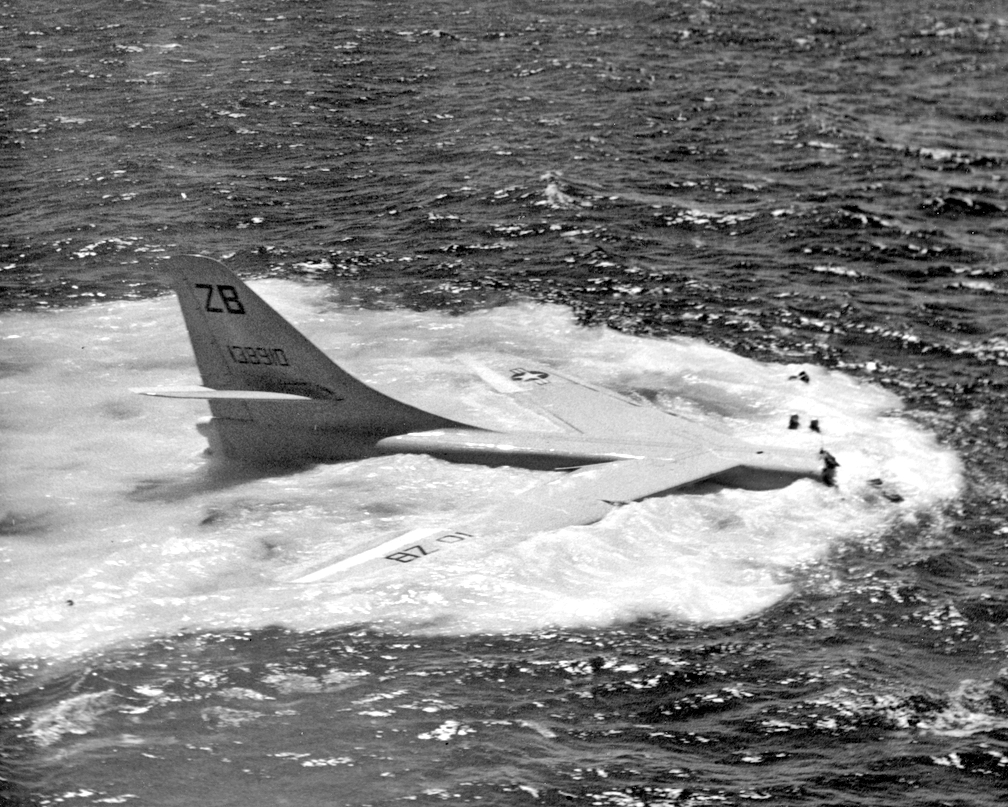
Given the A3D Skywarrior (AKA the “Whale) was the largest/heaviest plane to ever operate from an aircraft carrier, it stands to reason that if one hit the water it also made the biggest splash. A3D-2 (#138910) of Heavy Attack Four was no exception.
The aircraft was only a few months old when, on its first deployment, it encountered some unplanned excitement while landing (note hook down, speed brakes open) on the USS Ticonderoga, August 12, 1957. It went like this:
Things were looking ops normal when the aircraft bounced down on deck snagging the #3 arresting wire.
Then the damned wire broke.
Now, that busted #3 wire had held long enough to decelerate the aircraft below flying speed, but unfortunately it did not hold long enough to slow the plane’s speed to where it could stop before running out of deck.
Too fast to stop, but now also too slow to fly, the now highly agitated pilot briskly ascertained that his only available option was to fire-wall the throttles and hope for the best. However, what with the Whale’s less than amazing thrust-to-weight ratio, the outcome was never in doubt: The hapless A3D ambled off the deck and wallowed towards the waves.
The effect of a 25-ton aircraft smashing into the sea is apparent.
Having impacted the water, the crew did not loiter about the cockpit pondering what to do for the rest of the day. In fact, that decision had already been made for them: the aircraft’s nose had sheared off. Fortunately for them, policy dictated that the overhead hatch would be open for landing. What with the hatch already open, and the nose gone, egress was relatively simple if not somewhat frantic. You can see the crew floating in the Pacific Ocean sunshine with a fish-eye view of their aircraft carrier as the Ticonderoga draws abeam the wreck. Skywarrior 138910 is on its way to the bottom of the sea.
F-86 meets its fate in Fresno

Although there was an F-86 squadron at Fresno, Ca. during the 1950’s, this is not one of theirs. The date is July 19, 1958, and this F-86E (51-12994) of the Van Nuys Airport based 195th Fighter Interceptor Squadron has met its fate away from home. Mechanical difficulties brought about this mishap which was sufficient enough to write-off the aircraft.
115th Fighter Interceptor Squadron

F-86 Sabre pilots of the 115th at their home base of Van Nuys Airport in the mid-1950’s.
Grumman F3F – the “Flying Barrel”
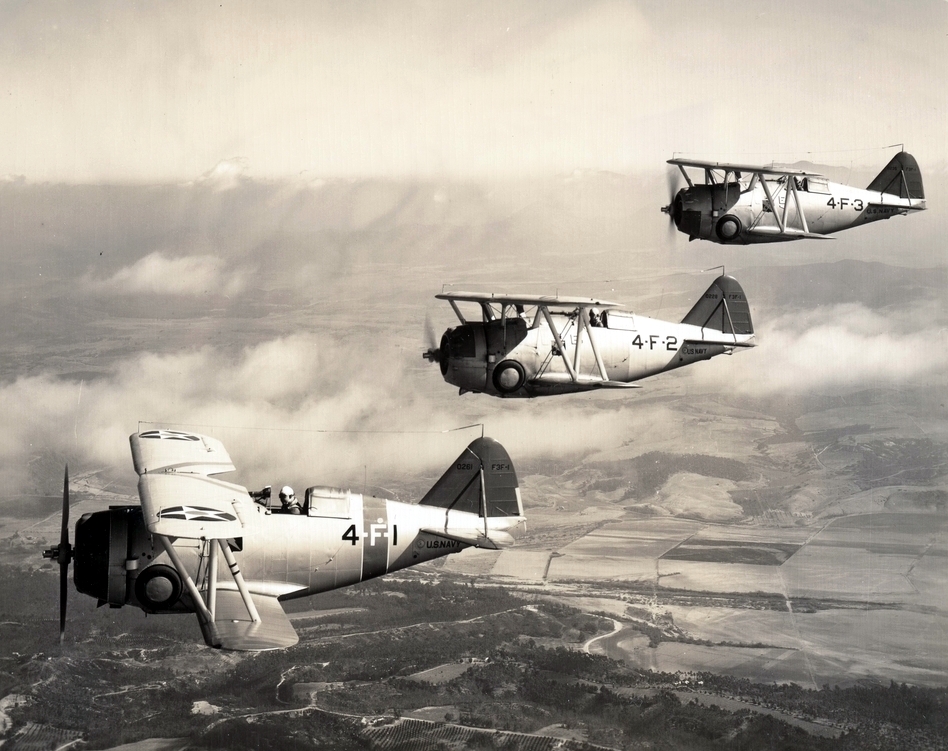
The F3F had several nicknames, all related to its appearance. Nevertheless, it was rugged, reliable, and pretty quick. It was also the last biplane fighter ordered by the US military. The first two photos show VF-4 out for a cruise above California in the late 1930s. Numbers are 0261, 0228, 0235
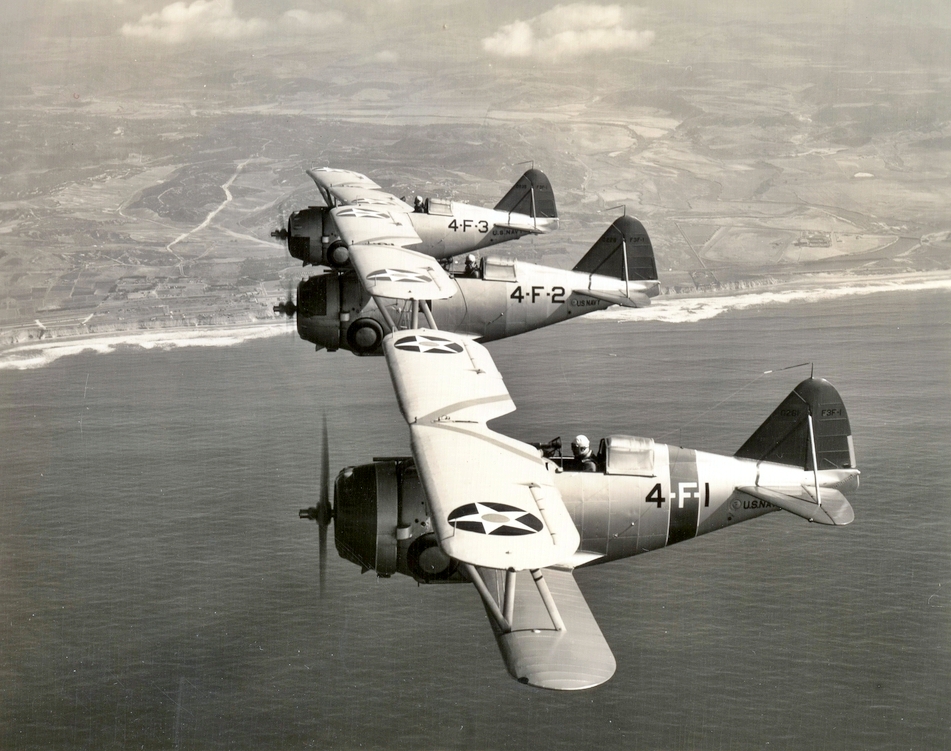

Here, we see Marines of VMF-2 out for a drive in the F3F-2. This second model had a bigger motor and was readily identified by the size of the engine cowl. Numbers are 0973, 0977, and 0979.
Scouting Three, USS Saratoga, 1939
 Hurrying across the hills of Southern California, 18 SBC Helldivers of Scouting Squadron Three (VS-3) make a fine display for the cameraman.
 The men of VS-3 aboard their home base, USS Saratoga. The ship’s main battery of 8″ guns makes a nice backdrop. Note the small saluting/practice gun at the base of the big rifle barrels.

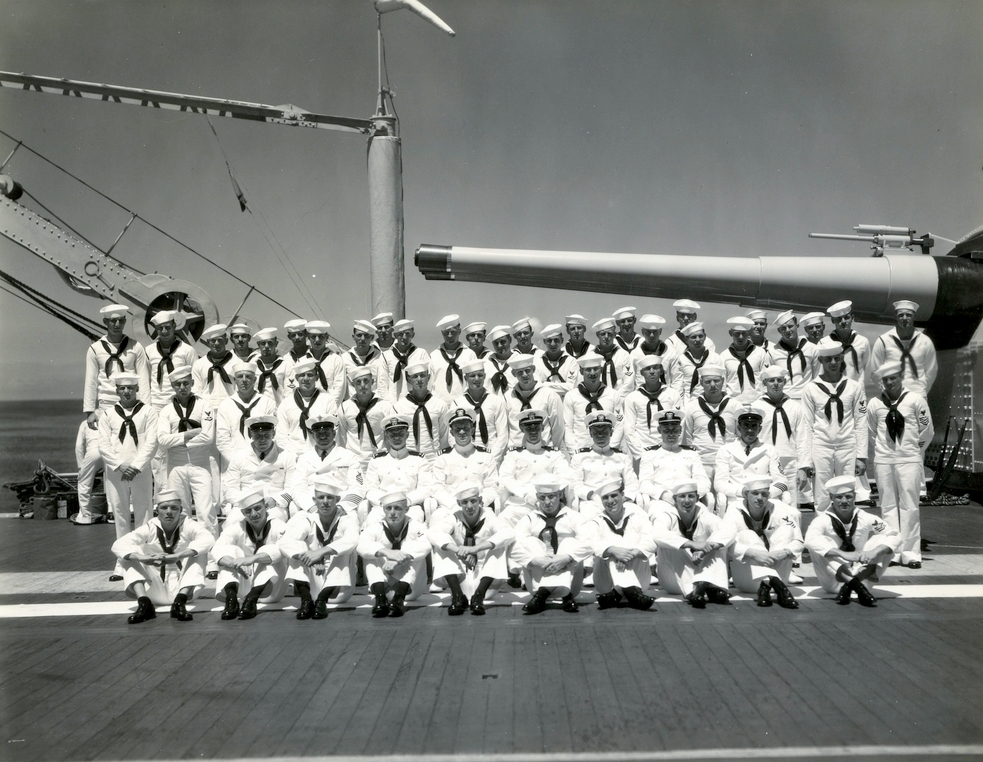
Many have dismissed this armament on America’s early carriers Lexington and Saratoga as a throwback, a sop to the old-school admirals who could not fathom that the day of the big gun ship had been eclipsed by aircraft. Believing that fossilized admirals were wedded to outdated beliefs sounds dramatic. Still, that belief ignores a simple fact: The battle aircraft of that period were pretty well limited to fair weather operations and, thus, were not a reliable substitute for a capital warship’s heavy armament. Therefore, big guns were needed, but not as offensive weapons (the relatively unarmored Lexington and Saratoga were not to fill part of the battle line). What was required were defensive weapons. What type and size of defensive guns? The Lex and Sara were speedy vessels and could easily outrun any battleship of that time, so battleship-sized guns were not required. What they could not outrun was a cruiser. Given that the typical armament for a cruiser was 8″ guns, it made sense to provide the same weaponry to the two carriers.
Less than ten years after the two carriers were commissioned, the advances in aviation technology made the big guns less critical, and they were eventually removed. While those guns were in service, they were not there at the insistence of outmoded and narrow-minded navy brass. When the two carriers were designed, the question must have been asked: what were they to do on a zero-visibility day with aircraft grounded and an enemy cruiser sweeping through the mist? Answer: Provide the two ships with all-weather firepower. It was a perfectly sound idea.
TBD Devastators of USS Lexington and USS Saratoga

Torpedo 3 (VT-3) prepares to land aboard Saratoga in 1939. Barely visible above the center aircraft, in echelons of three, are six SBC Helldivers (Well, at least in the original photo they are visible). 3-T-11 is BuNo. 281 which was lost in 1942 while landing on the Sara. Note the “plane guard” destroyer trailing behind the carrier.

Torpedo 2 cruises up the California coast in the late 1930’s. Left to right: 292, 293, and 298. The first, 292, was lost in a mid-air collision with another TBD in 1940. 293 was transferred to VT-8 and was shot down at Midway. 298 saw action when assigned to VT-5 but was forced to land in in a lagoon at Jaluit Atoll in Marshall Islands Feb 1, 1942.
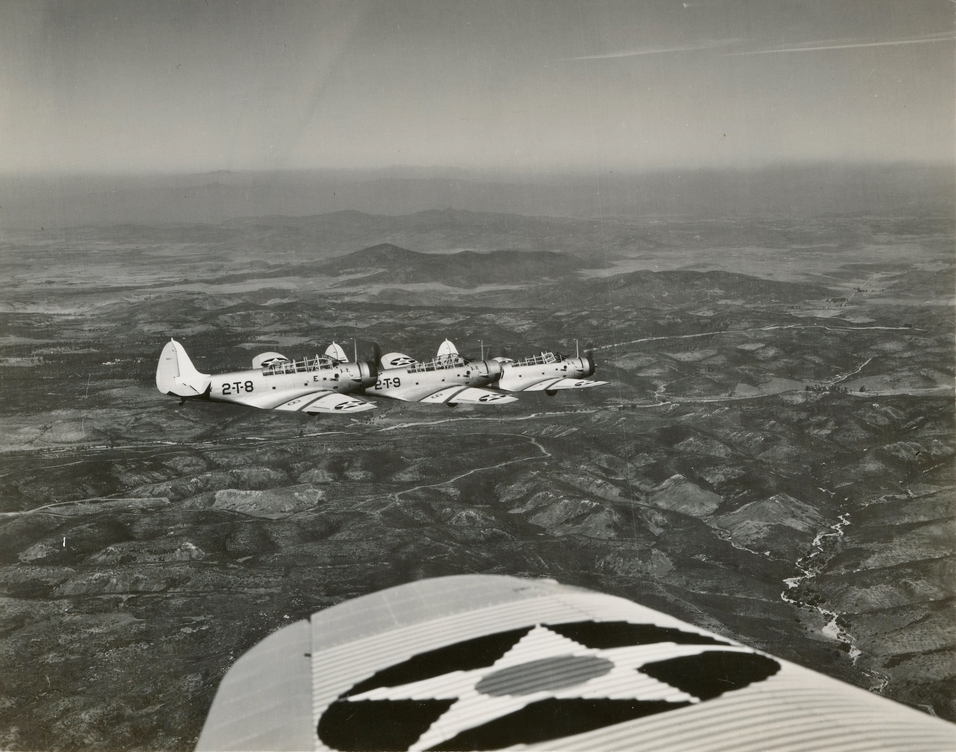
The same aircraft as seen above.
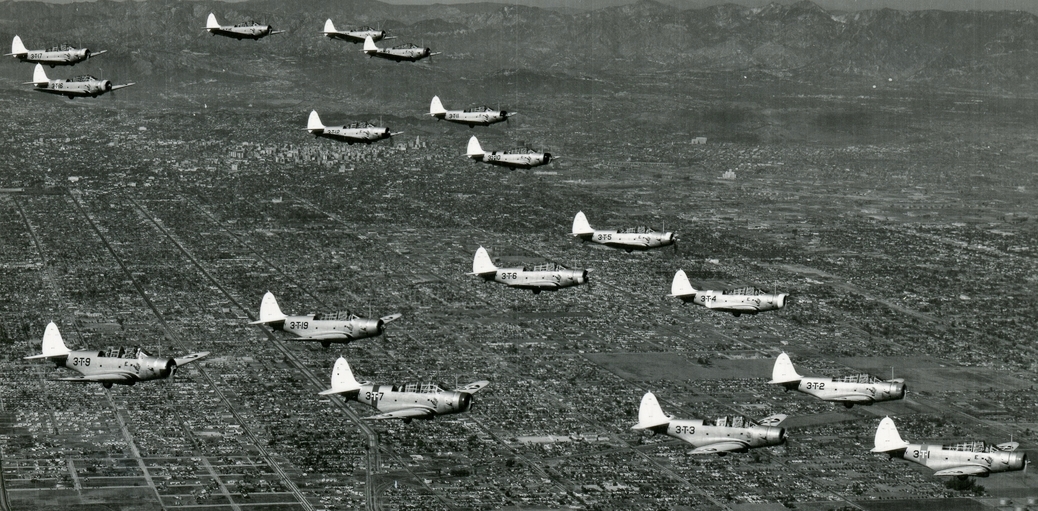
Looks like they managed to get almost every TBD in Torpedo 3 aloft for this photo.
The Convair R3Y Tradewind
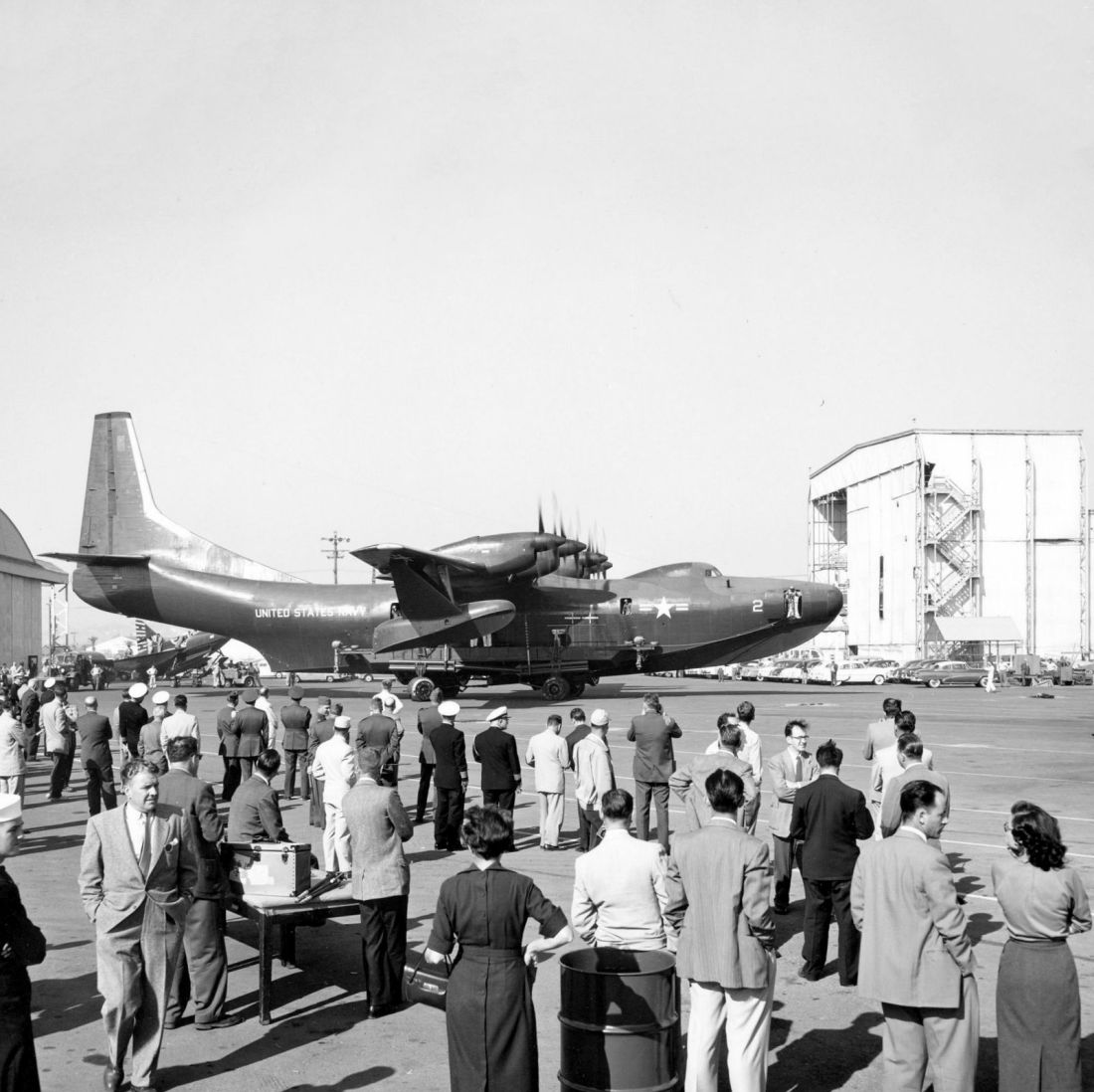
The navy’s newest flying boat basks in the sunshine at Convair’s San Diego factory. The Tradewind seemed to have a bright future indeed.
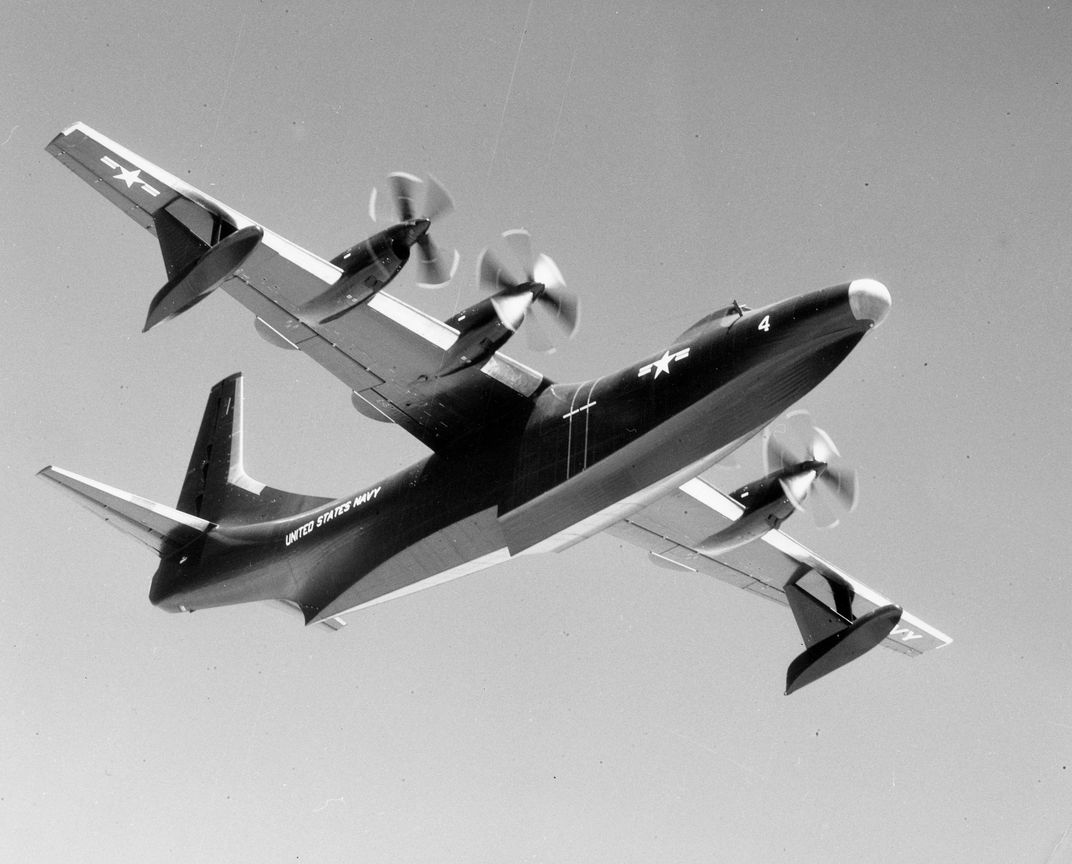
Sleek and powerful, the R3Y set seaplane speed records that stand to this day.

Originally dubbed the PY5 and intended as a patrol/bomber, the Tradewind as the R3Y was soon envisioned as the answer to the navy’s need for a cargo & troop hauler. The potential was promising for the Tradewind; a swift flying boat that could fulfill a variety of missions.
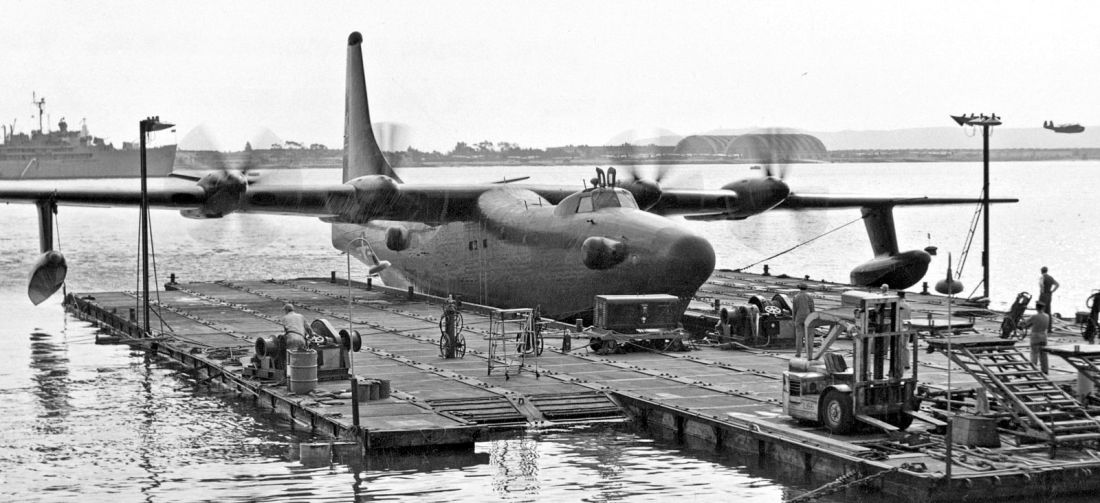
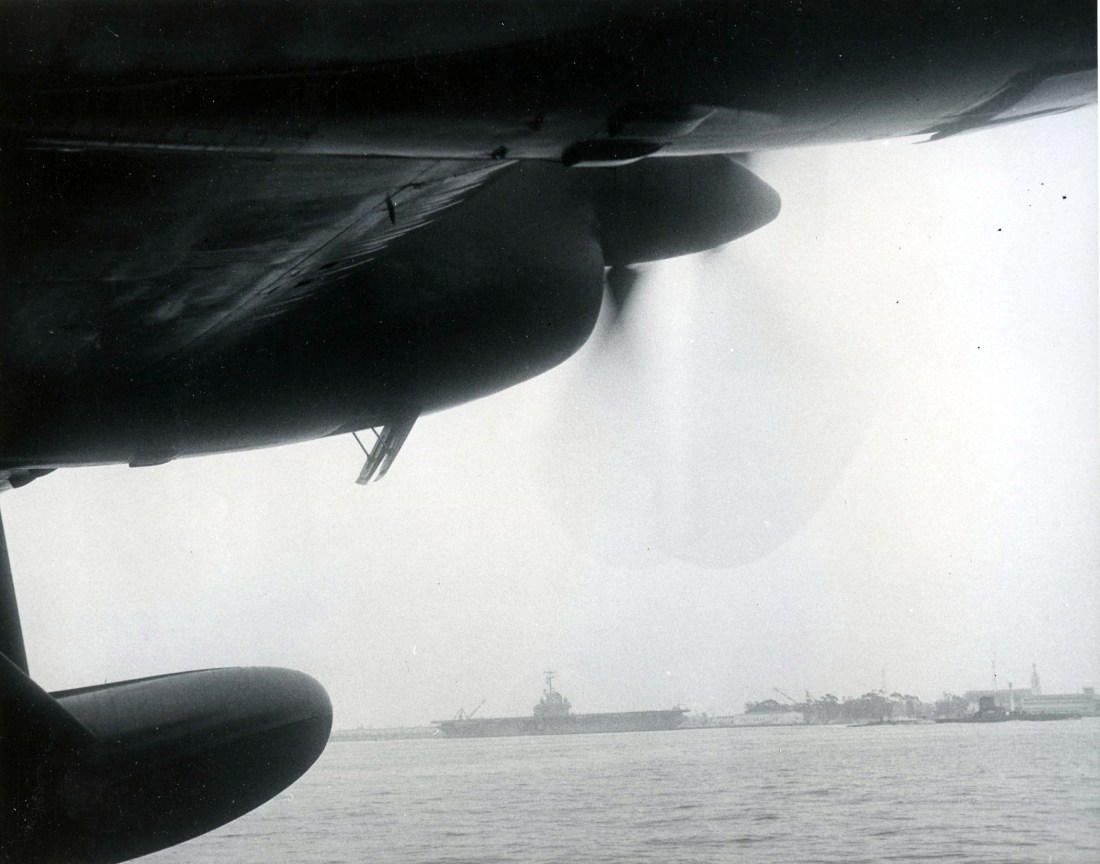
Nosed in to such a dock was the only way to perform a full power engine run while afloat. As my dad, a former seaplane pilot, has said a million times, “once you start the motor, you’re moving – there are no brakes.” NAS North Island is in the background.
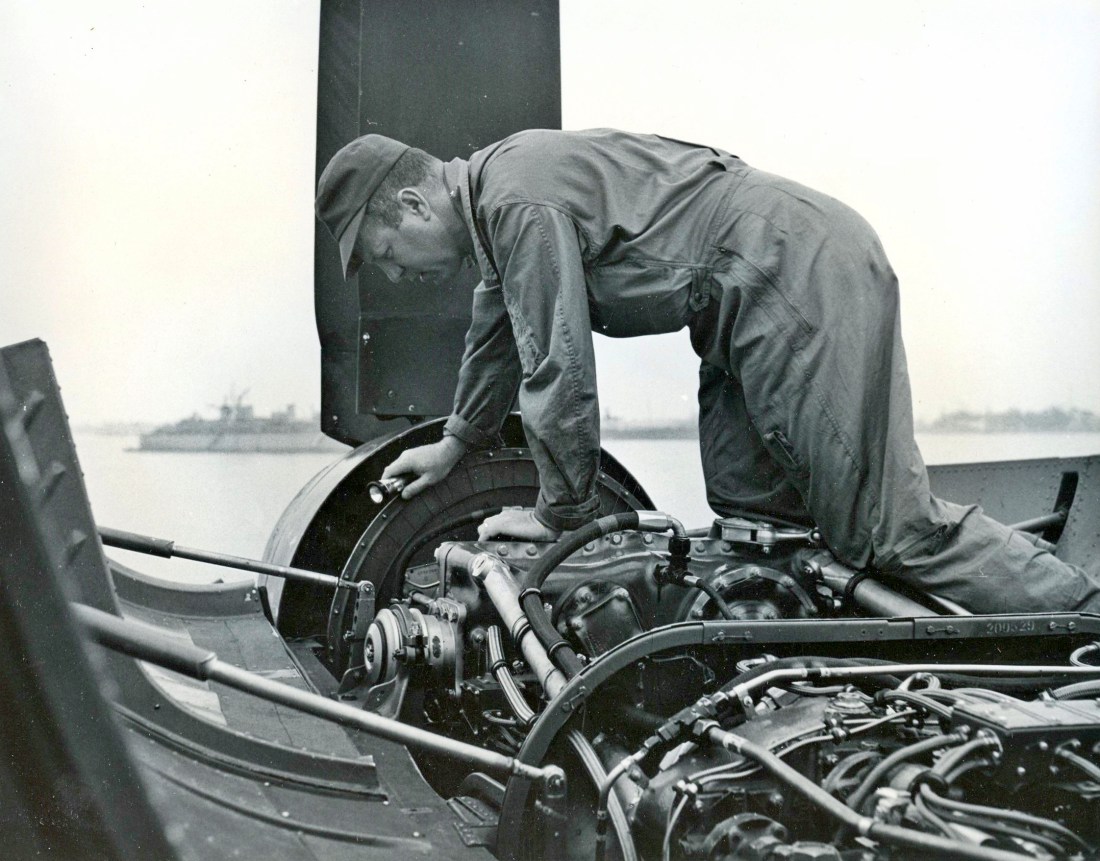
But (yes, there is a “but” to this grand Tradewind tale), the aircraft was plagued by unreliable engines and propellers. Its T-40 turboprop engines were actually a pair that drove contra-rotating propellers via a common gearbox. When working, it performed beautifully, but the engine system and propellers were terribly prone to failure.

Entering service in 1956, the R3Y was flown by one squadron, the navy’s VR-2 at NAS Alameda. The massive beaching gear assembly is evident.
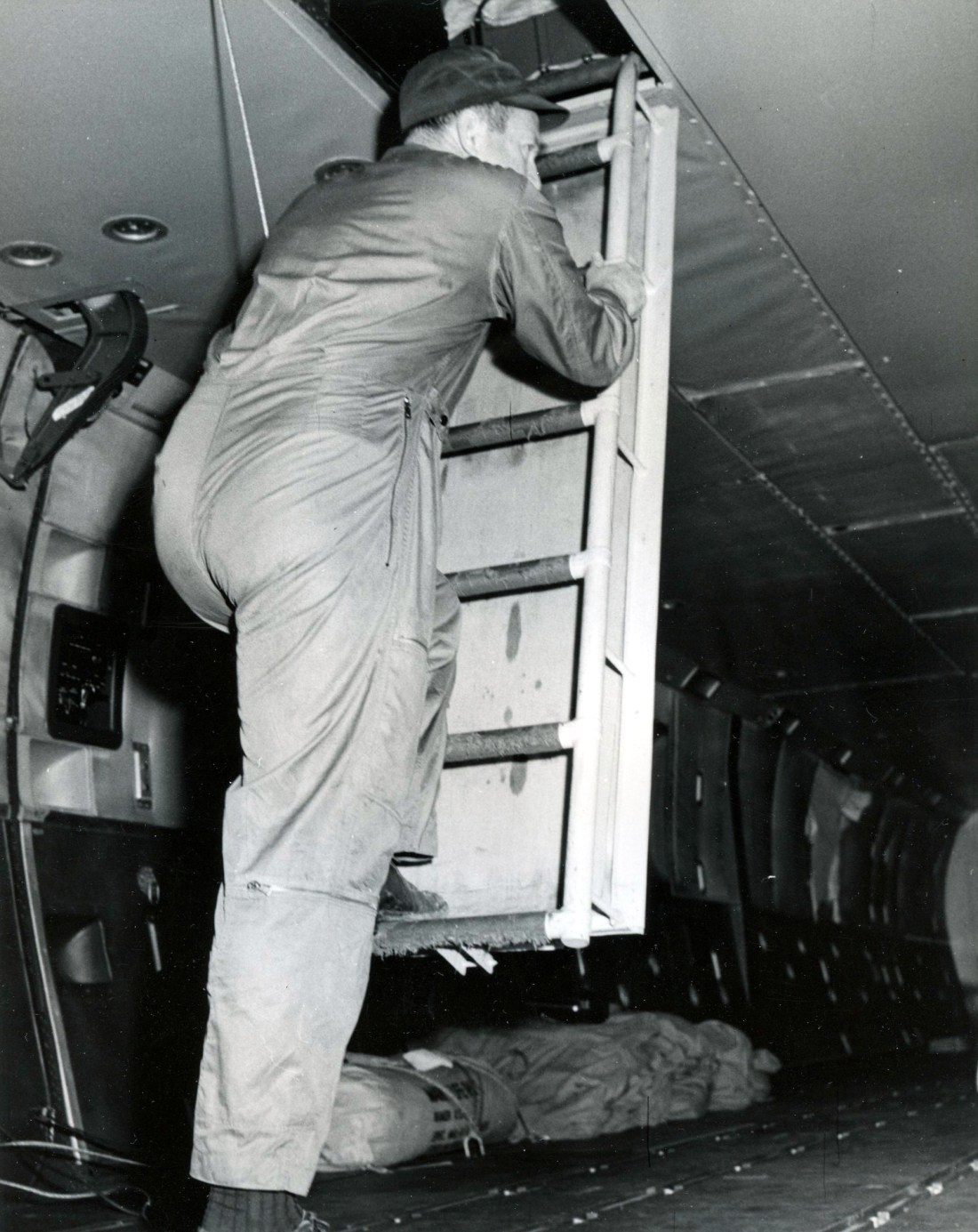
Flight deck access was through the cargo compartment.

Crewman keeps an eye on the T-40 engines. Note the twin exhaust for the paired motors.

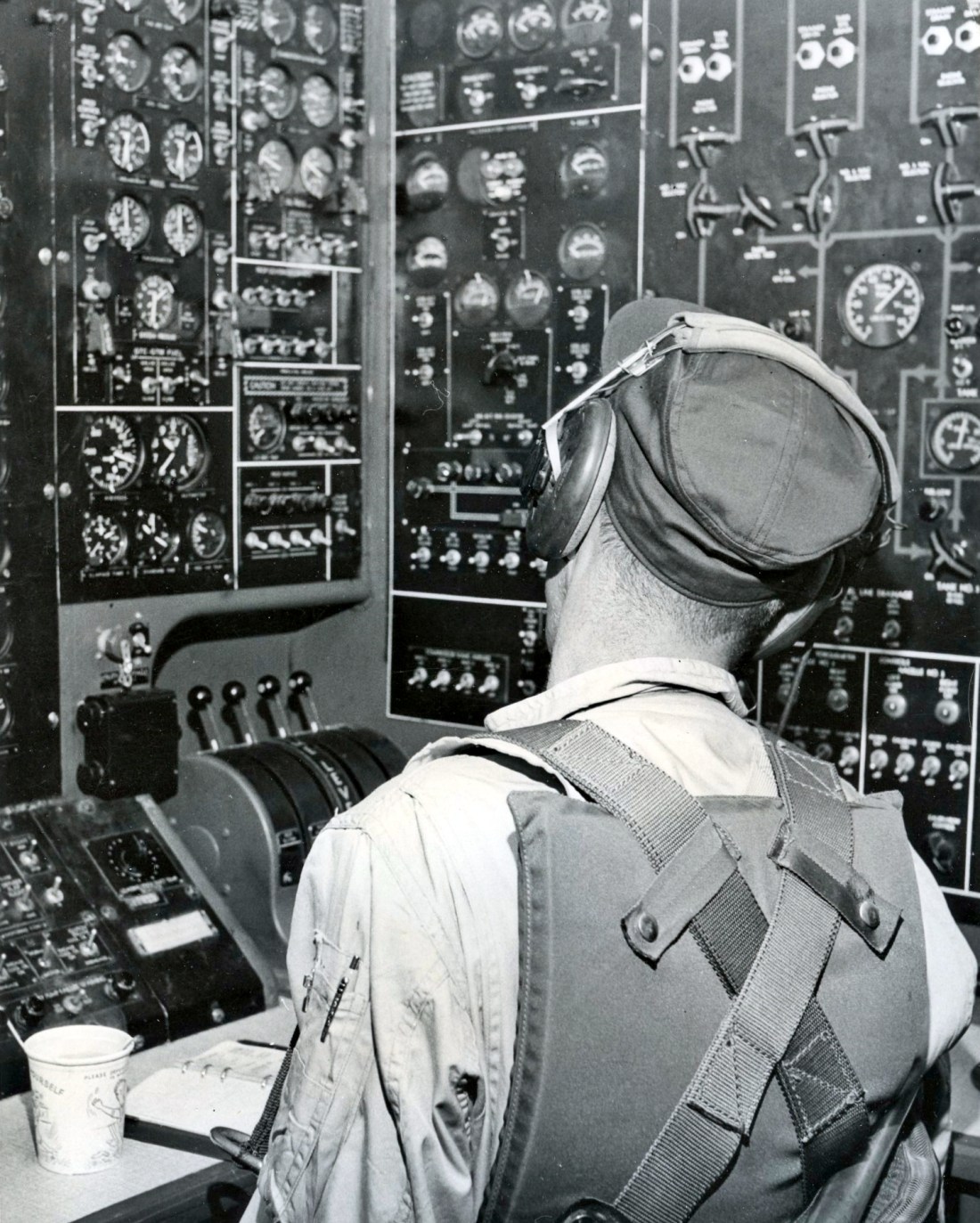
Charged with keeping the whole thing running were the flight engineers. Given that only 13 Tradewinds were built, it is rare to meet anyone whoever had anything to do with the aircraft. Luckily enough, I had the pleasure of meeting one of the R3Y’s former flight engineers. He said the aircraft was a pleasure to fly, but he also confirmed that the motors and propeller system were a constant headache.

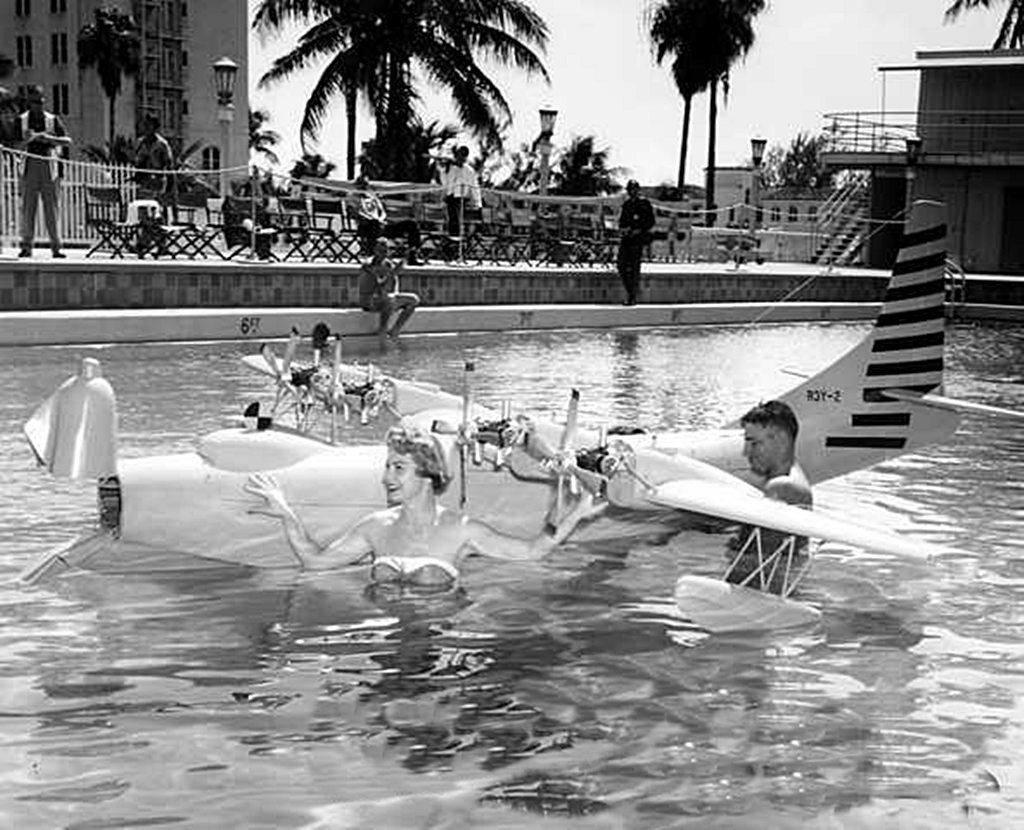
Everyone loves the 1950’s promotional schemes, and this one with star of stage, screen, and swimming pool, Esther Williams is no different.

The newspaper says it all: The Tradewind was ill-served by its engines and propellers. Of the four Tradewinds that crashed, all were the result of engine related problems. Faced with such difficulties, the navy ordered the Tradewind grounded in 1958 after only two years of service. The aircraft as a concept was well-received, but it needed better motors. Any aircraft powered by the T-40 had a short life as a result.
Colonel Joseph A. Barrett
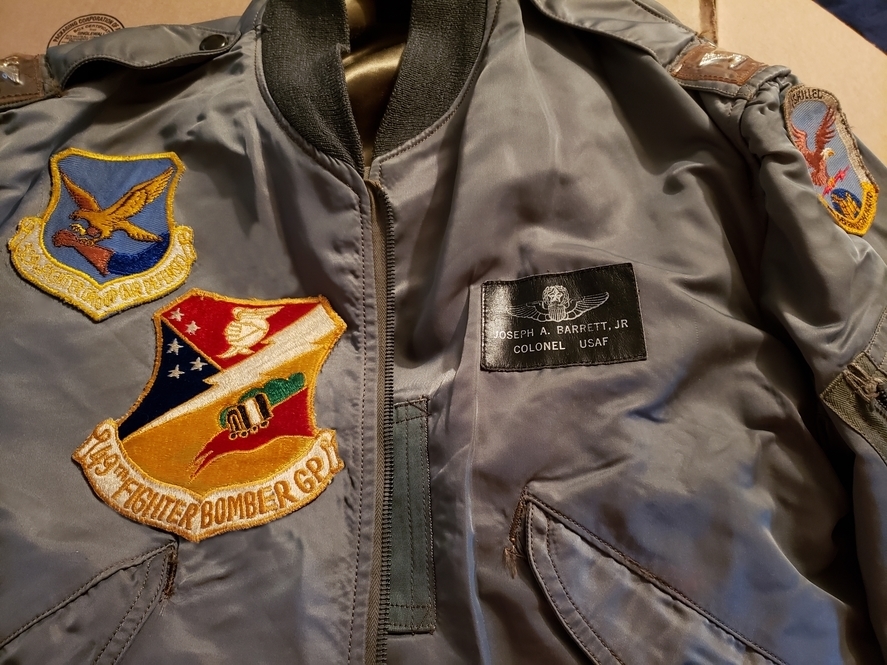
An F-86 pilot, Barrett was commander of the 49th Fighter Bomber Group at Misawa Air Base, Japan, in 1957. His next stop was commander of the 329th Fighter Group (Air Defense) at Stewart AFB, NY, 1958-59.
March AFB, 1960 Open House
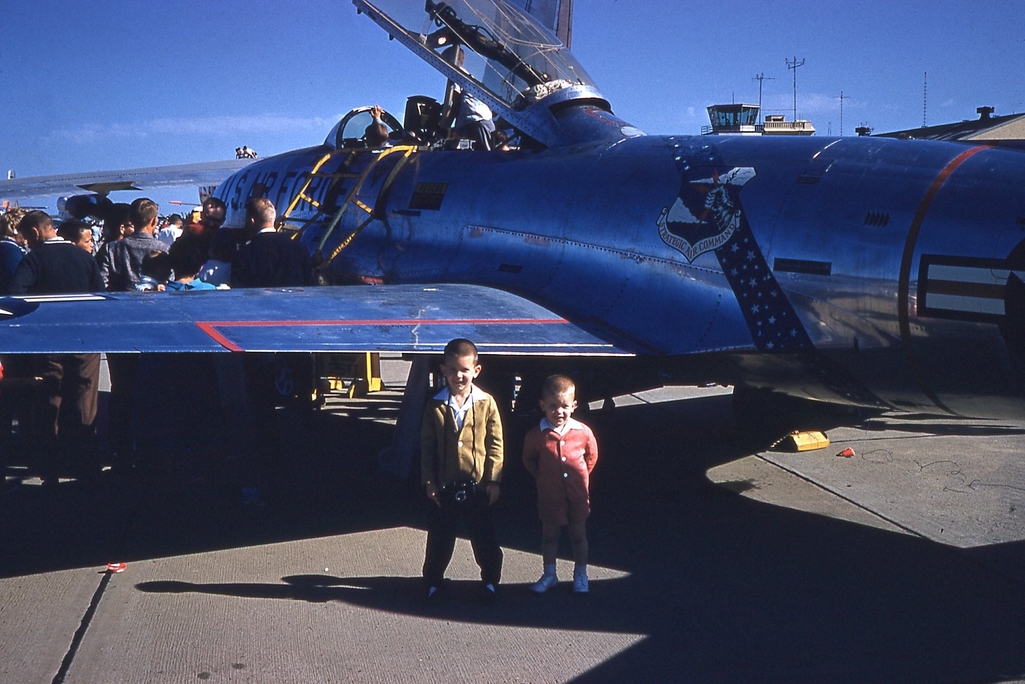
Looks like it didn’t take much convincing from dad for these two happy boys to pose next to a Strategic Air Command T-33. A B-47 is in the background. March operated two wings of these aircraft during this time.
Chanute Field, 1933

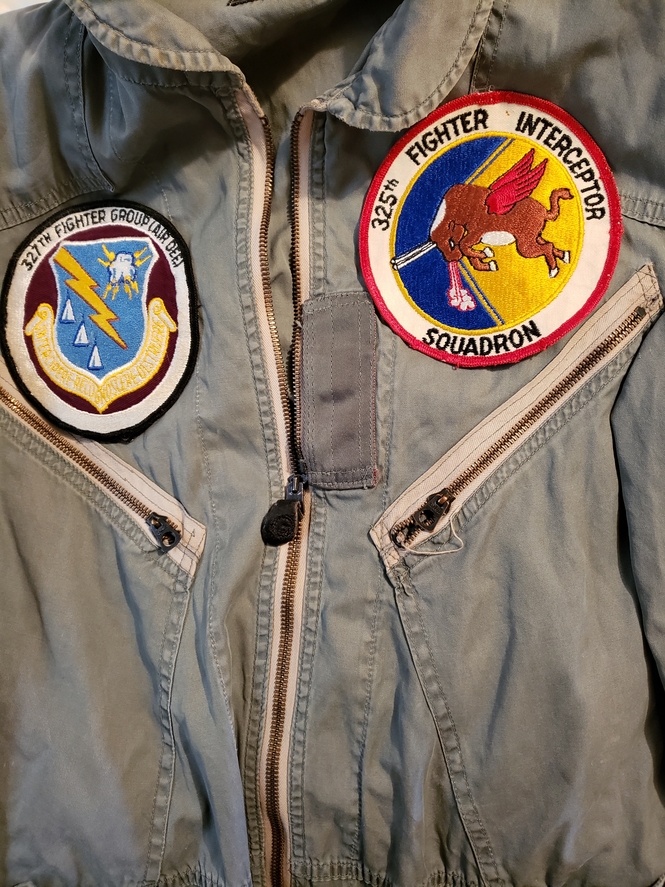
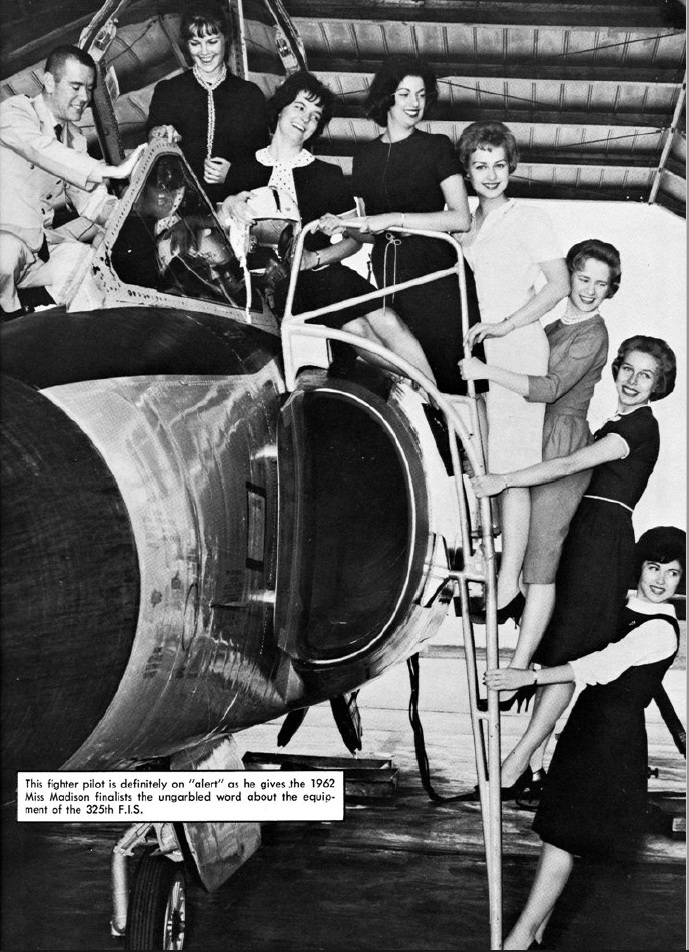
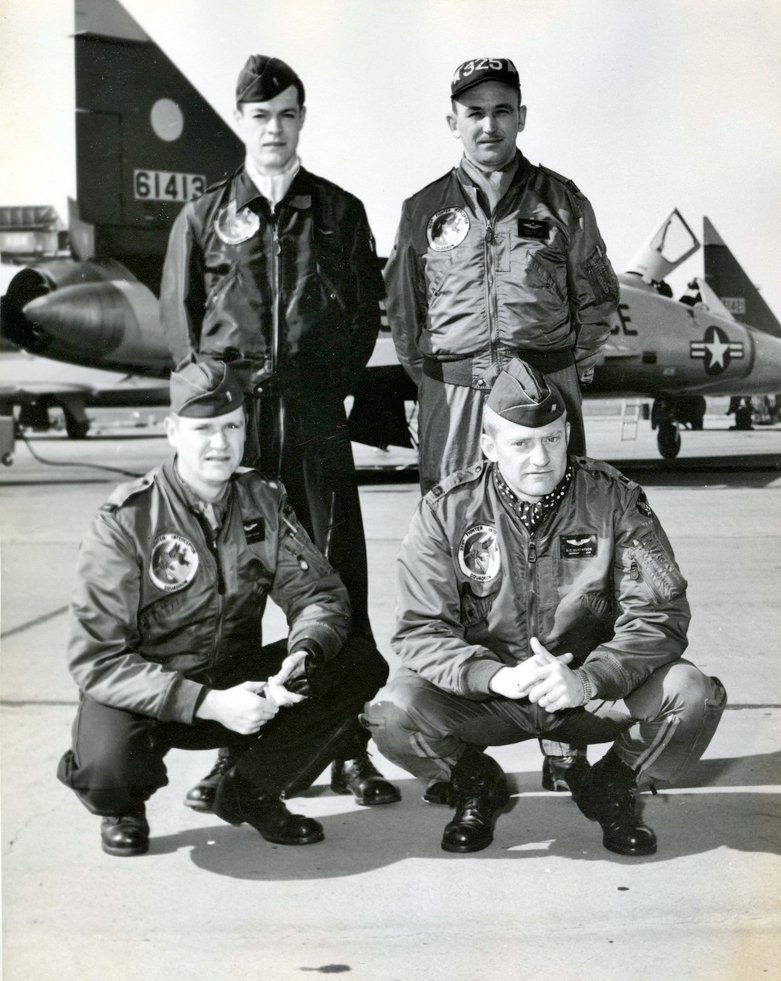
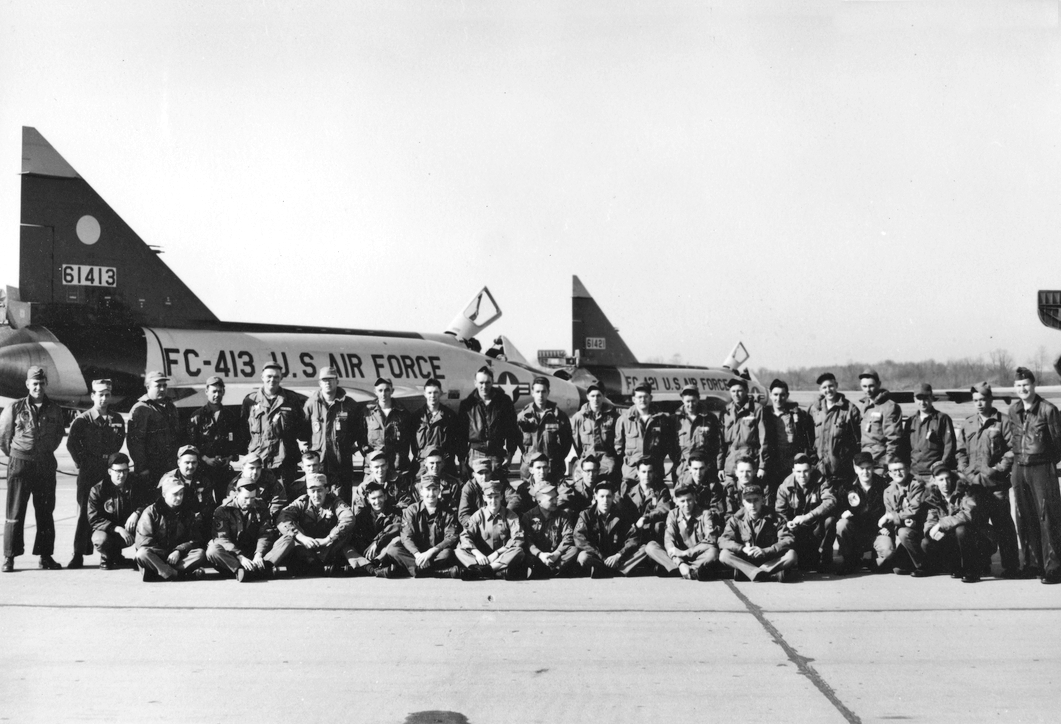
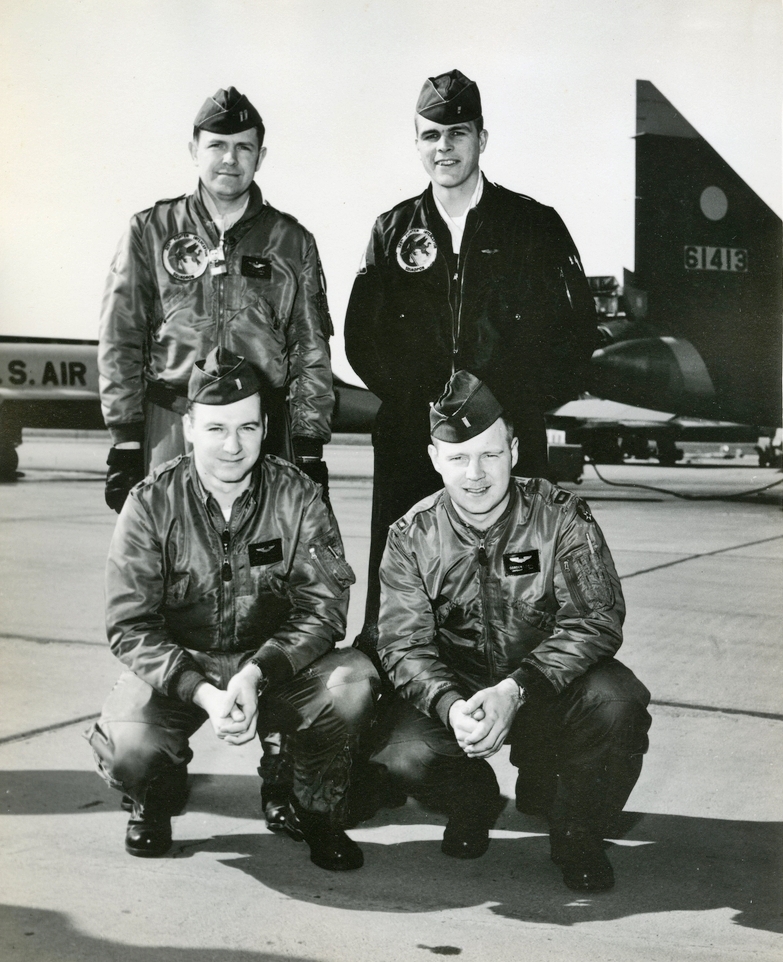
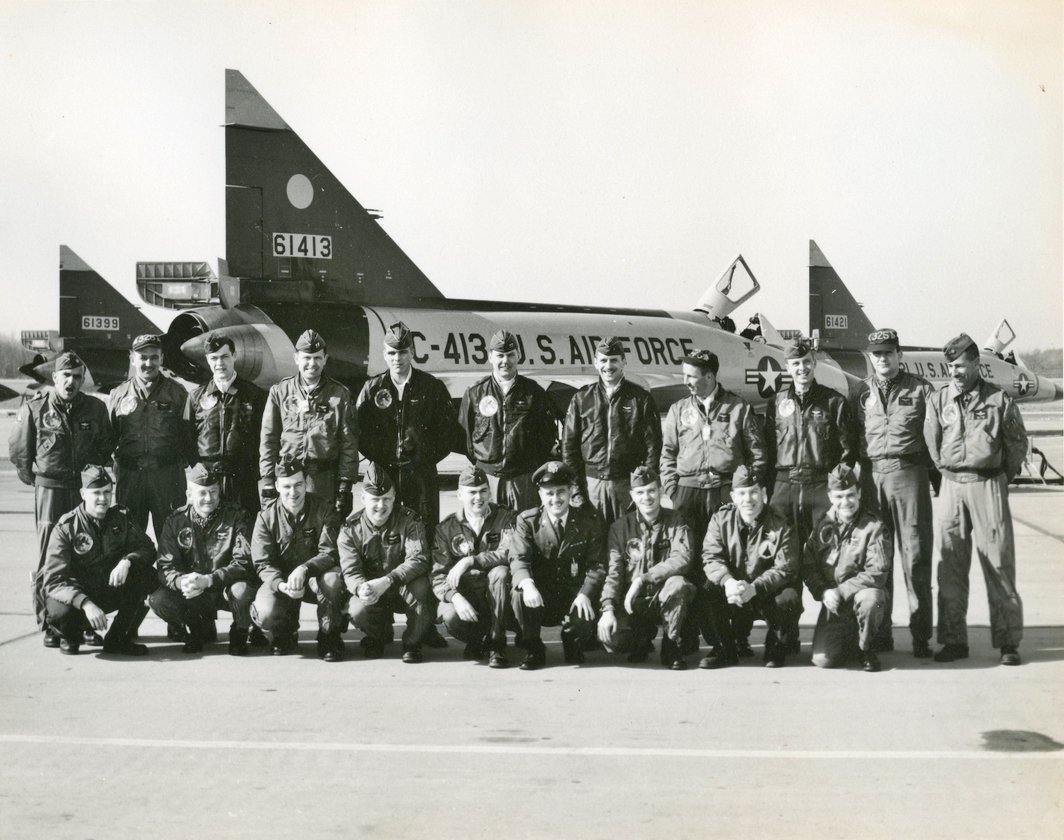
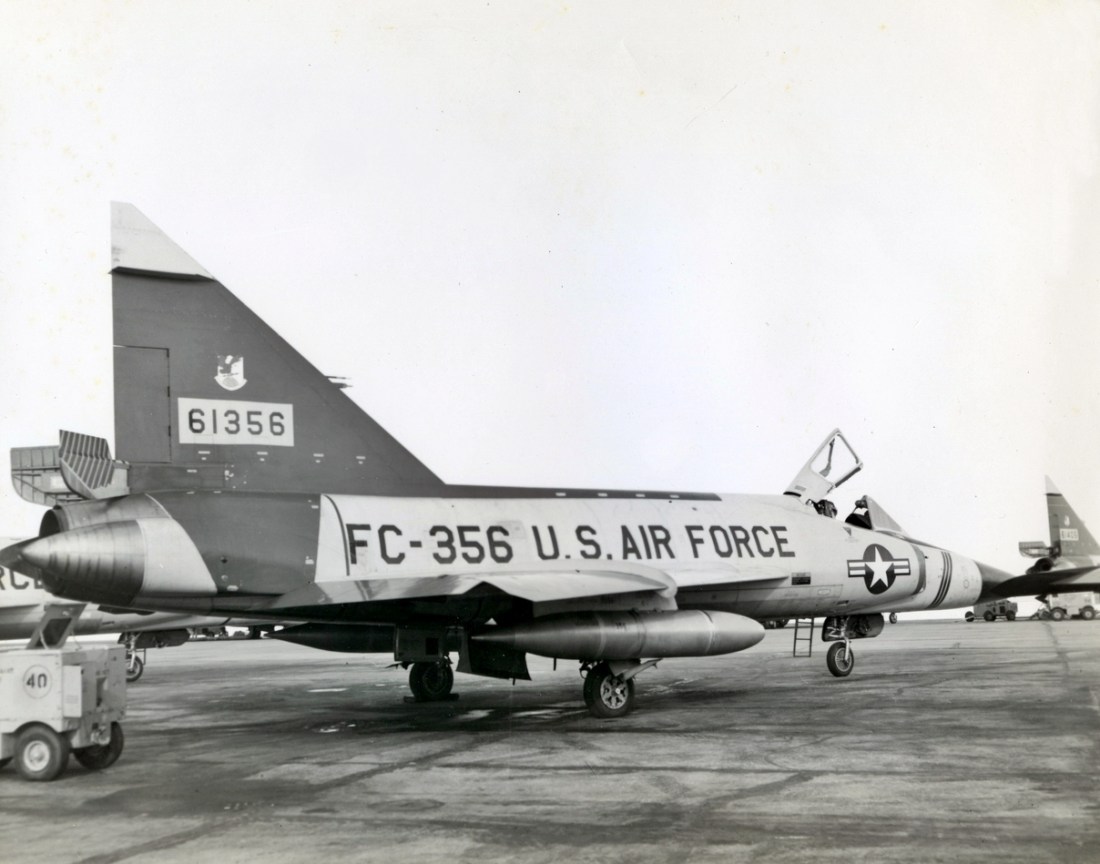
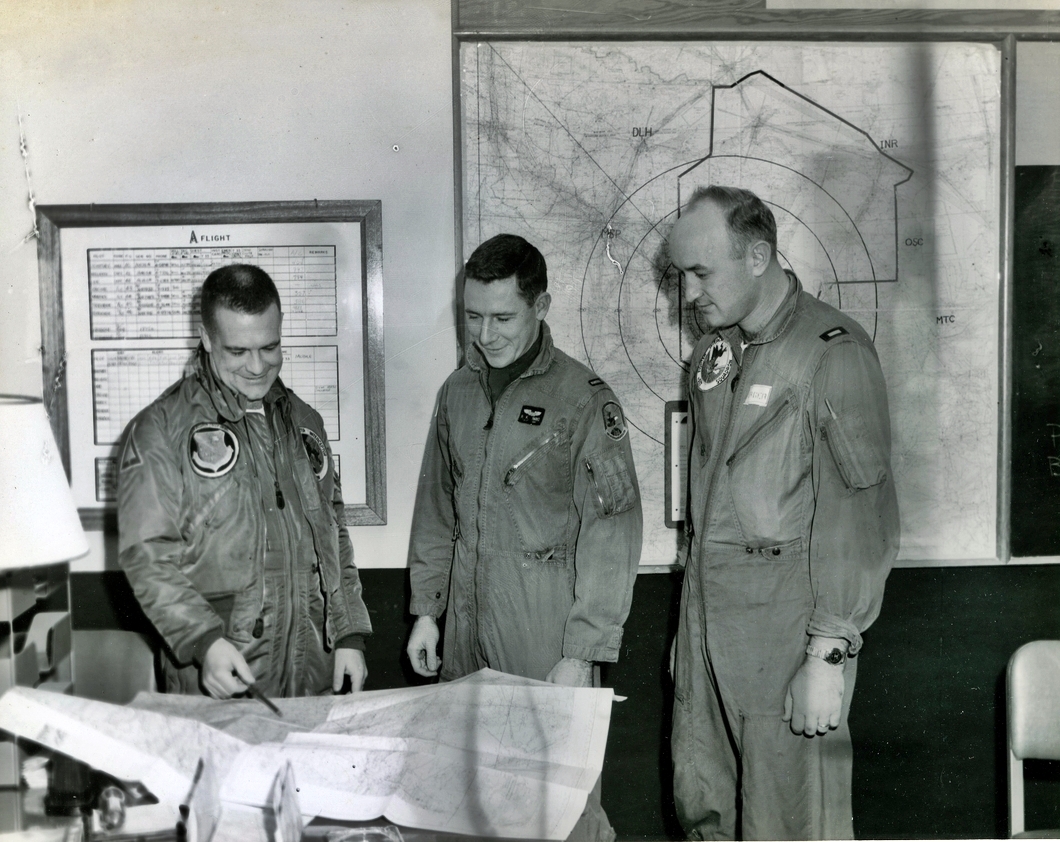
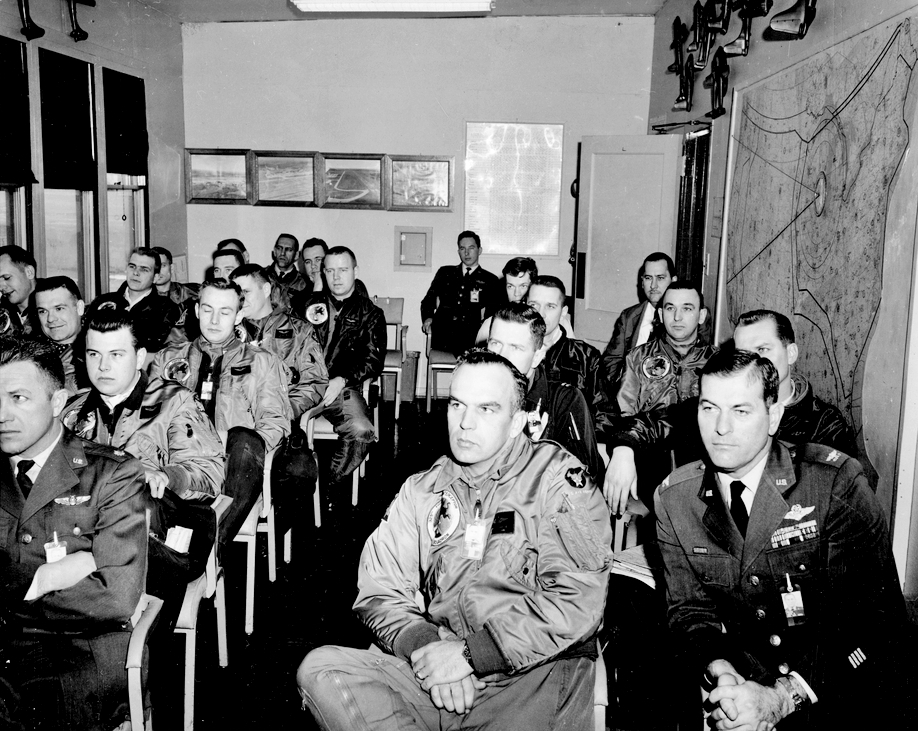
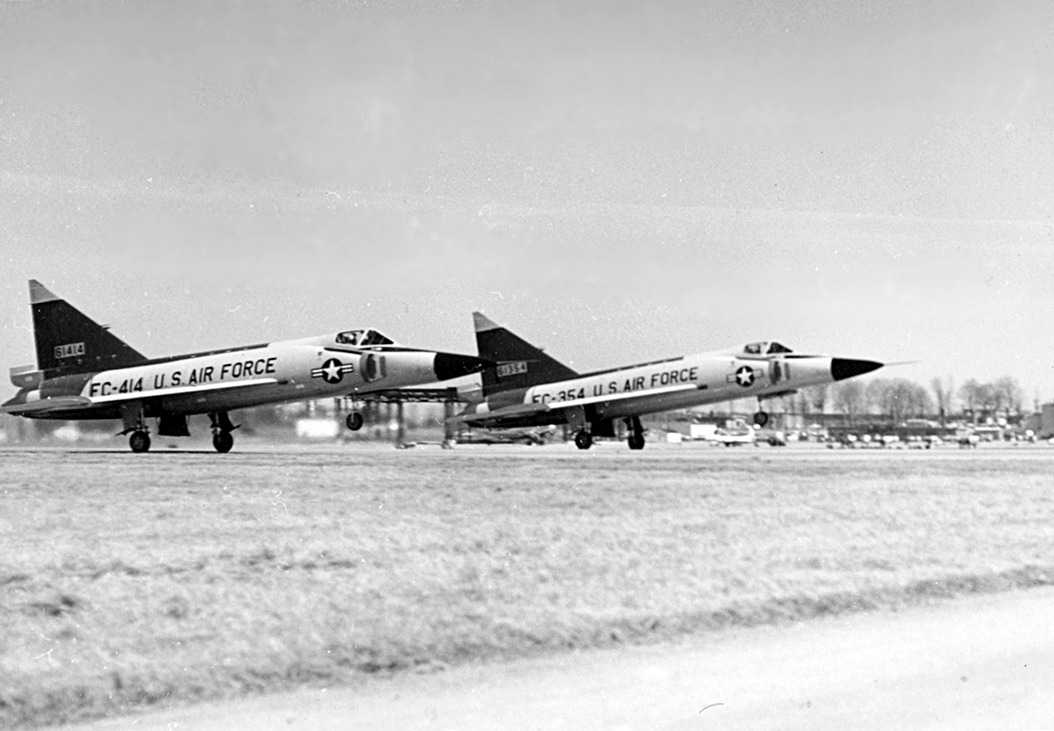
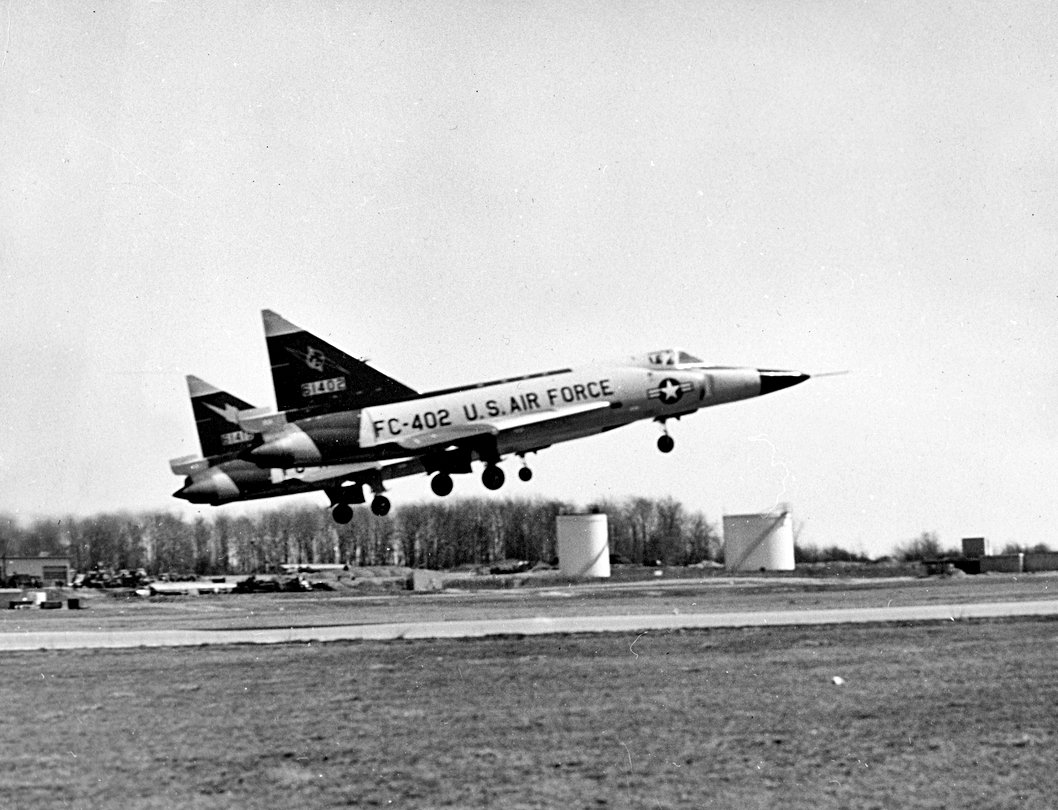
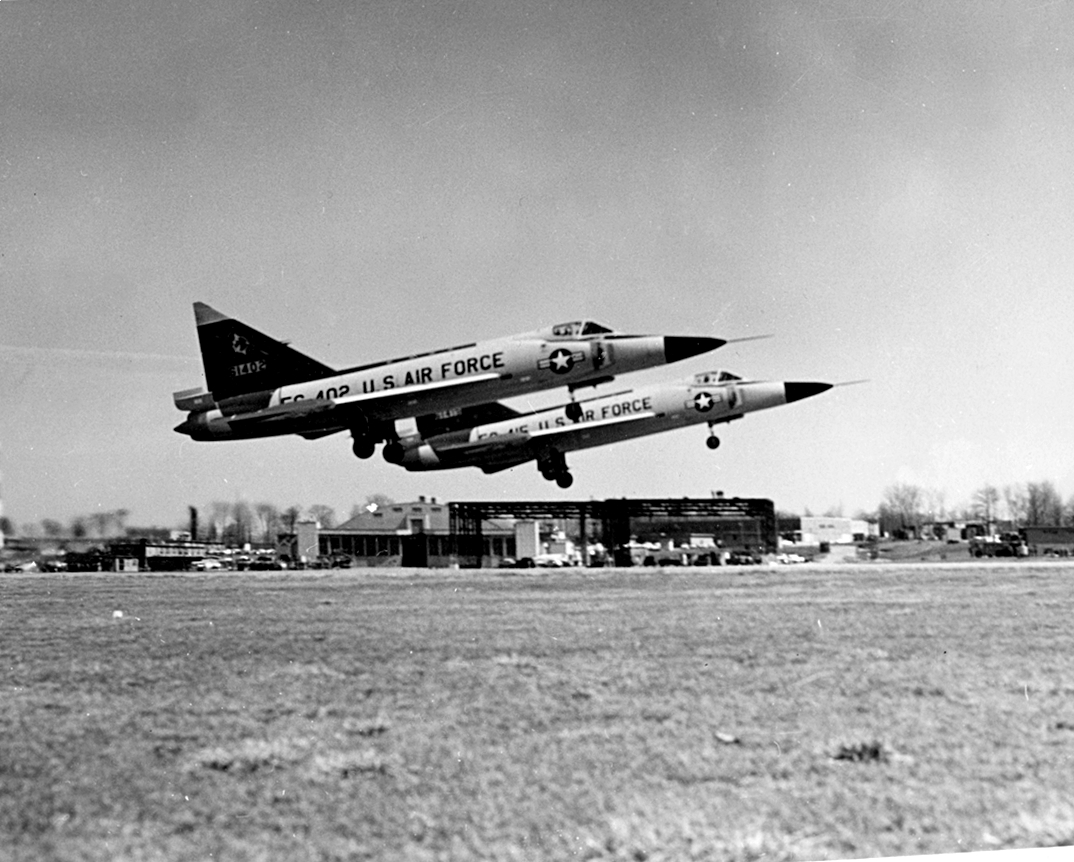
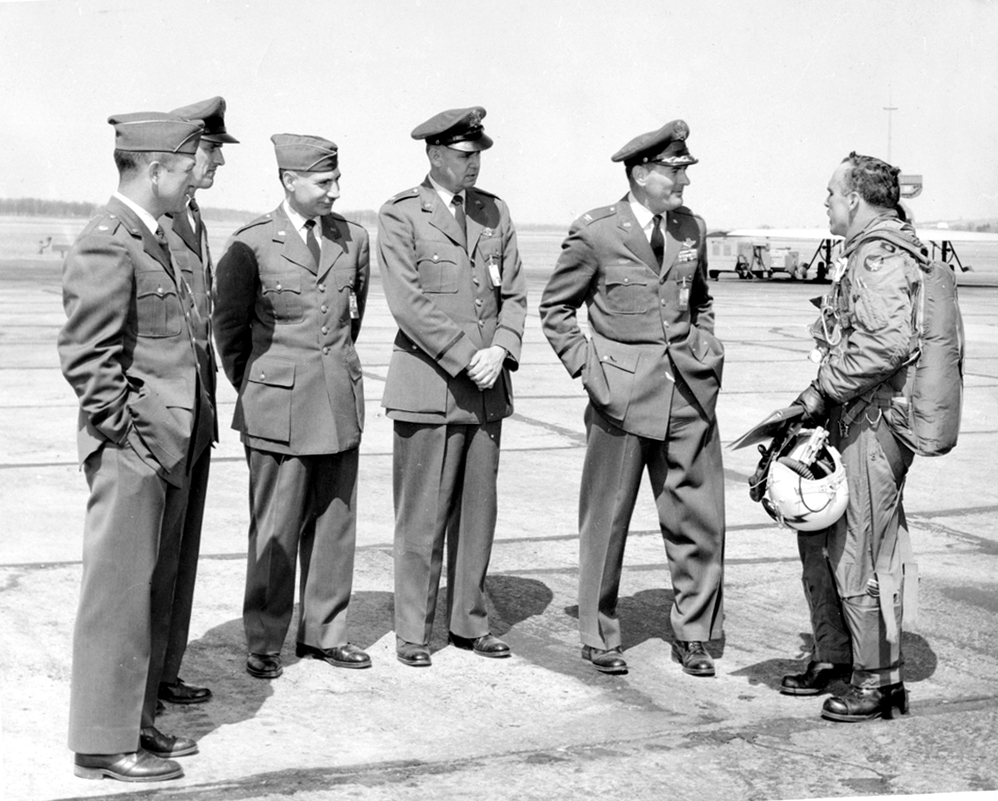
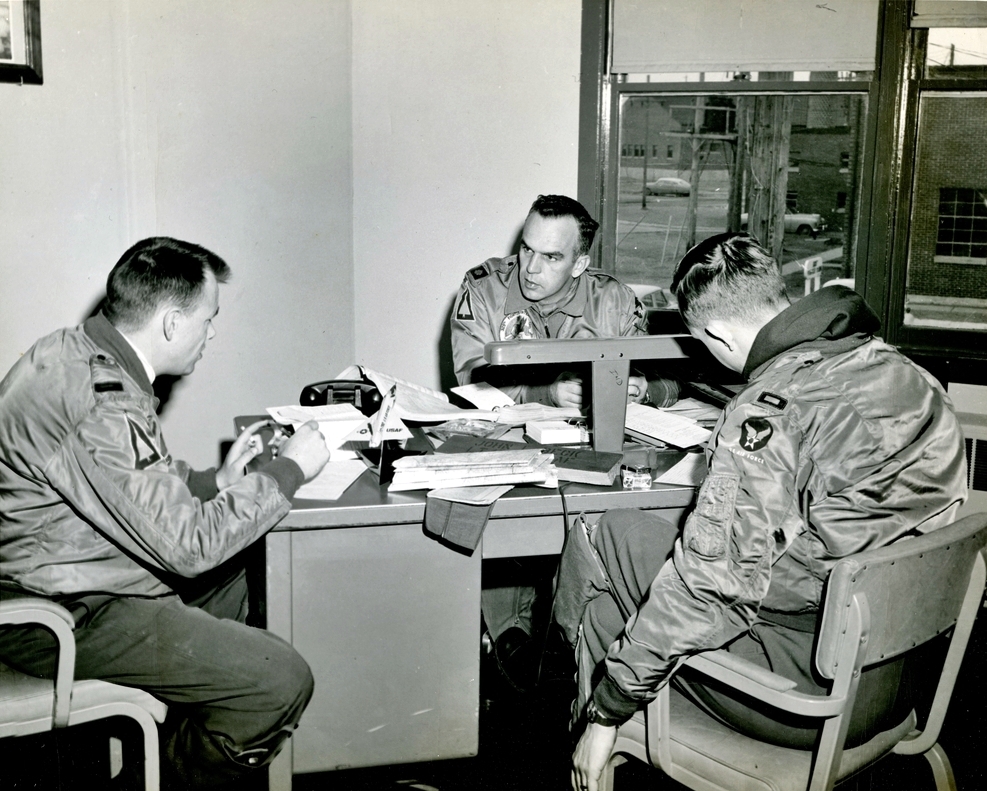
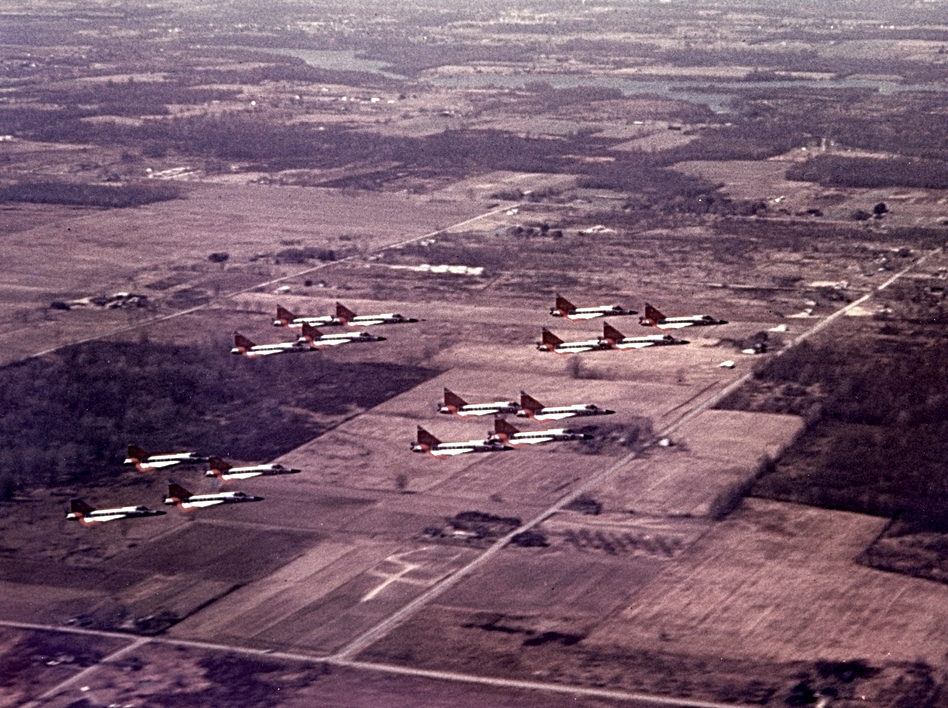
325th Fighter Interceptor Squadron (Pt.II)


 The Jive Bomber