One of Italy’s finer fighter aircraft of World War II, the C.202 Folgore was sleek and deadly, but not without its flaws. On par with the Allied fighter aircraft of 1941-42, the Folgore had one major complaint from its pilots: weak armament. With a pair of low muzzle velocity 12.7 machine guns, it took a lot of bullets from a C.202 to bring down a rugged aircraft such as the P-40 Warhawk/Kittyhawk as found in the skies of North Africa. Later versions included a pair of 7.7 guns in the wings, but the weak firepower of the Folgore meant the design would never achieve its potential.
This postwar photo of a captured C.202 was taken at Freeman Field, Indiana. The plane was air-worthy, and would eventually find its way to the National Air & Space Museum.
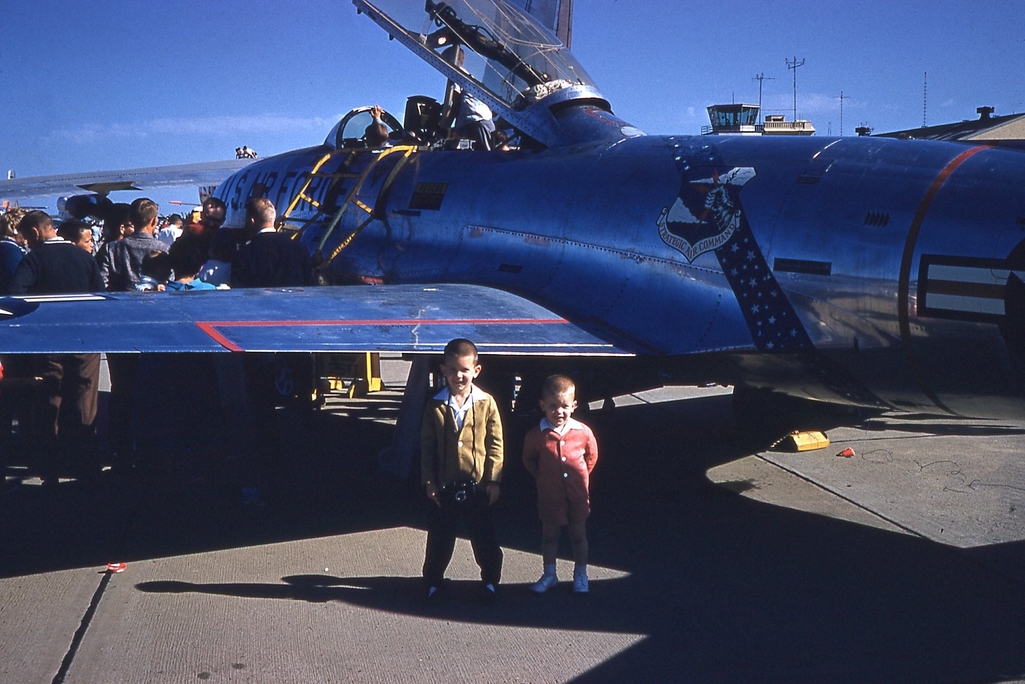
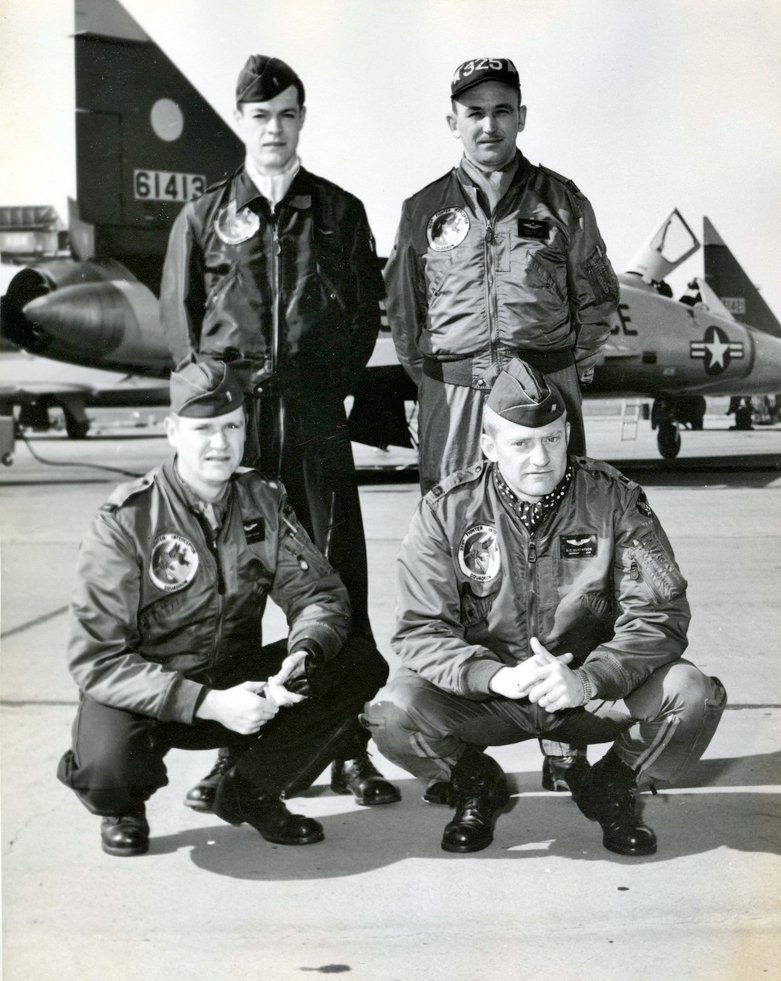
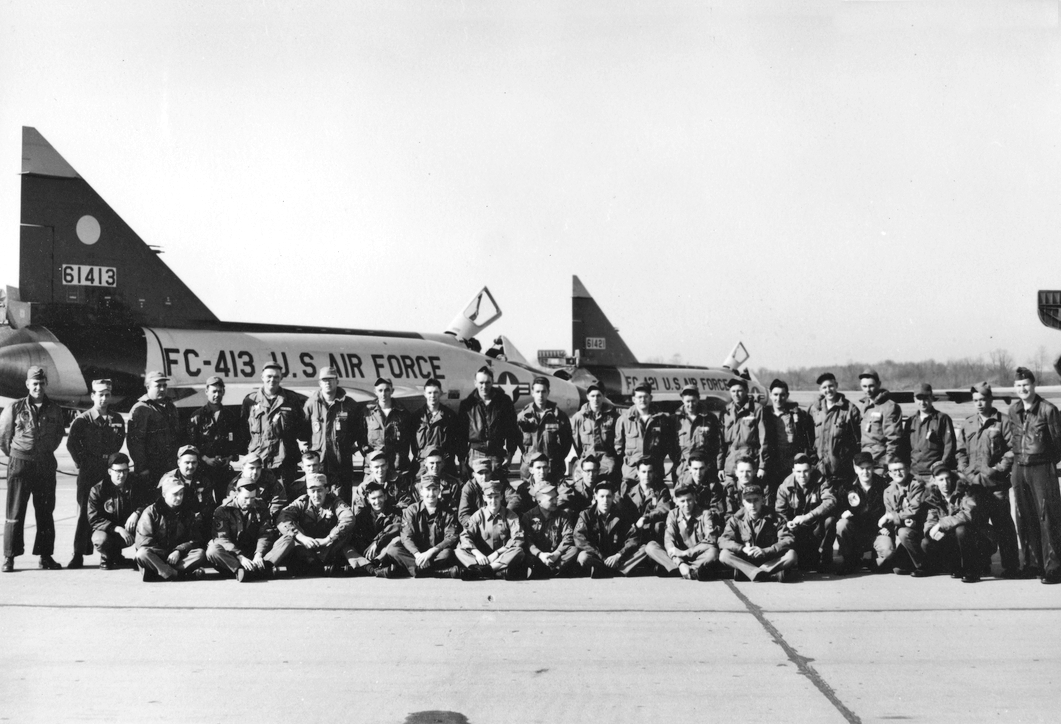
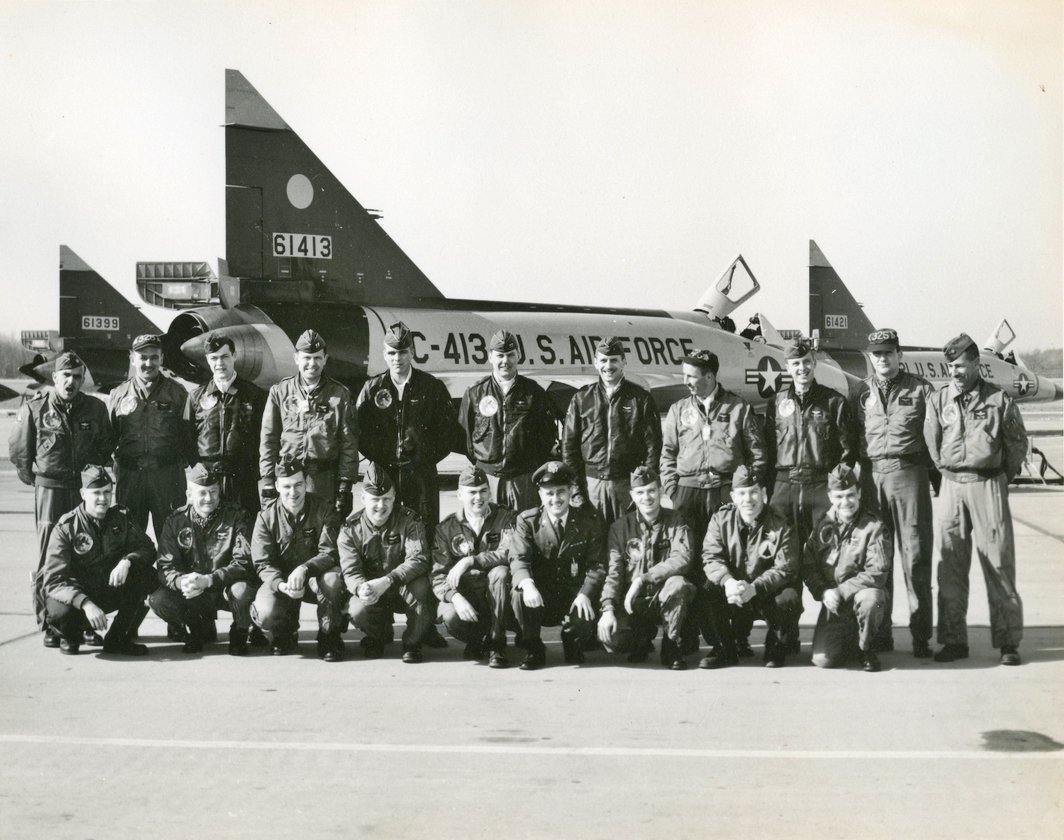
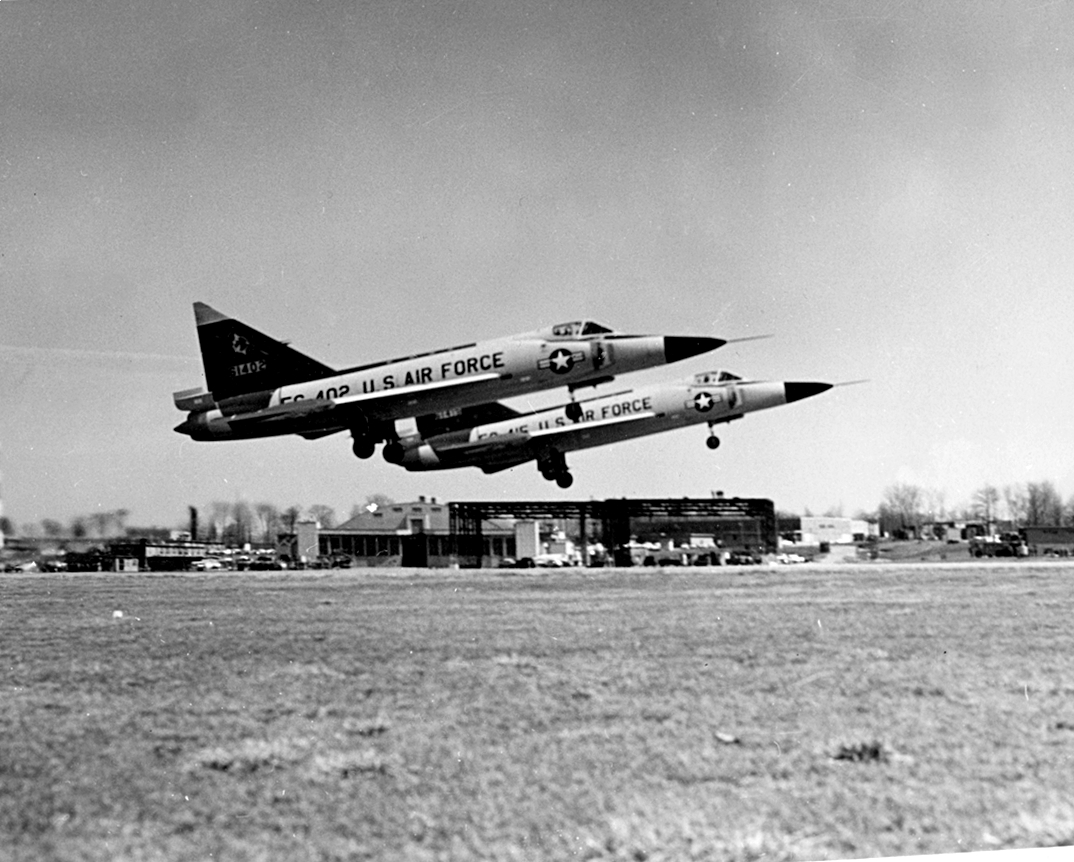
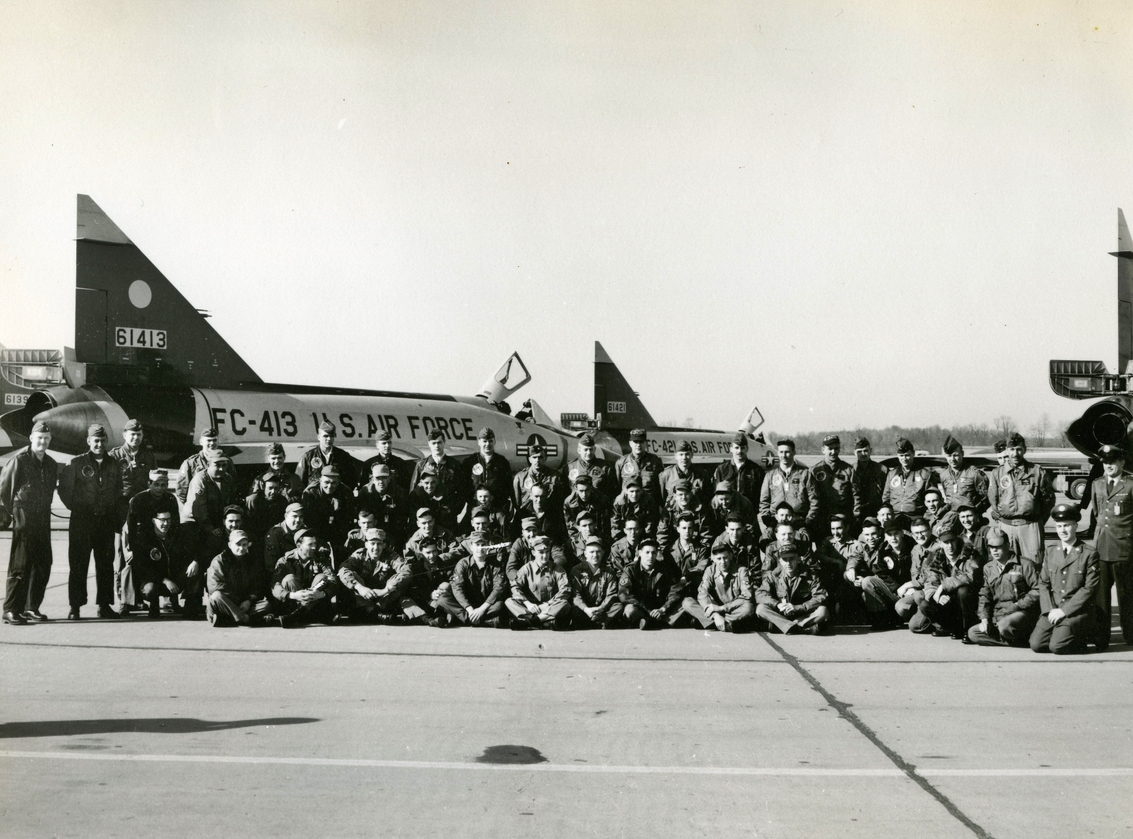
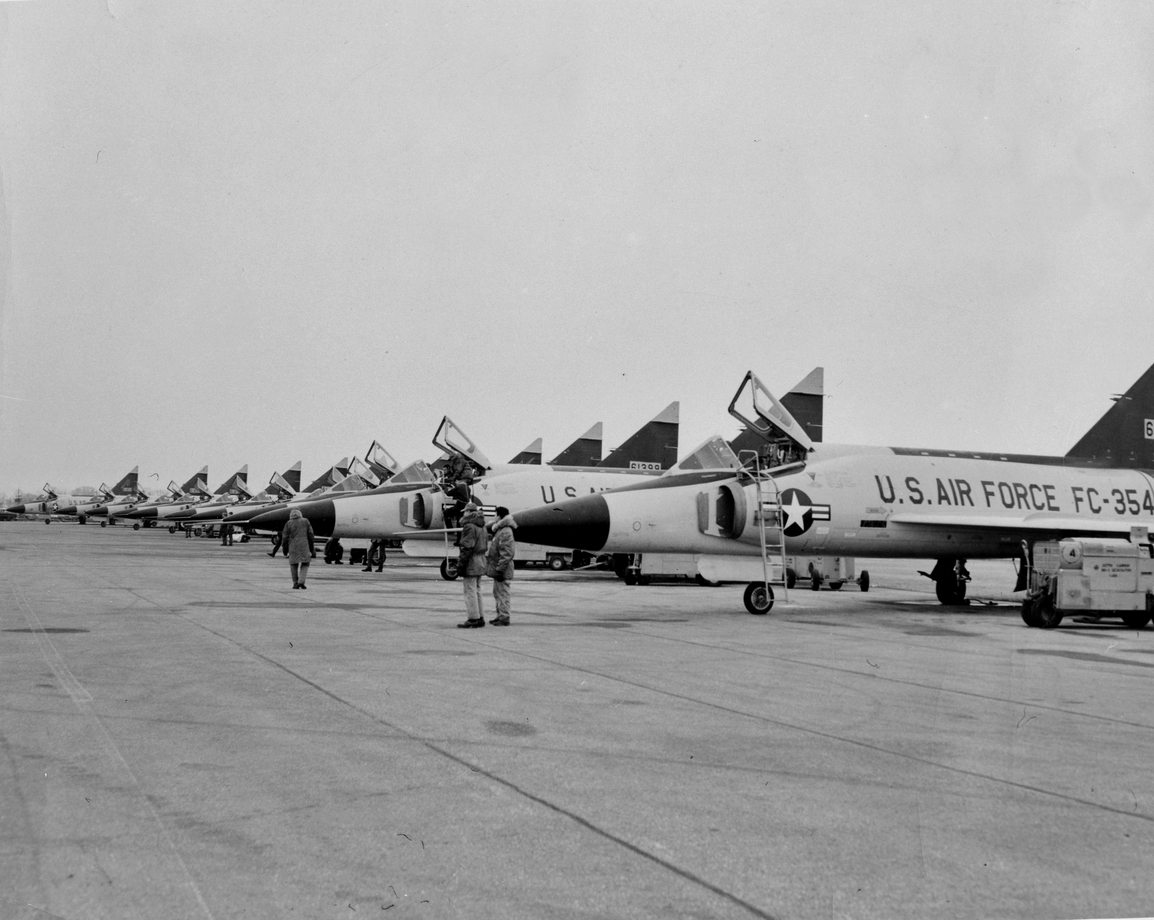
Maintenance men and pilots say “cheese” on the ramp of Truax AFB, Wisconsin in the late 1950’s. Of the F-102’s in the background, 56-1413 is now displayed at the Castle Air Museum in California. Beyond sits 1421 and she is no more.
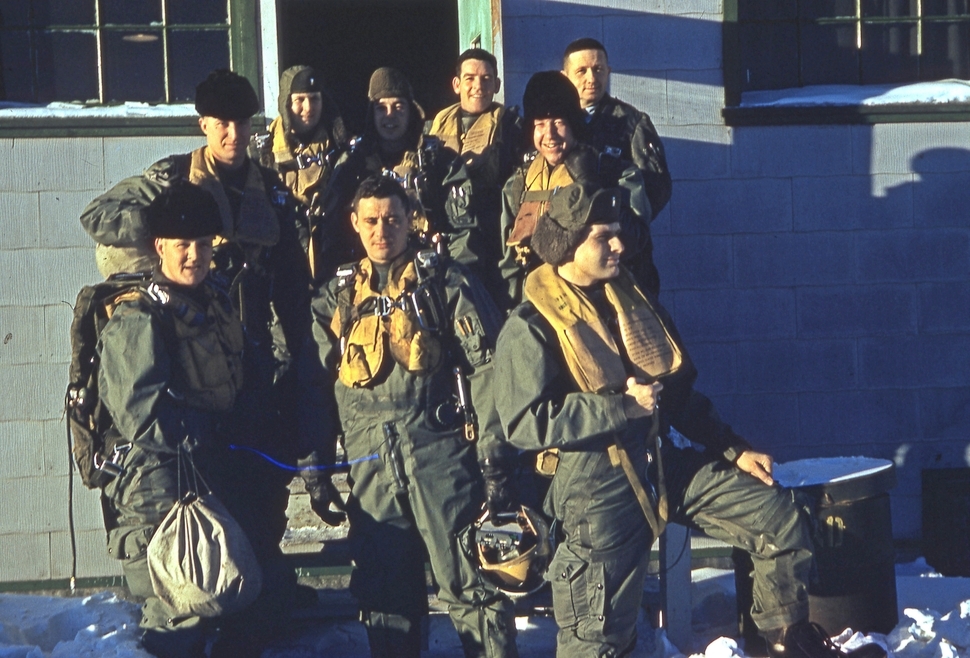
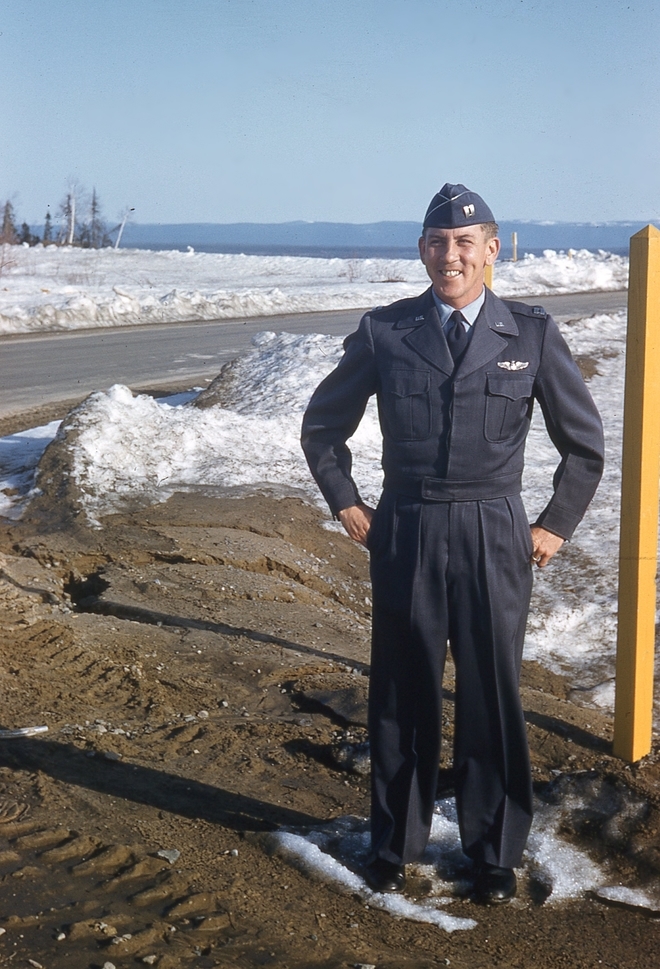
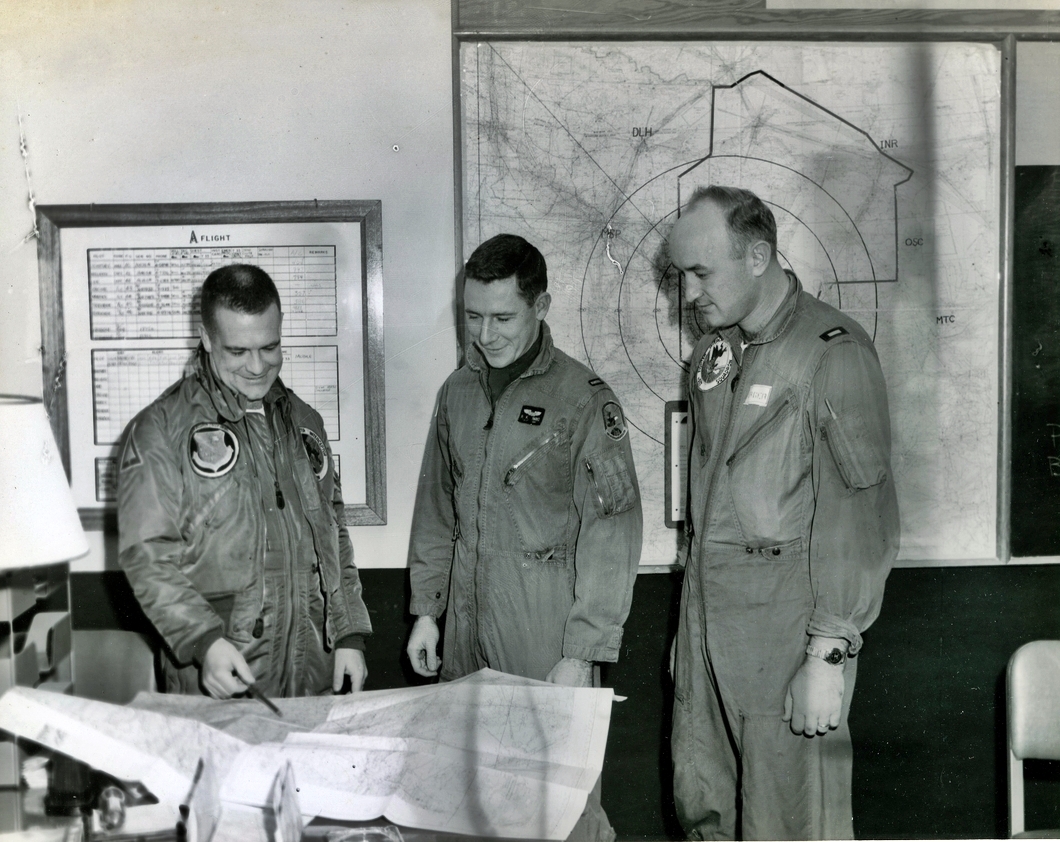
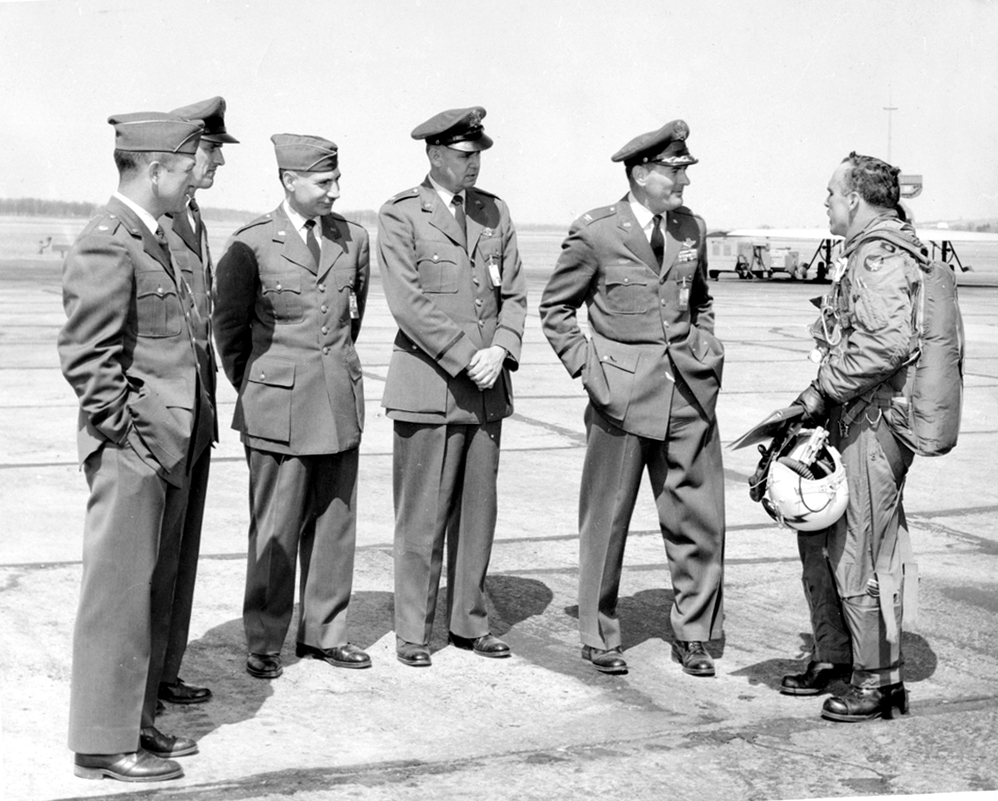
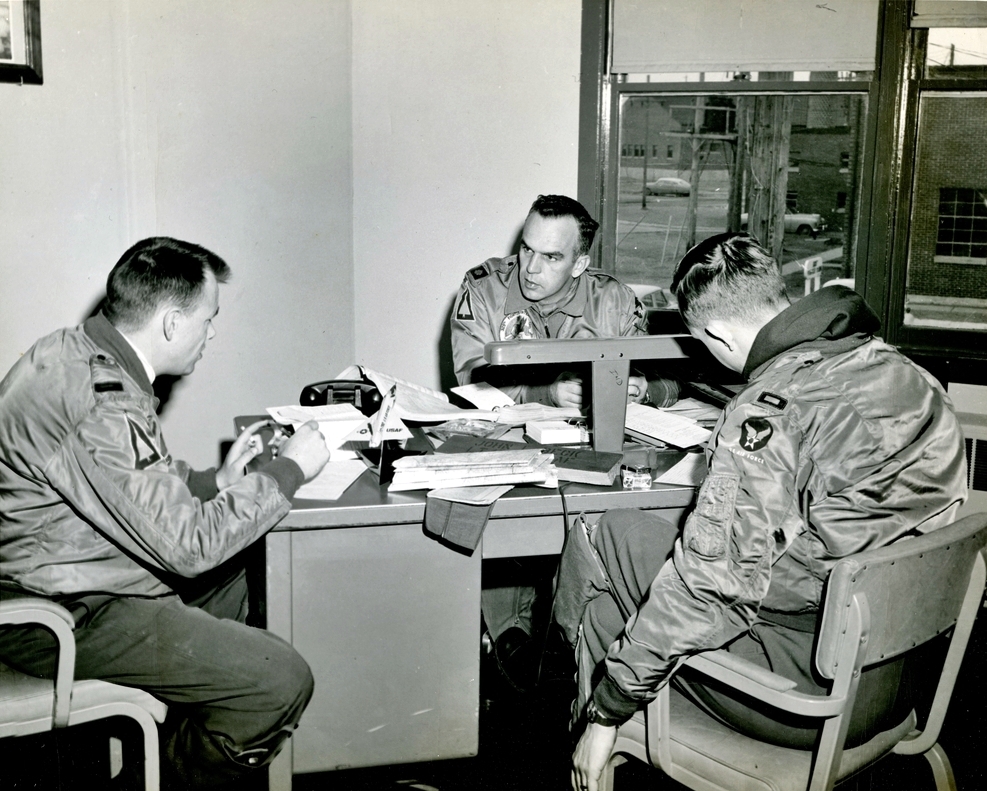
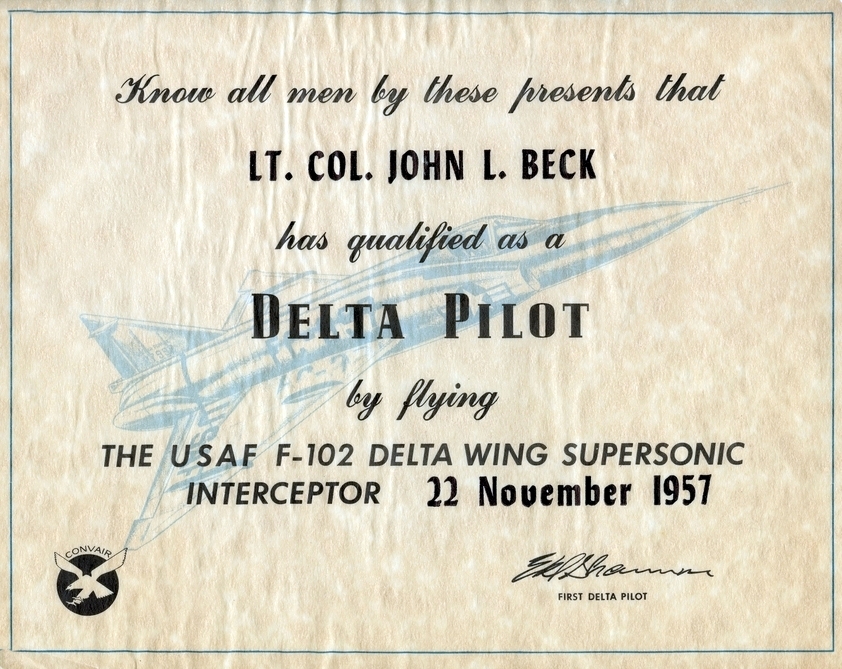
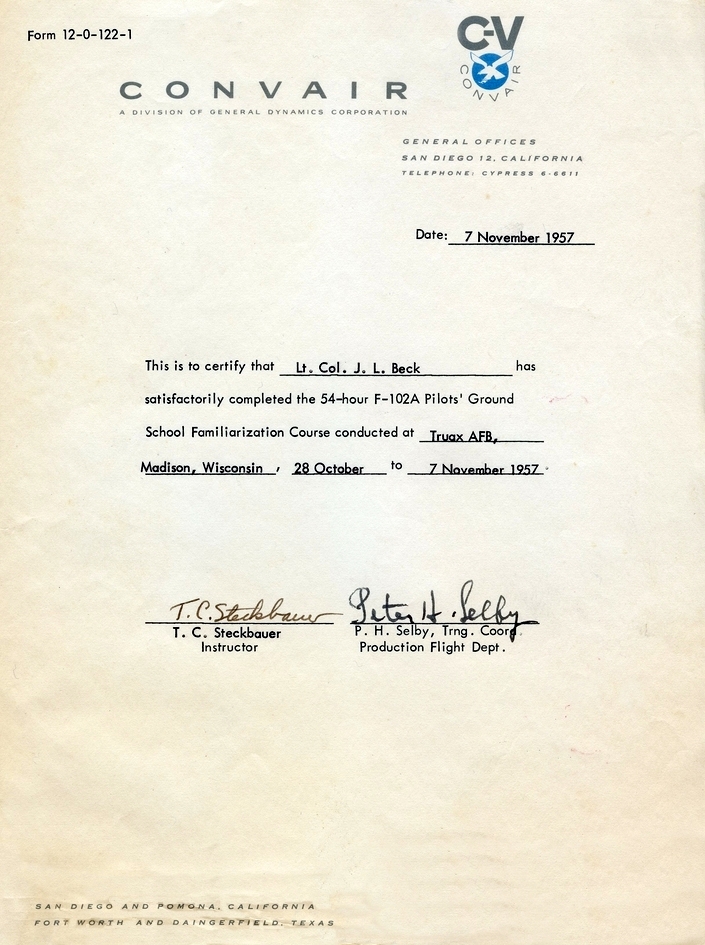
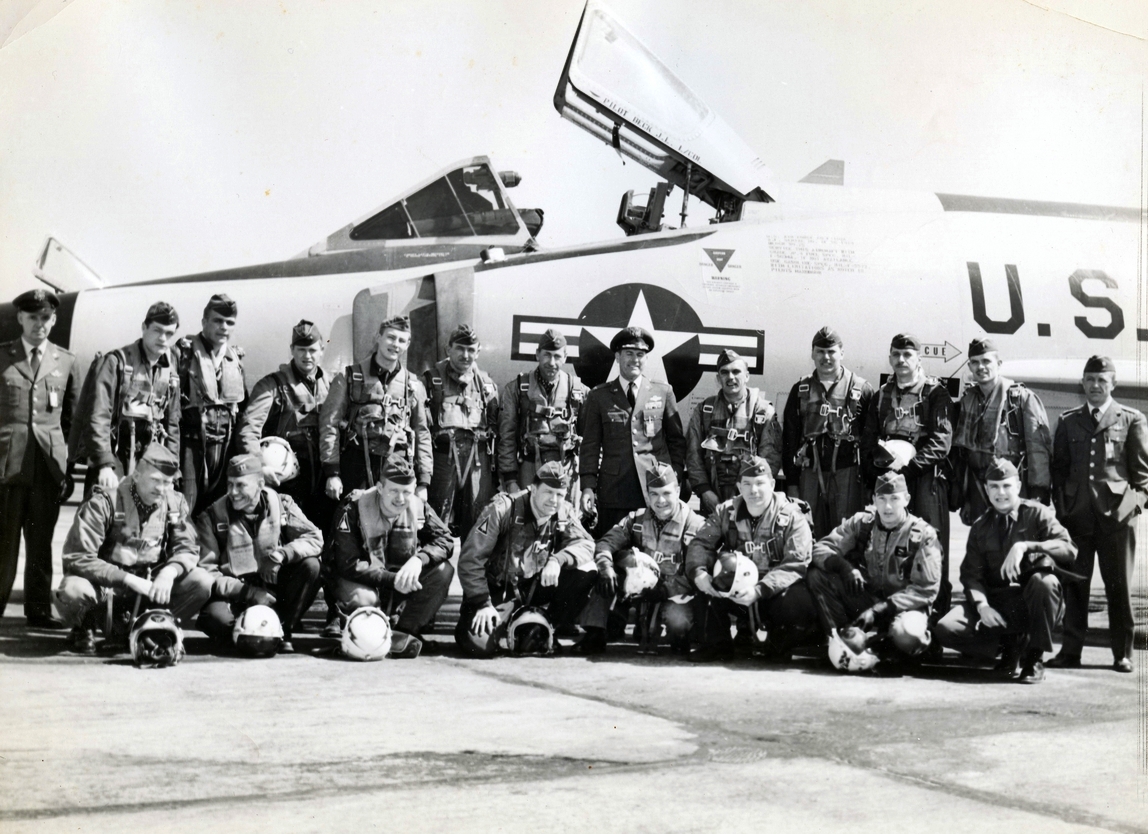
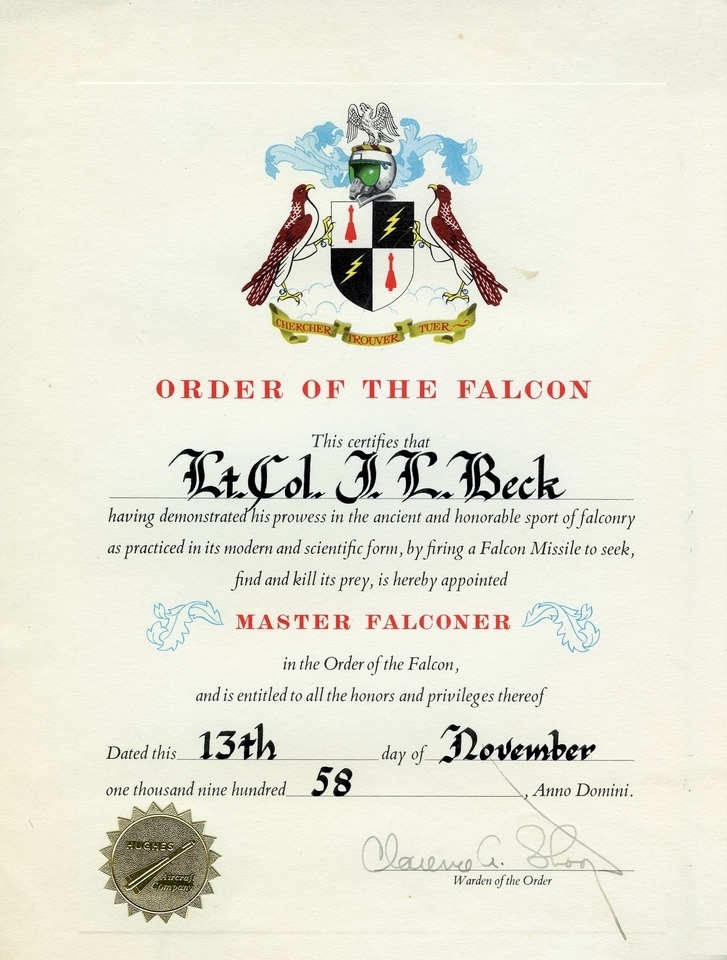
These photos are from the estate of the 325th commander, Lt Col John Beck. Seen here briefing his men, Beck had served as boss of the 87th Fighter Squadron in WWII and was a highly decorated pilot with both the US and British DFC’s.
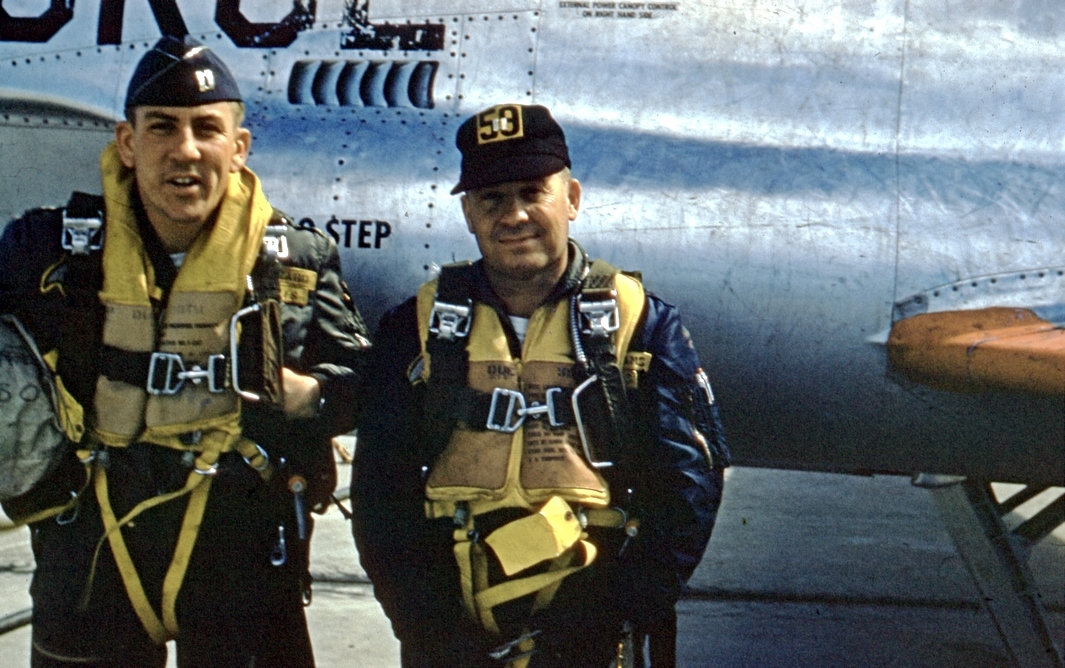
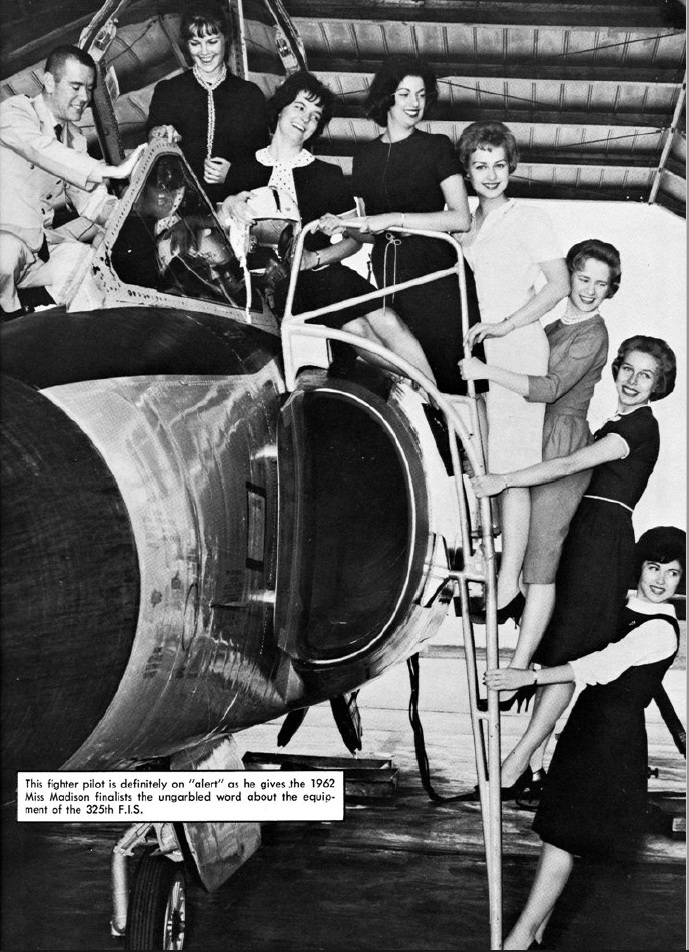
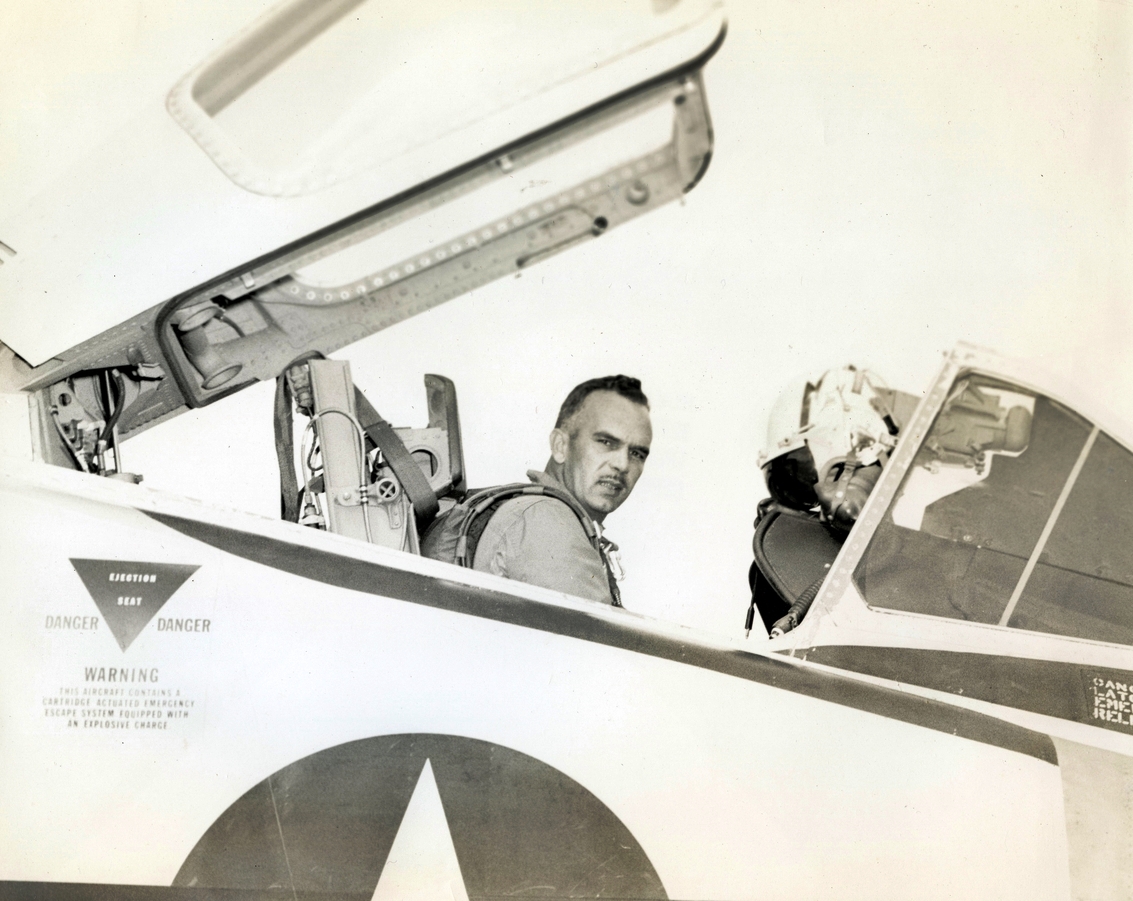
Beck in the cockpit of an F-102. Aircraft had changed a bit in the 15 years since he had flown the P-47.
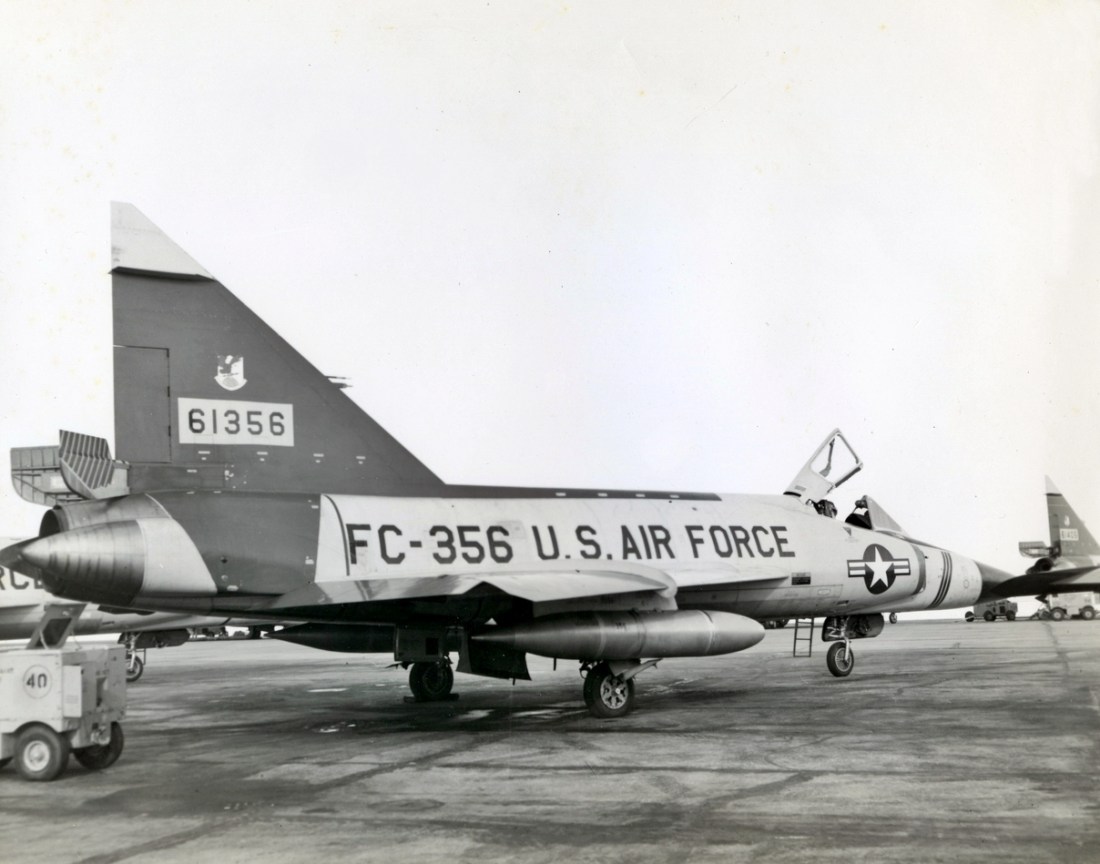
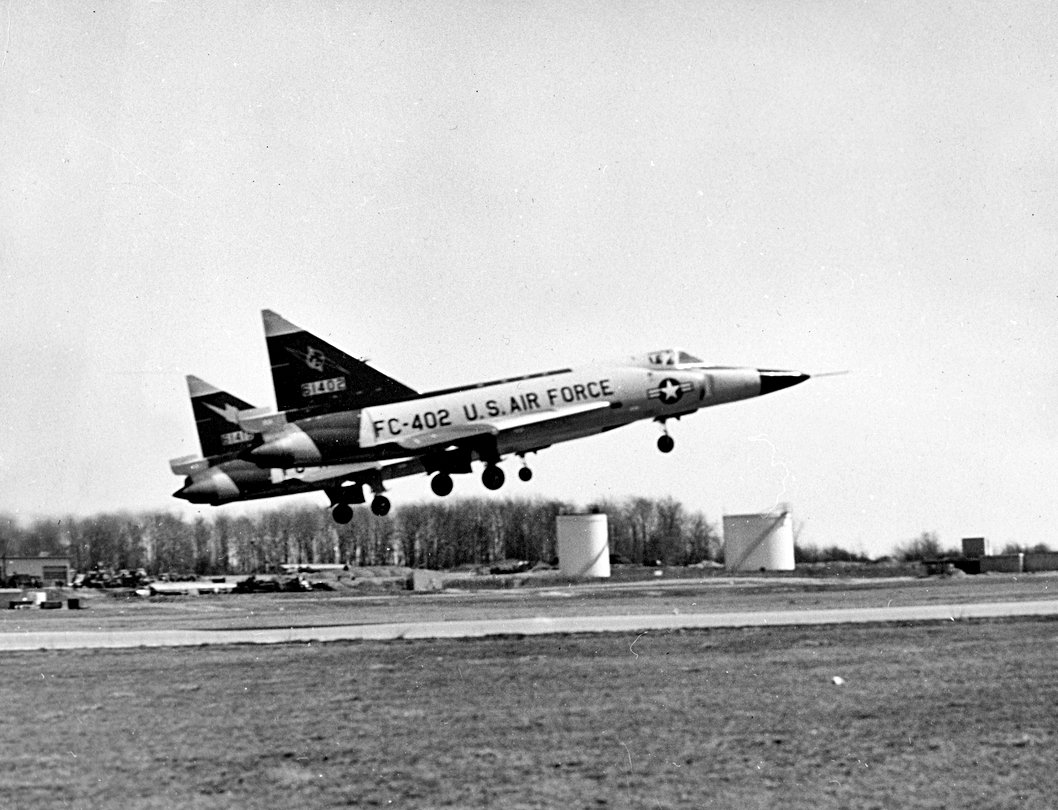
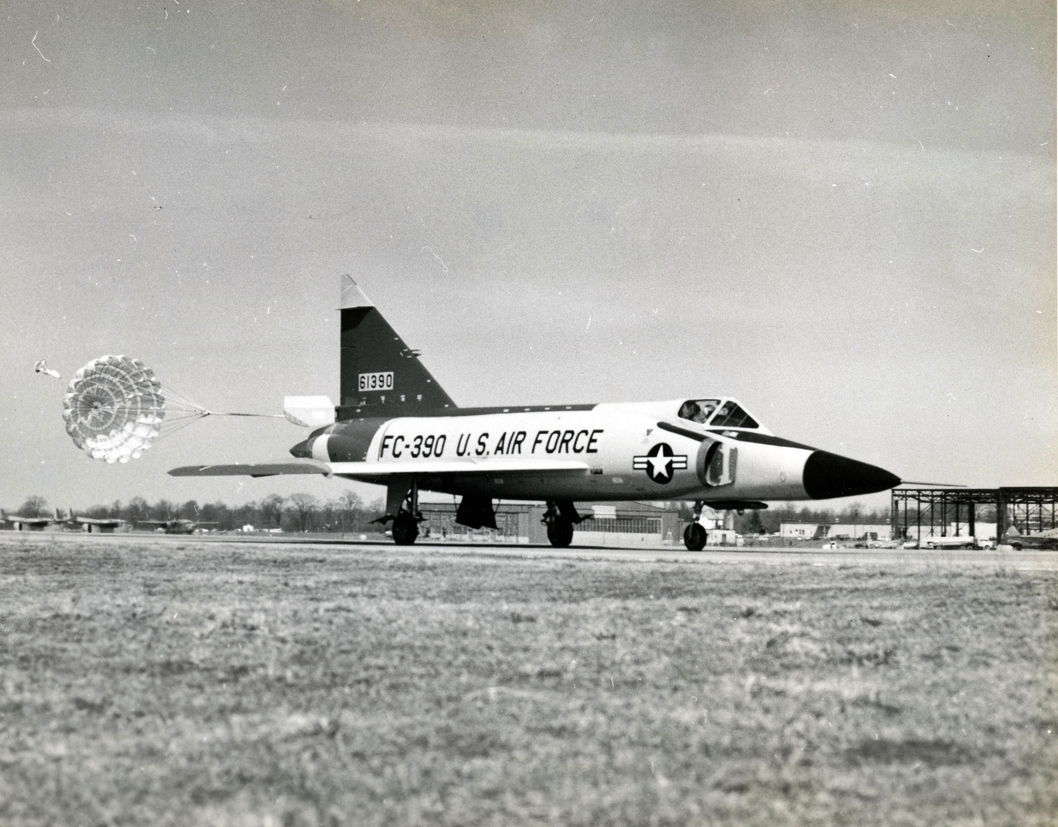
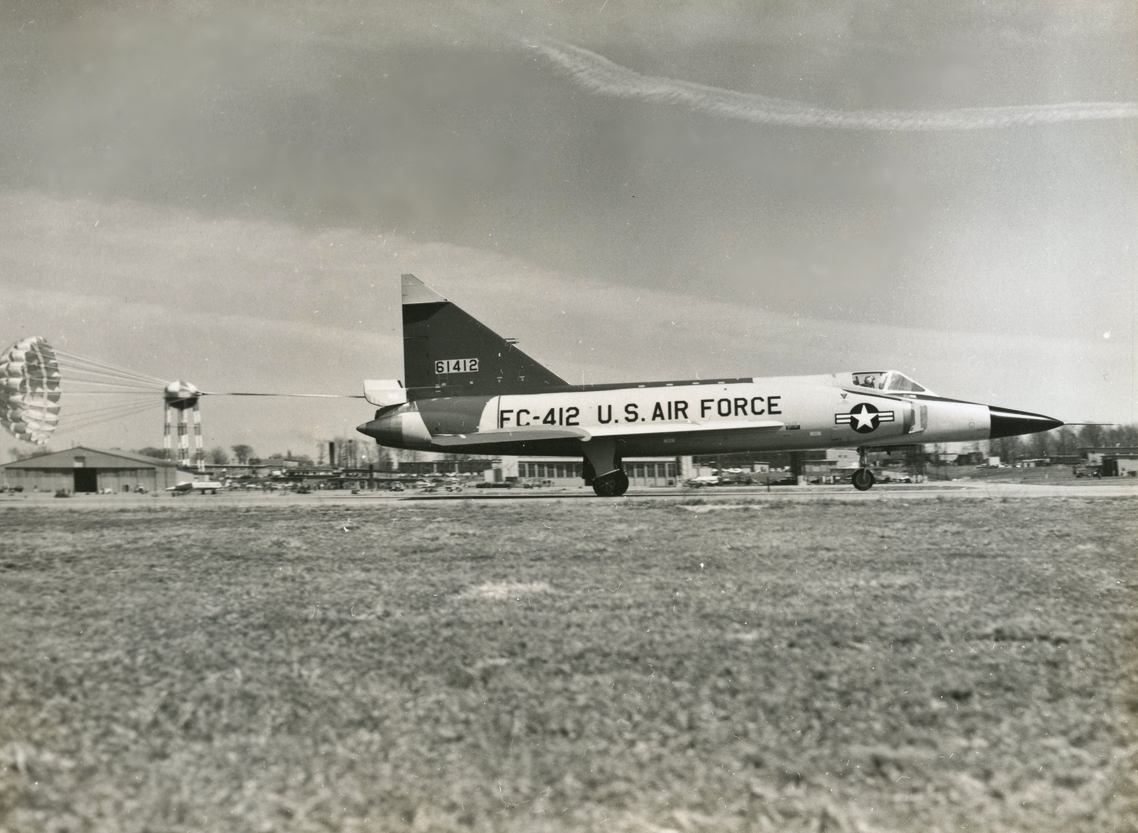
56-1390 on roll-out at Truax AFB, 1958.
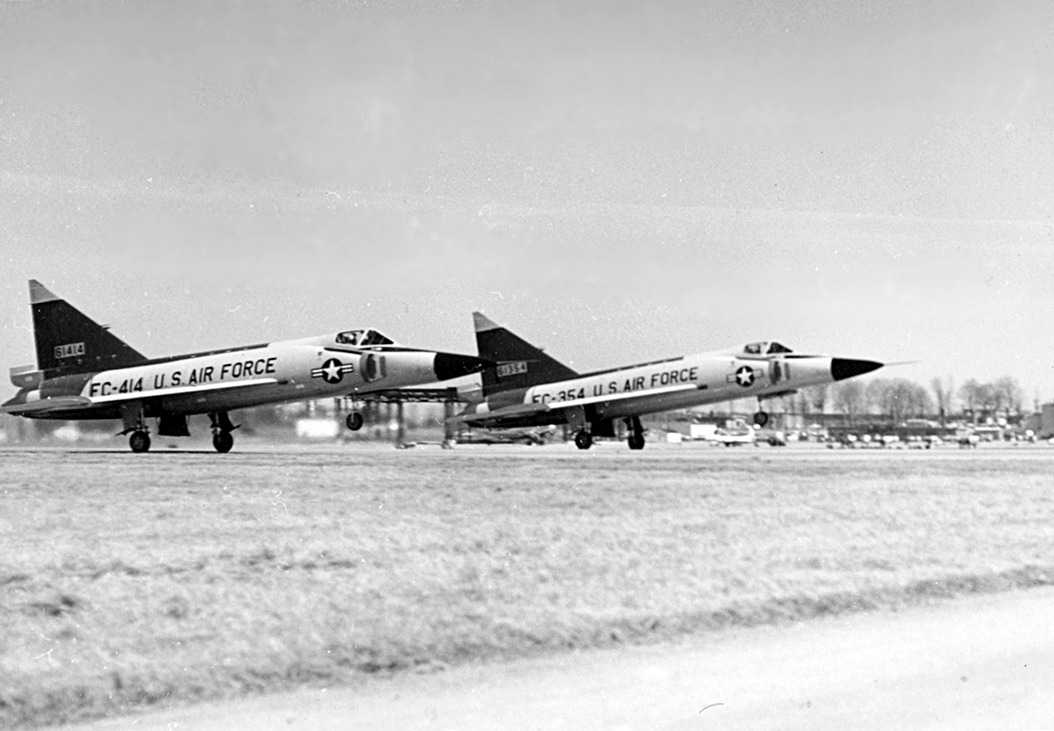
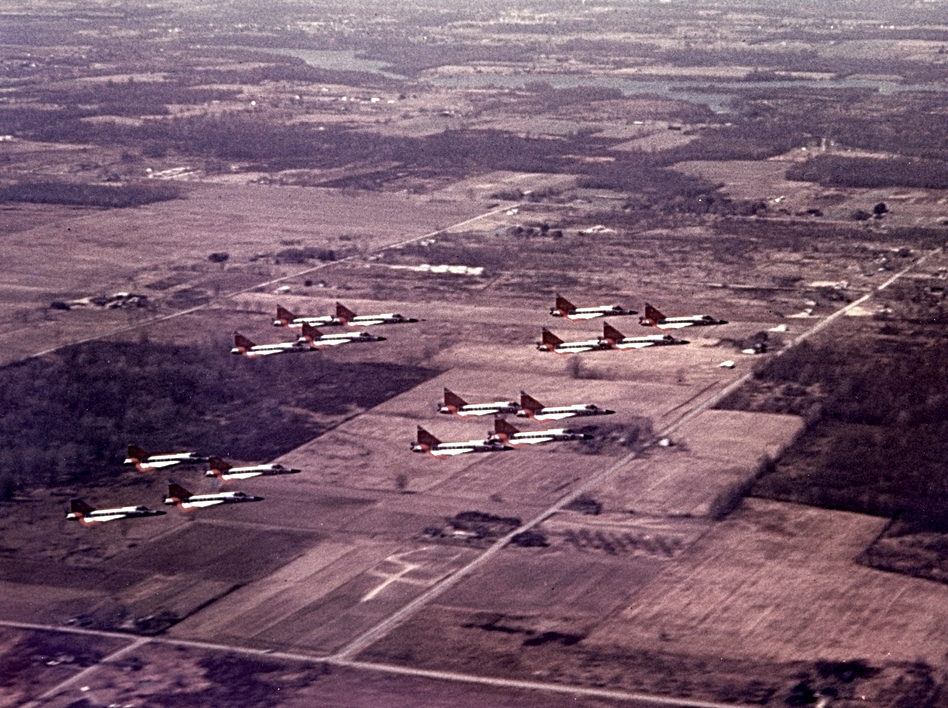
56-1412 speeding past what is now the ramp for the Wisconsin Air National Guard.
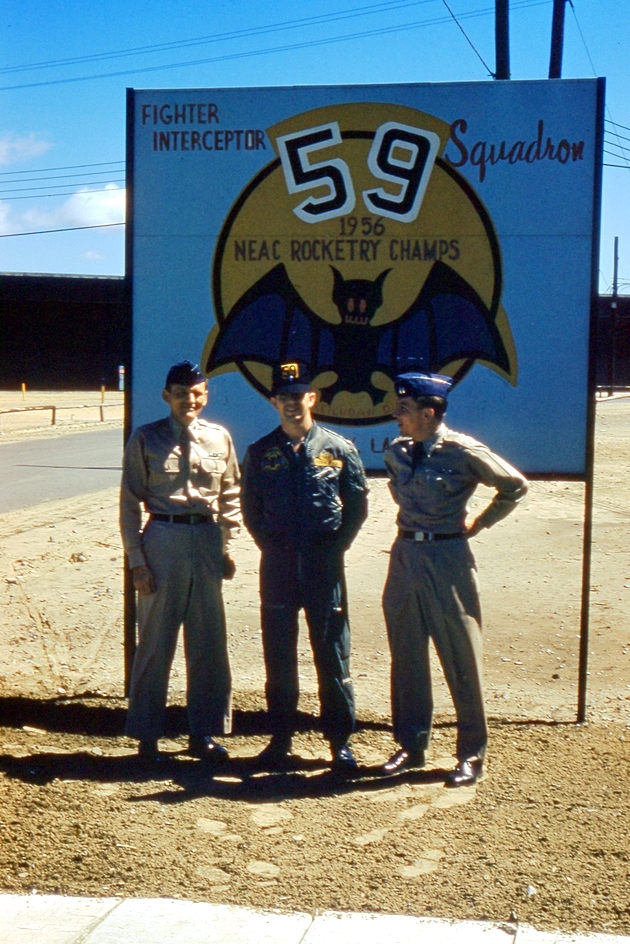
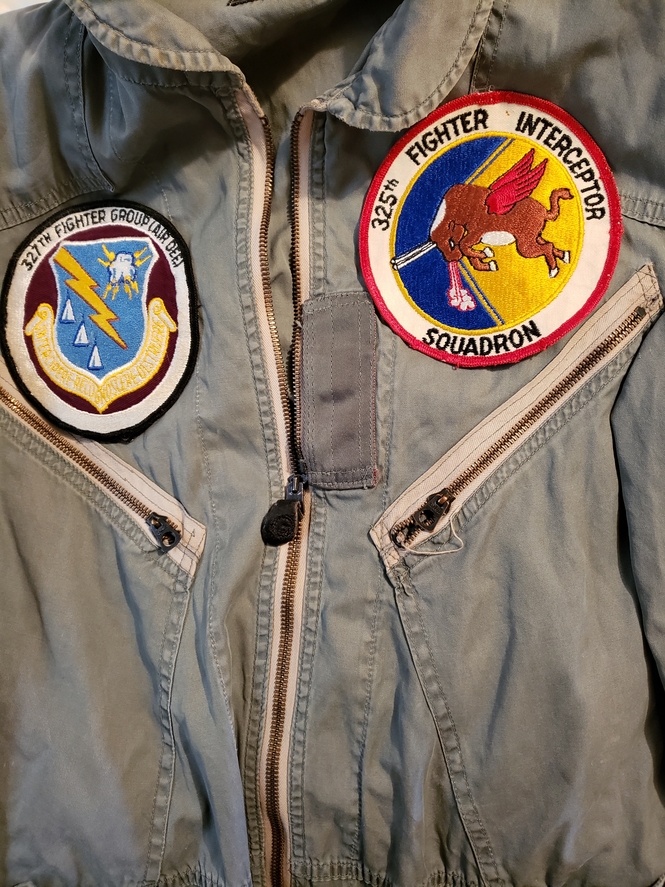
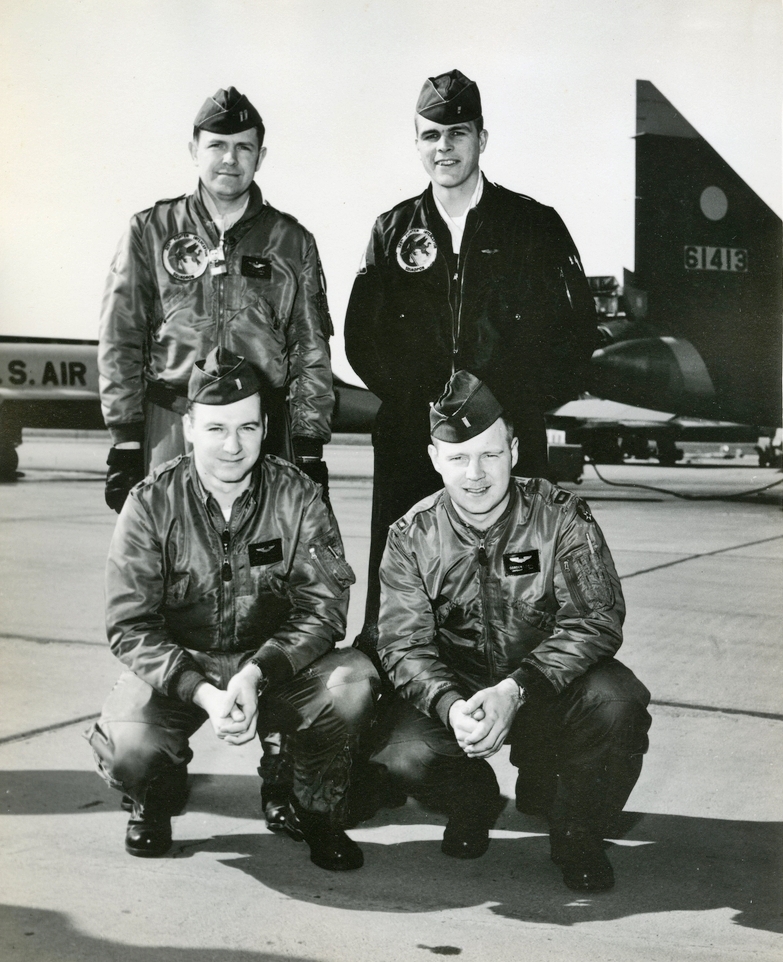
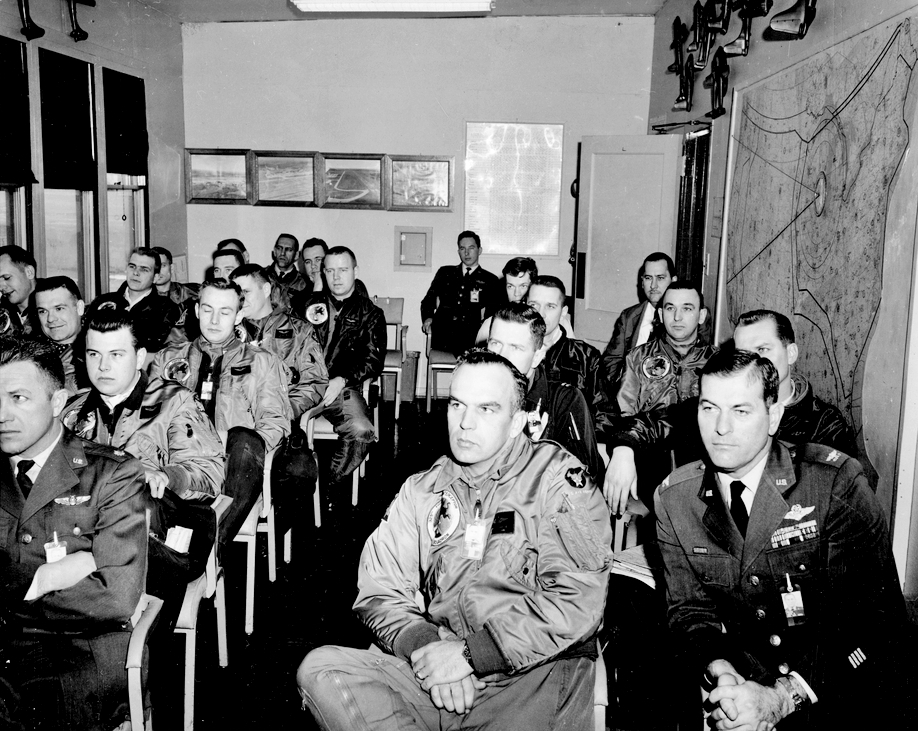
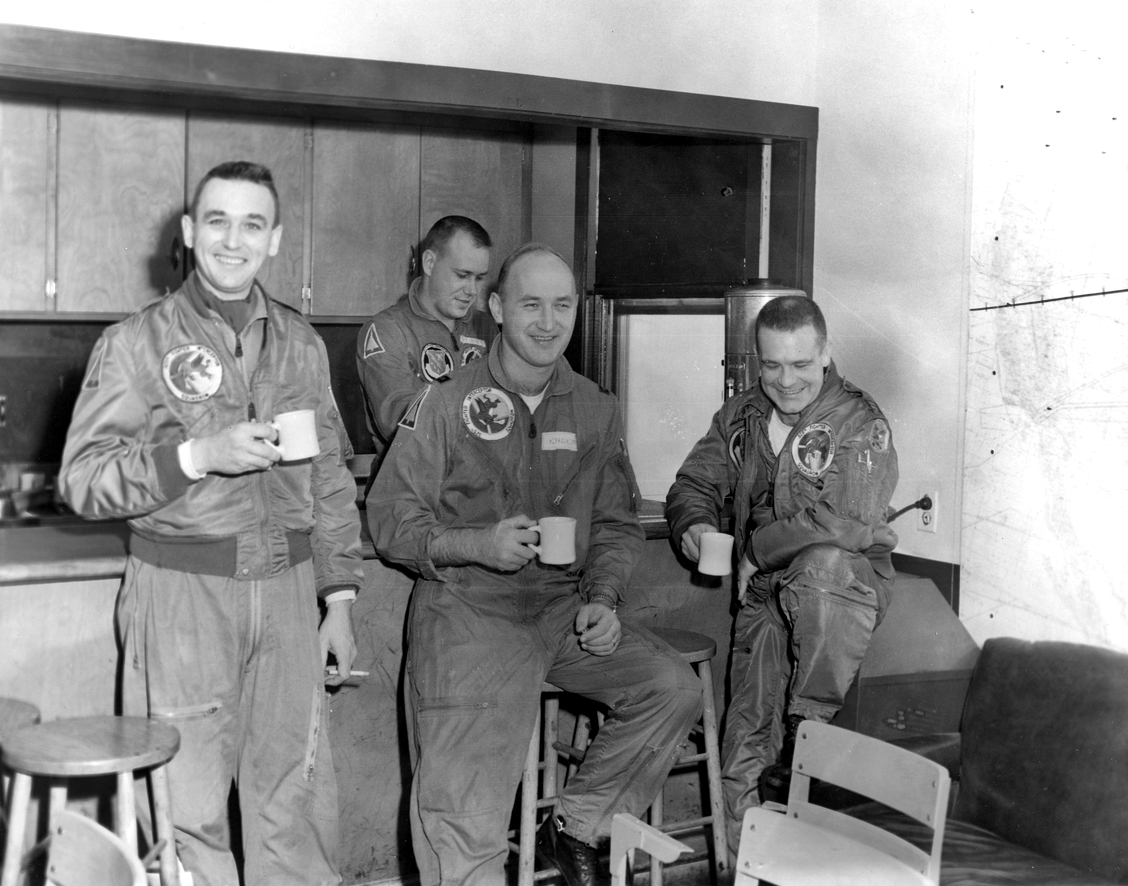
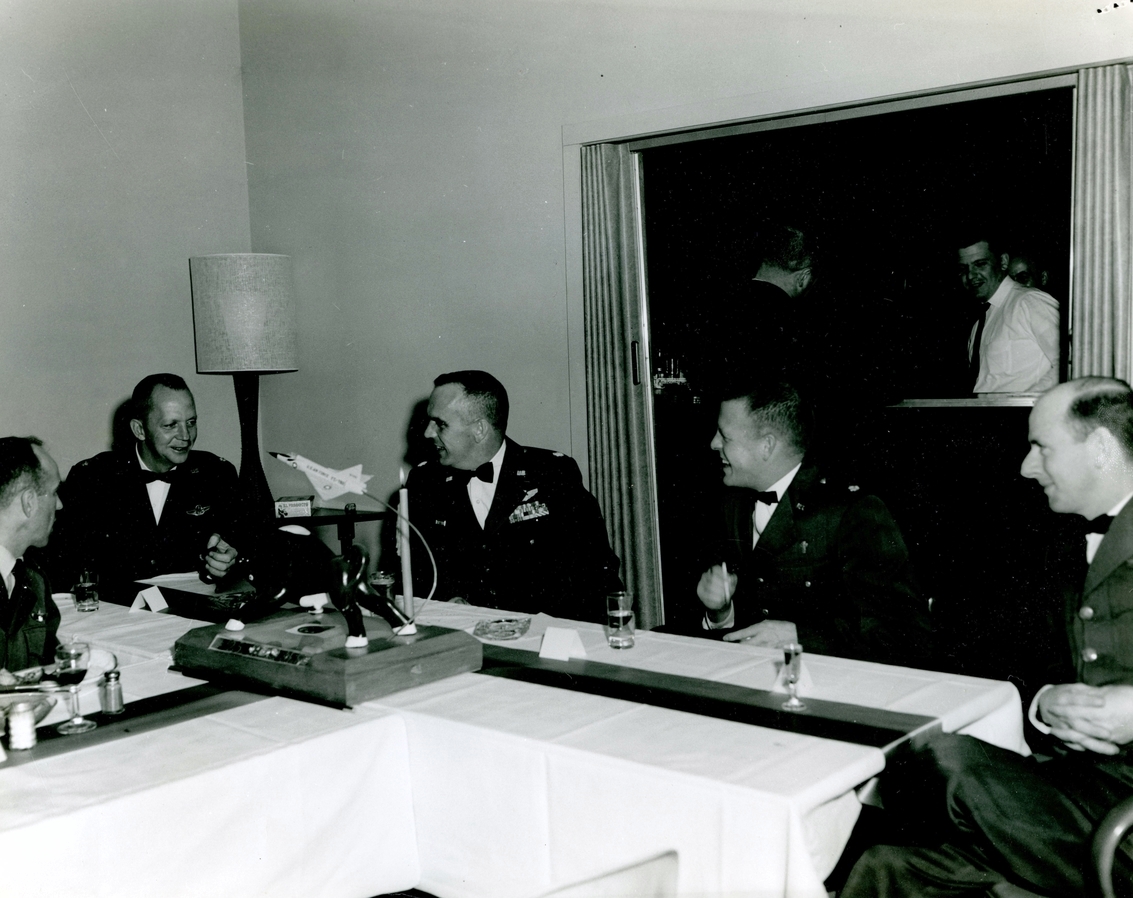
Beck and his fellow pilots enjoy a squadron “dining in” at the Truax “O” club. Note the F-102 model mounted above the red bull mascot of the 325th.
These fuzzy-sweater wearing air show fans picked out a pretty good spot to watch the Blue Angels at NAS Whidbey in the early 1960’s. Try this with today’s average car and there would be two human-shaped dents in the paper-thin tin can metal roof, whereupon the car manufacturer would be sued for not placing a warning in the owner’s manual to “Never lie on the roof of your vehicle, especially when it is in motion” etc. etc…
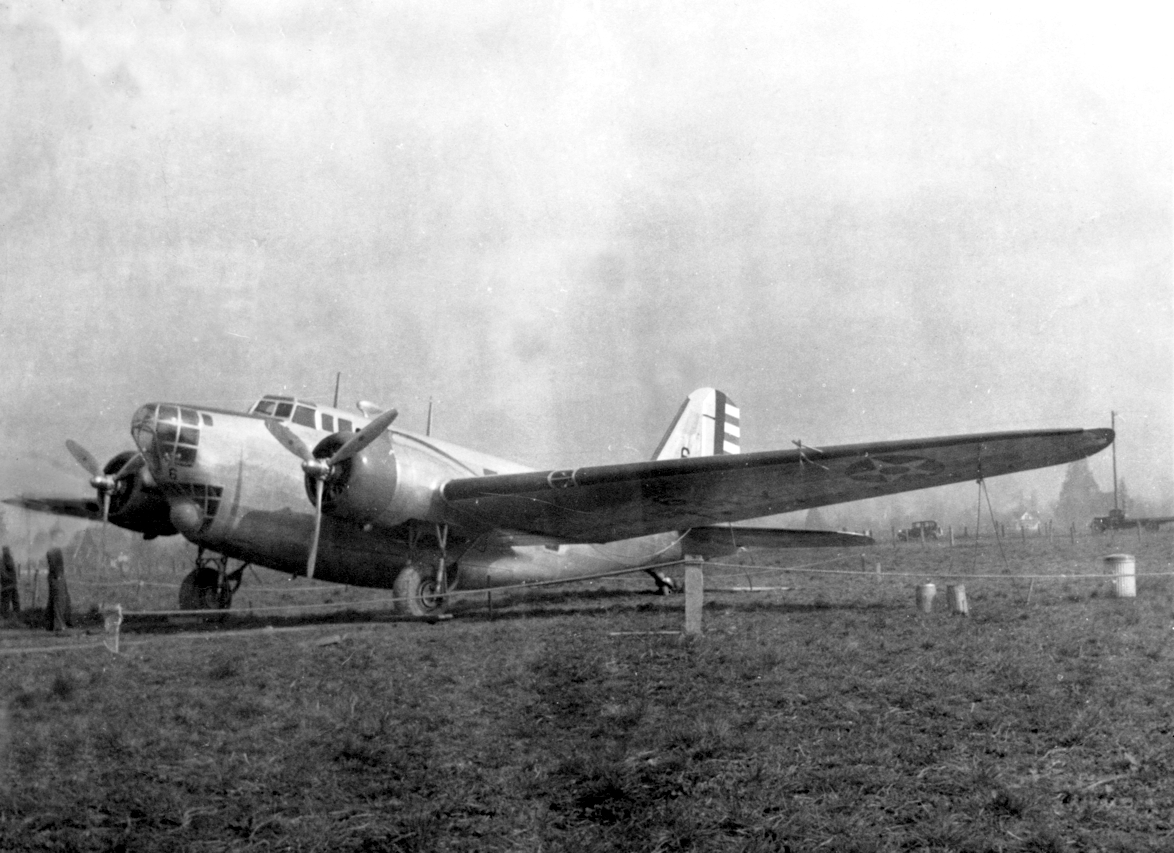
Photos #1 & #2 show a squadron of O-47’s lined up while on maneuvers at the Malone, NY, airfield. A couple of BT-2’s and a B-10 are thrown in for good measure.
A mass of struts and wires, an O-43 waits beside the less strutted (but less graceful appearing) O-47’s.
Classy gas truck fills up the beasty O-47’s.
Lt. Howard Means and crew deplane after a grueling mission over upstate New York.
O-43 (33-271) gets a few tweaks before darting back in the sky.
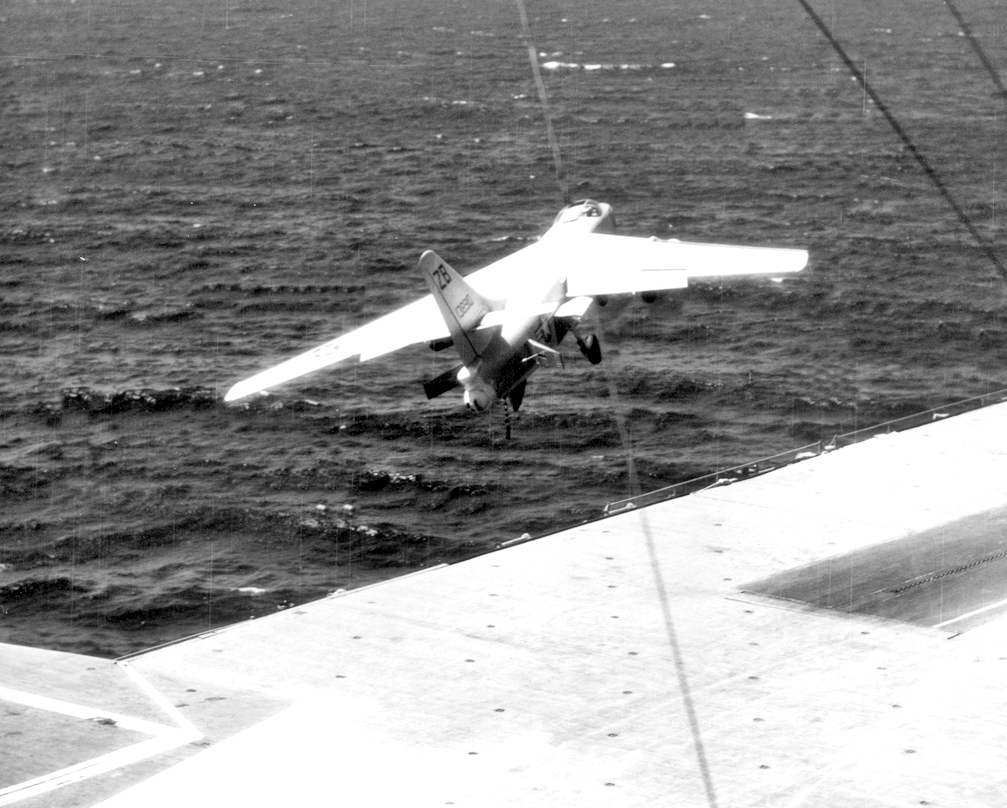
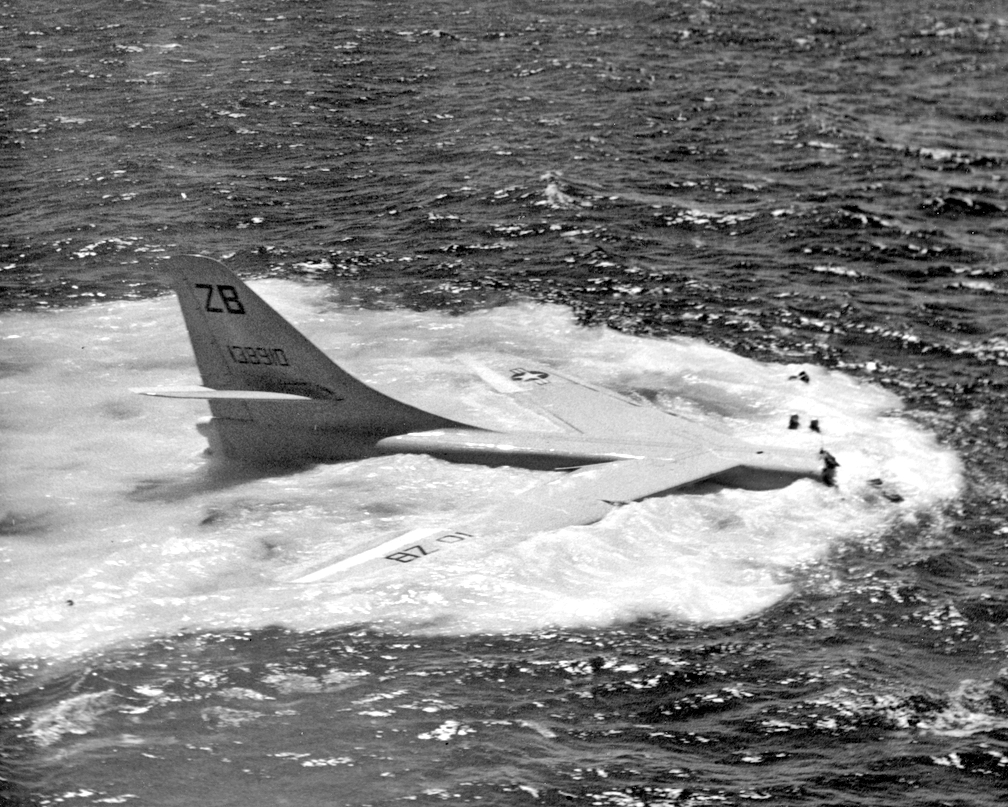
“Miss Naval Air Station Whidbey Island” and her court wave hello to the good folks of Oak Harbor, WA during the town’s 1961 Memorial Day parade. Don’t know what that A3D Skywarrior is made of, but I would like to have it hanging in my house.
Passengers on the liner S.S. Olympia wave hello to the crew of an HO4S-3 (55875) of the Royal Canadian Navy in the autumn of 1963. The vessel, bound from New York to Europe, has now entered Canadian waters thus entitling the boys of the RCN to drop down for a look-see.
Basking in the warm (and humid) New Jersey sunshine, F-106A 57-2459 of the 539th Fighter Interceptor Squadron shares the ramp with an MC-131A and an F-105B. All of these aircraft were based at McGuire. Our F-106 had a long life, but she ultimately came to her end after being picked to pieces to keep other 106’s flying. Our MC-131 (52-5785) too had a long life but with a happier ending: After her USAF days she went to the Coast Guard, but is now on display at the Castle Air Museum in California. The F-105 (57-5784) spent most of her long career with the New Jersey Air National Guard (as seen here), but was saved and is now on display down Mexico way.
The crew chief and pilot of F-84E 50-1125, 474th Fighter Bomber Wing, standby for another trip “Up North.” Judging by the markings below the canopy, this will be its 24th mission.
T-33A 51-4113 gets a going over. Note the painted over “buzz number” on the nose.
F-84E 50-1157 of the 27th Fighter-Escort Group.
Another Kunsan-based unit was the 3rd Bomb Wing with its B-26 Invaders.
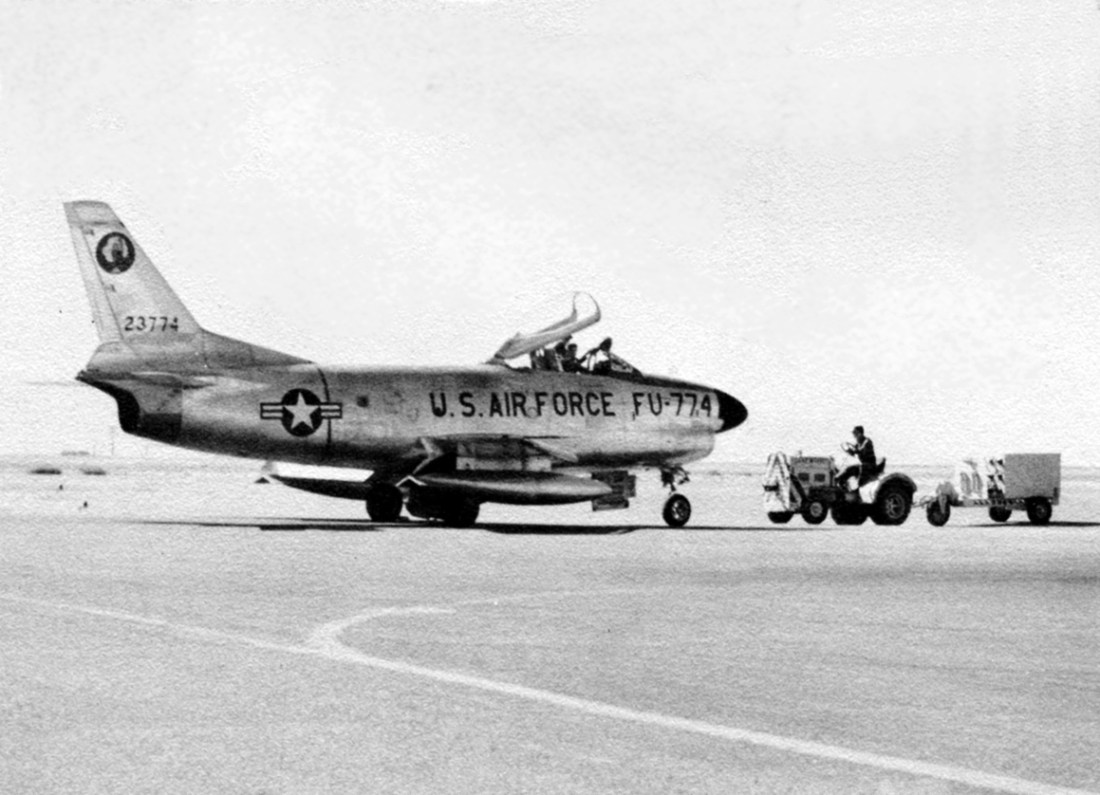
Originally a TF-80C and renamed (of course) the T-33A, 48-370 was in fact the 15th of these aircraft built. Truly, an early T-Bird. The photo says “Selfridge Field”, but the T-33 belonged to the 3525th Pilot Training Wing at Williams AFB, AZ (says so under the cockpit sill). However, the pilots wear the crest of the Selfridge’s 56th Fighter Interceptor Wing on their epaulets and the background does not look very Arizona-esque. Lt. Leonard Lilley, on the right, wears a US Army hat, so this is during the uniform transition period of the late-40’s to early 50’s. Note the stars denoting victory markings on the nose. Some of those markings may reflect the fact that the aforementioned Lilley shot down 7 MiGs during the then ongoing Korean War.
Cruising gracefully, a pair of F-101B’s of the 18th Fighter Interceptor Squadron show their sleek lines to admirers below. 58-0324 is now on display at Palmdale Airport, CA. 58-0339 was less fortunate and was chopped to pieces in the 1980s.
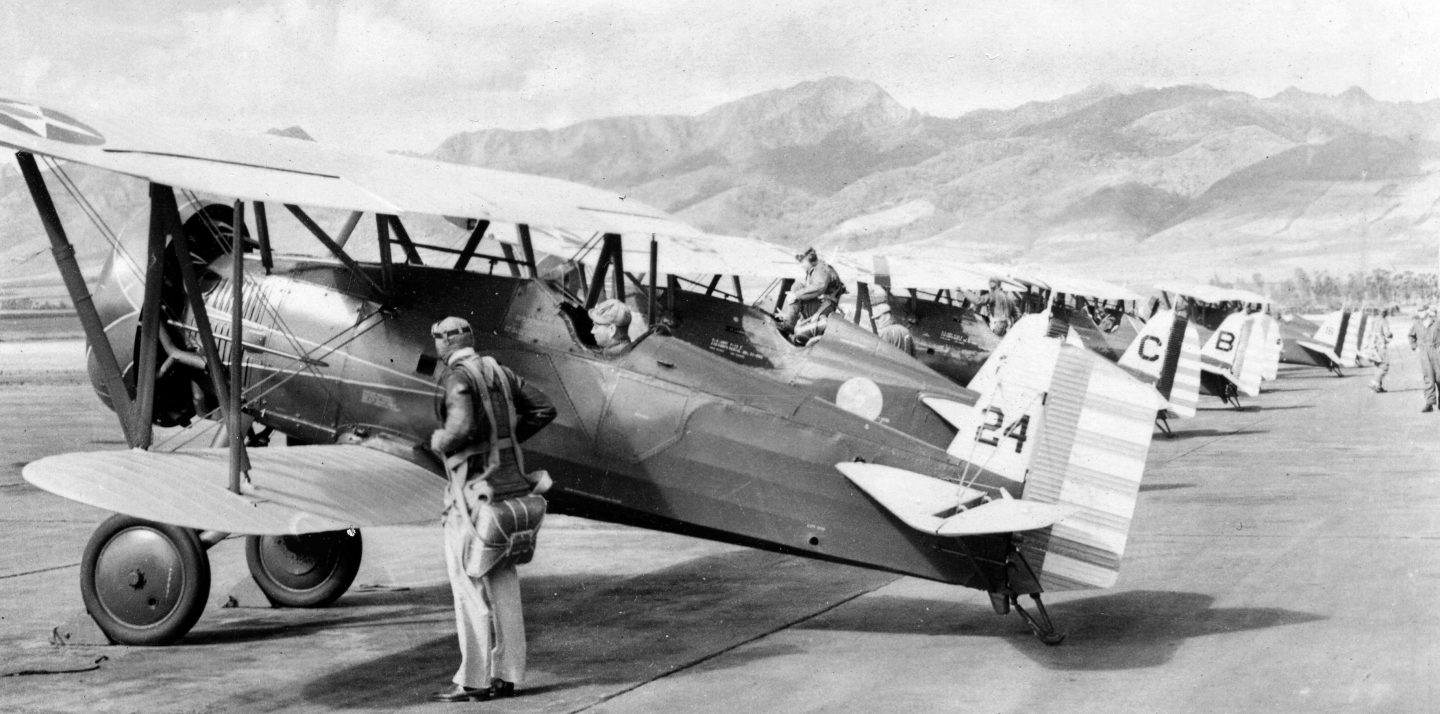
Engines are warming up as ships of the 19th Pursuit Squadron prepare to take to the Hawaiian skies in the early 1930s. The P-12E in the foreground(31-565) is the personal mount of the 18th Pursuit Group. Most of the aircraft are “C” models, but there are a few “E’s” seen as well (taller horizontal stabilizers).
RB-57’s and RB-26’s of the 363rd Tactical Reconnaissance Wing bask in the South Carolina sunshine. With their black paint jobs, the interior of these aircraft must have been hotter than an atomic sauna.
PS. Whatever 1950’s chemical is in those green barrels killing the grass beneath would probably drop a man dead with one sip.
More RB-57’s. The hangar under construction is still in use today.
C-119’s and RB-26’s.
More C-119’s and RB-57’s with a couple of RT-33’s in the distance. Constructed in 1941, Shaw was slowly modernizing in the 1950’s but there are still plenty of WWII buildings in the background.
F-86s arriving at Shaw on a cross-country hop from Alexandria AFB, LA. Renamed later that year as England AFB, it was, in 1955, home to the 366th Fighter Bomber Wing and their Sabres.
The Chinhae Air Base flightline is a flurry of activity as F-51’s of the 67th Fighter Bomber Squadron are refueled and rearmed for another strike on the attacking North Korean and Chinese forces. As pilots dash back and forth, maintenance men and armorers are swarming the aircraft. By the time this busy day was done, there were going to be quite a few less enemy troops than when it began.
F-5 42-13095 of the 12th Photo Recon Squadron zooms in for landing at its base in Italy. This aircraft carried three names: “Shark” on the nose. “Louise” on the left engine nacelle, “Vera” on the right.
Two shots of “Anna” landing in Italy. Note the local civilian onlookers.
F-5 “Hoppy” flares for landing.
F-5F 44-26045 was transferred to the Chinese Air Force. The same thing happened to the B-24 in the background, 44-42270. Perhaps all of the aircraft pictured were similarly transferred (?)
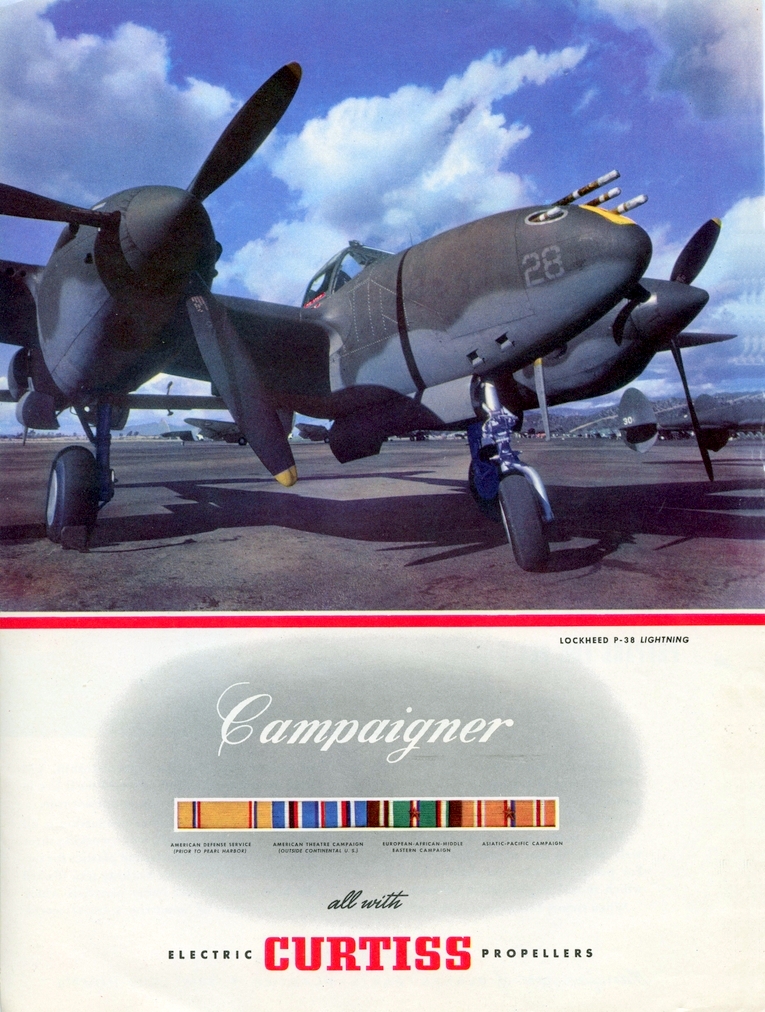
P-38J 44-25605 was modified to a personal transport for General George Stratemeyer. Perched in the Plexiglas nose, he had the best seat in the house.
There were worse places to be stationed in the 1950’s USAF. Home to a number of aircraft (including these KC-97’s of the 303rd Air Refueling Squadron), Kindley eventually lost its usefulness to the Air Force, but that was fine by the Navy who set up shop there and reamed the base NAS Bermuda.
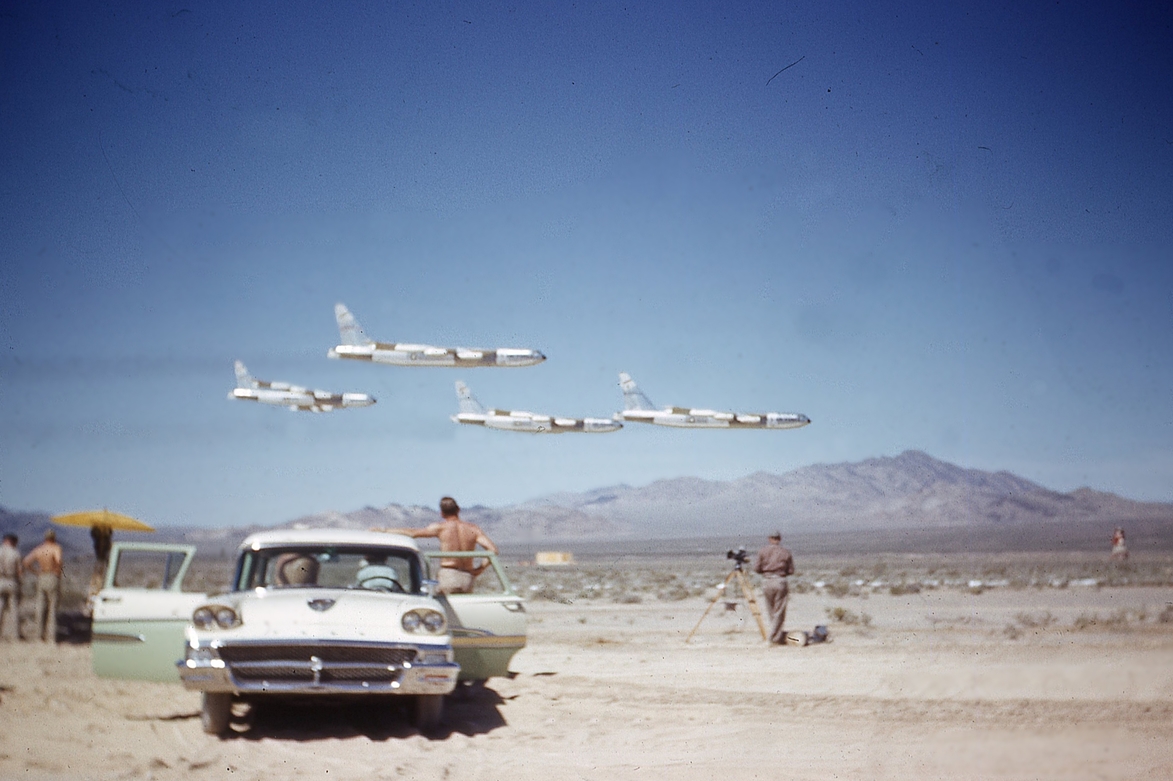
I do not know what the occasion was, but these bombers are not what one typically finds crowding your city airport (there are at least a dozen B-47’s), in this case, Sky Harbor Airport in Phoenix. Judging by the vehicles at the Avis Rent-A-Car, I would say this slide photo dates from circa 1954. There is a 1962 date stamped in the slide, but I think that is when a copy was made. My evidence: the B-47’s in 1962 wore different markings, and, the rental cars are all early to mid-1950s vintage – a company like Avis would have much newer cars on the lot way before 1962.
With all four turning, Dad looks things over from the right seat in the late 1950’s. He was giving a check ride to a new captain.
Aloha for gaily colored shirted and lei bedecked “Air Tourists” as they deplane during an early evening arrival in Honolulu. I say “Air Tourist” because that is the logo next to the door. This DC-6 (N37544) was delivered in 1950 and flew many a mile for United.
United Flight 2609 is readied for another load of revenue. (Note the “Flight 2609” sign in the rear window.
On August 28, 1945, PB2Y-5Z (7073) was the Coronado flying boat that flew Admiral Nimitz from Saipan to Tokyo Bay for the surrender ceremony aboard USS Missouri. Having completed their mission, the Coronado crew had nothing else to do but wait for Admiral Nimitz to complete his historical mission. The perfect time to catch up on such chores as laundry.
This PB2Y was modified to a VIP transport complete with a flag officer cabin. I assume the pants swinging in the breeze were dry before the admiral had a chance to see how useful the twin tails truly were.
When photographed by yours truly at Taegu Air Base in 1990, these were Republic of South Korea Air Force (ROKAF) birds. Ah, but in the days of the Korean War, they belonged, respectively, to the USAF’s 311th Fighter Bomber Squadron and 16th Fighter Interceptor Squadron. Of course, in 1990, these Sabres (52-4829 and 52-4526) were no longer front-line aircraft, but they were still lingering about the base. Camouflaged 526 was not going anywhere soon, but 829 was.
Story as follows: We USAF guys were tenants of Taegu. Both us and our ROKAF hosts flew variants of the F-4 Phantom and therefore shared certain facilities. One of them was the “trim pad” – the engine run-up area. We had an RF-4C that needed the use of said trim pad and, having been told it was in use by the ROK’s, I drove over to ascertain how long they would be. To my complete surprise, there sat this F-86, 829. As seen by 526, there were several rather sorry looking Sabres scattered about the base, but I had no idea they also had a flyable one. And flyable it was; the next day I saw it streaking over the base. I learned from a ROKAF friend that when their general needed to get his hours he didn’t do it in some new fancy jet like the F-4 or F-16. No, he strapped on the bird that he had cut his teeth on, the F-86 Sabre.
A jolly group of passengers about to embark on a PAA (Pan Am) Sikorsky S-38 at Key West for a weekend frolic in sunny Havana. I do believe Pan Am boss Juan Trippe is in both these photos. Havana was a hot spot for travelers in Prohibition-era America. Take the train south to Key West, hop aboard PAA, and voilà: you were in boozeville. This planeload of flappers and their Beau Brummells are in for a heck of a good time. F. Scott Fitzgerald would approve.
A Boeing bomber 4-ship consisting of the B-52, B-47, B-29, and B-17. This B-52C (54-2676) crashed in 1957, the B-47E (52-0165) of the 9th Bomb Wing was scrapped. Now the two oldtimers up top, B-29 44-62022 and B-17 44-83684, survive to this day in museums.
Little do the men working on these factory-fresh Fortresses realize that over half a century will pass and these planes will still be flying. The four tail numbers I can make out (60-0004, 0038, 0041, and 0043) are in service today. Location is the flightline at Wichita, Kansas.
It’s about 1955, and the Dash 80 is on an early test flight over Port Townsend, WA. Below its nose is Fort Worden, a Coast Artillery post from the late 1800’s. Whidbey Island is in the background.
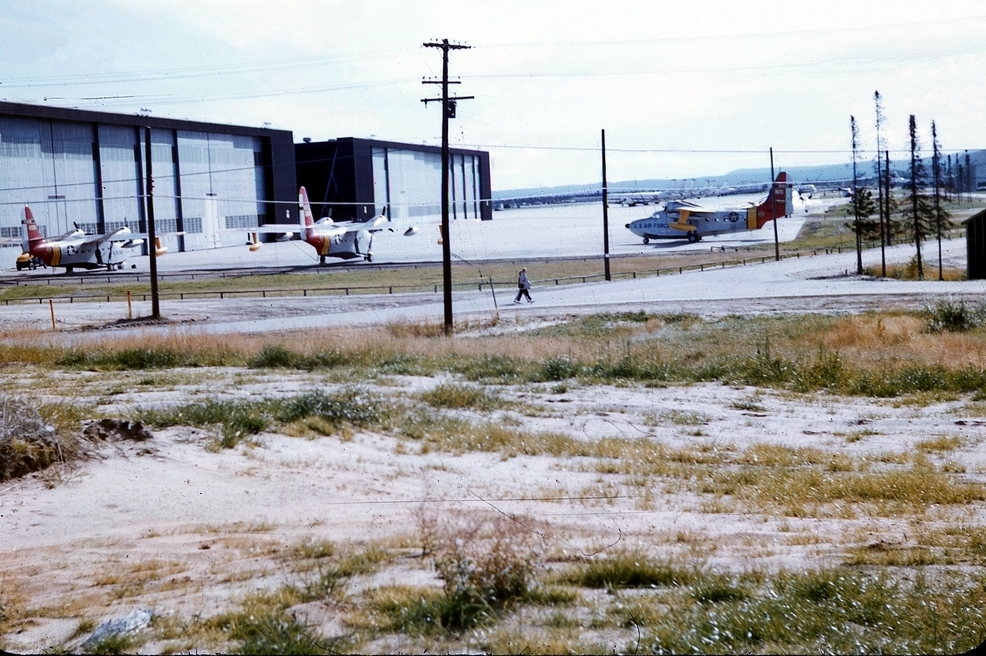
This airframe, 133398, lives on today at the Canadian Air Land and Sea Museum in Markham, Ontario. Hopefully, it will return to the condition seen here. “Canadair” – one of the more nifty sounding names in aviation history.