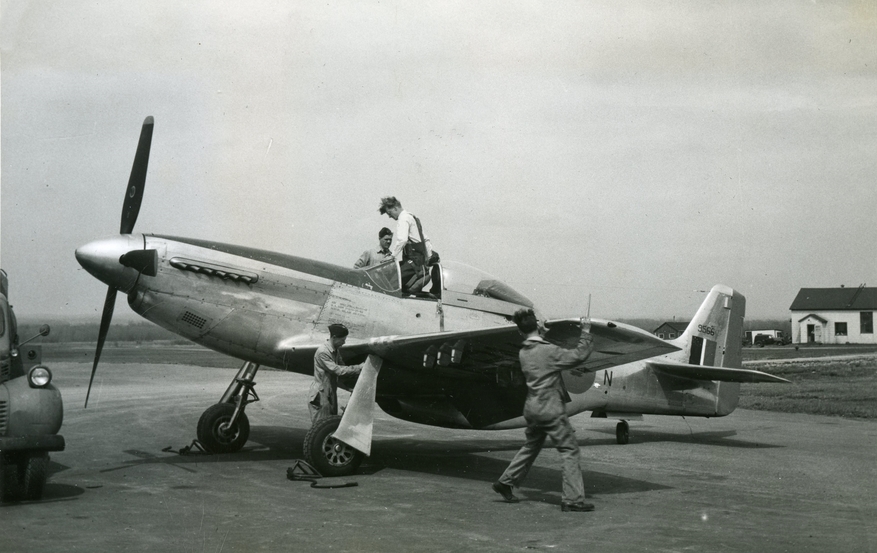
The Boeing 247-Y


Nose gun installation. Note the former serial number “366”.

The two forward rows of seats were removed to allow the installation of additional fuel tanks.


Cockpit of the 247-Y had the addition of the gun charging handles seen jutting from the instrument panel in front of the pilot’s yoke.
A one of a kind aircraft if there ever was one. When this Boeing 247 began life with United Airlines, I doubt many believed it would end up being converted into a warplane, but that is precisely what Boeing itself did. NC 13366 earned money for United until they retired the 247. Boeing then reacquired the aircraft to fulfill a rather unusual request to turn it into a militarized airliner for China. This Boeing obviously did.
Remembering Pearl Harbor
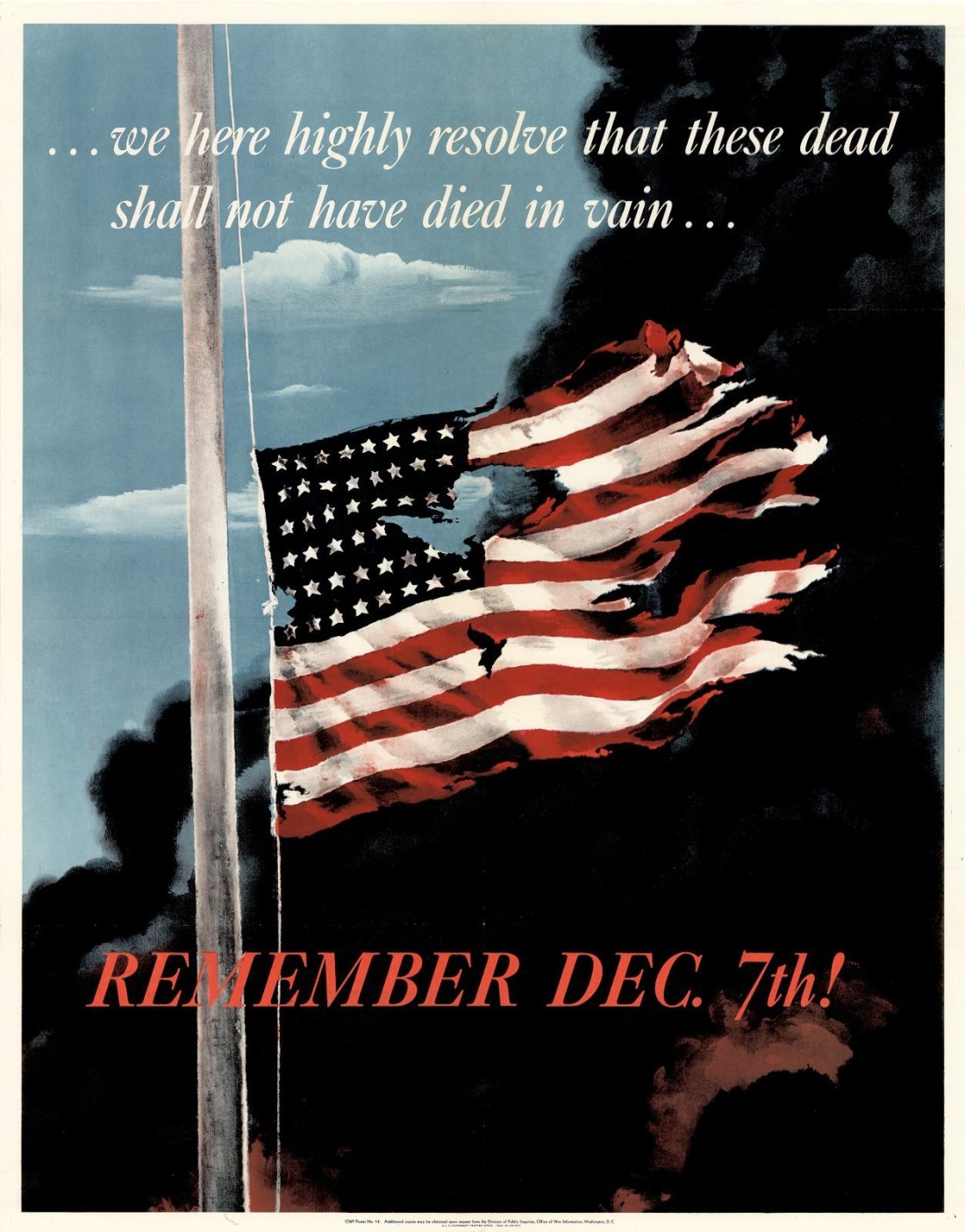
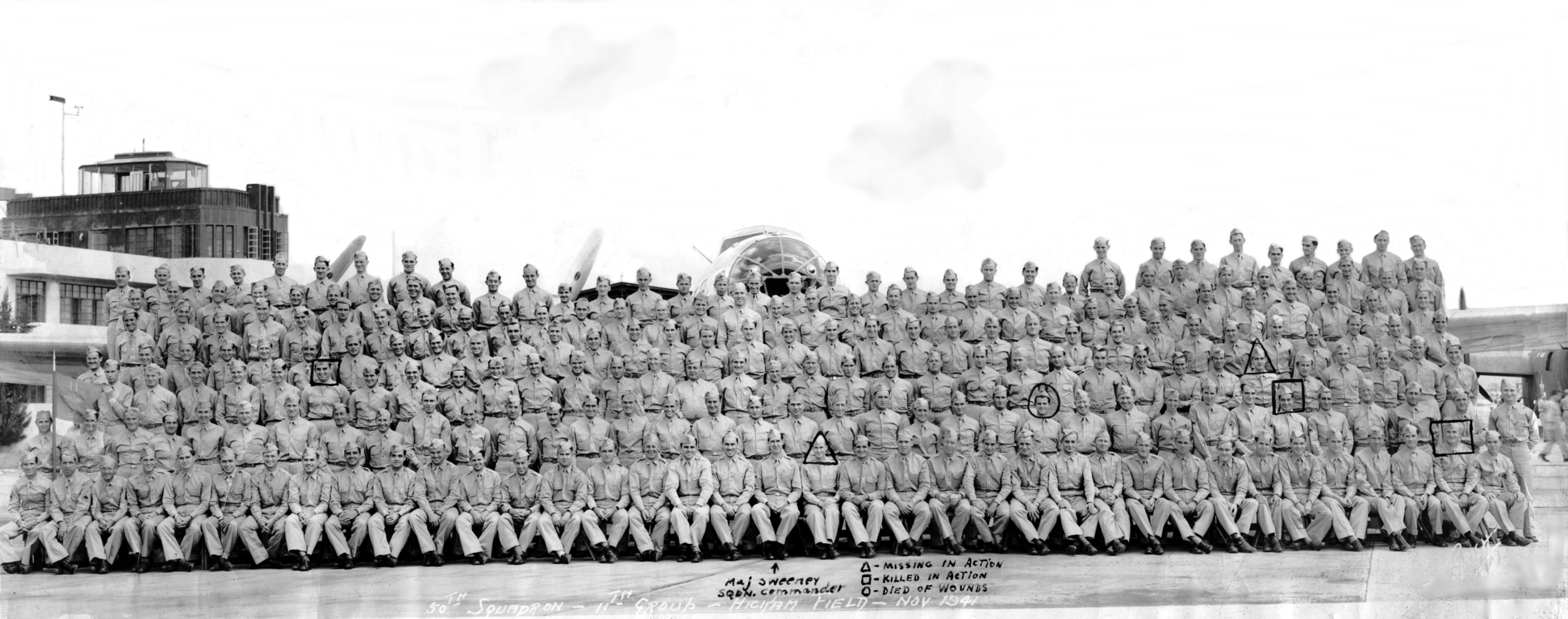
It is late November, 1941, and the men of Hickam Field’s 50th Reconnaissance Squadron pose for a photo to send home for Christmas.
These men could not possibly imagine that even as they smiled at the camera, plans were already underway for their demise. Nor could they imagine that some of them have less than two weeks to live. For those who do survive, it will be an event that will mark them for the rest of their lives.
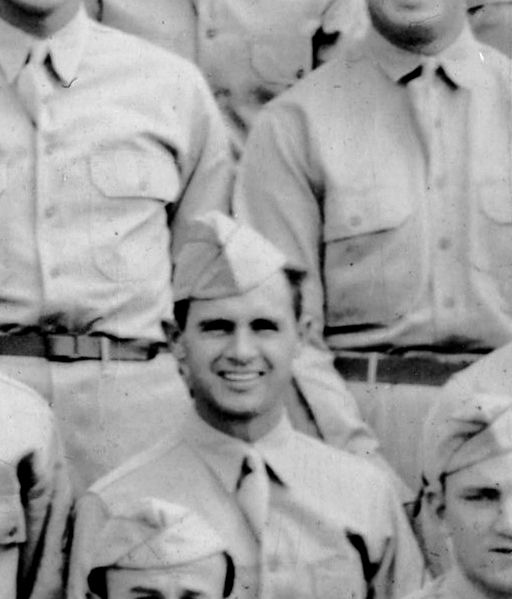
One man who lived through the attack was PFC William P. Stroud Jr. (4th row, 4th from right in the group photo). A flight engineer in the 50th Recon Sq., Stroud was in the barracks when the attack began. (That barracks, just across the street from the flightline and hangars, bears to this day the scars of the attack.) Despite the madness of that morning, William Stroud kept his cool. Knowing where he was needed most, he raced across the street to the flaming flightline to lend assistance. The squadron’s aircraft were already destroyed, so he grabbed a rifle to get in the fight. And a fighter he was. Following the attack on Pearl Harbor, Stroud won his pilot’s wings, flew B-24s, and in his numerous combat missions earned the Silver Star and Distinguished Flying Cross.
Stroud, soon to be tested in battle, was identified in the group photo by his granddaughter, and it is a pleasure to single out and salute such a courageous young man.
It is well that we remember both those who lived and those who lost their lives that fateful morning. As the original owner of this photograph indicates with his annotations, some would not survive December 7th, but they were never forgotten by those who did.
~”They shall grow not old, as we that are left grow old:
Age shall not weary them, nor the years condemn.
At the going down of the sun and in the morning
We will remember them.” ~
Willis B. Haviland – Pioneer American combat pilot.


Willis Bradley Haviland (1895-1944) was the 16th aviator to join the famed Lafayette Escadrille, the result of which is that he is one of the first Americans to engage in aerial combat. Joining the navy after America’s entry into World War I, he is seen here during World War II when he served as the first Executive Officer of NAS Whidbey Island, and then its second Commanding Officer.
In these photos, Haviland is seen standing on the left in front of a SB2C Helldiver, and center, before a JRF Goose during a visit to NAS Seattle. In honor of the former skipper, a hangar is named for him at NAS Whidbey.
Back when orange flight suits were the thing…


Here are 1960s flight suits from two of the USAF’s F-106 units: The 95th and 5th Fighter Interceptor Squadrons. Based, respectively, at Dover and Minot AFB, these squadrons were both long-time operators of the “Six”.
PB4Y, 1945
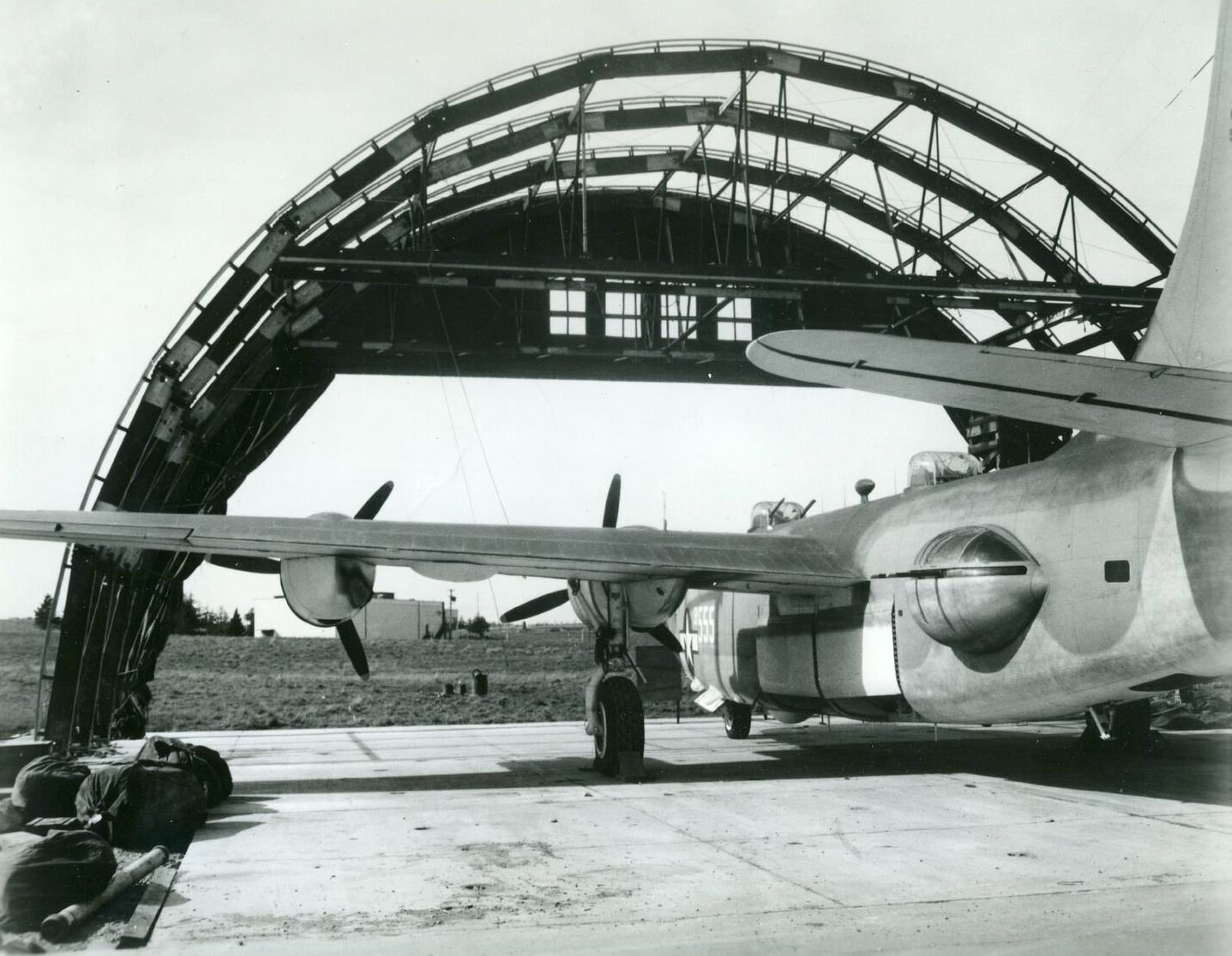
A PB4Y Privateer enjoys a sunny day at NAS Whidbey Island’s Ault Field in 1945. Given the obvious lack of protection from the as yet unfinished hangar, it is just as well that it is a sunny day. In the background is the base theater – still in use as such today.
1942: The first PBY arrives at NAS Whidbey
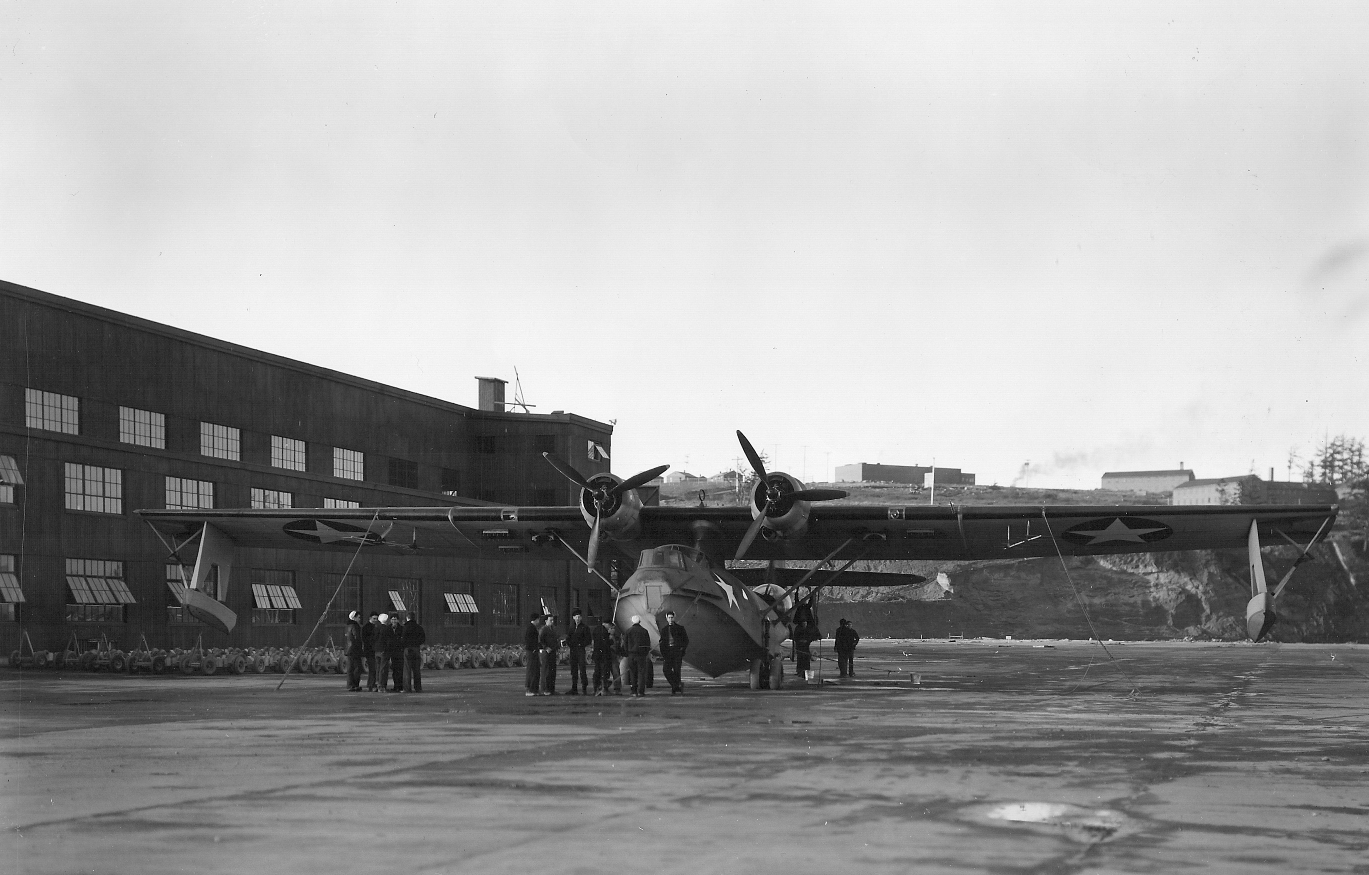
The date is December, 1942, and this is the first PBY to arrive at the brand new NAS Whidbey Island seaplane base. (Note the construction material littering the ramp in the background.) The installation was intended to be a support facility for PBYs from NAS Seattle, but even before work began the plan was altered to where Whidbey would be its own base.
This PBY’s arrival was not without some apprehension. The pilot, Lt. Morrison, stated that he circled the area for quite some time before spotting the “red girders of the seaplane hangar under construction.” Even then he had to land four or five miles out due to an abundance of logs floating in the harbor. After carefully picking his way through the debris he was met by a boat that succeeded in clearing a path for the incoming aircraft.
This hangar (minus the ordnance carts parked alongside) still stands today, but with a different mission: It is now the Navy Exchange (NEX) department store. From this angle, the former hangar looks pretty much the same now as it did then.
“Lone Ranger” – The XPBB-1

Boeing plant at Renton, WA three weeks before the first flight.


Good view of the internal bomb bays. Boeing obviously factored in the loss of lift that would be experienced with these doors open. Judging by the lunchboxes at lower left, the men are anticipating a long day.


The open overhead hatch tells us that this is a high speed taxi test.

Famed Boeing test pilot Eddie Allen takes in the view while the XPBB is towed to open waters on Lake Washington.


The XPBB-1 “Sea Ranger” was Boeing’s effort at fulfilling the Navy’s need for a better long-range flying boat. Such aircraft are always a battle between aero and hydro dynamic engineers, but the XPBB was a remarkably streamlined and efficient design. Internal bomb bays with sliding doors were incorporated into the wing were one such aerodynamic feature.
First flown on July 7, 1942, the XPBB proved a winner from the start and seemed to have a bright future, but…other forces were at work. Despite the Navy’s satisfaction with the project, Boeing’s talents (and factories) were needed for the B-29 program. This was given priority, and, with only one example built, The XPBB project was cancelled. The B-29 program, coupled with the Navy’s growing lack of enthusiasm for the future of large flying boats, caused the one and only XPBB-1 Sea Ranger to became known as the “Lone Ranger”.
Oddball Aircraft

The Westland-Hill Pterodactyl was one of a number of tailless aircraft designed by that firm in the 1920s. A revolutionary idea, but I have to say that in looking at this photo one would be excused for thinking it was the result of some dire mishap.

Due to its flying characteristics (to say nothing of its appearance), the Vickers Vulcan carried the nickname “Flying Pig”.

The YC-123 was fitted with skis, wing floats, and a host of other devices with the idea of having an aircraft that could fly (and land) just about anywhere.

VB-17G (44-83259) was a VIP transport for General Carl Spaatz during the time he was the Air Force’s first Chief of Staff. The aircraft was nicknamed “Boops” after his daughter.

Boeing’s XAT-15 was a promising trainer but was elbowed aside in favor of other designs. Somewhat of a throwback in construction (it used a lot of wood), the aircraft is seen here at Boeing’s Wichita plant (note the Stearmans in the background).

The XB-24N (44-48753) was another one-off Liberator, but not too bad an idea. It did illustrate that a B-24 was doable with only a single horizontal stabilizer.

The Vultee Vulture in its original configuration. With the snug-fitting engine cowl and nacelle, one could easily mistake the aircraft for having a liquid-cooled engine. It did not, but the engine didn’t like it so Vultee eventually opted for a more conventional open cowl.

The XB-24J (42-73130) was a one of a kind aircraft that incorporated the nose of a B-17G. (Translation: Okay, maybe that wasn’t such a hot idea after all.) Due to the numerous “Frankenstein” versions of highly modified B-24s, there must have been something about its design that caused engineers to have fantasies about modifying the aircraft into something it was never intended to be.
Hahn Air Base, 1956

T-33 16817 of the 50th Fighter Bomber Wing and F-86H 53-1429 of the 417th Fighter Bomber Squadron. The photo was taken April 28, 1956. Both aircraft would crash in the coming weeks.

417th FBS pilot explains the workings of the F-86 (53-1472) to an interested German civilian.

T-33A 51-6834 attracts a crowd of locals at the Hahn open house. When I was stationed in Germany, the annual “Flugtag” brought in huge crowds. Some came for the aircraft, others for the ice cream.

Air Policeman makes sure no one walks out the gate with a brand-new F-86.

T-33A 51-4502 assigned to Hahn’s 69th Tactical Missile Squadron. This aircraft was later sold to the Singapore Air Force and is now on display in that country.

T-33A hurries past the Hahn tower.

F-86H 53-1430 of the 417th FBS. This aircraft was the personal mount of Chuck Yeager when he commanded the 417th during this time.

417th FBS boss Chuck Yeager and pals with Yeager’s bird, 1430.
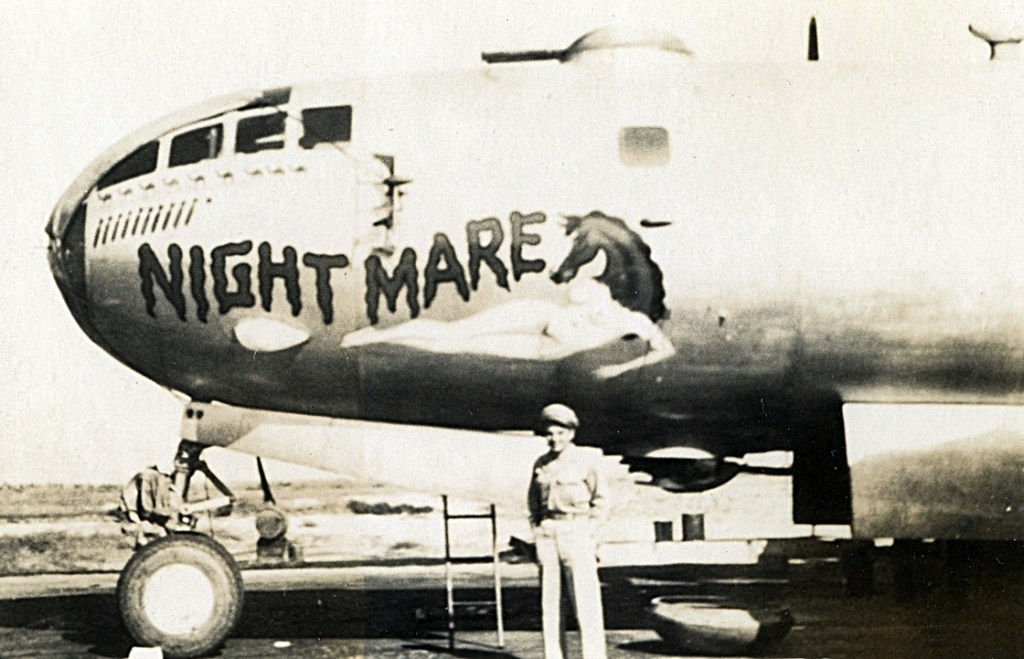
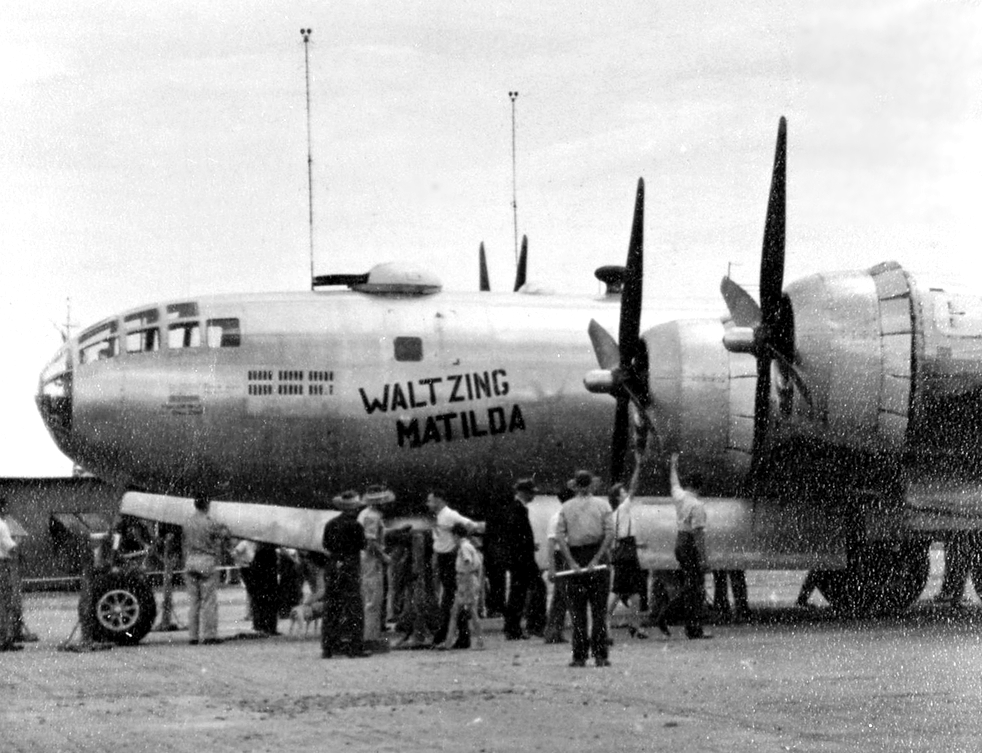
Some B-29 nose art


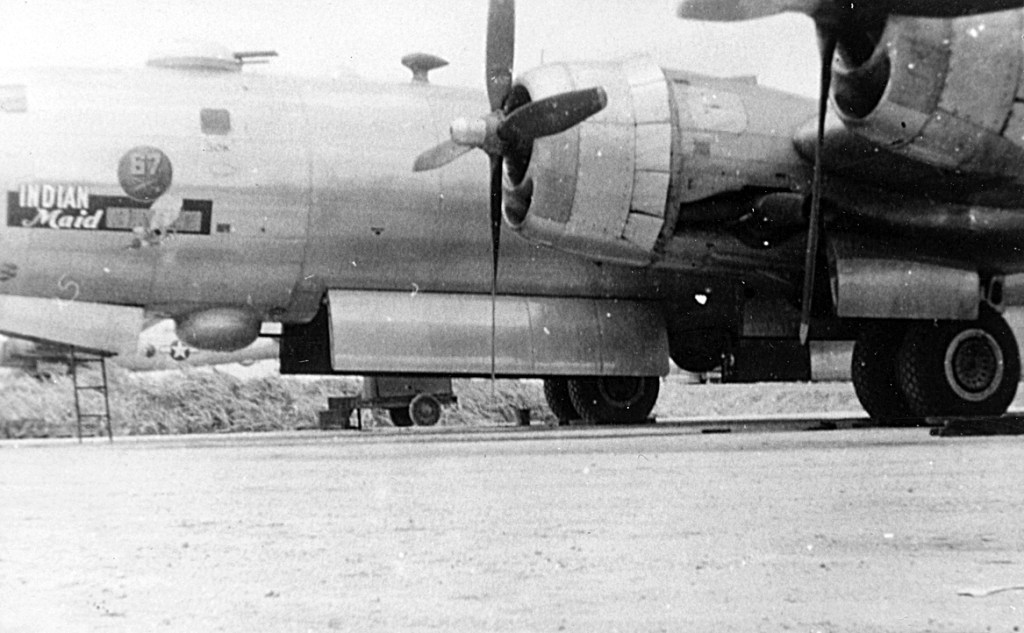
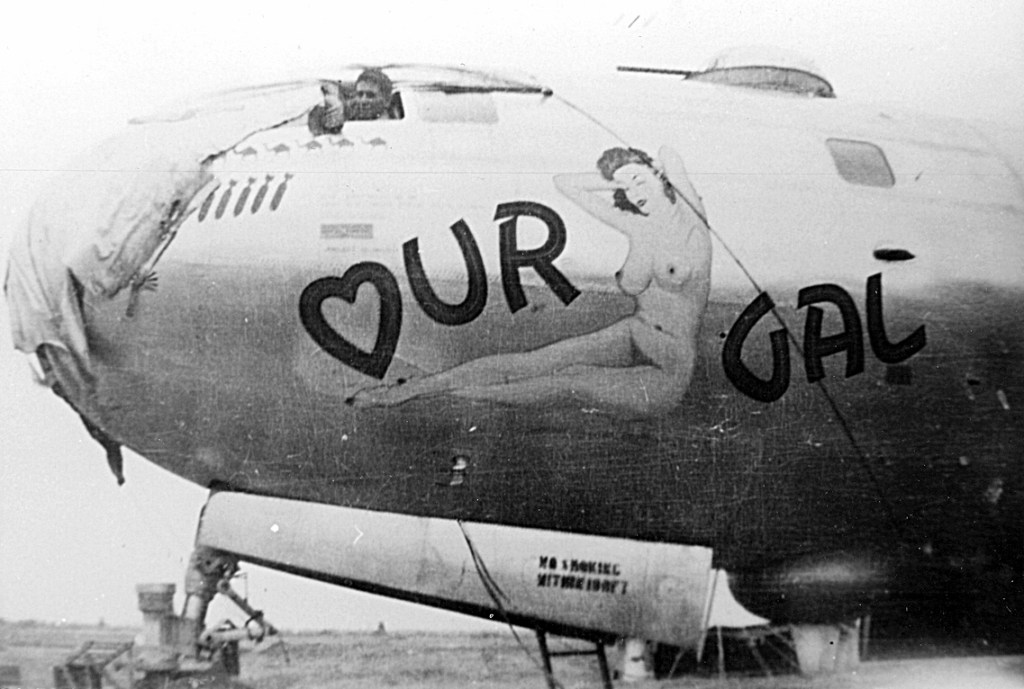


Early KC-97A at Boeing Field

Born a cargo aircraft, C-97A 49-2591 was soon converted to a tanker configuration as seen here. Her air refueling days were short-lived as she was then reconfigured to once again become a trash hauler. Not the very obvious rear cargo doors where the boom operator’s pod has been attached.
“General Gilmore & Staff”, 1930
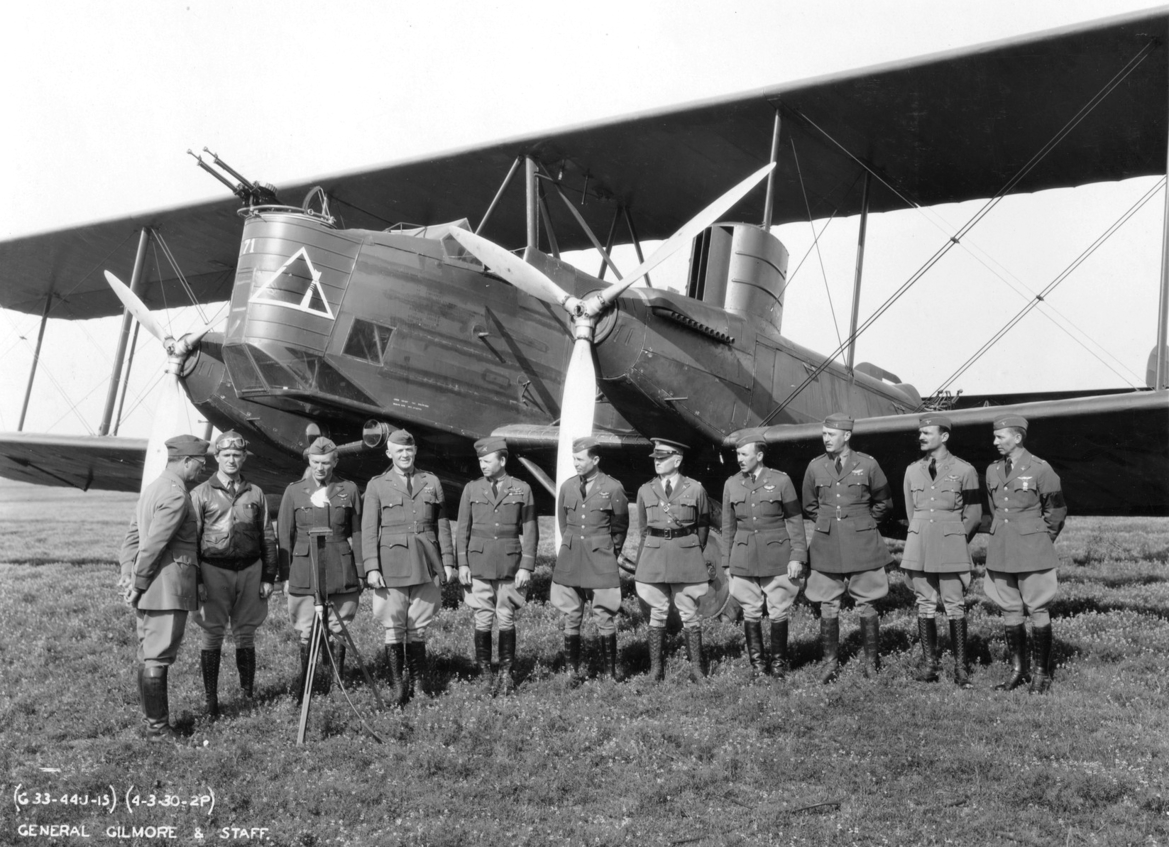
General Gilmore was Chief of the Air Corp’s Material Division where, naturally, he had a trusty staff to make things easier. That staff included Captains Frank Andrews and Laurence Kuter, and Major Henry Arnold. These men would achieve three, four, and five-star rank in the coming years. All of the men in this photo are wearing mourning bands but I am unable to ascertain who it was that died. The location of the photo is Wright Field, the aircraft, a Curtiss B-2 Condor of the 96th Bomb Squadron.
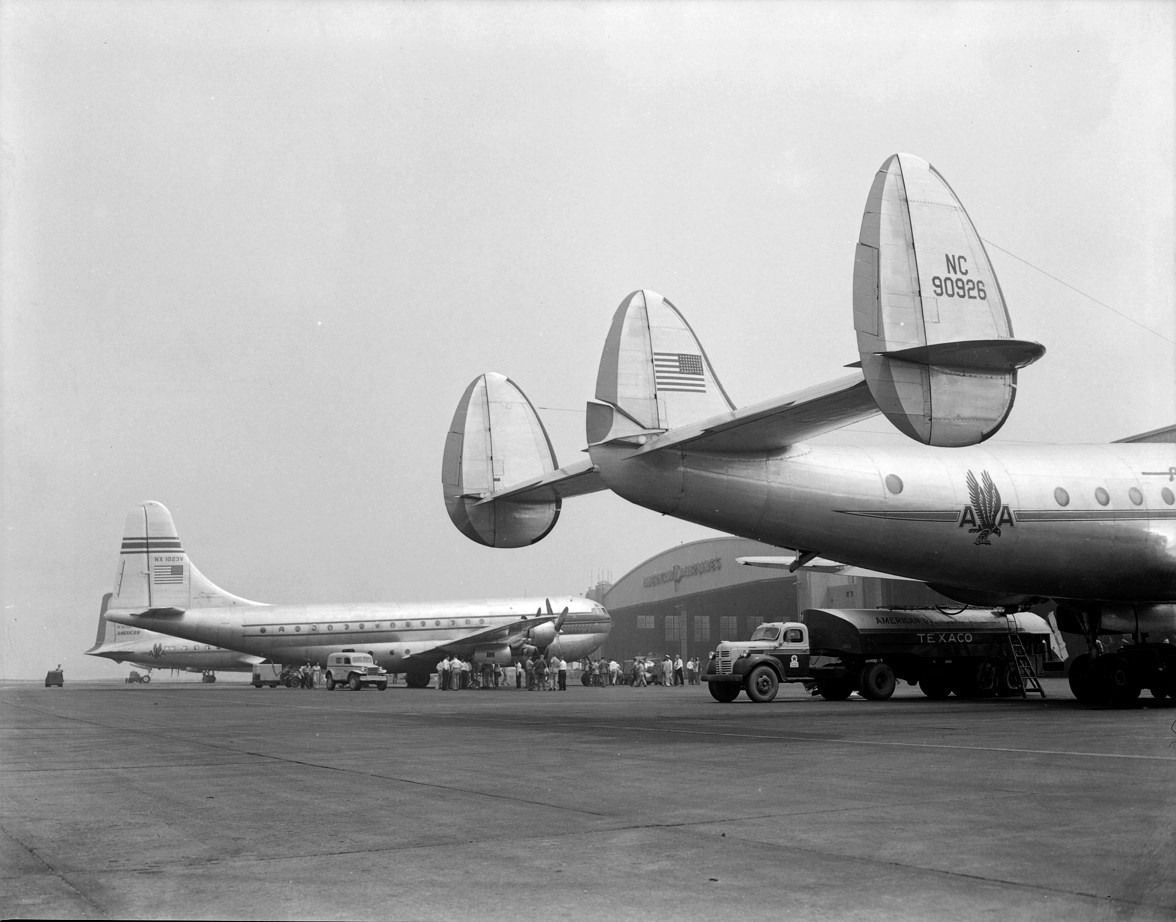
American Airlines, 1949

-
Super Connie NC90926 (“Star of Tunis”) heads an all-star ensemble of American Airlines heavies. B-377 Stratocruiser (NX1023V, “Clipper Golden Gate”) is next. It was the second prototype of the 377 and, judging by its lack of company markings plus the sizable crowd, had probably just arrived. Sadly, it crashed in Manila on 2 June, 1958. Last in the line is the stalwart DC-6.
RAAF Beaufighters

A Beaufighter (A8-154) of No. 30 Squadron coasts in after another mission.

A pair of Beaufighters from No. 31 Squadron await their next mission (A8-143 in background, A8-176 in the fore). Note the Dauntless swooping down from the right.
The Beaufighter was pretty much all engine. Location of photos: Moret Field, Philippines.
124th Fighter Squadron, Iowa Air National Guard, 1951

“To minimize risk, only the fewest number of men required should refuel an aircraft” ~ Air Force Technical Order on the Refueling of Aircraft

Men of the 124th Fighter Squadron

Air Policemen defy anyone to touch the squadron’s C-47.

Iowa Air Guard F-51s and a lone AT-6

Working hard for the Guard.
The year 1951 was busy for the Iowa Air National Guard at Des Moines Airport. At the beginning of that year the boys had been flying F-84 Thunderjets, but with the Korean War now in full-swing those F-84s went to active duty units while Iowa reverted to the F-51. Having flown them from 1946-1949, the 124th and the Mustang were old friends. This state of affairs continued until the war ended thus making jets available once again.
18th Fighter Group P-38s at Moret Field, Philippines, 1945

“Margie” (44-25468). The bird behind is named “Porky”.

44-26169 taxis past USMC F4U Corsairs.

44-26260 taxis towards its parking area.

18th Fighter Group P-38 takes to the air.lift
113th Observation Squadron
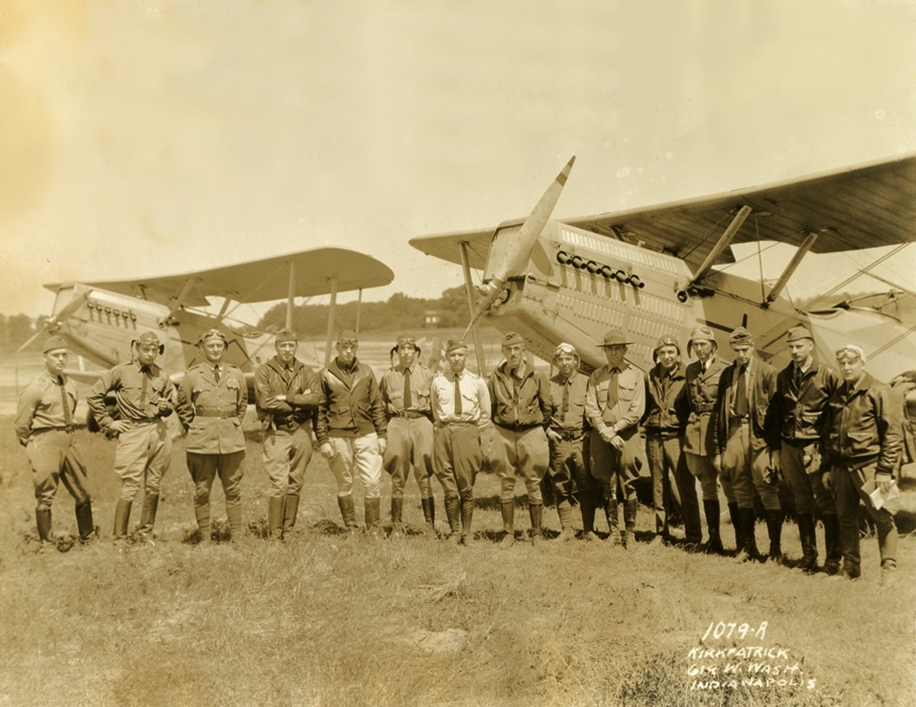
Pilots and observers of the Indiana National Guard at Stout Field in the late 20s – early 30s. The Douglas BT-1 was their aircraft and it was a familiar sight in the skies over the Hoosier State during this era.
The RAAF in the Philippines, 1945

Spitfire (A58-635) of No. 457 Squadron

Lineup of No. 457 Sqn aircraft. A58-642 is second from left.

“Grey Nurses” in the Philippines. Aircraft here include 626 and 634

RAAF Spitfires were more than a match for most Japanese aircraft.

No. 457 Sqn Spitfire coasts down for landing. B-24 Liberator in the background.

No. 31 Squadron Beaufighter.

Beaufighter A8-15 (“Holbrook”) of No. 31 Sqn. The cigar-chomping kid is the source of these photos; Dan Esterly, my next door neighbor.

A8-14 is prepped for another mission.

Beaufighter of No. 31 Sqn roars past USMC Corsairs, Zamboanga, Philippines.
The original “Skyblazers”
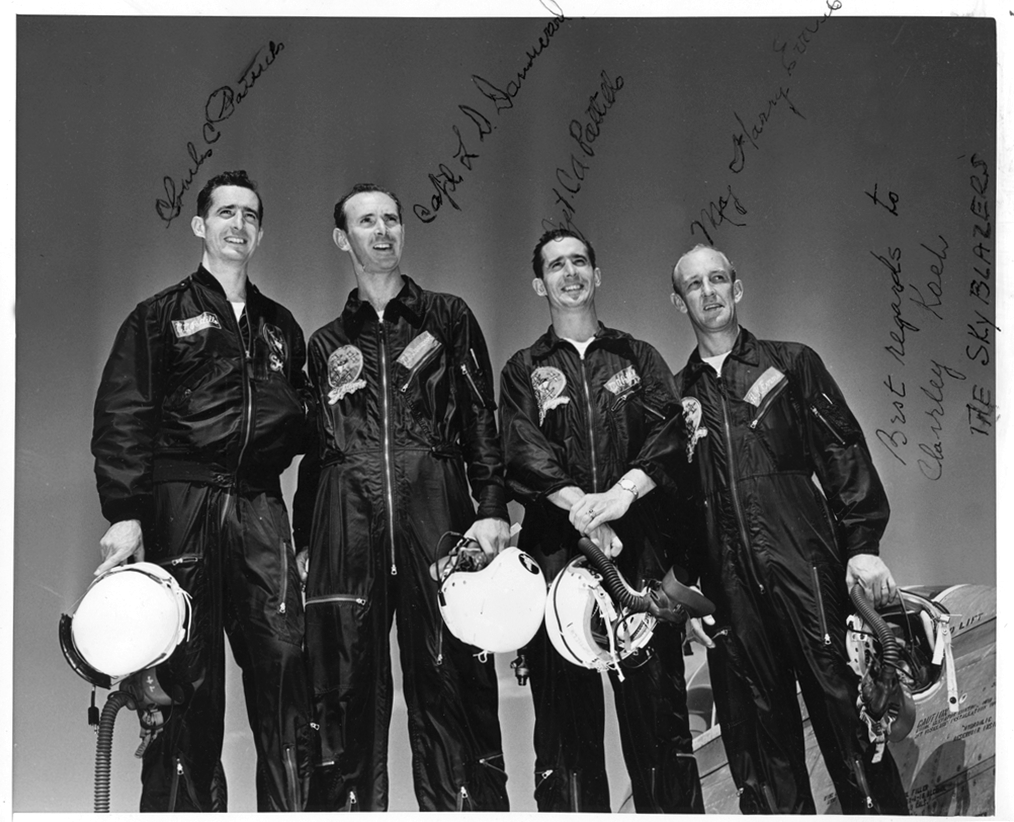
From 1949-1962, the Skyblazers of US Air Forces Europe (USAFE) thrilled European audiences with feats of aerial precision and showmanship. Here they are in the early days atop one of their F-84 Thunderjets: team founder Major Harry Evans, pilots Lawrence “Dagwood” Damewood, and twin brothers Charles “Bill” & Cuthbert “Buck” Pattillo.
Young pups: K/C-135’s in the early 60’s.

KC-135A 59-1504 “City of Tacoma” on the ramp at McChord AFB in 1961.

Another shot of “City of Tacoma”. Now 60 years old and still flying.

1504 flew with the 22nd Air Refueling Squadron, 1960-1962 – McChord’s brief time as host to tankers.

60-0357 started life as a C-135A but was quickly converted to a tanker configuration. Still flying today.

C-135A 60-0369 never underwent the tanker conversion. This, no doubt, is one reason it had a comparative short life: eventually used as a ground trainer, then scrapped.

C-135B 61-2264 was also not “tankerized” but was converted into an RC-135, “Cobra Ball”, assigned to Eielson AFB, AK.

2664 role as a “Cobra Ball” spy plane ended tragically on March 15, 1981, when it crashed on Shemya Island killing 6 of the crew. Stationed in Alaska at the time, I remember the tragic incident well.

61-2664, 665, 666, and 667 on the Renton ramp in the early 60’s. All were converted to some form of intelligence gathering configuration.

61-0278 was the 500th KC-135. Delivered in 1962, she was dubbed “Miss Ak-Sar-Ben” – “Nebraska” spelled (for whatever reason) backwards. She was converted to an EC-135 and ended her life in the bone yard.


 The Jive Bomber