
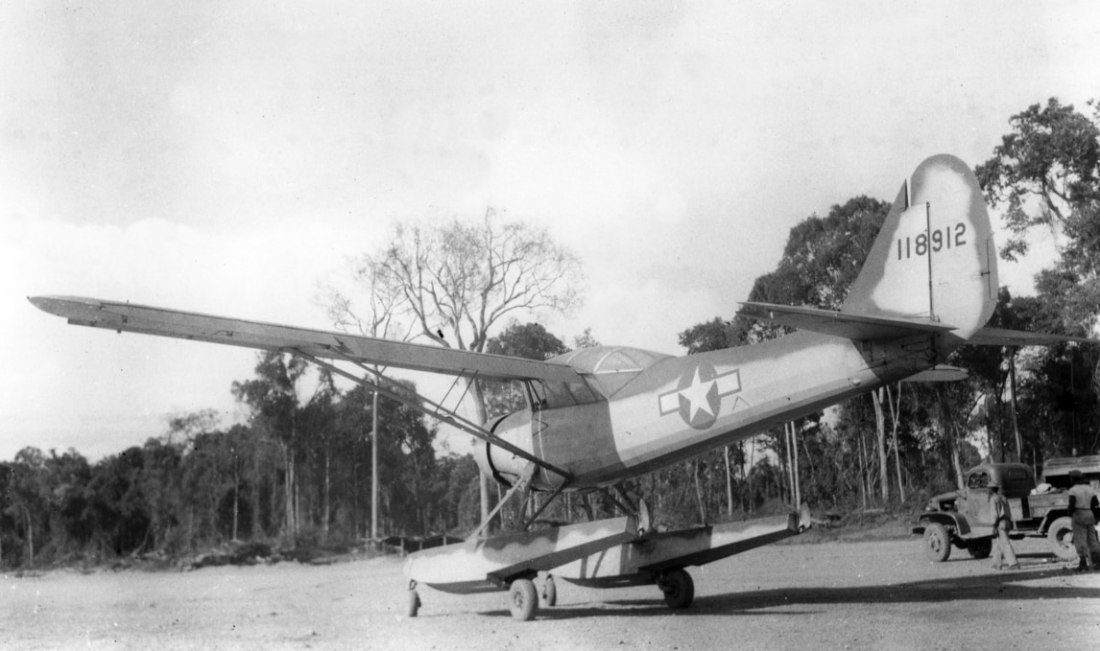
Boeing XPB-1

First flown in 1925, the XPB-1 with its all-metal hull seemed promising enough, but was plagued by difficulties with its liquid-cooled engines.
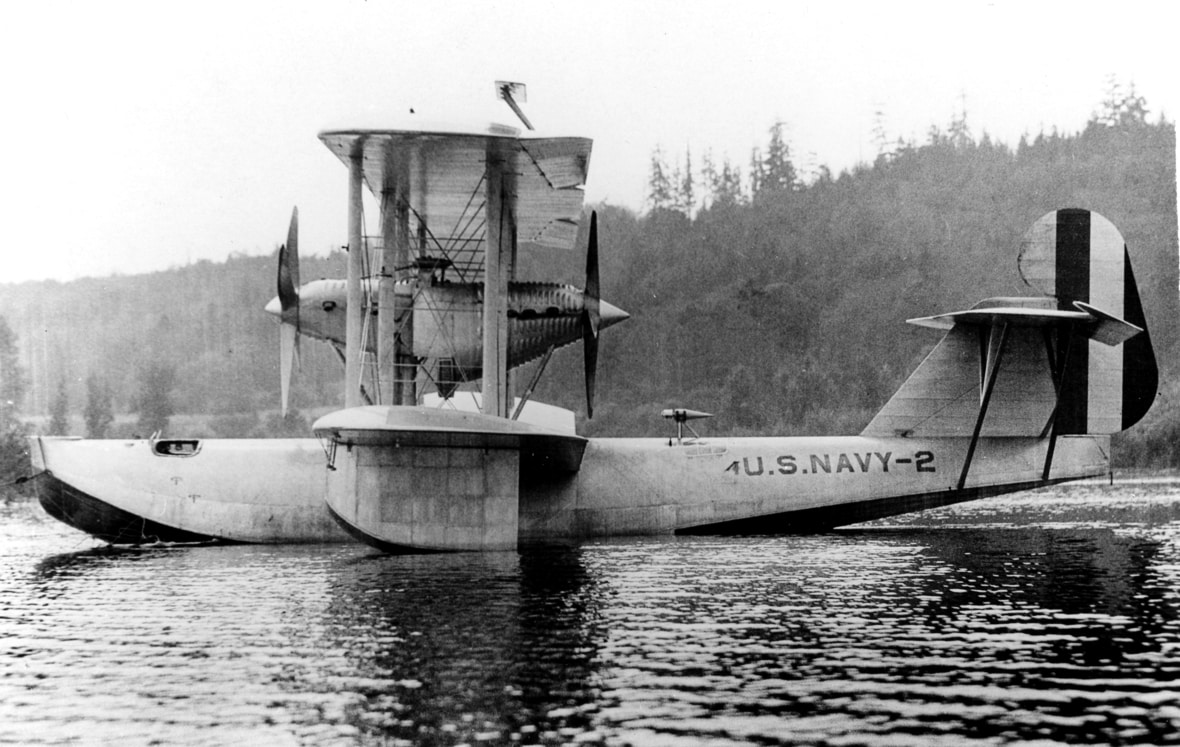
Despite the engine problems, the rugged XPB-1 was retained for testing purposes by the navy who eventually replaced the original motors with radials. Still, there was only one built.
The 94th Pursuit Squadron

The 94th Pursuit Squadron of Selfridge Field out for a drive in the mid-1930s. Great photo – you can practically hear the engines roaring. The aircraft are, of course, P-26s.
Albatross D.III of the Polish Air Force
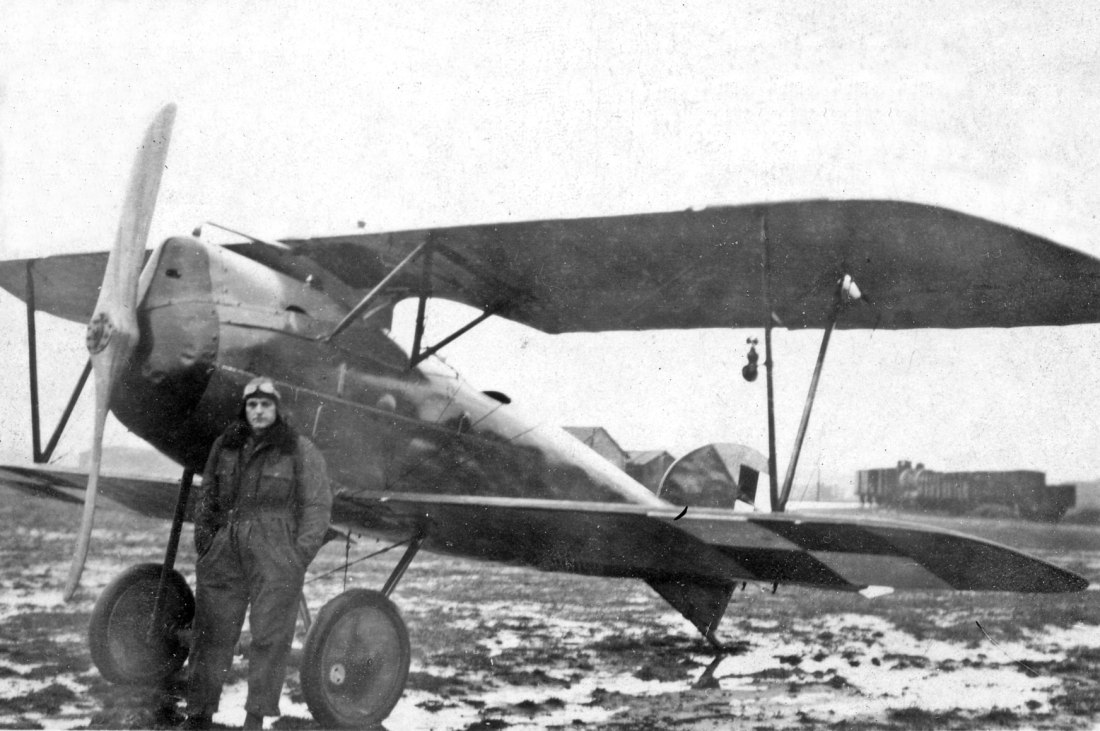
Poland’s fledgling air force began with top of the line machines such as the German-built Albatross. When war came with the Soviet Union in 1919, the untried Polish air force gave a good account of themselves and were instrumental in the victory over the USSR.
Curtiss P-36 Hawk, 1940-41
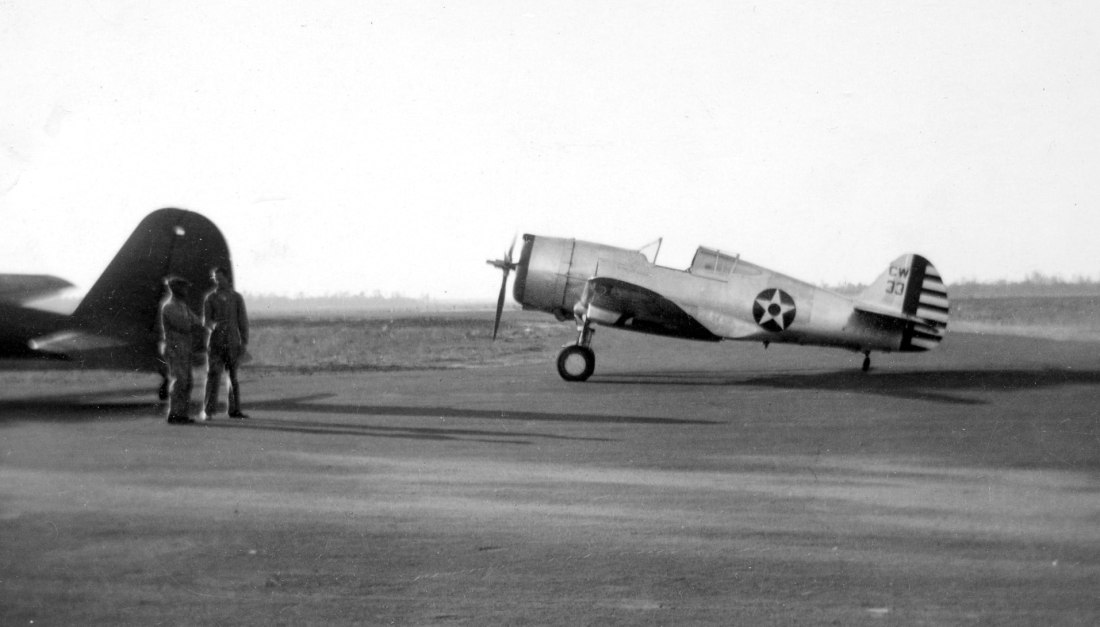
We see a rather rare photo here: a pre-war P-36 sporting a bare metal finish with national insignia on its fuselage. Perhaps this can be explained by the fact that in late 1940, the Air Corps was conducting experiments with camouflage as well as the placement of the national insignia. This P-36 is assigned to Maxwell Field’s 23rd Composite Group – the unit that carried out such testing.
Junior Birdmen of 1959

T-34

When this photo was taken, T-37 58-1896 was fresh off the assembly line

A photo to show to the folks back home.

T-37A 56-3563 has a long life ahead of it. Today, it is on display in the appropriately named town of Jet, Oklahoma.

The number of pilots who trained in the “Tweet” is beyond counting.

Rainy (and humid) afternoon at Graham Air Base.

By the book, or “Buy the Farm”.

With bulging briefcases, students of the 3300th Pilot Training Group prepare to march.

He is about to be trusted with a multi-million dollar aircraft.
These shots were taken at Graham Air Base, Florida, in the latter half of 1959. The aircraft are the T-34 and, of course, the then new T-37 “Tweet”. Graham was an air force training base, but was operated primarily by civilian contractors and not air force personnel. As such, it did not carry the title “Air Force Base”. By 1959, the era of civilian operated training schools was coming to a close, and Graham Air Base closed the following year.
The Vickers Valiant

The third Valiant built, WP201 was used for training missions and testing with No. 1321 Bomber (Defence) Training Flight at RAF Wittering.

On the ground, the Valiant could be an ungainly-looking beast. Looks are deceiving things though – the Valiant was a highly respected aircraft and marked the RAF’s commitment to nuclear defense.
The VC-137A & B

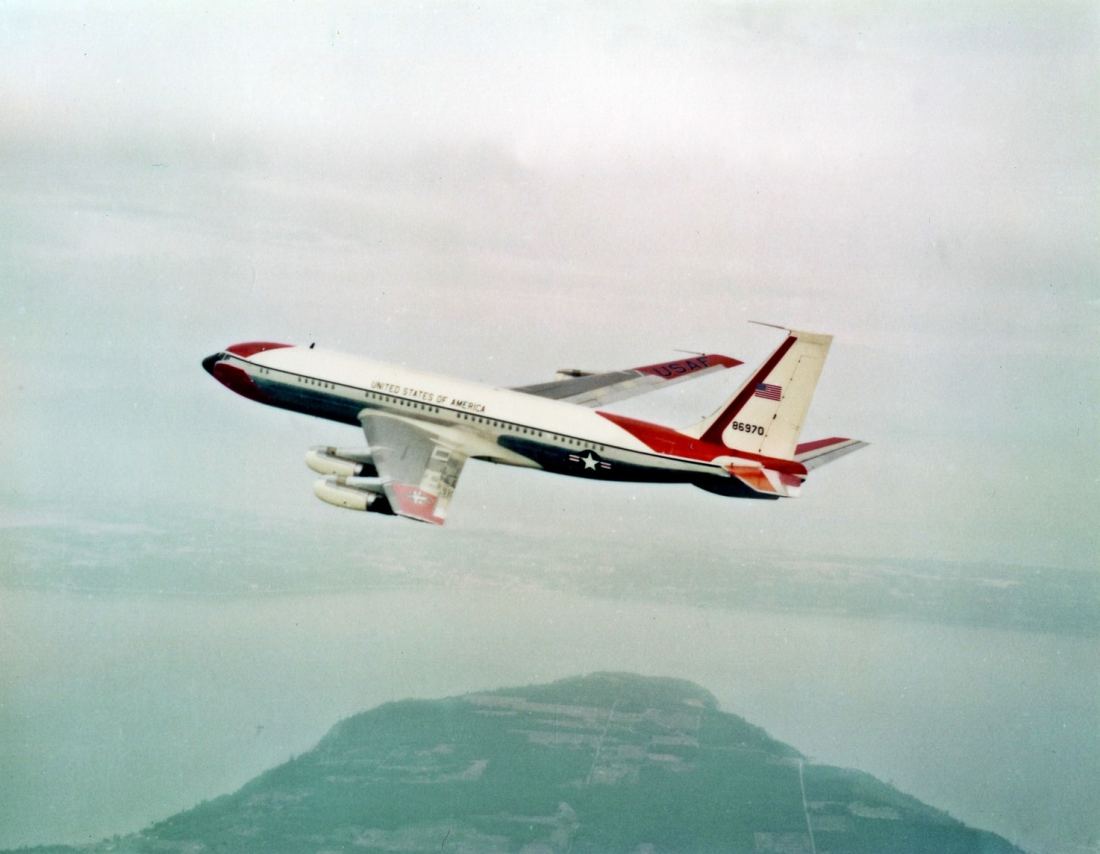
- 58-6960 sports the VC-137’s original markings on an early test flight prior to its delivery to the USAF.


“Regular Army Officers”

The aircraft is, of course, a DH-4. The place is somewhere hot (note the sun’s x-ray effect on the wings). The date is sometime in the 1920s.

The man in the center is Hap Arnold who wears his Military Aviator badge beneath his wings.
Record setting flight!
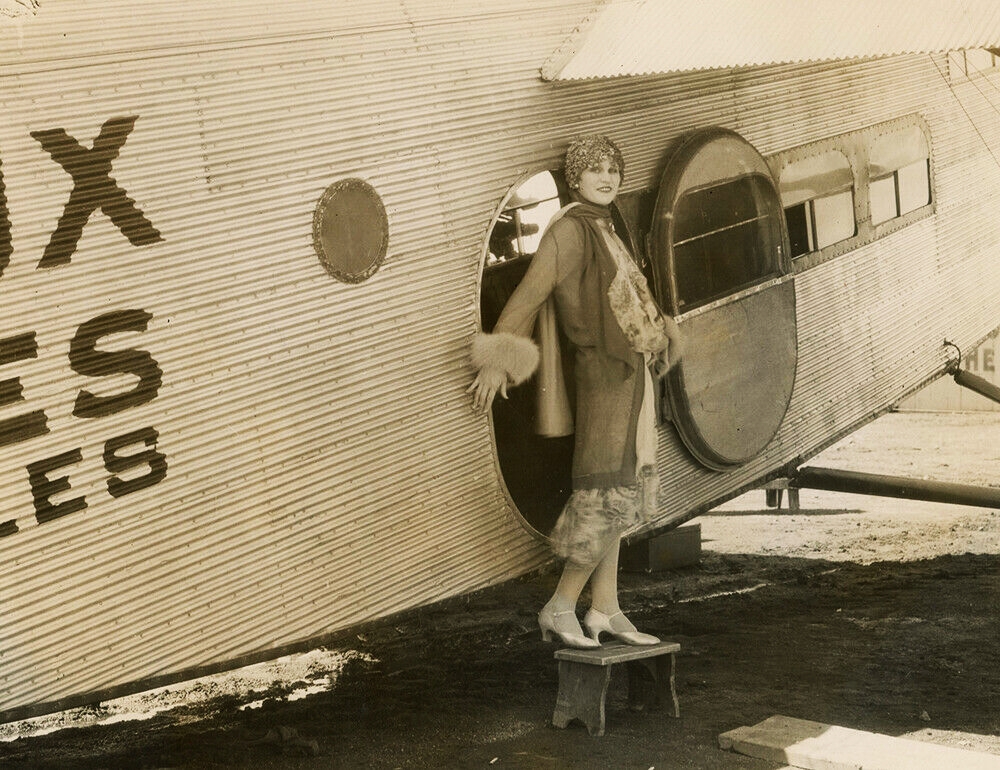
Back in the 1920s, almost any routine event was automatically far more interesting when it was done in an airplane. Take a fashion show for instance. Appealing as such a venue would be on terra firma, it became much more newsworthy when it happened 5,000 feet in the air. That brings us to the photo. The aircraft is, of course, a Ford Trimotor. The location, Hollywood (also, of course). The woman is famed fashion designer Peggy Hamilton – and famed she was: Hamilton was the designer for all the big movie studios and top names in the film industry.
So, why is Madam Hamilton about to board the Trimotor? According to the photo’s caption, she is going to perform the “World’s first” fashion show in an airplane. Once airborne, she will model eight “gorgeous gowns” to an appreciative audience of club presidents from various organizations. Given that Hamilton was married at least 6 or 7 times (no one is exactly sure which) the gowns in question might be leftovers from her numerous matrimonial endeavors. Whatever the case, I am sure the club presidents were vastly entertained.
Note: Given the Trimotor’s low altitude and lack of insulation, I would venture to say that this event also set the record for the world’s bumpiest and noisiest fashion show.
F-102 Delta Daggers!

F-102A on a visit to Paine AFB, WA, circa 1959. Stationed just down the road at McChord AFB, 56-0972 bears the rather simple yet satisfying markings of the 317th Fighter Interceptor Squadron (FIS).

Another 317th FIS bird (56-0958) poses with a predecessor, a replica Spad.
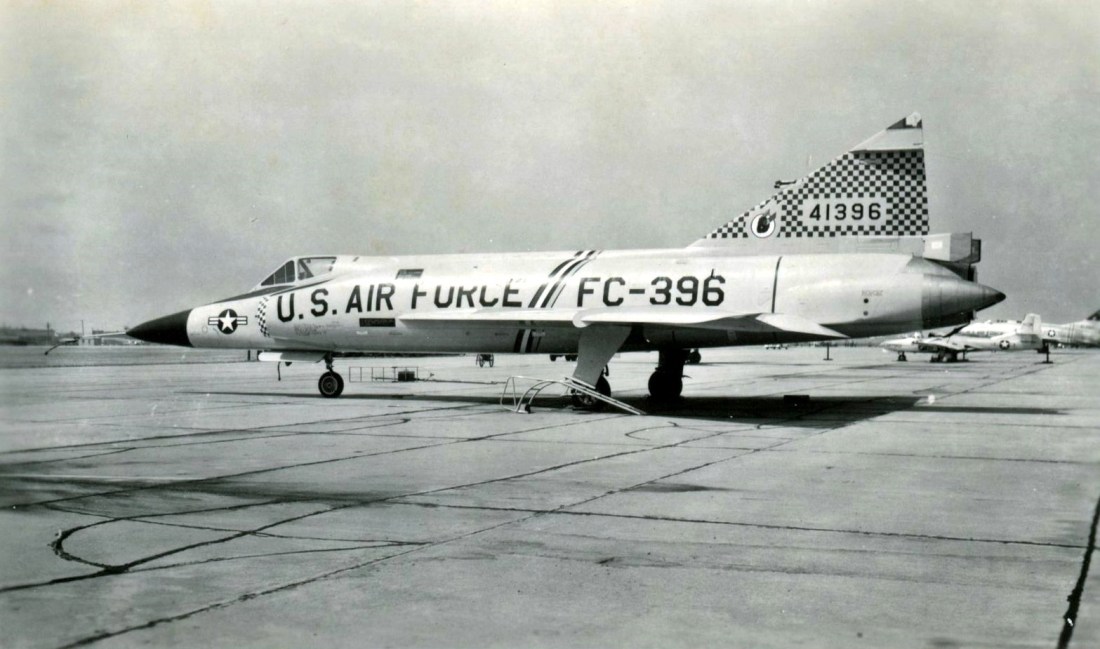
Early F-102A of the 327th FIS.

Another early bird, 53-1817 of the Air Proving Ground Command, 1956. This aircraft was withdrawn from service in 1962 and was then displayed for decades at Lackland AFB, Tx. It is now on exhibit with the Florida Air National Guard, Jacksonville, Fl.

The Washington Air National Guard’s 116th FIS flew the F-102 for only 3 years, 1966-69. This aircraft, 56-0985, is currently on display at McEntire Air National Guard Base, SC.
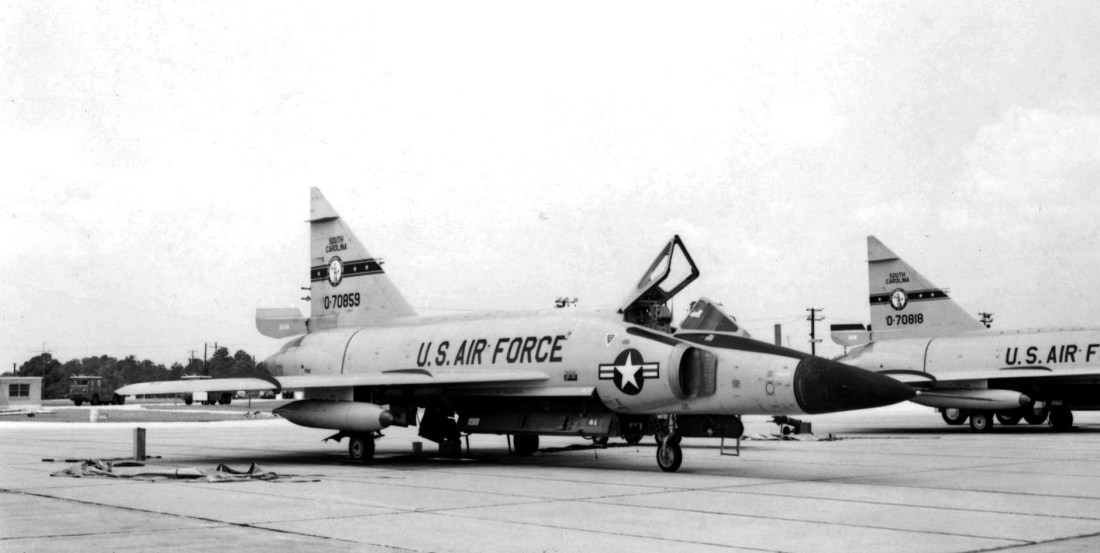
Speaking of South Carolina, here are a brace of 102’s from that state’s 157th FIS, 57-0859 and 57-0818.
Carl Ben Eielson, Aviation Pioneer
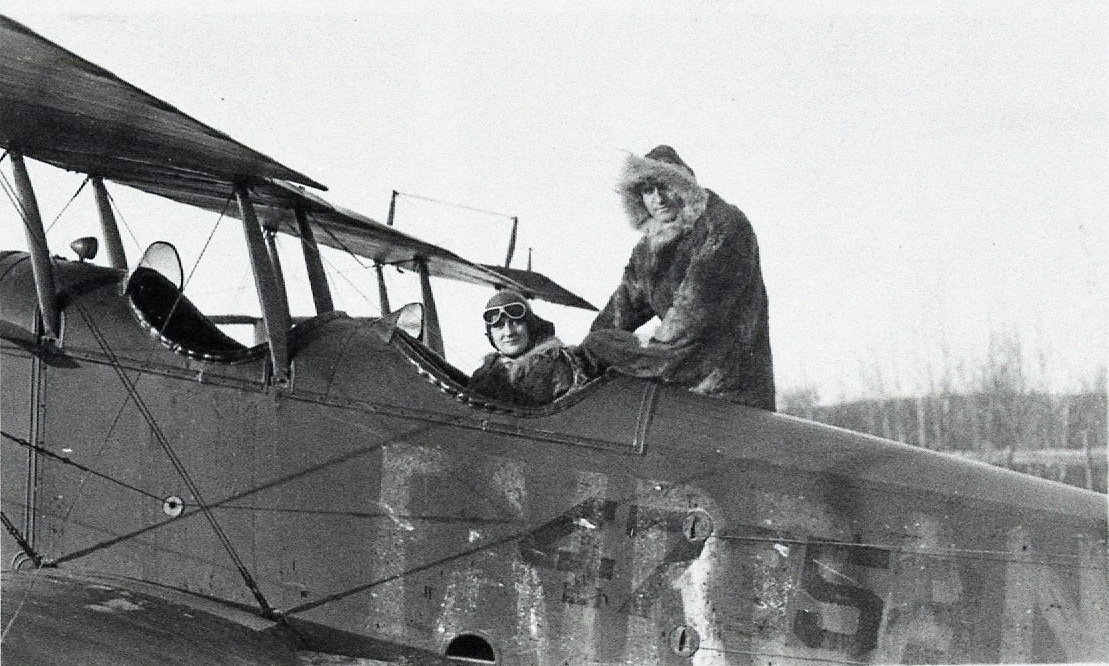
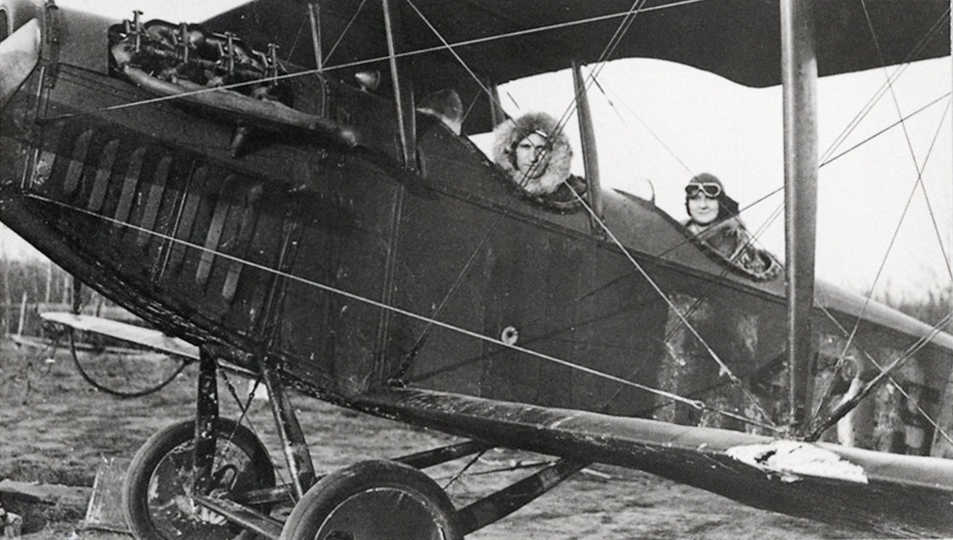
Furry-hooded Carl Ben Eielson earned his wings during World War I with the Army Air Service, became a post-war barnstormer, then headed north to Alaska and began making a name for himself. He flew the mail to remote towns where only dog sleds had gone before, started an airline, became a polar explorer, and made the first flight over the North Pole from Alaska to Norway. He died on a rescue mission in 1929, but his legacy lives on (Eielson Air Force Base, Alaska, is named in his honor).
Eielson’s aircraft of choice during his bush pilot days in Alaska was a Curtiss JN-4D “Jenny”, seen here. Weathered and beaten with the faded name “Fairbanks” emblazoned on its olive-drab fuselage, this aircraft (AS 47358) managed to survive and is now on display at Fairbanks Airport in Alaska.
On a side note, Eielson’s passenger is Mrs. Ladessa Nordale, wife of Fairbanks newsman Hjalmer Nordale. An adventuresome and interesting woman, Mrs. Nordale later became a prominent Alaska judge where, among her more interesting cases, was one that involved whether an automobile constituted a brothel.
In days gone by, prostitution was legal in Alaska, but, somewhat strangely, brothels were not. Any Alaska woman could partake in the world’s oldest profession, just not in a facility where one could offer (or attain) the services typically associated with such establishments. One day, a local young lady (of easy virtue) found herself in court. Her crime? Plying her “trade” in a car. As far as the police were concerned, that car was now a brothel on wheels and thus illegal.
Finding herself in front of Judge Nordale, the young lady’s legal strategy revolved around a defense that insisted a motor vehicle did not constitute a house of assignation. Judge Nordale thought otherwise by ruling that a Cadillac could indeed be considered a den of ill-repute and put the motorized entrepreneur out of business.
The Cadillac-as-bordello case accidentally created some comedy gold when it was later discovered that Judge Nordale was the proud owner of (you guessed it) a Cadillac.
Major Muse and his P-12

When this photo was taken May 28, 1934, Major Muse was commanding officer of Crissy Field, San Francisco. A somewhat stout gentleman, Muse must have found the P-12 cockpit (or those of most pursuit ships of the day) a rather tight fit. There is what appears to be a pole or staff protruding from the aft fuselage – no idea what it’s for.
The short-lived Udet Flugzeugbau

-
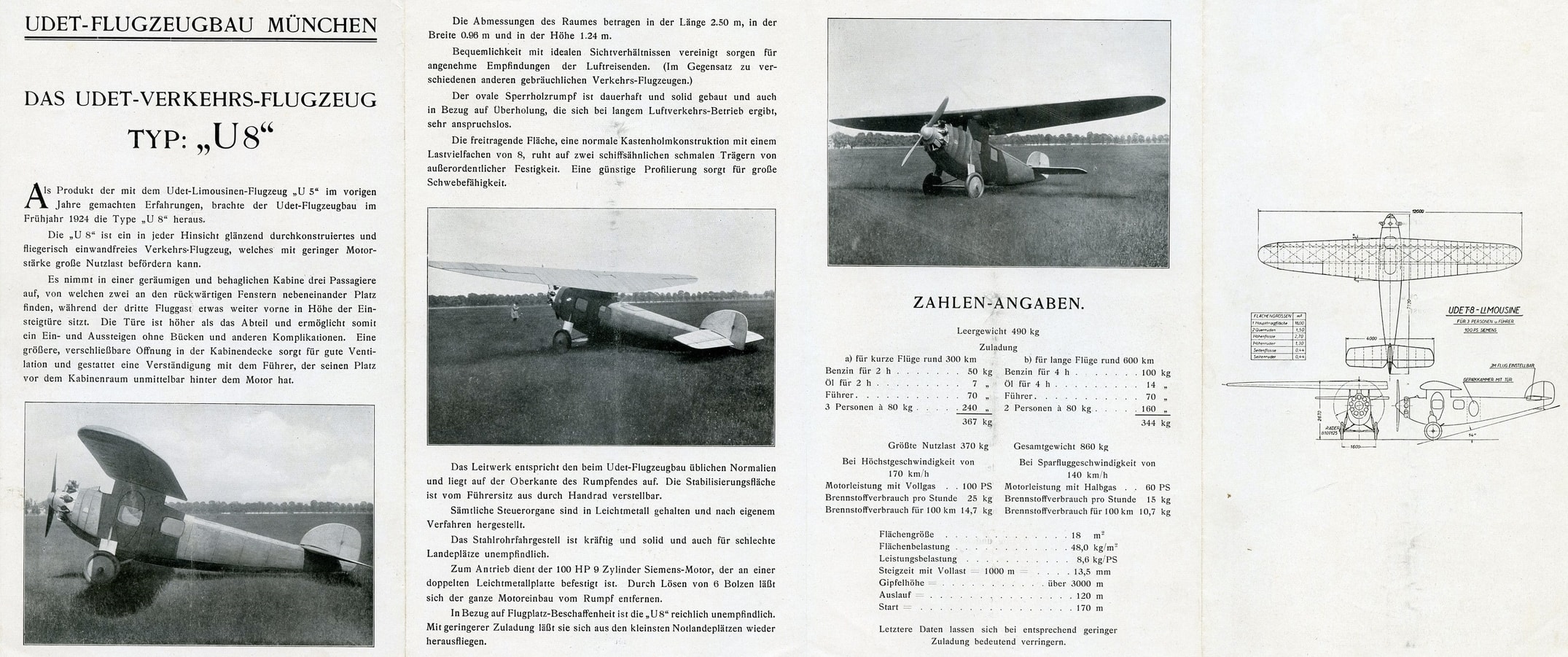
Famed German ace Ernst Udet could do just about anything in an airplane, but unfortunately, that did not translate into a successful aircraft company of his own. Still, the designs of such Udet aircraft as the U8 and U10 were hi-tech for the early 1920s.
-
These are two of Udet’s original sales brochures from that period.

The R.34 comes to America
No one in the United States had any experience.
When the British airship R.34 crossed the Atlantic in 1919, she and her crew became instant celebrities. Taking off from Britain on July 2, the crew battled winds, storms, freezing conditions, and a rapidly dwindling fuel supply before arriving 108 flying hours later. Hovering over a field in Mineola, NY, the airship discharged its first cargo – Major John Pritchard – who parachuted down to organize the landing party below. This was necessary because no one in the United States had any experience in handling such a craft. As the photos illustrate, obviously, Pritchard was successful. He also became the first man to arrive in America by air.
The first photo shows R.34 resting after its journey. Hundreds of hydrogen cylinders are scattered and stacked all around to provide gas for the trip home. Why the whole place wasn’t blown to Kingdom-come is probably a miracle.
Photo #2 is interesting because the men of the 278th Aero Squadron decided to use the R.34 as a backdrop for their group photo. At this time, the 278th was being disbanded at Mineola, and the arrival of R.34 was obviously inspiring. This is the only explanation because the 278th certainly had nothing to do whatsoever with airships (other than trying to shoot them down, should the opportunity present itself.).
The last photo exemplifies how the R.34 compared to the Woolworth Building in New York City. The tallest building in the world at that time, Woolworth’s was always a handy prop for comparison (ocean liners, airships, etc.).
Letord bomber, 1918

Although a latecomer to La Première Guerre mondiale, the Letord bomber (first flown in 1917) nevertheless saw a great amount of service in the Aéronautique Militaire of France. I am not certain which version of the Letord this is, but it is possible that it is the Let.7, a bomber intended for night attack. Also, note the camouflage paint.
26th Bomb Squadron, 1942
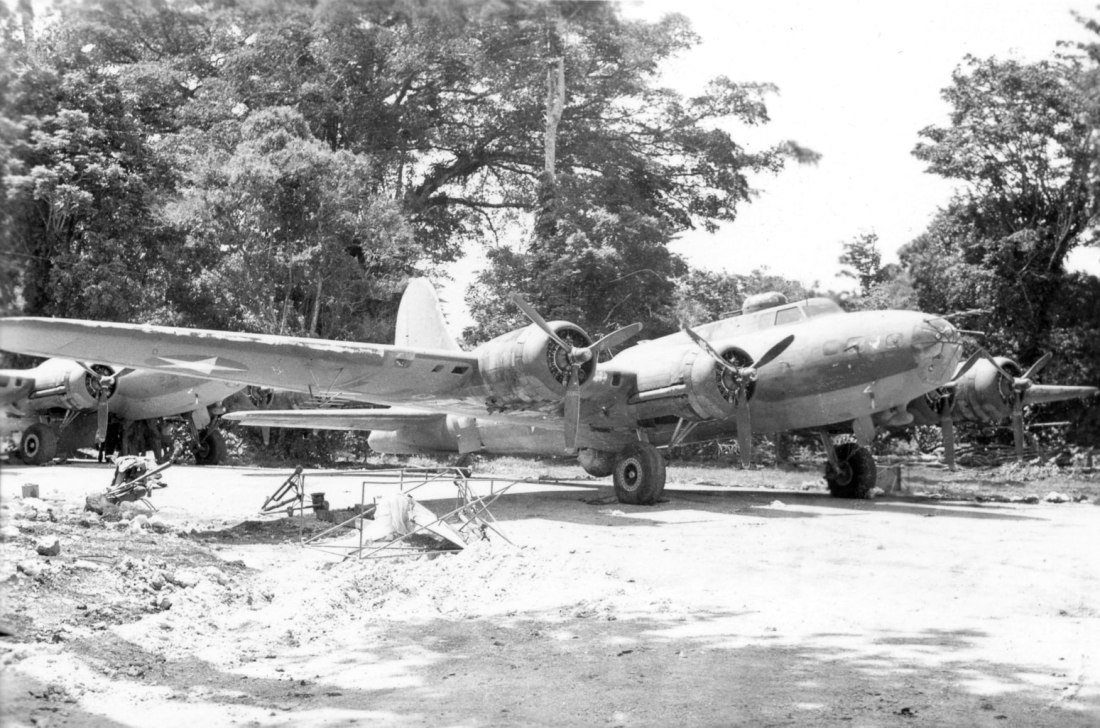
Pekoa Airfield, New Hebrides Islands, in the autumn of 1942. A duo of B-17Es of the 26th Bomb Squadron, 11th Bomb Group, await another mission. Note the wing and nose antenna of the SCR-521 radar.
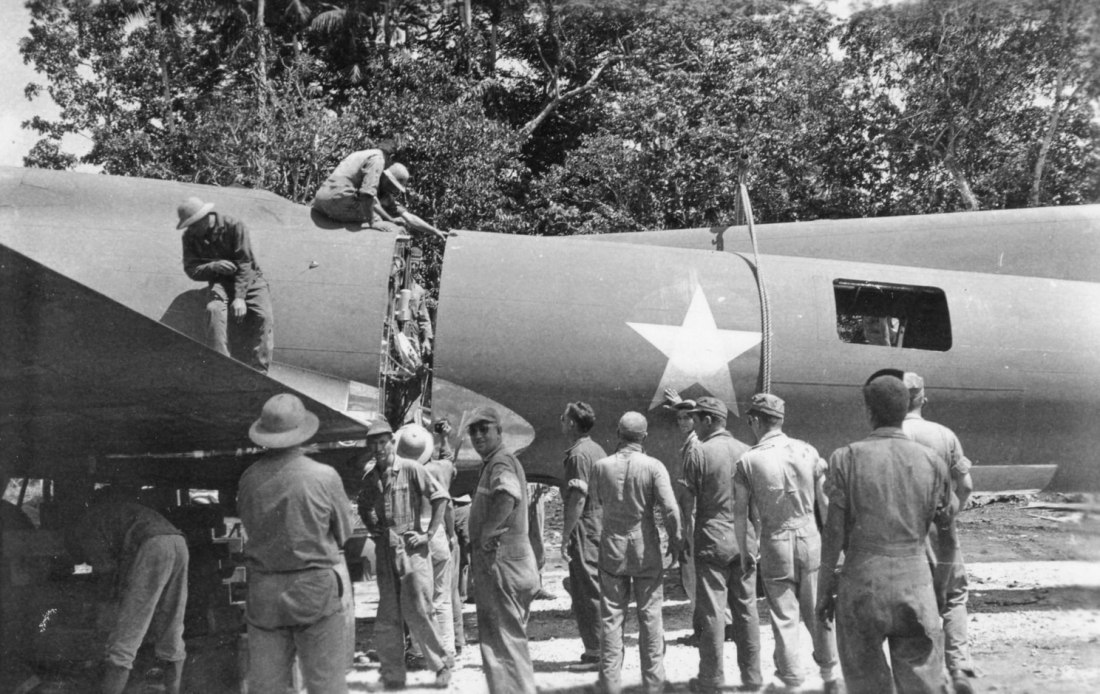
Ground crew reinstall a critical airframe component – the rear half of the aircraft. One can still see on the national insignia that its red center was painted over.

The 26th Bomb Squadron scoreboard and Roll of Honor.
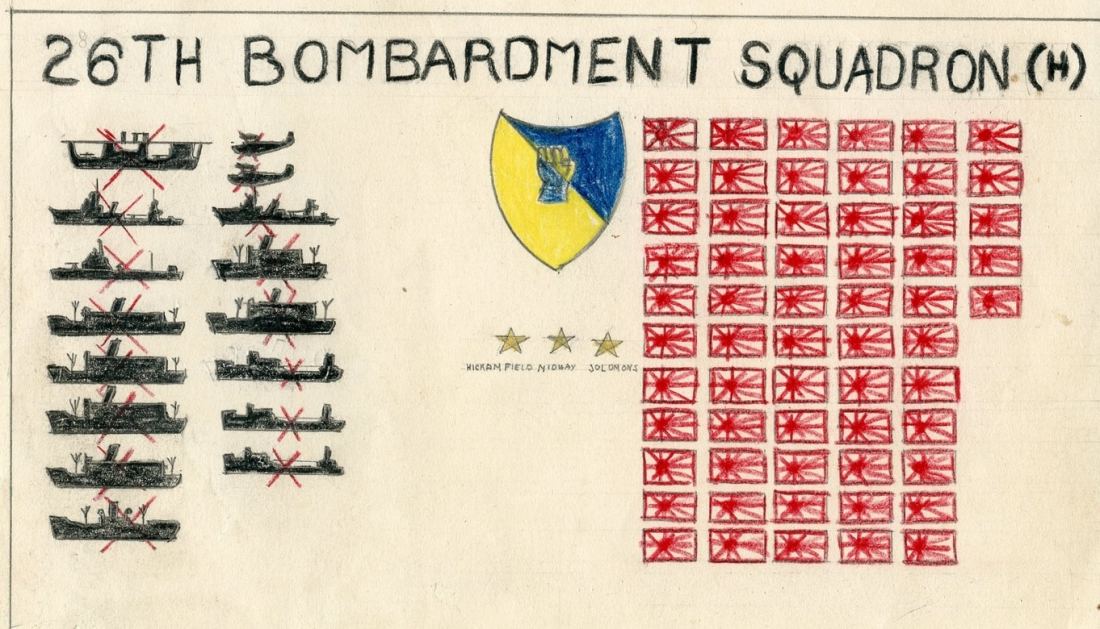
This came with the photos: a hand-drawn version of the same scoreboard. The stars denote action at Hickam Field (the 26th was there December 7), Midway, and the Solomon Islands.
F-89D, 58th Fighter Interceptor Squadron

The year is approximately 1955 (The F-89, 53-2568, was written off in 1956), and it’s one of those great airshows of the era. We can only guess at what other aircraft graced the ramp of this unidentified base, so we will have to content ourselves with this gaggle of birds. The 58th FIS Scorpion is from Otis AFB, the B-29 (45-21800), from Langley. A well-known aircraft, this B-29 did the air drops of big name test airplanes way back when (The X-1, Chuck Yeager, being just one of many).
C-123 (54-577) brings up the rear. Scarcely visible behind the F-89 are F-84s of the USAF Thunderbirds. Like I said, one of those great old time airshows.
Boeing bombers that never flew


Here are a few Boeing designs that never made it too far off the drawing board : the Models 436, 461, 474, and 704. Although these models were never flown, you can see a lot of their elements in the B-47’s and B-52’s that were.
27th Pursuit Squadron, 1939
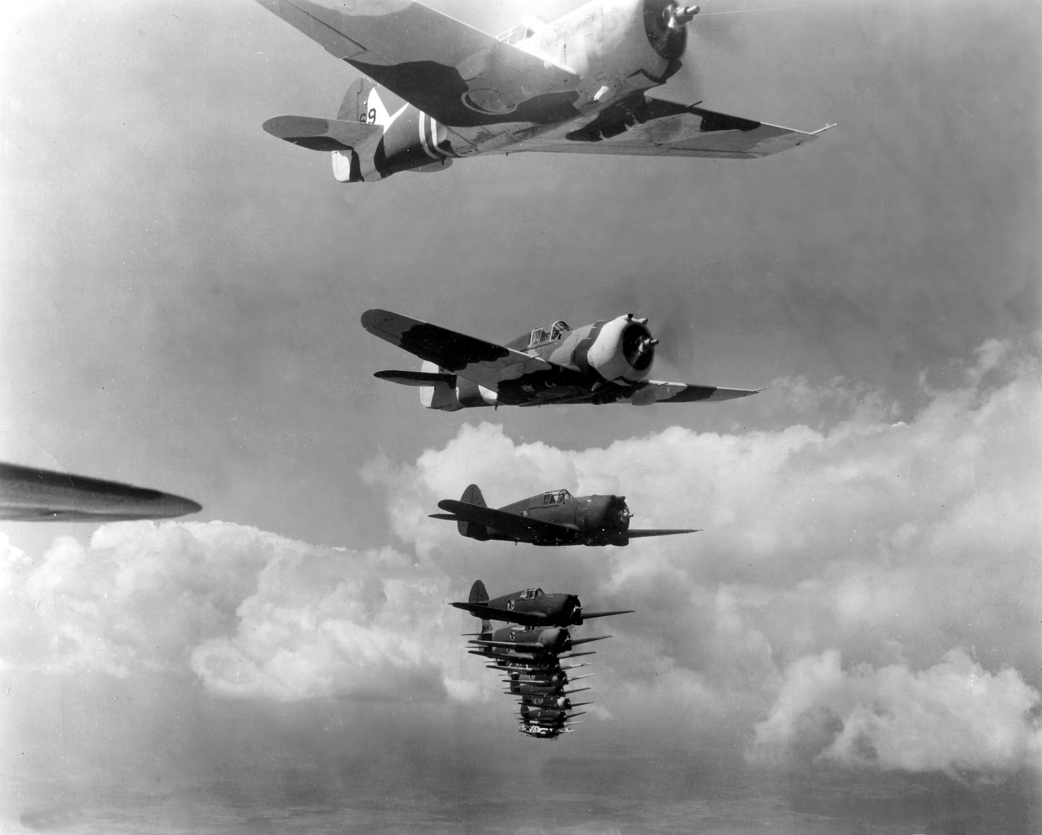
Sporting some rather bizarre camouflage paint schemes, P-36 Hawks of Selfridge Field’s 27th Pursuit do some fancy flying for the camera. Contrary to popular belief, the camo paint was not part of some war game exercise but rather for display – the 1939 National Air Races in Cleveland, Ohio. In theory, the water-based paint could be easily removed. In practice, that was not quite so: broad areas were washed clean, but the paint adhered itself into every panel seam and rivet head.
Fast forward: In the early 1980s, a pair of A-10s from my base in Alaska were given a water-based “Arctic white” paint job over their normal dark green. Used only for a one week exercise, the white paint was then given a rinse. Same results as in 1939. Every place that was not a smooth flat surface had white paint clinging to it. Every panel, rivet, and screw head was highlighted making for two hideous-looking A-10s. Eyesores that they were, the two aircraft were parked together at the far end of the ramp.
Gloster Meteor T.7, RAF Cranwell

Meteor WH169 is pictured on its home turf of RAF Cranwell in the late 1950s. As a two-seater, it was used primarily for training and in such a scenario the aircraft crashed and ended up in the scrapyard in 1960. Lurking behind it are two other Cranwell mainstays of the 1950s: a de Havilland Vampire and a Vickers Valetta (WJ462).
Pursuit ships during the 1941 Louisiana Maneuvers

Bearing the light blue markings of the “friendly forces” during the maneuvers, this P-40 of Hamilton Field’s 77th Pursuit Squadron readies for another mission against the bad guys of the red force.

One of the “bad guys” – a P-38 of Selfridge Field’s 27th Pursuit Squadron.
Open house, Langley AFB, 1962

Naturally, one sees this photo and says “F-4 Phantom.” However, the picture is early enough to where the sign in front of the aircraft says otherwise: “F-110A Phantom”. That is a bit of a misnomer. While the Air Force did designate their version of the Navy’s F4H Phantom as the F-110, they chose the name “Spectre” instead. Carrying the Navy bureau number of [1]49406, this aircraft’s USAF serial number was 62-12169.
The F-105 alongside (59-1755) is from Seymour Johnson AFB’s 336th Tactical Fighter Squadron. This aircraft was shot down while engaged in a dogfight with a MiG 17 on July 19, 1966. The pilot, Stephen W. Diamond, was seen to eject, but was never found.
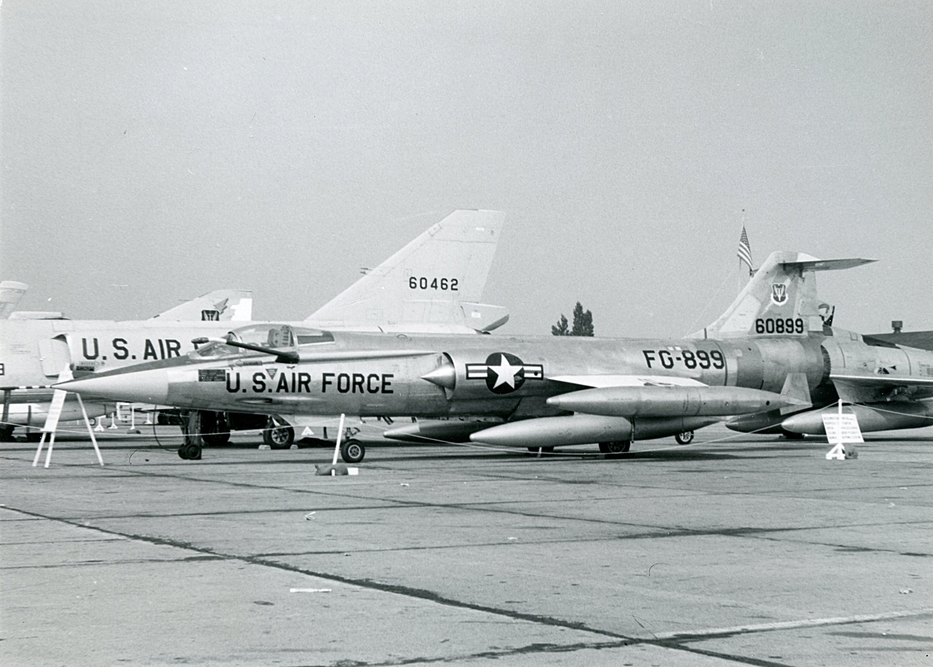
F-104 Starfighter (56-0899) of the 479th TFW, George AFB. The F-106 alongside (56-0462), is from Langley’s 48th FIS. This aircraft suffered engine failure while on a high altitude (70,000 feet) intercept mission on June 6, 1975. The pilot, Captain Stephen Damer, made aviation history when he safely ejected at great altitude and descended some 12 miles or so to the Gulf of Mexico.
Mixed bag of B-29 Superforts

44-87768 was an SB-29 of the 3rd Rescue Squadron. The tail of SB-17G 44-83719 of Hamilton AFB’s 2154th Rescue Squadron is visible to the left.

45-21749 of the 11th Bomb Wing is seen here on the ramp at Carswell AFB. In the background is the XB-36. Note: 21749 was shot down by a MiG 15 on 29 March 1951 while assigned to the 19th Bomb Wing. All were killed including Wing Commander Col. Payne Jennings.

44-61908 and 44-86421 of the 307th Bomb Wing, MacDill AFB. The latter aircraft was lost in a mid-air collision in 1952.

44-8771 of the 509th Bomb Wing was also known as “Priv’ Love Witch”.

Another view of “Love Witch”.

45-21758 of the 97th Bomb Wing

EB-29B 44-84035 of the 4112nd Army Air Forces Base Unit, Olmsted Field, Pa.

44-62295 carries the name “Iron Bird”. Assigned to the 4135th Army Air Forces Base Unit, Hill Field, Utah.

44-62314 of the 43rd Bomb Wing was nicknamed “Gas Gobbler” when it took part in a round the world in 1948.

44-62044 of the 9th Bomb Wing.

Another look at 044, this time parked in St. Louis with the McDonnell Aircraft plant in the background.

44-62234 of the 43rd Bomb Wing. Must be at a Naval Air Station – there are PBM Mariners in the background.

44-86292 is better known as “Enola Gay”.

Another view of Enola Gay.

44-86294 of the 28th Bomb Wing. The unusual device on the belly is the antenna for the AN/APQ-7 radar.

45-21846, an RB-29 of the 72nd Reconnaissance Squadron.

Unknown B-29 of the 468th Bomb Group.

42-65333 of the 4754th Radar Calibration Squadron, Hamilton AFB.

44-86345 of the 2750th Air Base Wing is seen at it’s home of Wright-Patterson AFB.

44-62128 of the 59th Reconnaissance Squadron.

44-87766 served with the 97th Bomb Group until it was transferred to the Navy and renumbered 84031. Note the somewhat removed USAF tail number.
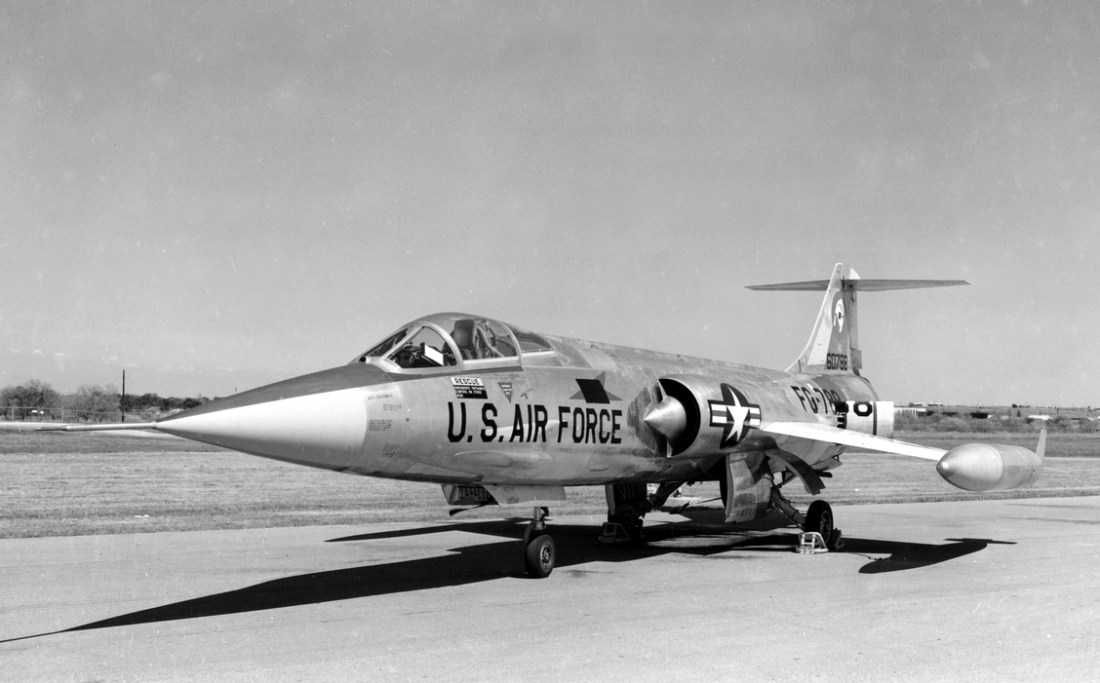
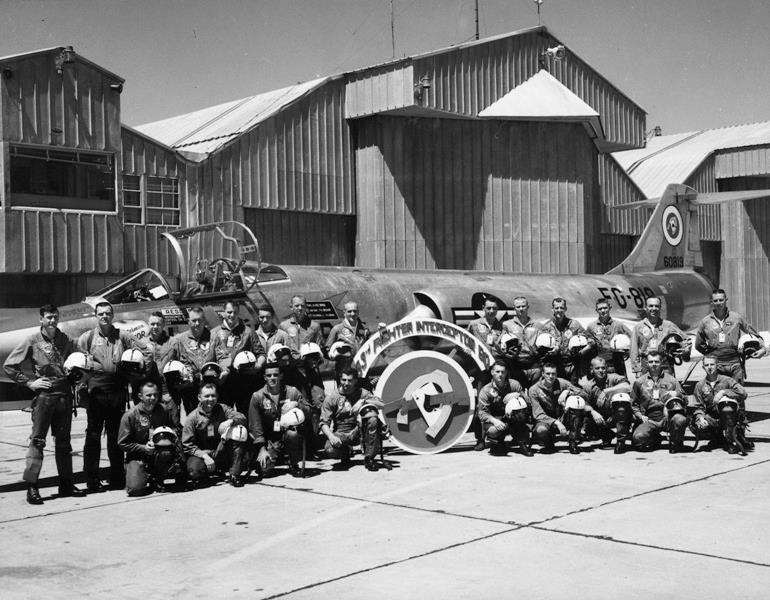
Starfighters of the 83rd FIS, 1959

 The Jive Bomber