Author: thejivebombers
Rhein-Main Air Base, 1952-53
A few photos from a USAF air policeman during his tour at Rhein-Main Air Base, Germany, during the early 50s. The Ceskoslovenské Aerolinie DC-3 was flown by Mira Slovak when he defected to the West in March 1953. Later, a famed air racer, champion hydroplane skipper, and all-around dare-devil, Slovak was piloting this DC-3 on a routine flight when he locked his copilot out of the cockpit, dove beneath radar coverage, and slipped into West Germany. The aircraft sat at Rhein-Main while the diplomatic niceties were worked out before returning home to Czechoslovakia. (It crashed a few years later.)
The photos of aircraft wreckage are sad reminders of a fateful day in May 1953, when an F-84 of the 22nd Fighter Bomber Squadron plowed into a formation of C-119s, causing two of them to crash as well as the F-84. Although the Thunderjet pilot who caused the mayhem parachuted to safety, eight of the 10 crewmen in the two C-119s were not as fortunate.
North to Alaska


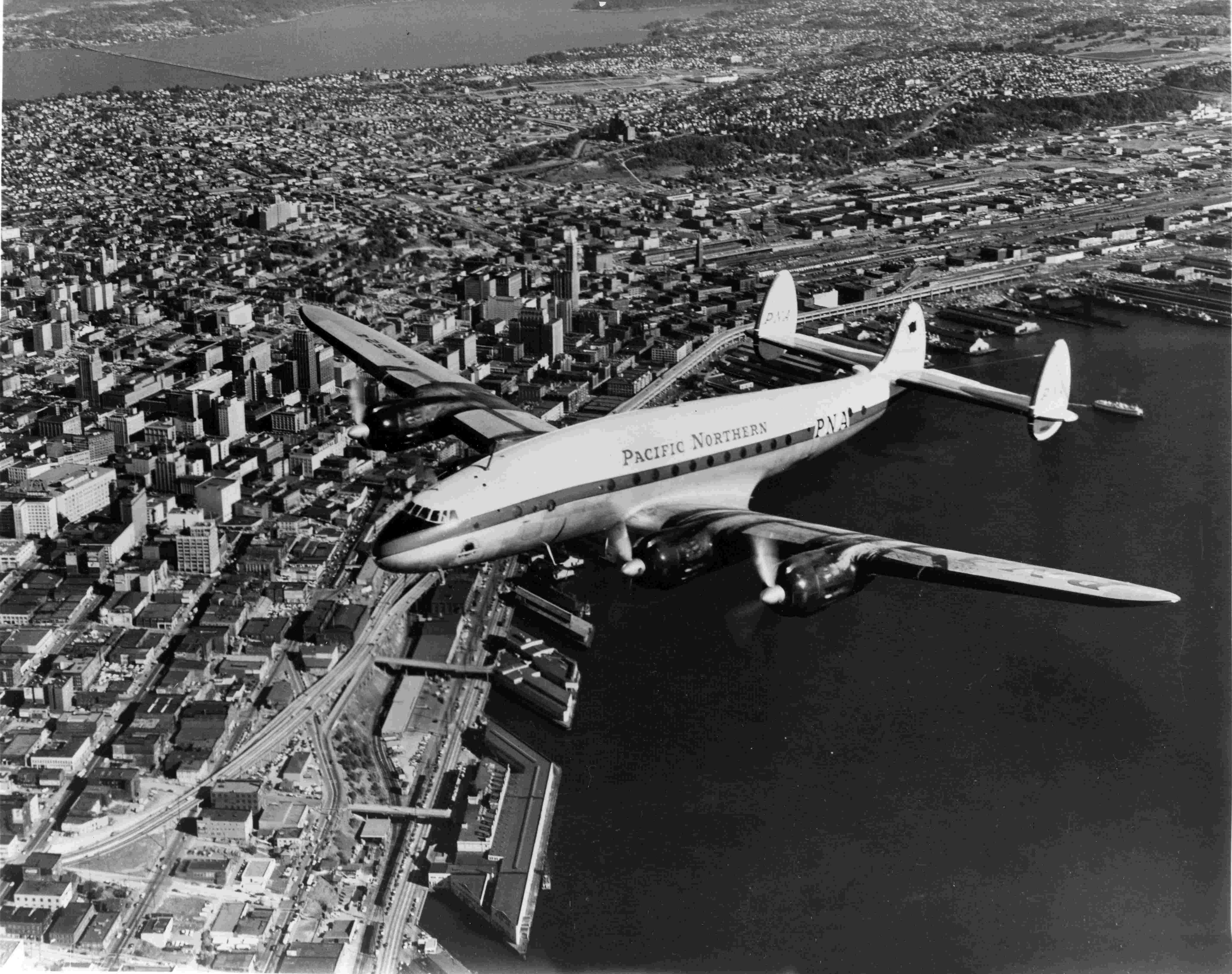
Climbing out of Seattle-Tacoma Airport on its scheduled late afternoon departure time in the Spring of 1959, Pacific Northern Airlines Constellation wings its way over downtown Seattle. Its final destination is Anchorage, but with a few stops along the way: Ketchikan, Juneau, Yakutat, and Cordova. Cost of the ticket from Seattle to Anchorage: $165.
December 7, 1941
Bombing Three, USS Saratoga 1939


Bombing Three (VB-3) – the “High Hatters” put on a good show for the camera in early 1939.
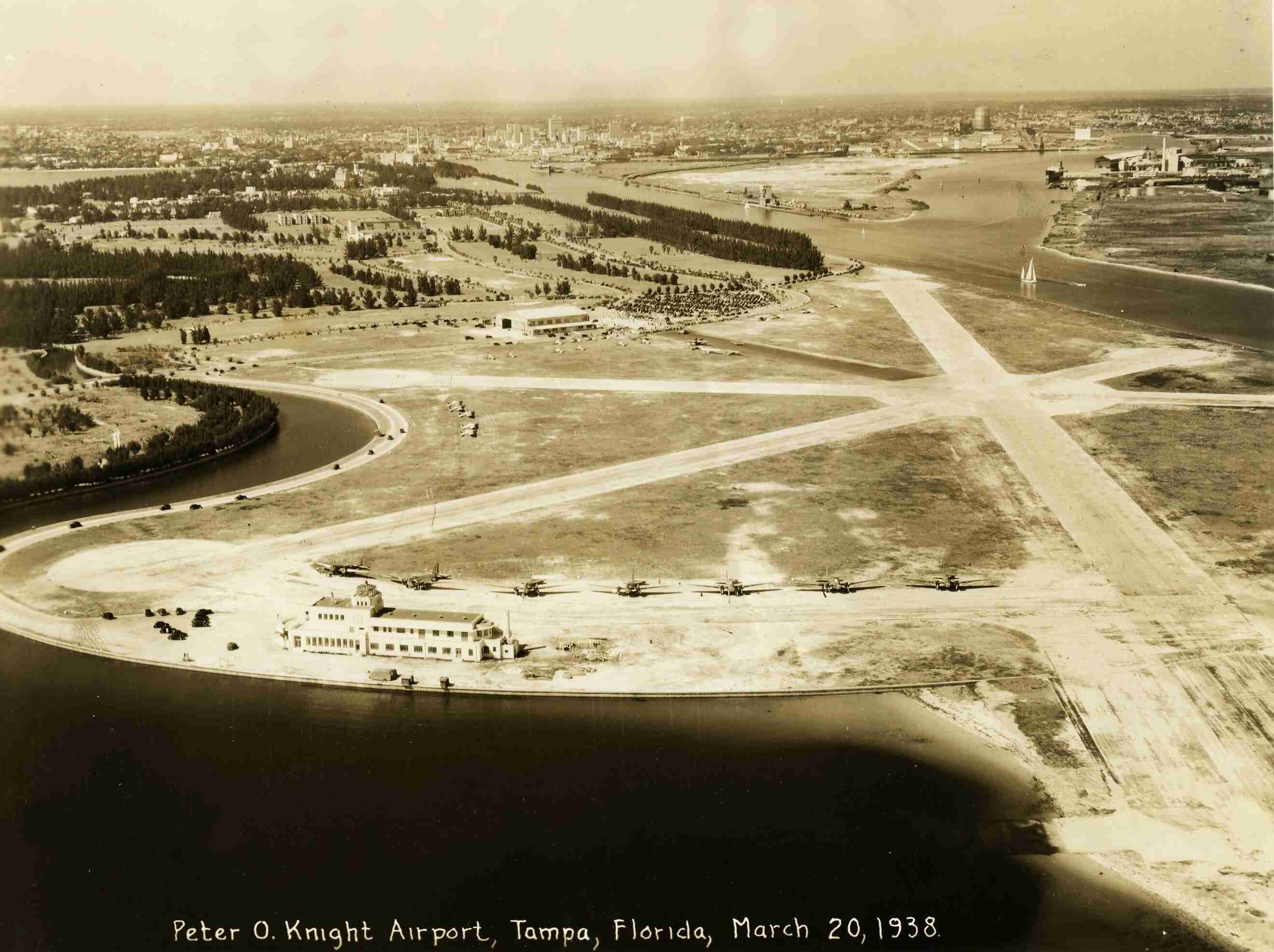
Peter O. Knight Airport, 1938

Still busy today with general aviation, Peter O. Knight opened in 1935 as Tampa’s principal airport and remained so until 1945. One of many airports built under the auspices of the Works Progress Administration (WPA), the field boasted multiple paved runways, could handle seaplanes, and had a very nifty art-deco terminal seen in the foreground (unfortunately, now long-gone). When this photo was taken in March of ’38, the main attraction was the bevy of Air Corps planes dotting the field: B-18s, P-26s, P-35s, and a lone B-10.
92nd Fighter Squadron, 1947

As the jet aged dawned other USAAF squadrons were transitioning from props to “stovepipes” (as the jet engine was commonly called), the 92nd in Hawaii was defending the islands with the tried and true P-47 Thunderbolt. In fact, the “Jug” provided Hawaii’s air defense until well into the 1950s. This is not at all surprising: jets were needed in Korea, and besides, were someone to launch an aerial attack on Hawaii, it could not have been with jets (there were as yet no Soviet jet bombers, and the MiG-15 posed no threat to far-off Hawaii).
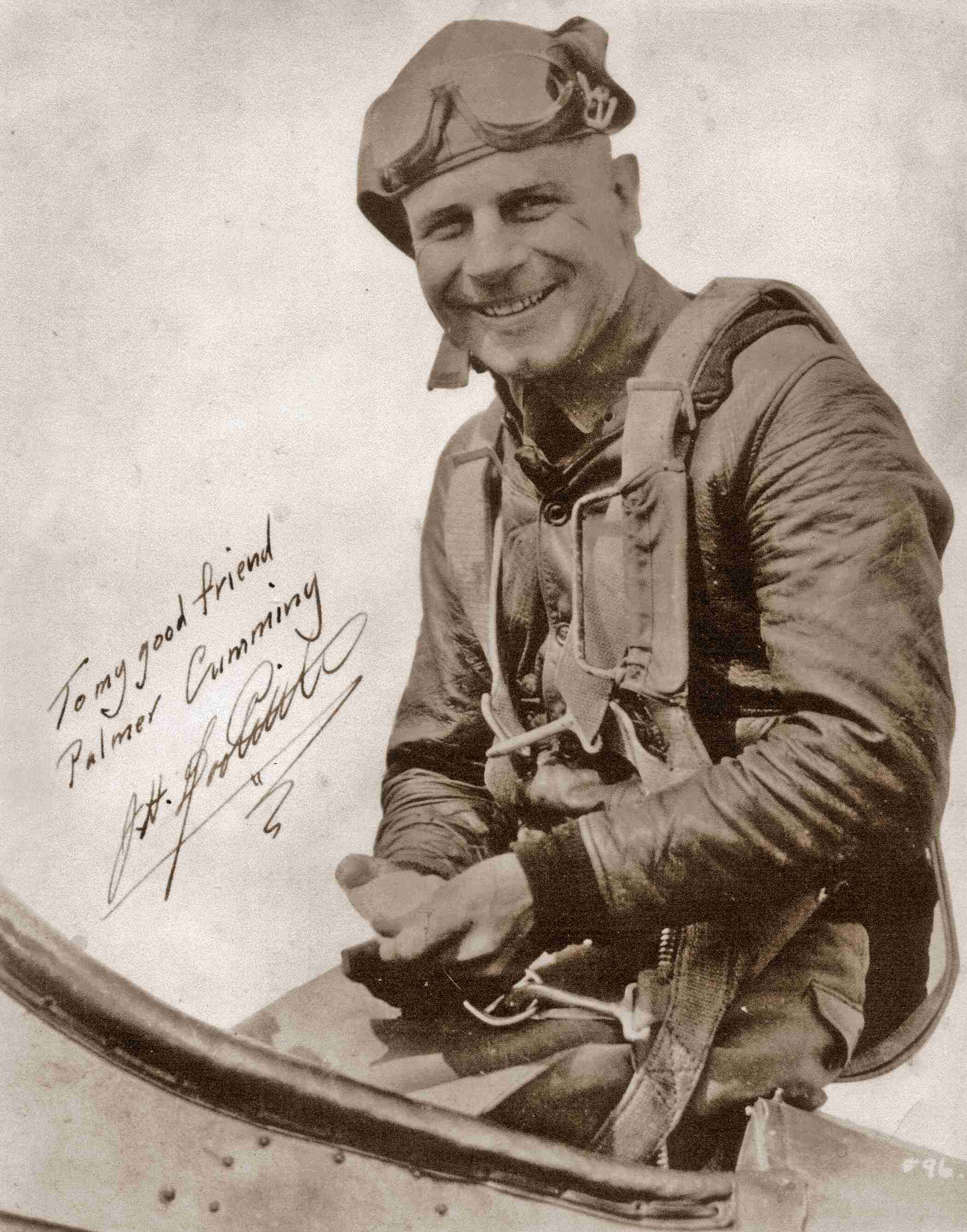
Master of the Calculated Risk

Early autographed photo of Jimmy Doolittle from the time he was speed champion of the world.
The BT-9 and BT-14
18th Fighter Interceptor Squadron
Post-War Props
The USAF’s first decade
Northrop’s Flying Wing
U-2 in Panama, 1966

Men of the 100th Strategic Reconnaissance Wing (SRW) on deployment to Albrook AFB, Panama Canal Zone, pose for a group photo before heading home. The reason for their trip to Albrook was classified: they were monitoring French nuclear tests in the South Pacific. When this photo was taken in ’66, the 100th SRW was new to the “spy plane” world – they had just gained the mission, personnel, and aircraft of the deactivated 4080th SRW (the men are wearing that patch, not the 100th).
Thunderjets and Streaks
Connecticut National Guard O-47

The local folks partake in observing the observation planes of their state’s National Guard Aviation Section. These aircraft, seen here in 1939, were assigned to Connecticut’s 118th Observation Squadron.
18th Fighter Bomber Wing Weapons Team, 1958
“Miss Bombshell of the 65th”

The lucky dogs of the 65th Bomb Squadron pose with the individual they have ascertained to best represent the unit’s interests, Miss Myrna Dell. The date is July 21, 1950, the place, Davis-Monthan AFB, Arizona, the aircraft, a Boeing B-50. When not fulfilling her role as “Miss Bombshell”, Myrna Dell was a regular in Hollywood films of the era (she once co-starred with Ronald Reagan).
This week in aviation history: “Operation Power Flite” in 1957 – 45 hours and 19 minutes around the world
1st Pursuit Group, 1937
Here we have one of those fantastic panoramic photos that was widely popular back in the day. Taking such a shot was not in the realm of most photographers and so one had to call on the experts: the National Photo & News Service of San Antonio, Texas. It was one of their photographers (E. L. Rothwell) that made the journey to Selfridge Field, Michigan in the summer of ’37. His tool of choice was a “Cirkut” camera, a truly ingenious device that, while pivoting on a level axis, exposed a roll of film which advanced in synchronised movement to the horizontal action of the camera. Capturing for posterity the 1st Pursuit Group required five feet of film (the photo measures 5 feet x 10 inches).
As stated, the photo was taken in 1937. Summer time, if one takes in to account the many open windows and the fully-leafed trees (and, according to the clock on the operations building, it was 9:10 AM). The squadrons are the 17th, 27th, and 94th Pursuit, the aircraft, of course, is the P-26.
Most of these buildings seen 84 years ago are still in use today.
Imperial Airways Armstrong Whitworth Argosy Mk. 1

A well-dressed chappie and his family pose with Imperial’s “City of Birmingham”. This particular aircraft, G-EBLO, was the second Argosy to enter service. Complete with a well-stocked bar and a solicitous steward to ease the rigors of 1920s air travel, G-EBLO flew its passengers in comfort between London and Paris.
P2Y of VP-19, circa 1939

Some eighty years ago, the Consolidated P2Ys of Patrol Squadron 19 were a familiar sight skimming across the waters of Lake Washington, along whose shore was located Naval Air Station Seattle. The P2Y was an ungainly looking contraption but looks belie the fact it was a very sturdy and reliable performer.
Postscript…
Many of the officers and men in this photo were local reservists. A ribbon on the men’s cap states they are part of “Patrol Squadrons, USN” (one man is from the USS Teal, a seaplane tender assigned to the base).
A visit to Selfridge Field, c. 1932
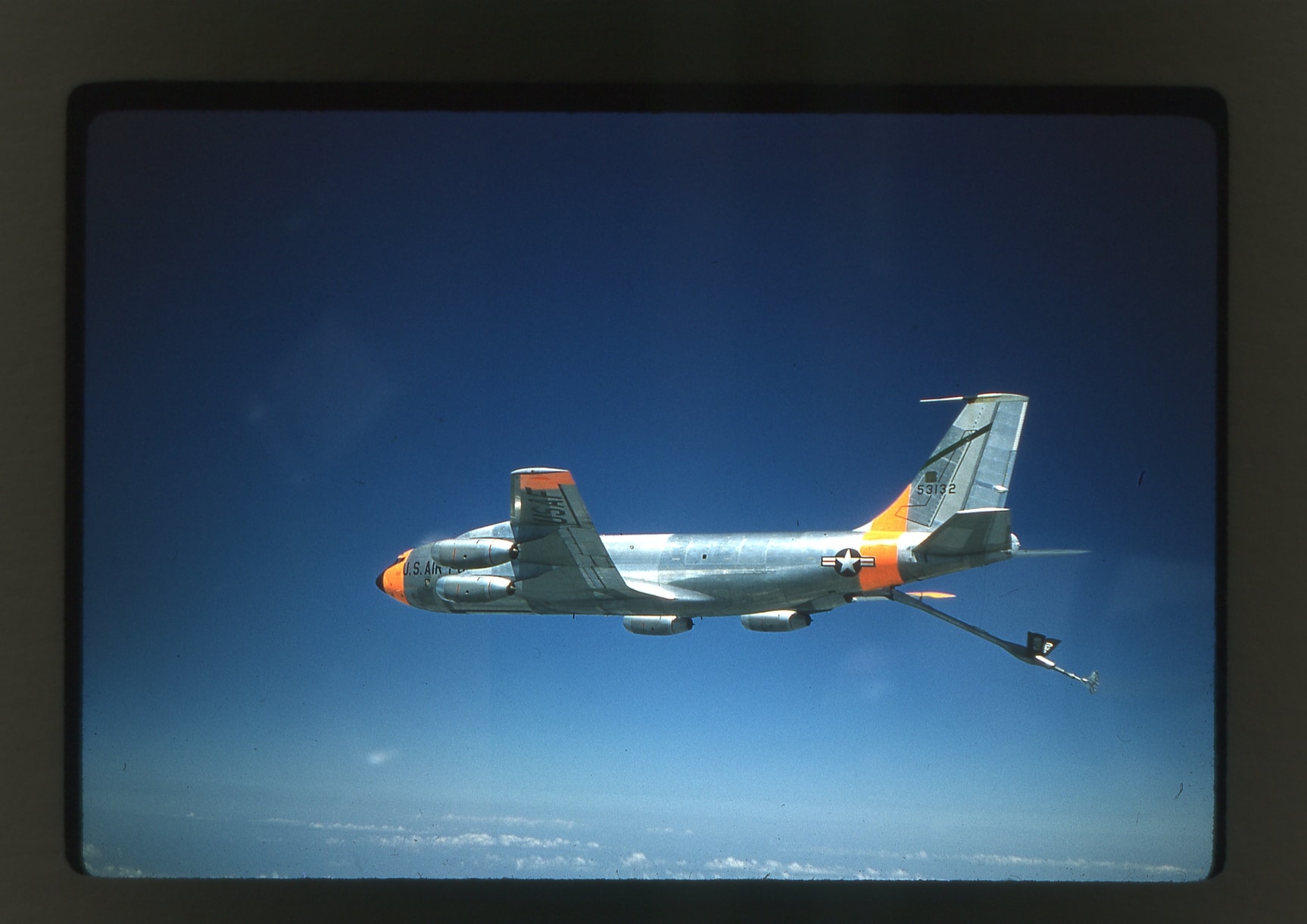
KC-135A, circa 1957