Upon closer examination, an XGAM-63 Rascal missile is seen attached to the right wing. This means that this Stratojet is one of two B-47s modified for testing said weapon, the Air Force’s first nuclear-armed standoff missile. Such a device came at a premium: at 2.2 million dollars, the Rascal cost more than its B-47 mothership.
SAC often sent aircraft and crews to civilian airports in order to disperse the bomber force. This B-47E (53-2143) of the 307th Bomb Wing, Lincoln AFB, is seen at Chicago O’Hare airport in 1960.
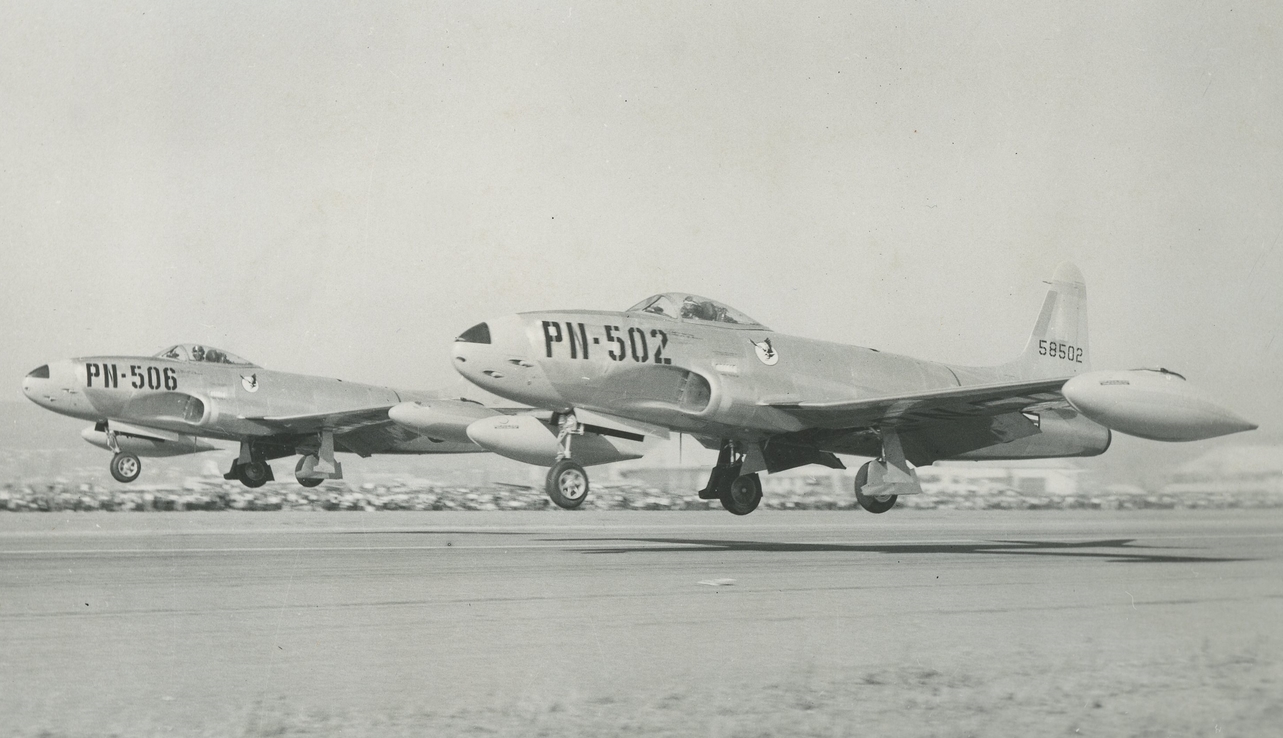
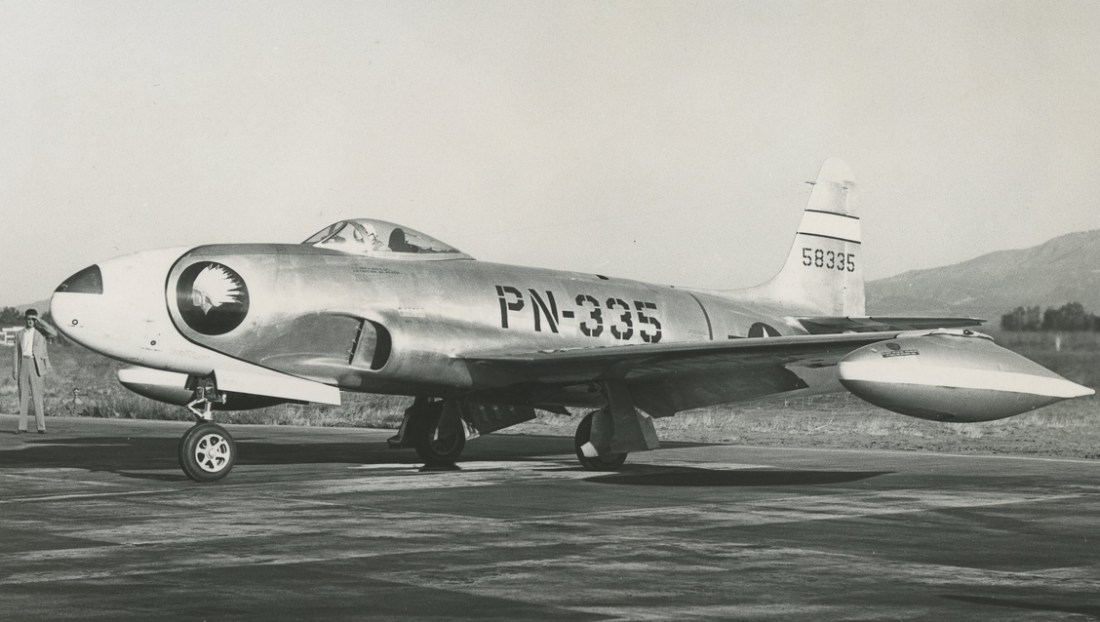
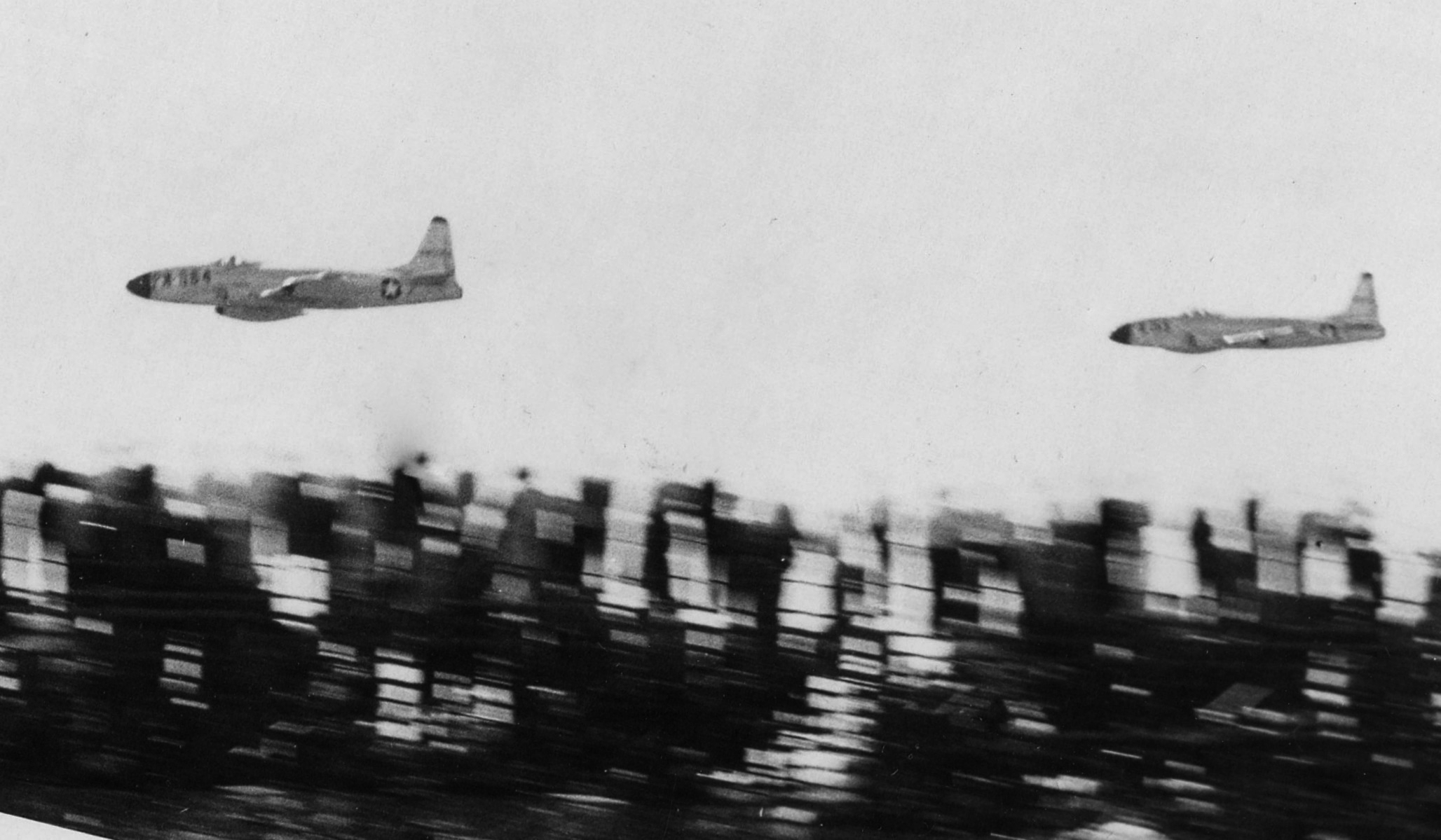
A pair of P-80’s of the 56th Fighter Group. 45-8320 is from the 61st Fighter Squadron, Jet. 44-85464 is from the 62nd Fighter Squadron, Jet. It wears the kill markings of Group CO, Dave Schilling.
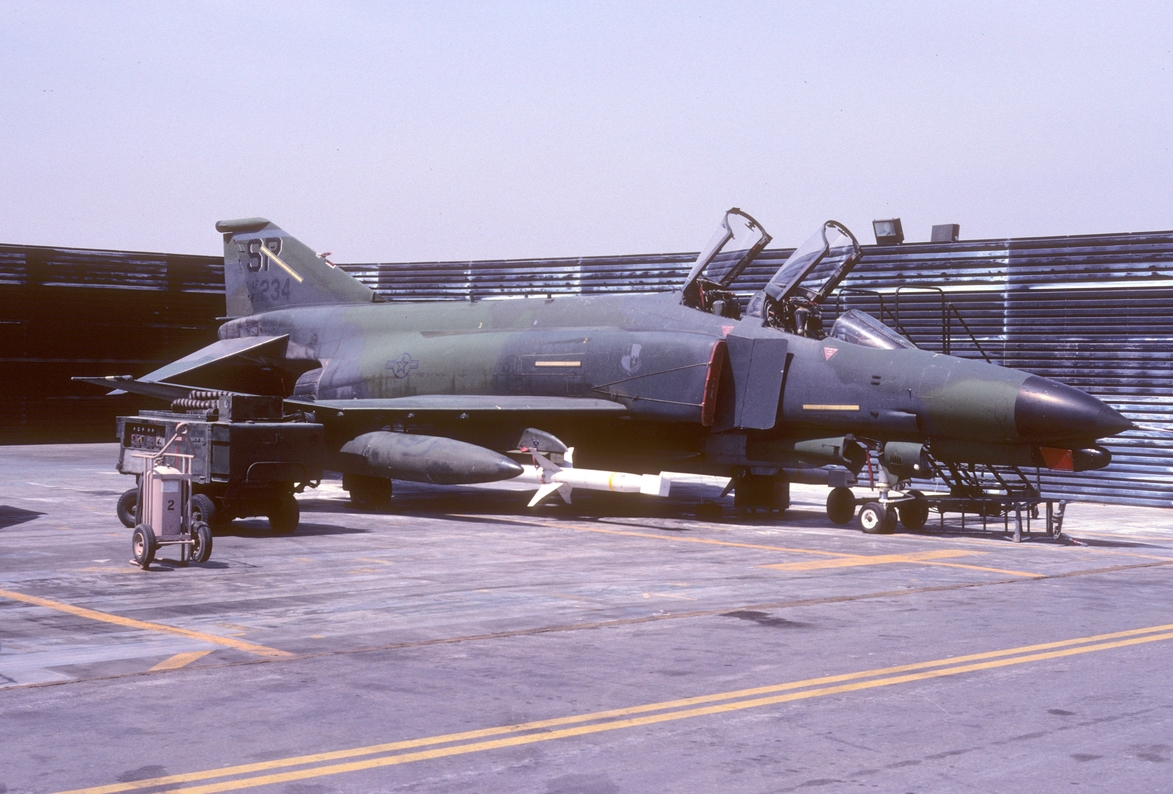
69-7234, lately of Spangdahlem Air Base’s 480th TFS, is seen here at Shaikh Isa Air Base, Bahrain during the Gulf War of 1991. While assigned there, the aircraft was part of the 3552nd Tactical Fighter Squadron. Interestingly, 234 was the only aircraft at that base that still retained the old green & gray “European 1” paint scheme.
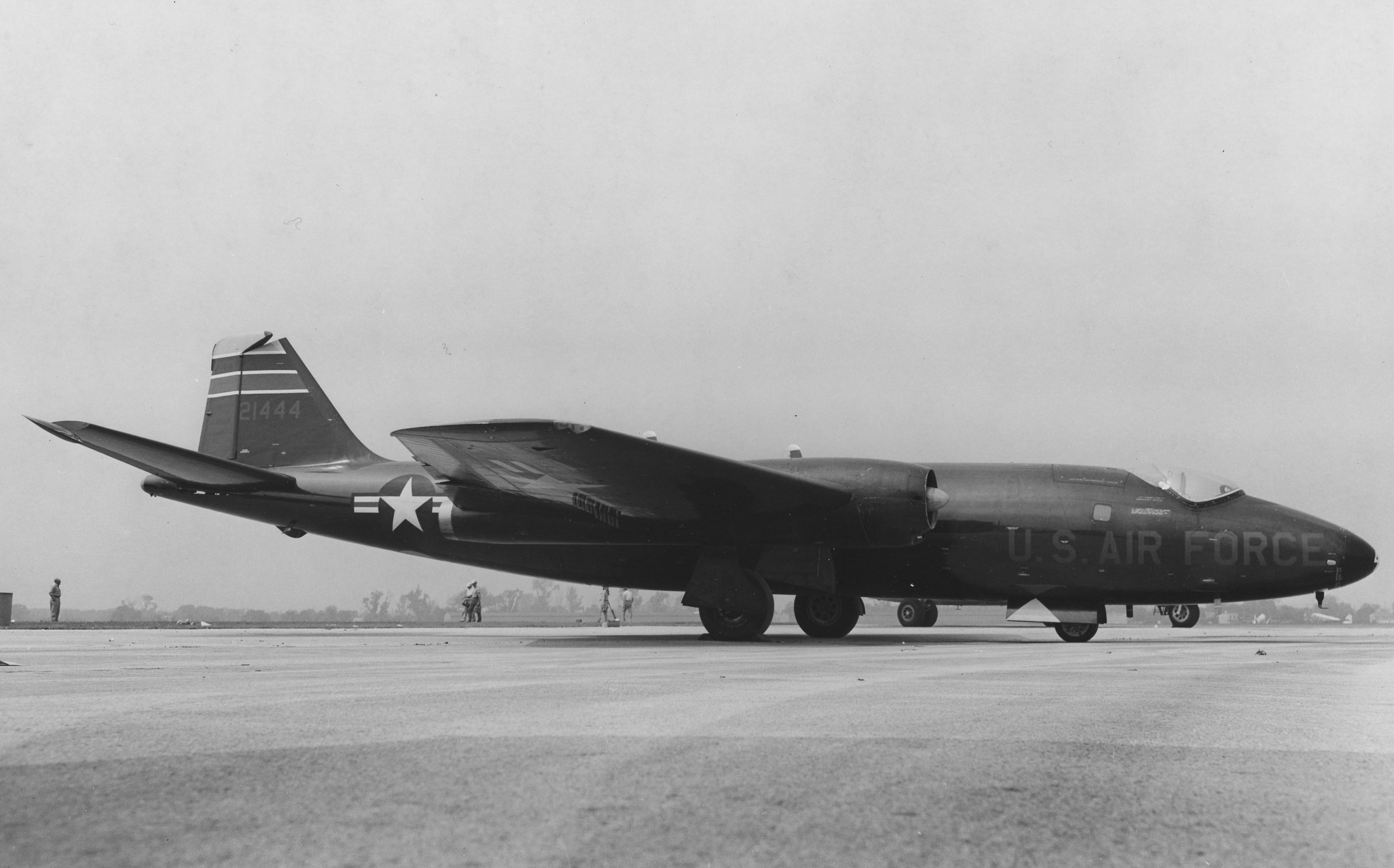
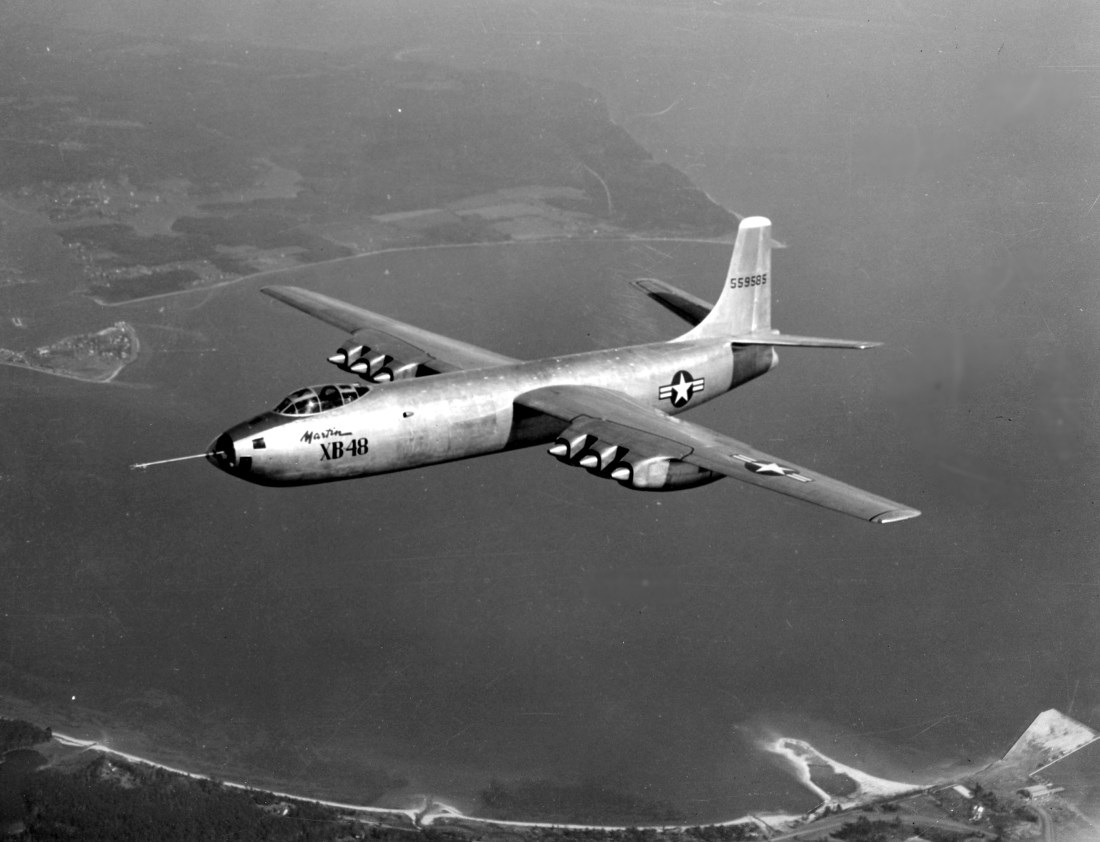
A couple of Martin bombers that failed to enjoy a long life. #1, the XB-48 was no match for Boeing’s B-47, and #2, the XB-51 fared no better in its efforts to be the USAF’s premier tactical bomber.
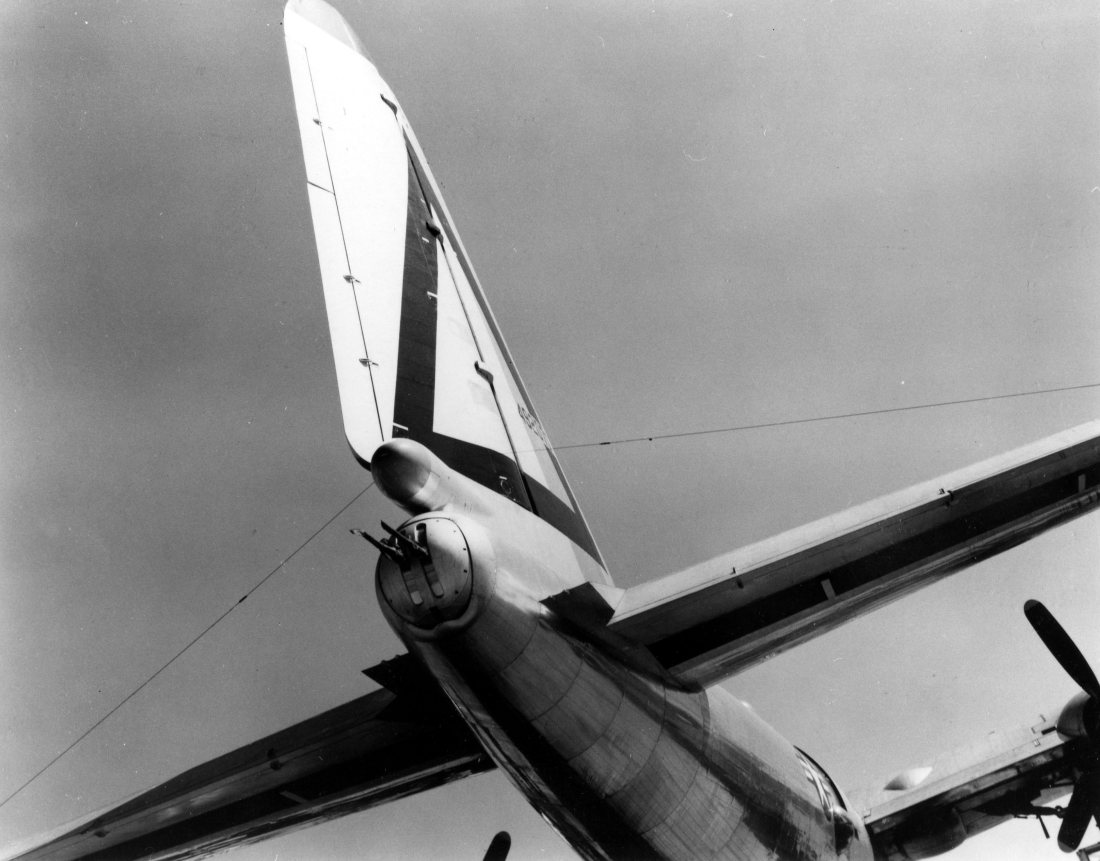
Nice view of a B-36’s defensive ability. Much has been said of the vulnerability of the B-36 – the USN even accused the USAF of suppressing such information. Of course it could be shot down, but as the Air Force (and the Soviets) knew well, intercepting fighters would never bag all the B-36’s. Even if only a handful got through, the nuclear weapons those few carried were deterrent enough.
Sharing the spotlight at a late 70’s open house, this F-5 (73-0881) is from the 58th Tactical Training Wing at Luke AFB. Interesting in that it carries the insignia of the 405th Tactical Training Wing, also at Luke. I can’t find any record the 405th flew the F-5. Maybe they briefly did so? Maybe some guy slapped on the wrong sticker. The Photo Phantom is from the 67th Tactical Reconnaissance Wing, Bergstrom AFB.
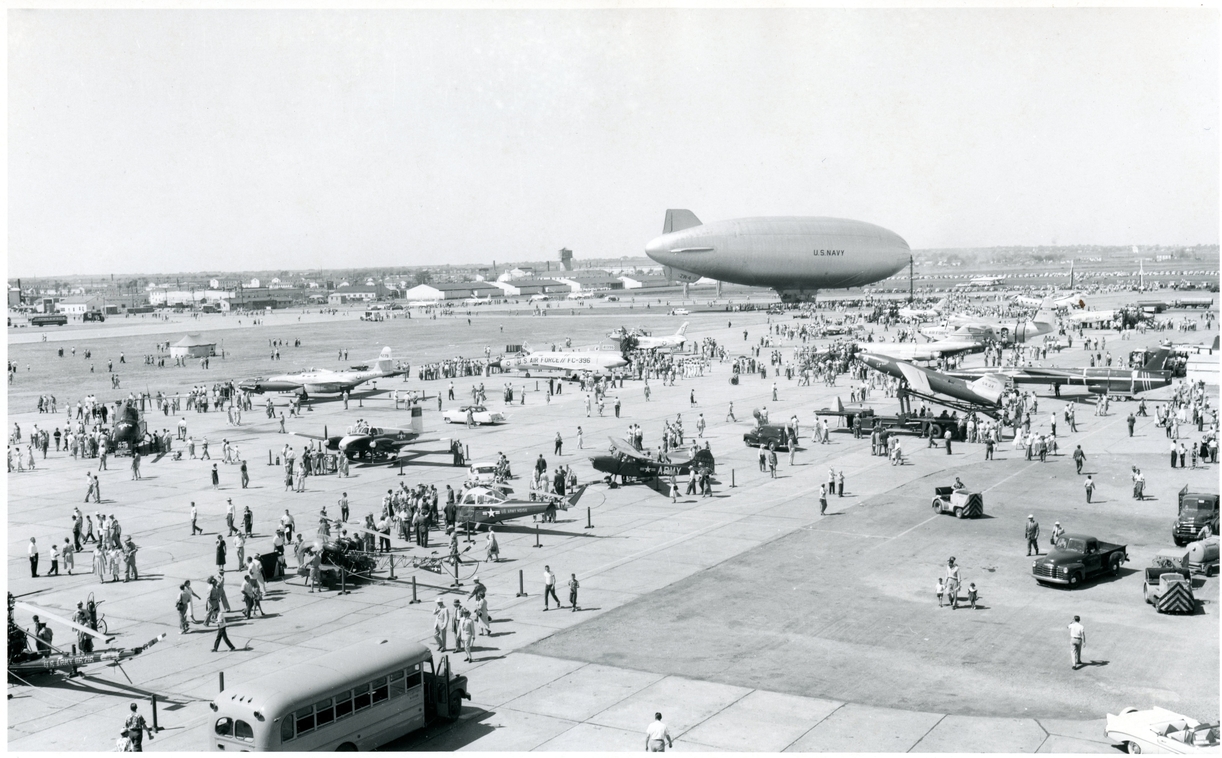
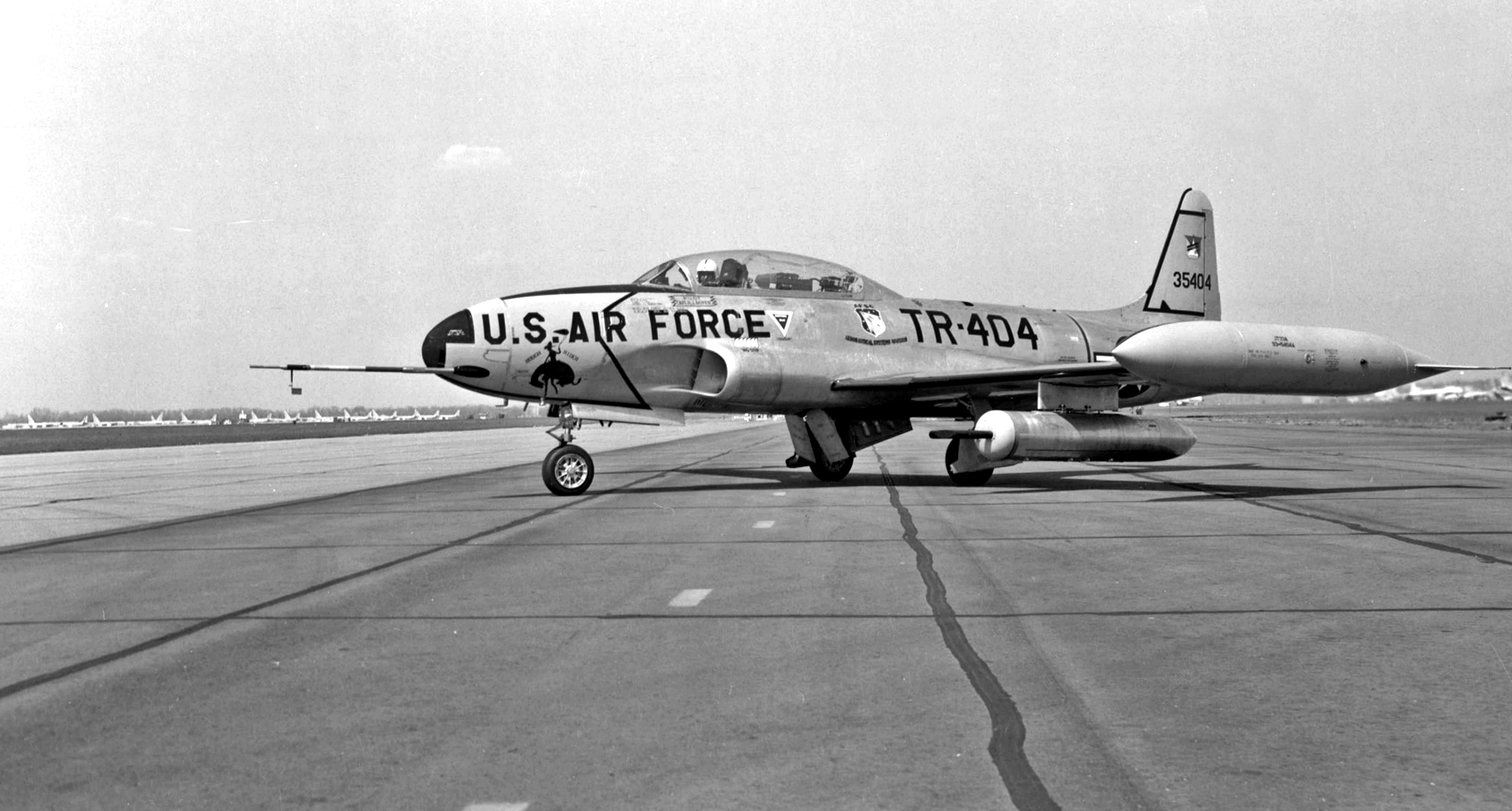
The Lockheed T-33 literally came in all shapes and sizes. This one (53-5404) is from Air Force Systems Command (AFSC) at Wright-Patterson AFB, and says “Project Rough Rider” on the nose. For a good reason too: It flew in to storms to measure the effects of hail. Though the insignia is that of Air Research and Development Command (ARDC), above it are the letters “AFSC”, the successor of ARDC. Apparently they hadn’t gotten around to putting on the new insignia. B-52’s of the 17th Bomb Wing are in the distance.
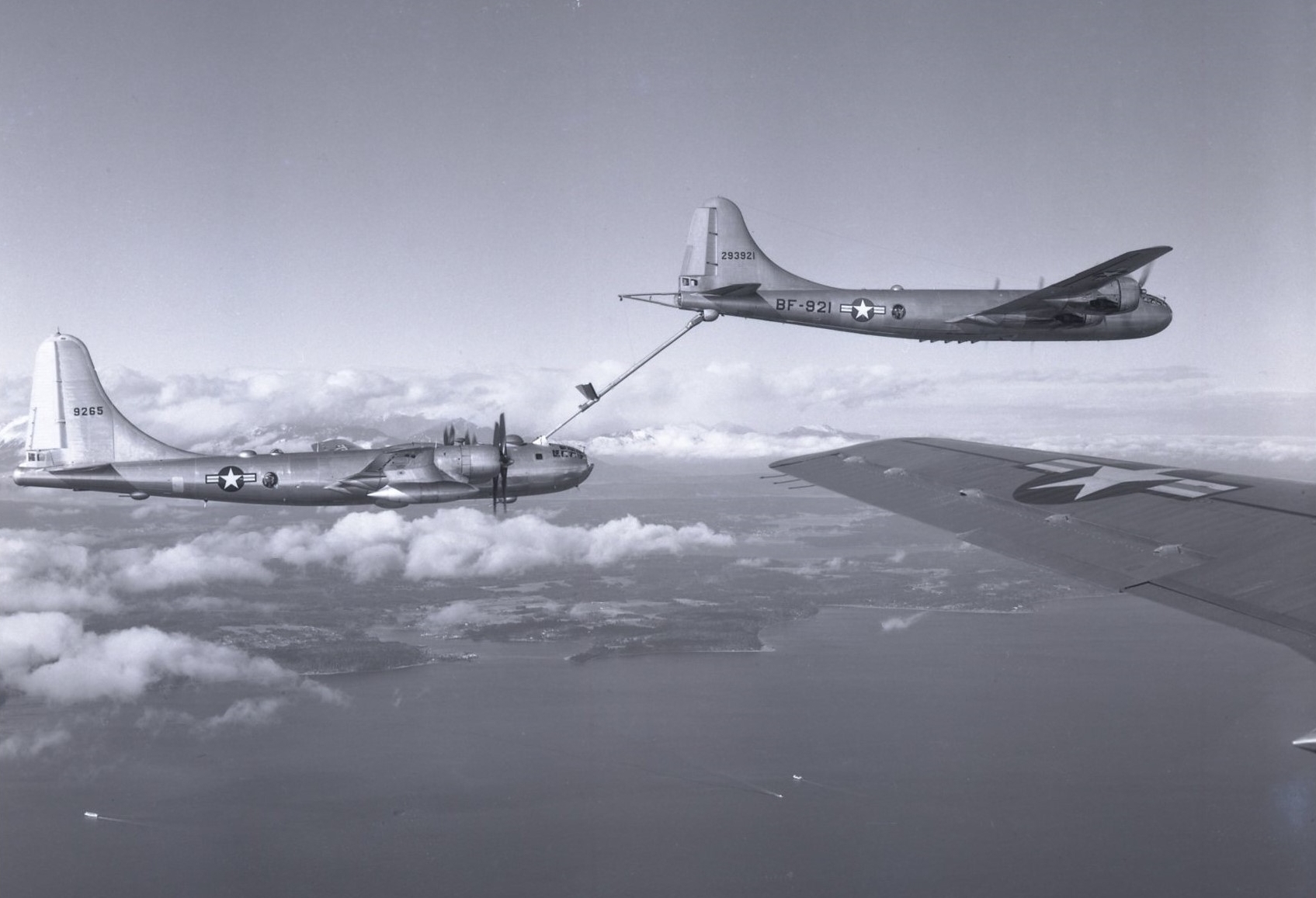
B-50 hooks up to a KB-29P during air refueling tests over Puget Sound. (Bainbridge island in the background). This B-50, 49-265, was eventually converted in to a tanker itself. The KB-29, 42-93921, started life as a bomber but never saw combat.
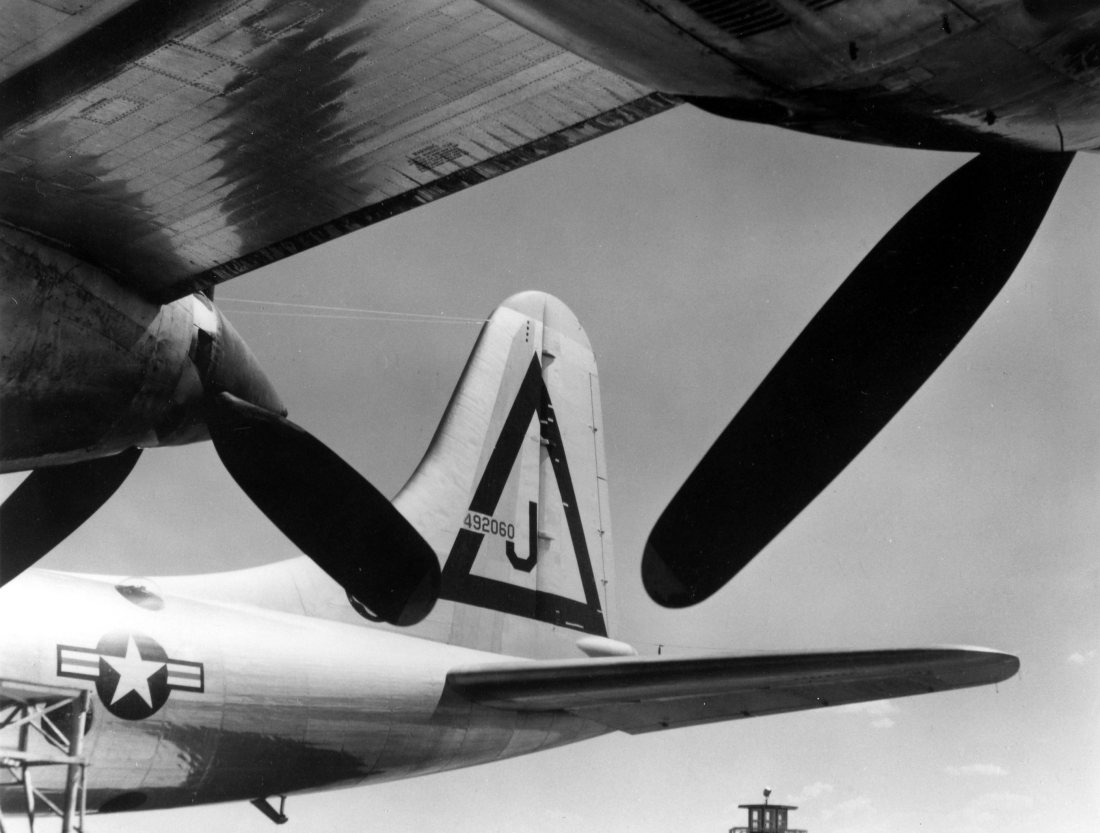
Now, I looked high and low to identify this B-36 unit. Great looking insignia, but my investigation revealed that this particular aircraft was used in a movie, and that the insignia is fictitious. Not a bad looking insignia though. This aircraft, 49-2652, when not leading a glamorous Hollywood life, was assigned to the 92nd Bomb Wing at Fairchild AFB, WA.
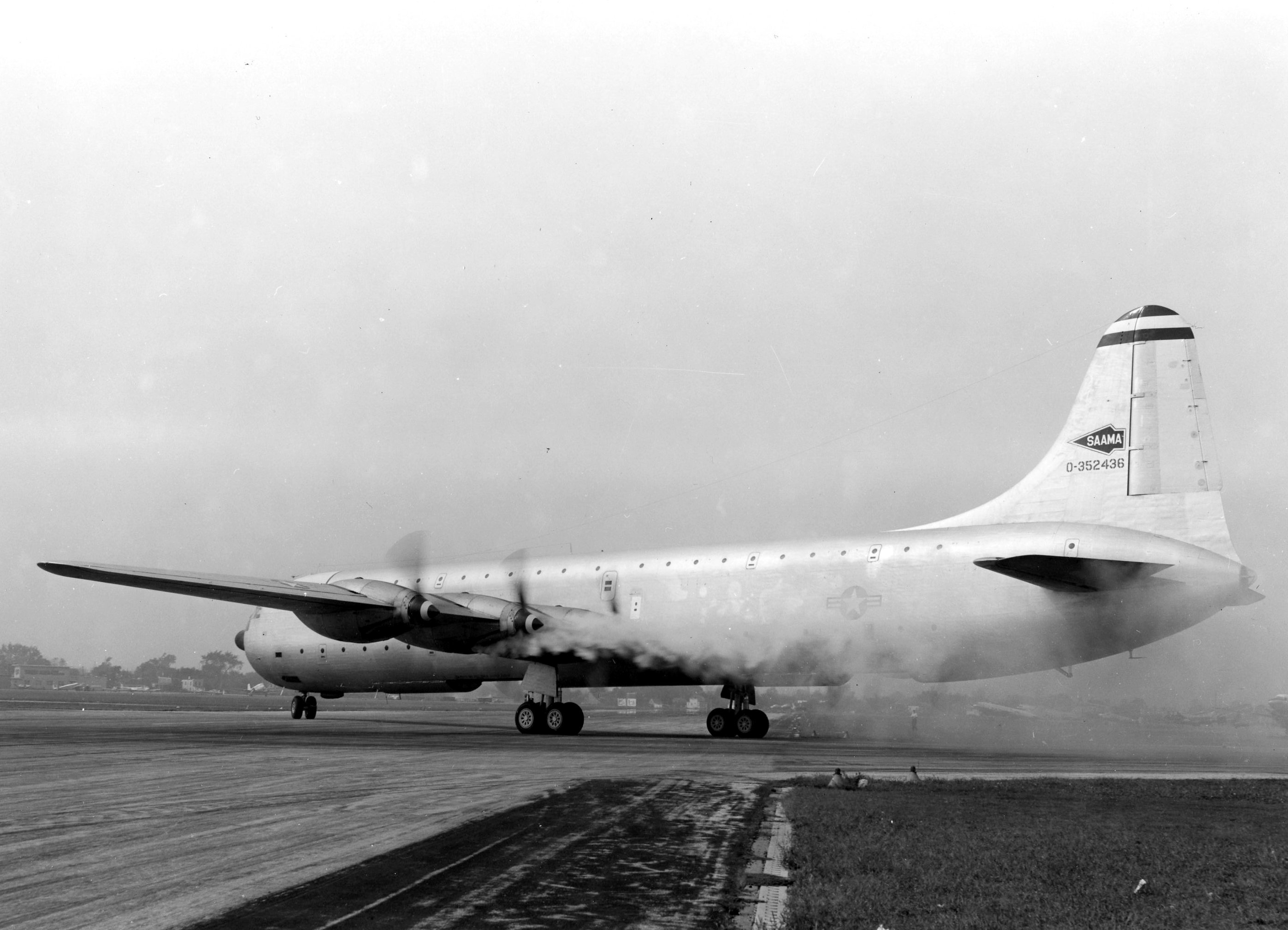
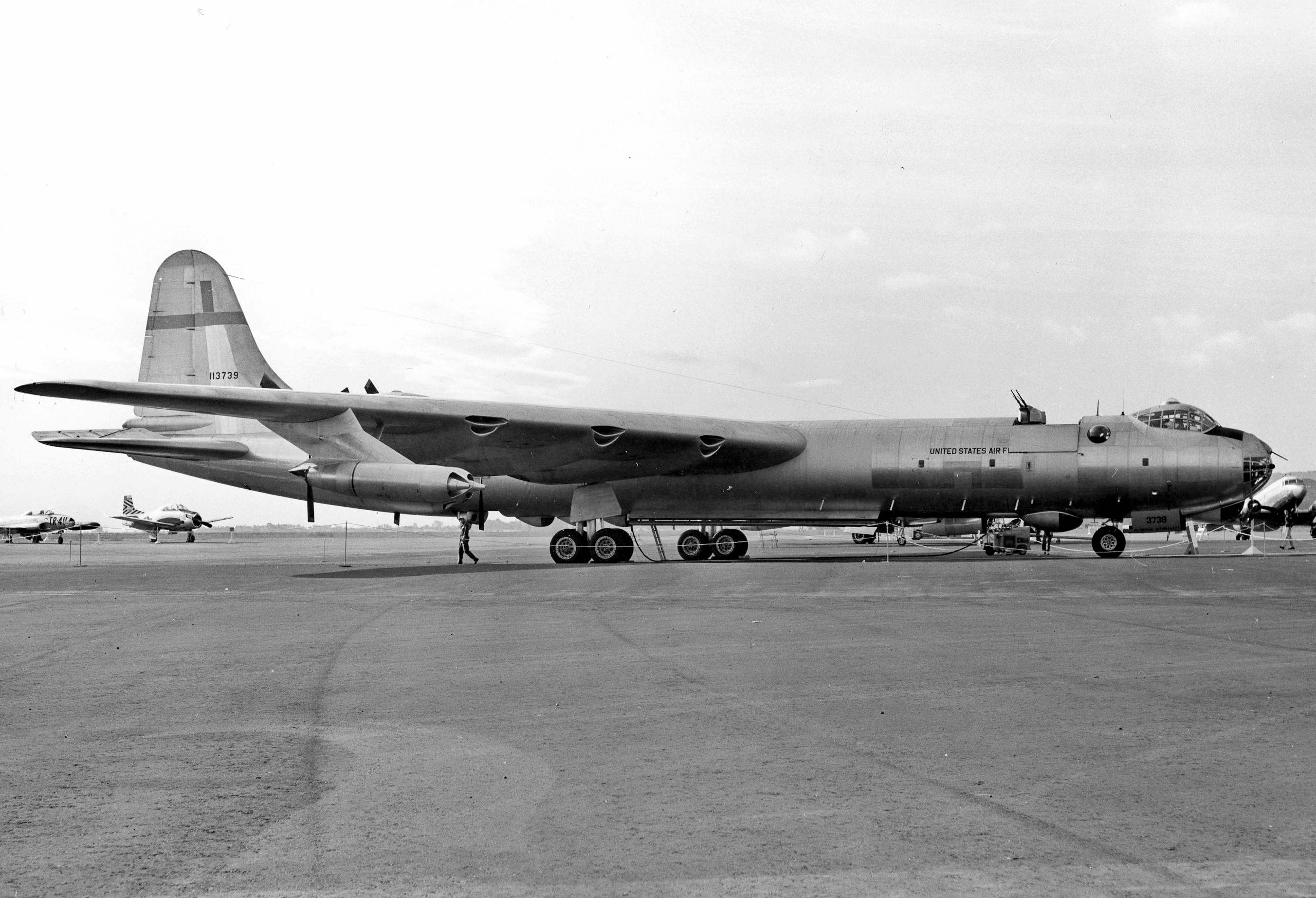
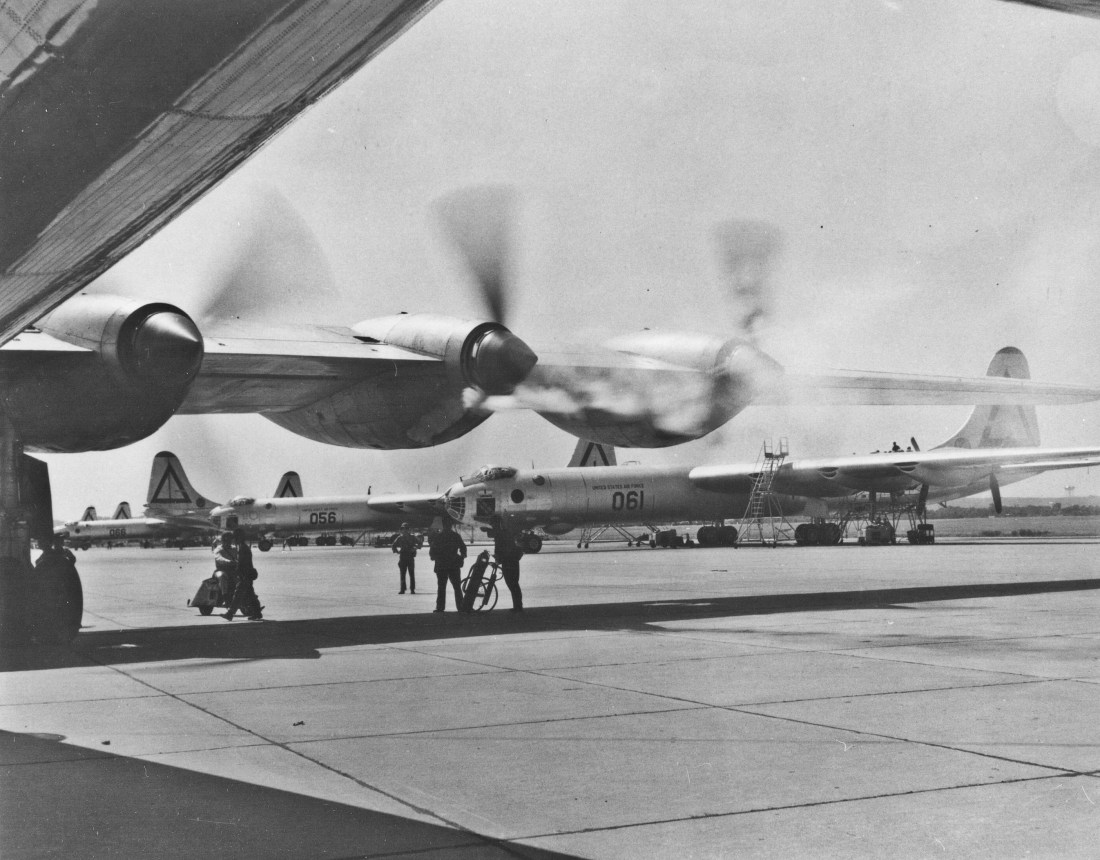
This is one of the “featherweight” models that had most of the guns removed to better the aircraft’s performance. Somewhere in the house, I have a Dash-One for a B-36; featherweight or not, the -1 charts reveal a beast that needed a runway halfway around the earth to get airborne. (Just one of the many reasons I love the B-36.)
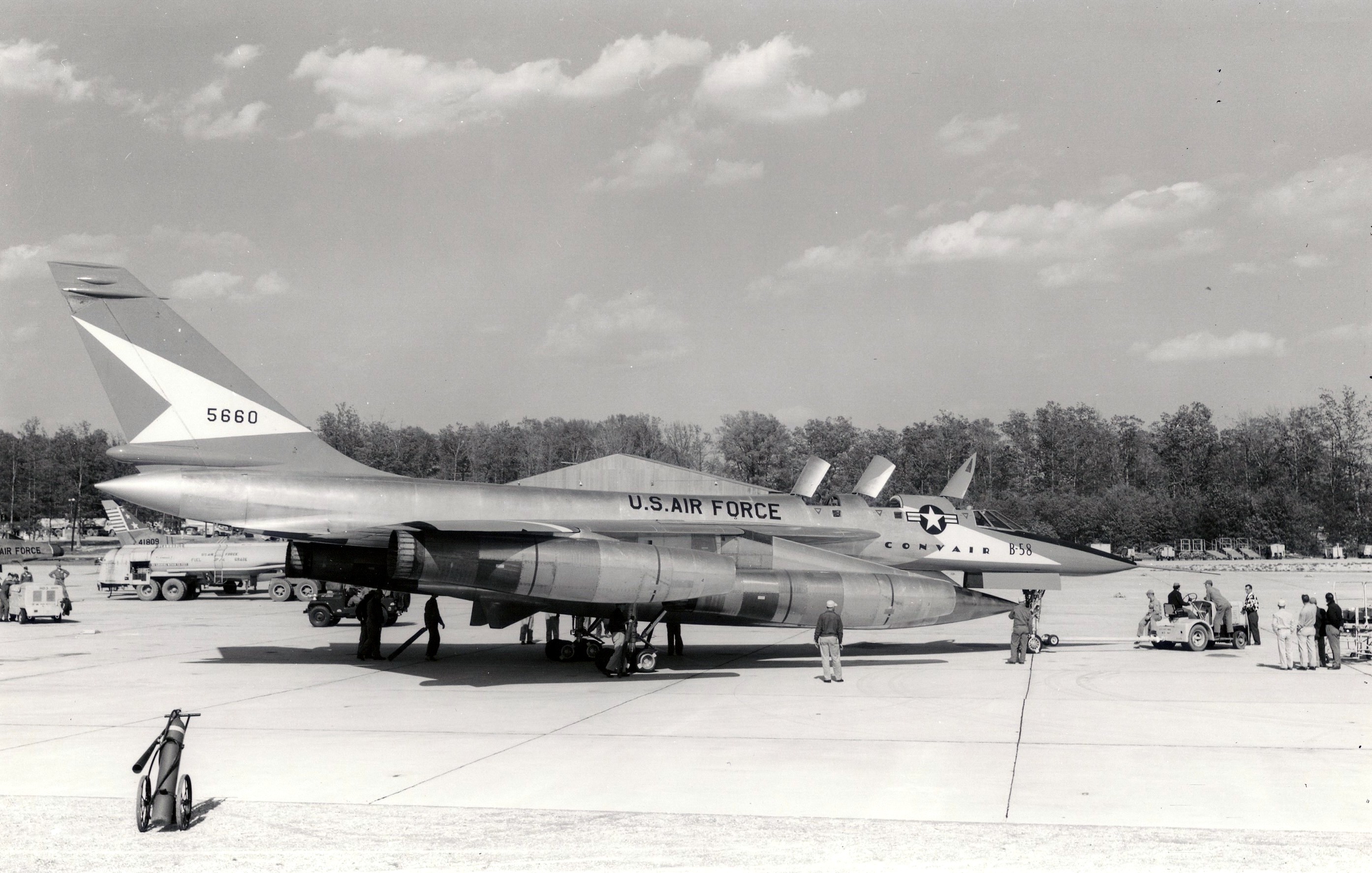
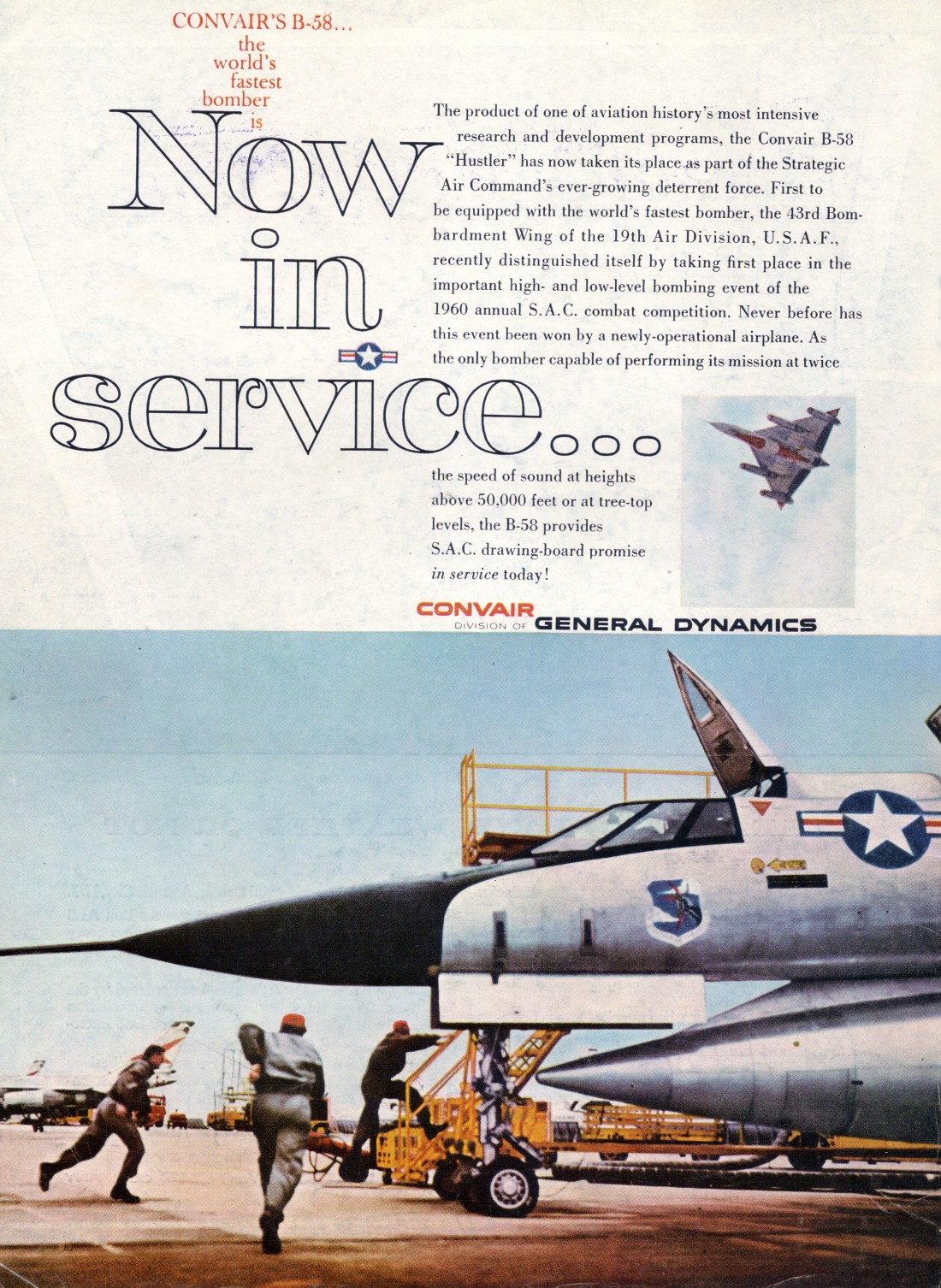
660 was the first of the B-58s and after spending a brief career as a test aircraft (it was the first one built) it was relegated to the role of an instructional airframe.