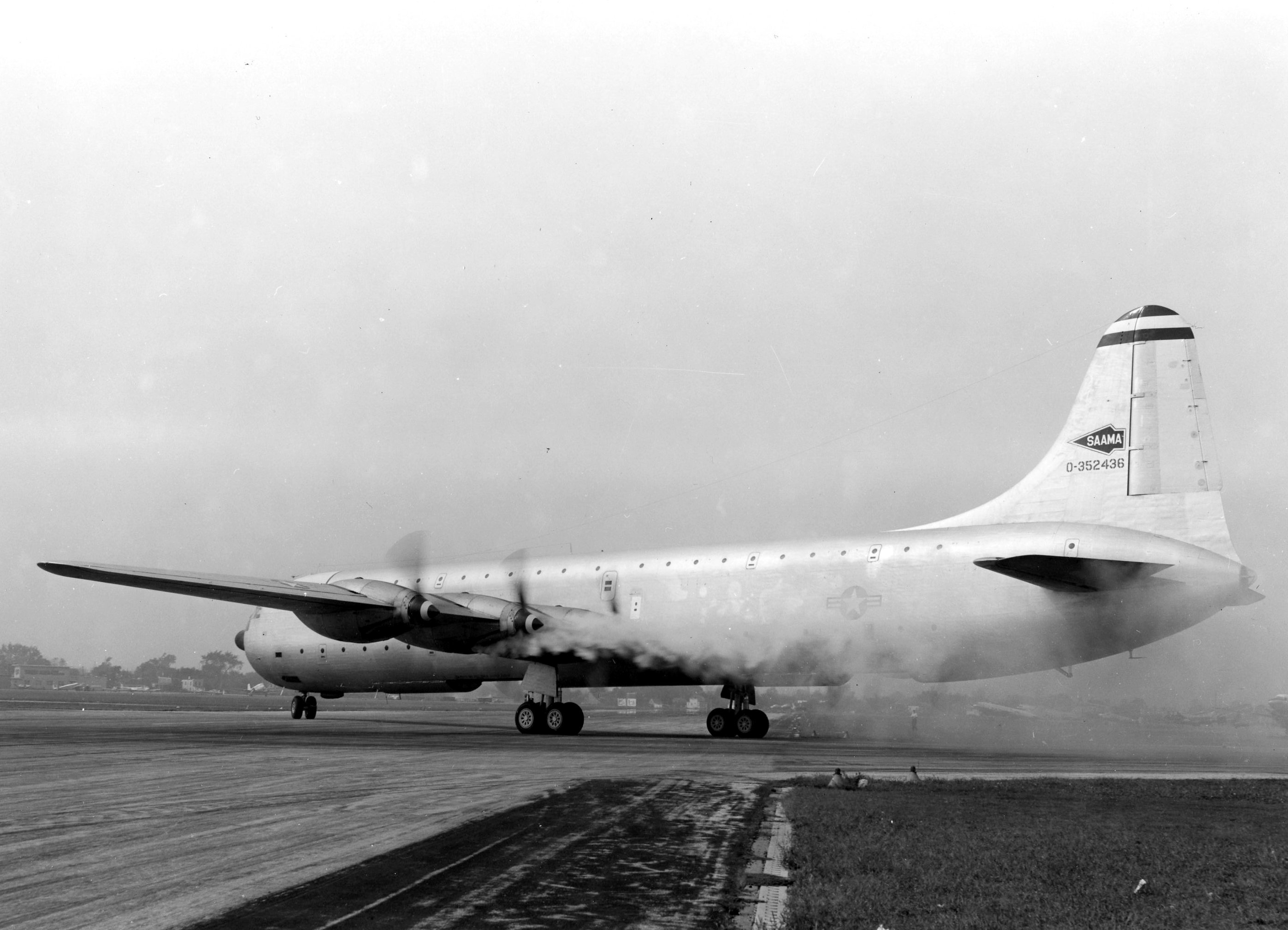
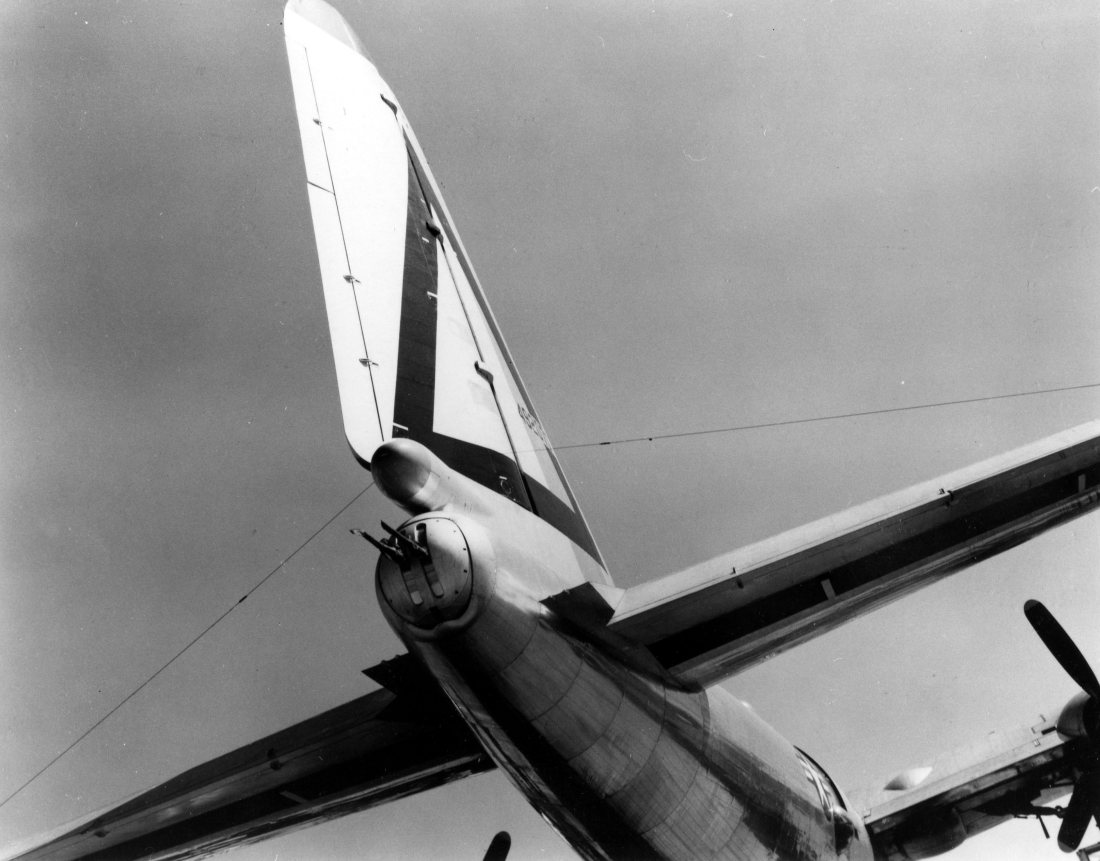
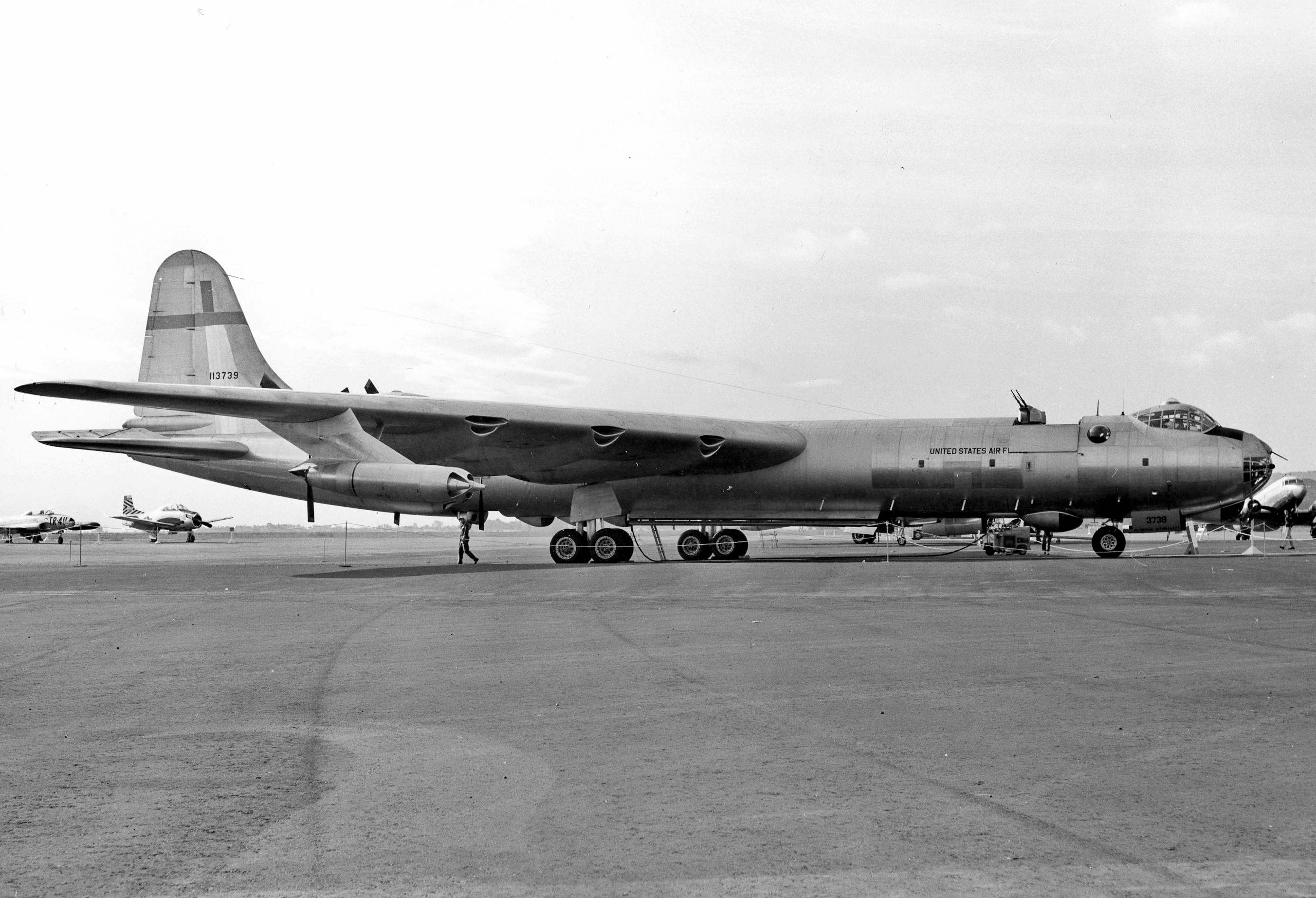
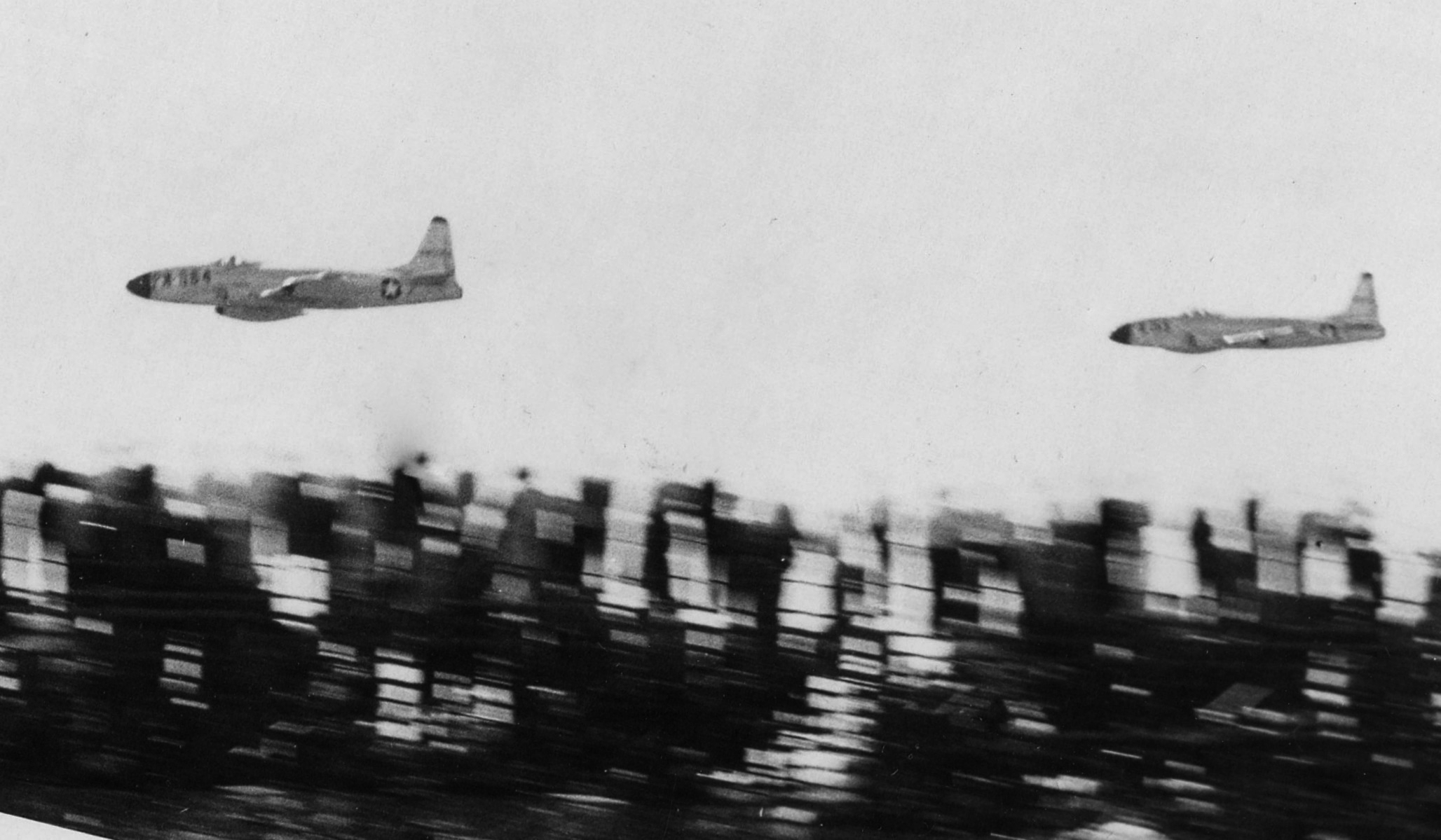
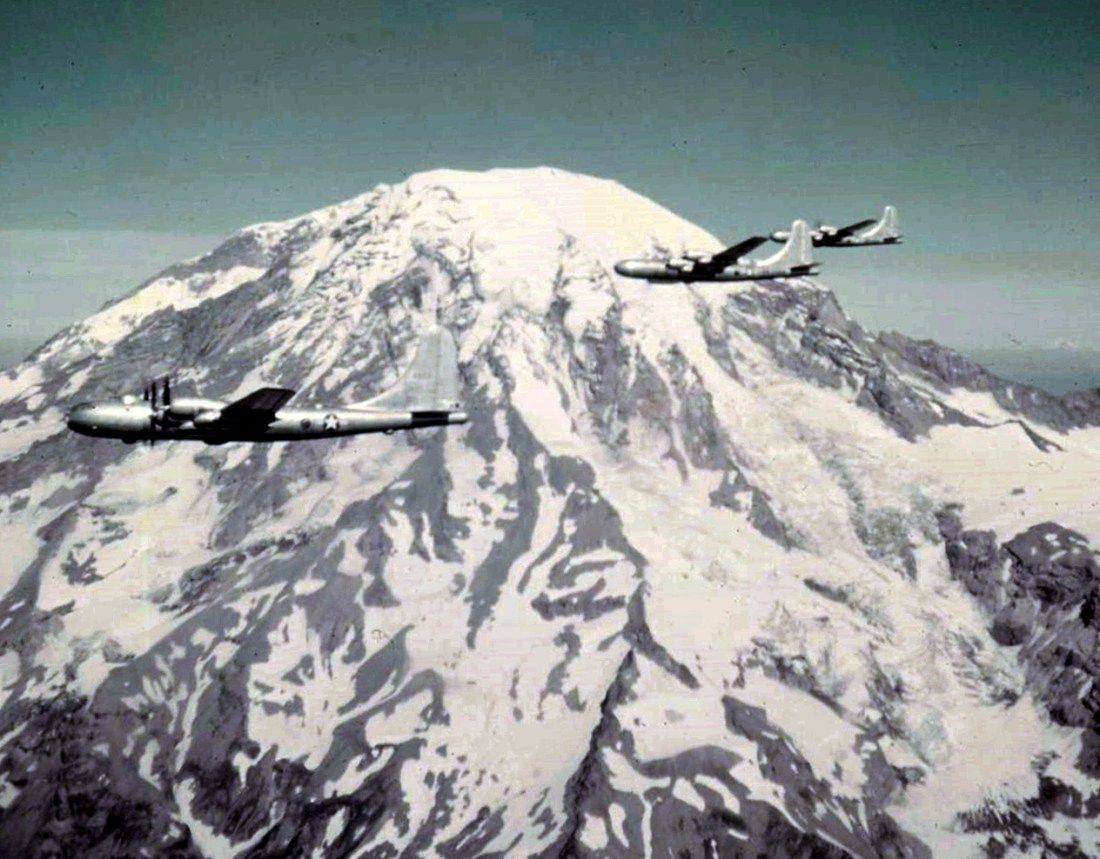
Nice view of a B-36’s defensive ability. Much has been said of the vulnerability of the B-36 – the USN even accused the USAF of suppressing such information. Of course it could be shot down, but as the Air Force (and the Soviets) knew well, intercepting fighters would never bag all the B-36’s. Even if only a handful got through, the nuclear weapons those few carried were deterrent enough.
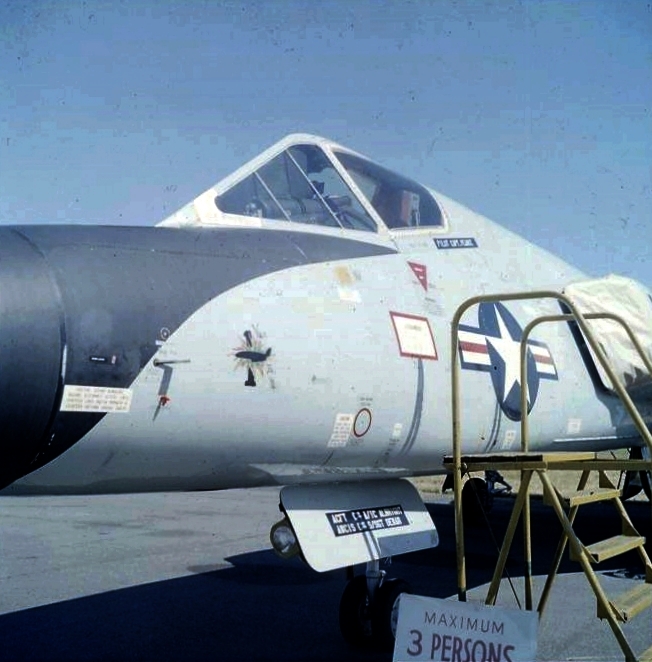
Sharing the spotlight at a late 70’s open house, this F-5 (73-0881) is from the 58th Tactical Training Wing at Luke AFB. Interesting in that it carries the insignia of the 405th Tactical Training Wing, also at Luke. I can’t find any record the 405th flew the F-5. Maybe they briefly did so? Maybe some guy slapped on the wrong sticker. The Photo Phantom is from the 67th Tactical Reconnaissance Wing, Bergstrom AFB.
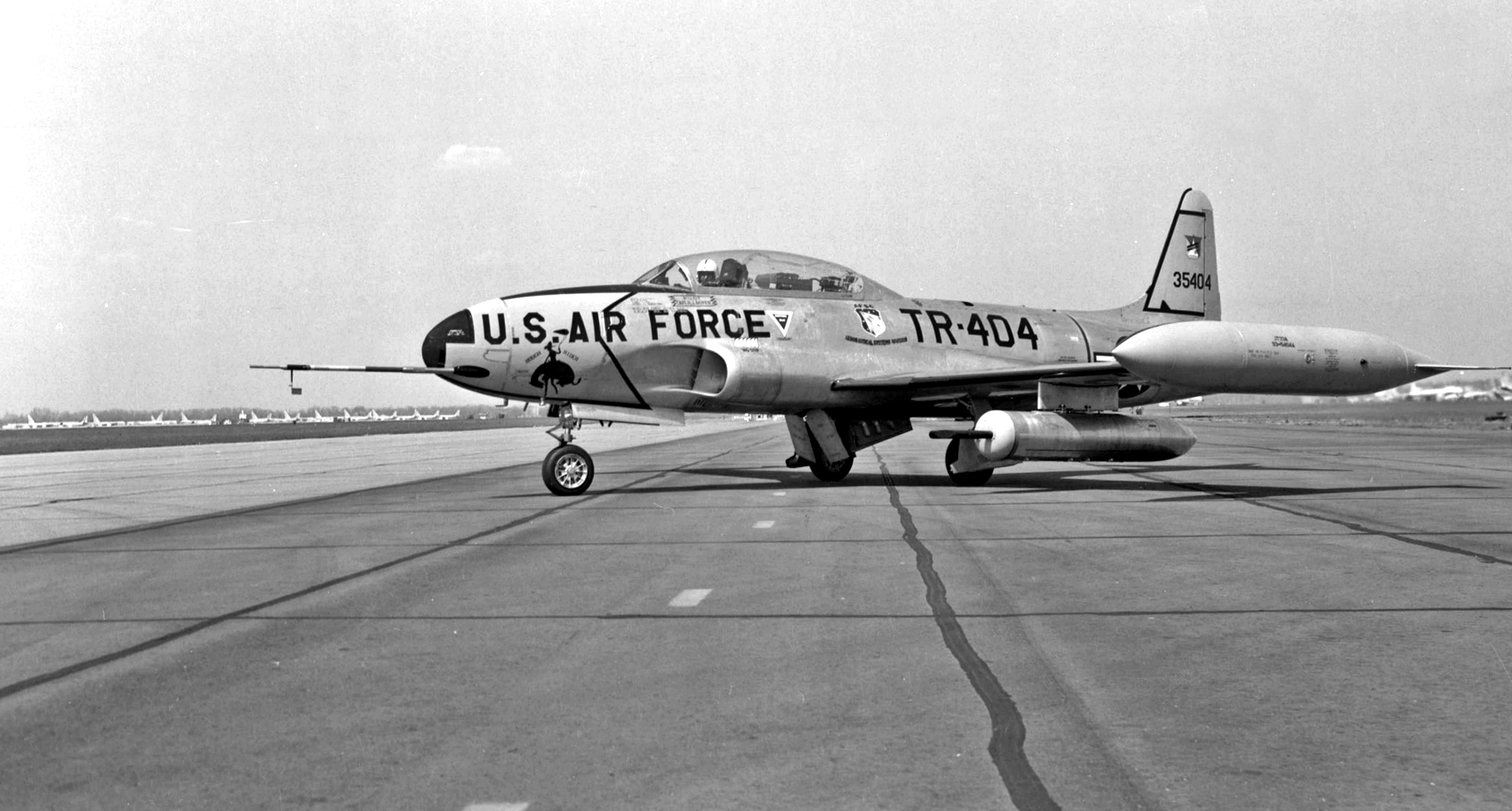
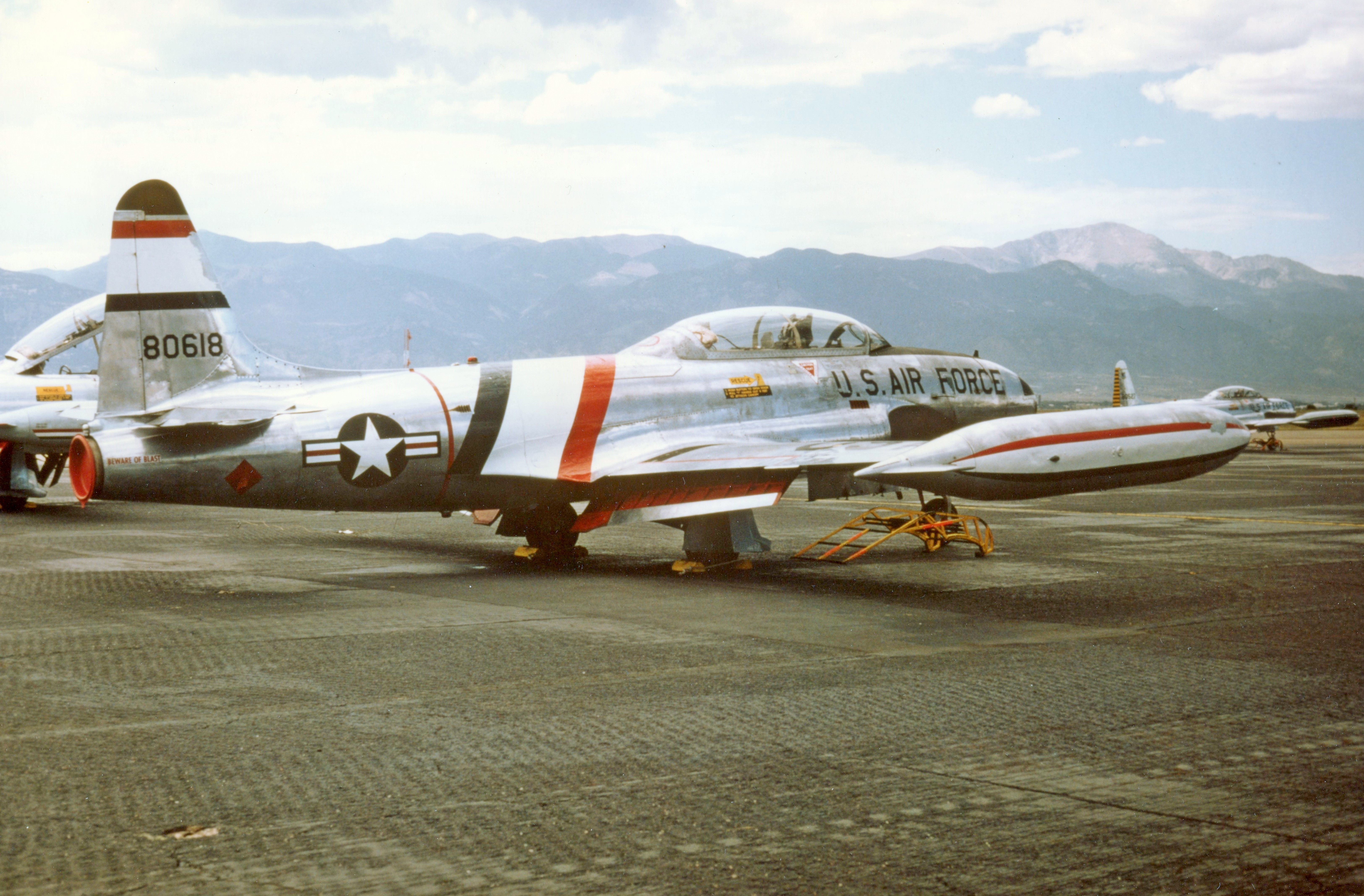
The Lockheed T-33 literally came in all shapes and sizes. This one (53-5404) is from Air Force Systems Command (AFSC) at Wright-Patterson AFB, and says “Project Rough Rider” on the nose. For a good reason too: It flew in to storms to measure the effects of hail. Though the insignia is that of Air Research and Development Command (ARDC), above it are the letters “AFSC”, the successor of ARDC. Apparently they hadn’t gotten around to putting on the new insignia. B-52’s of the 17th Bomb Wing are in the distance.
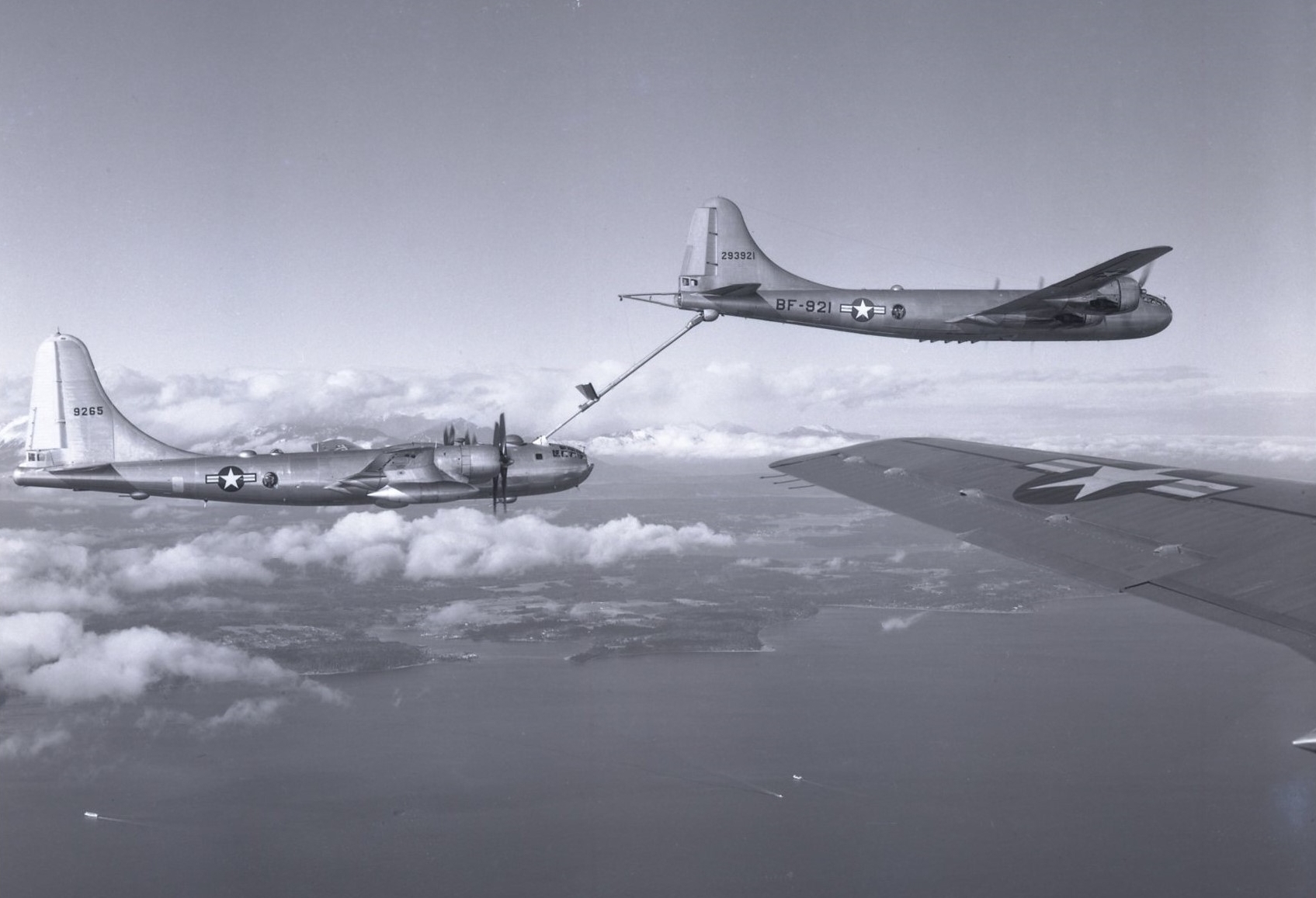
B-50 hooks up to a KB-29P during air refueling tests over Puget Sound. (Bainbridge island in the background). This B-50, 49-265, was eventually converted in to a tanker itself. The KB-29, 42-93921, started life as a bomber but never saw combat.
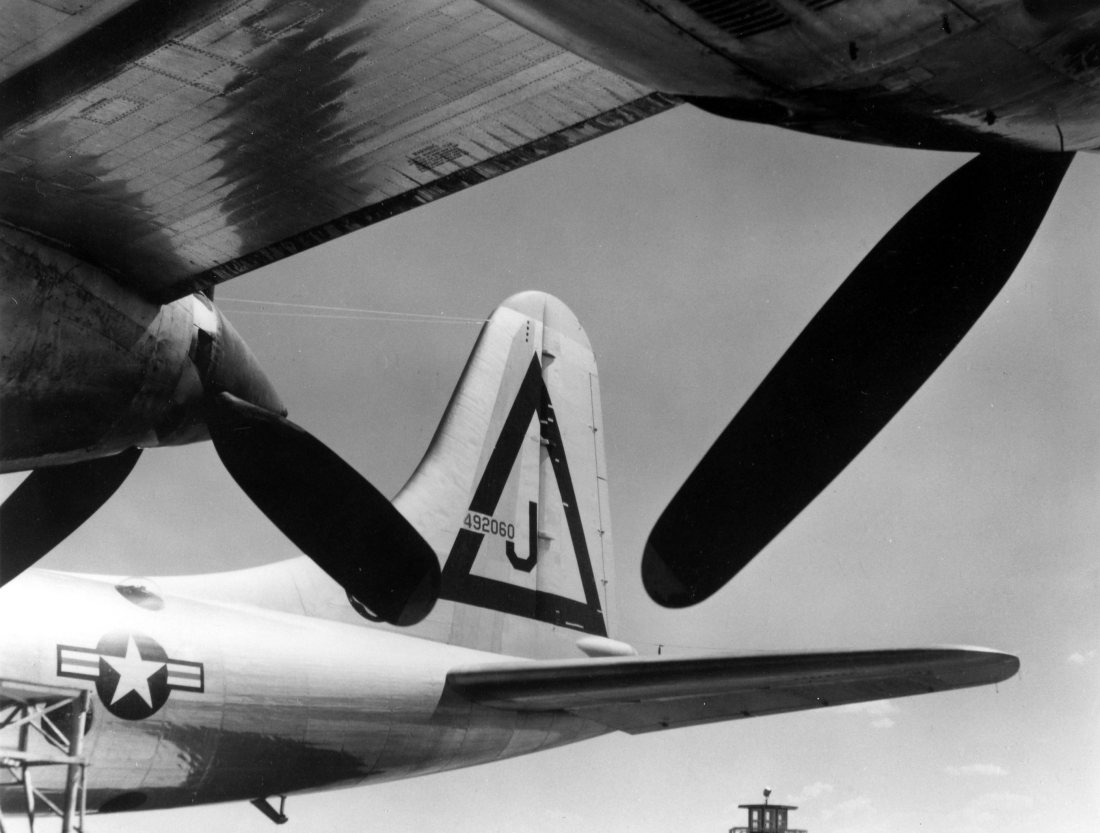
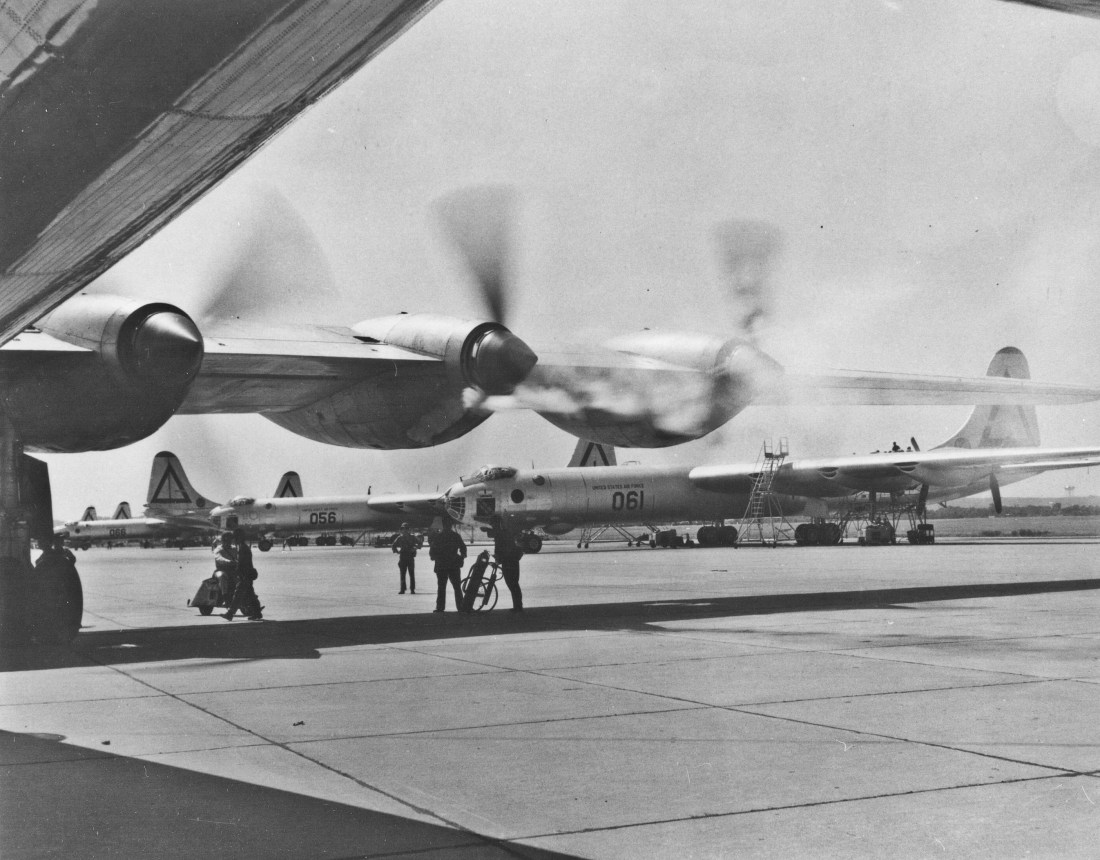
Now, I looked high and low to identify this B-36 unit. Great looking insignia, but my investigation revealed that this particular aircraft was used in a movie, and that the insignia is fictitious. Not a bad looking insignia though. This aircraft, 49-2652, when not leading a glamorous Hollywood life, was assigned to the 92nd Bomb Wing at Fairchild AFB, WA.
This is one of the “featherweight” models that had most of the guns removed to better the aircraft’s performance. Somewhere in the house, I have a Dash-One for a B-36; featherweight or not, the -1 charts reveal a beast that needed a runway halfway around the earth to get airborne. (Just one of the many reasons I love the B-36.)
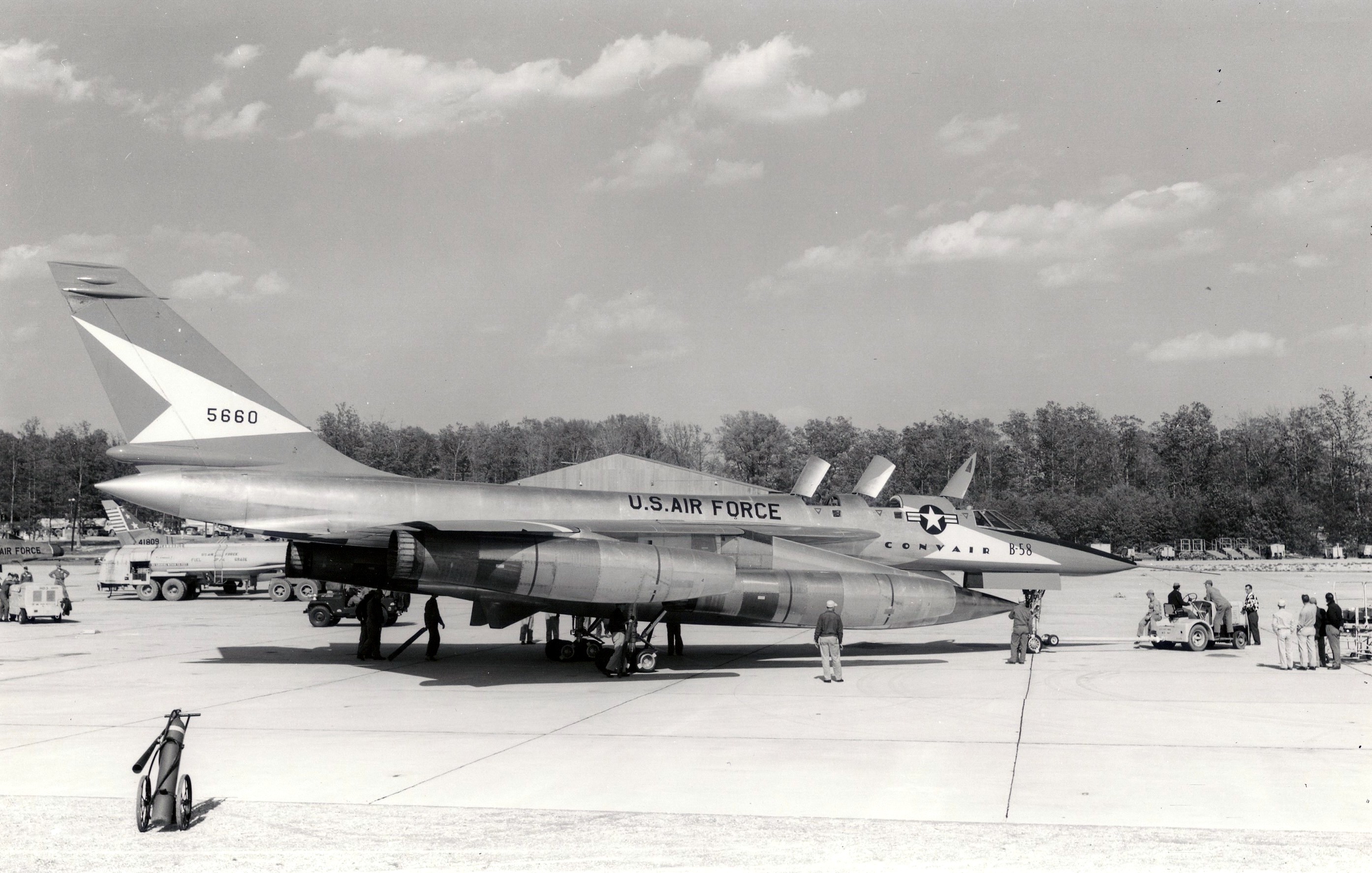
660 was the first of the B-58s and after spending a brief career as a test aircraft (it was the first one built) it was relegated to the role of an instructional airframe.
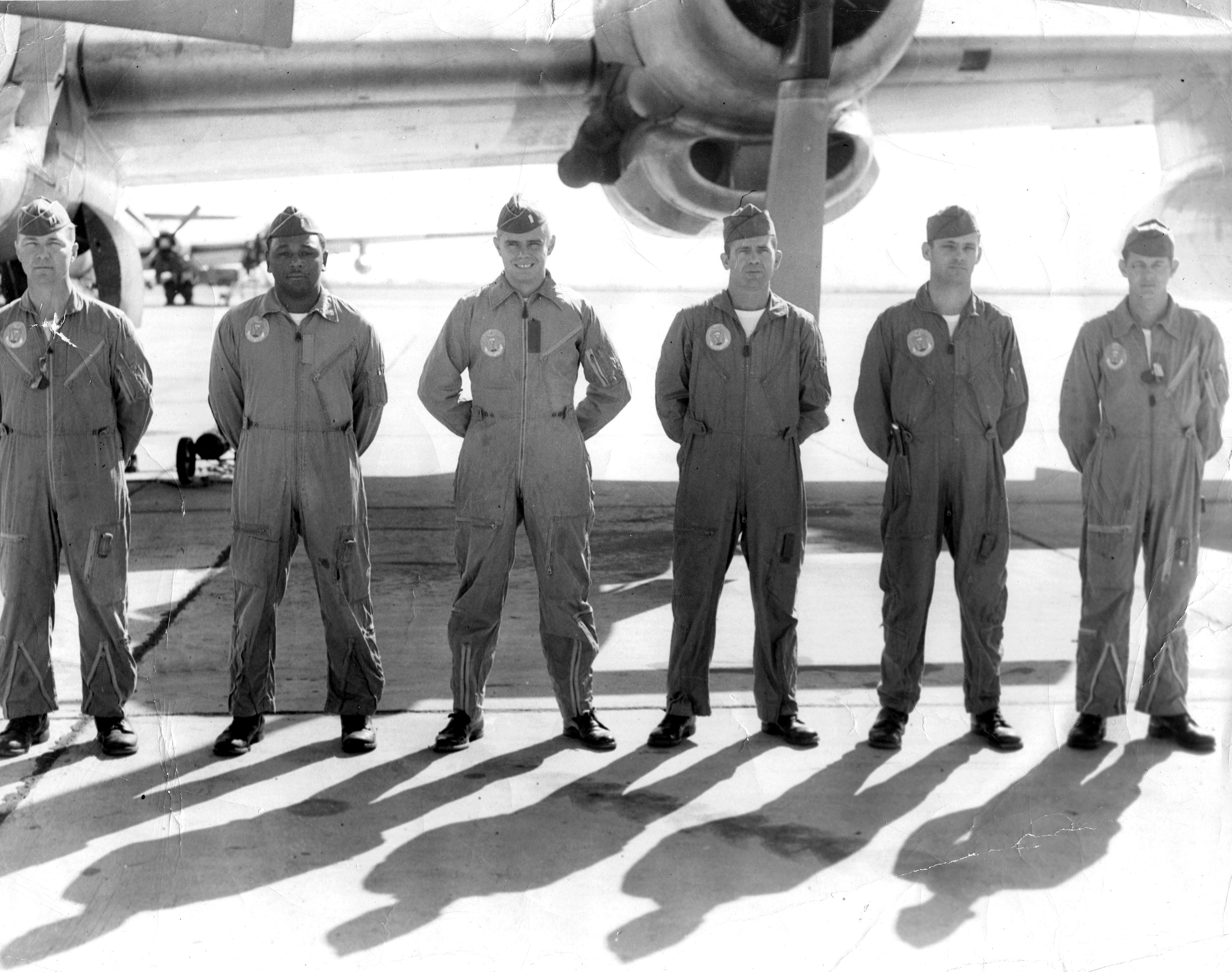
Northrop’s ground crew with the XB-35. Hard to believe the developments in aviation these guys were part of. Ten years earlier they had been working on open cockpit biplanes. Now, this.
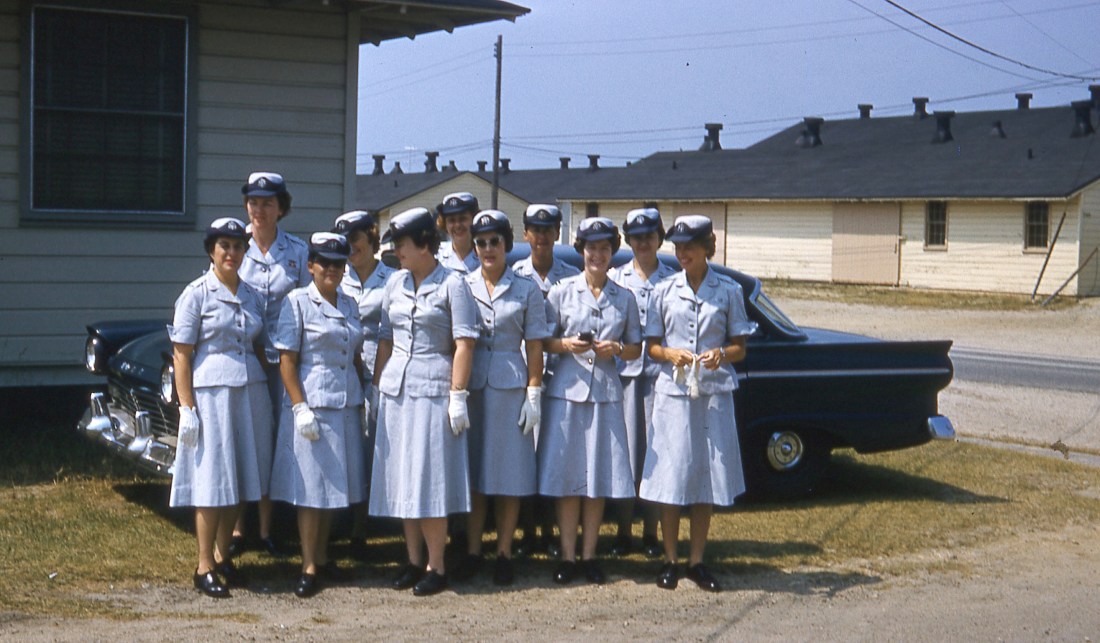
Departing from Otis AFB in Massachusetts, an intrepid crew in a C-119 flew a cargo of Air Force flight nurses to Key West in 1960.
We’re going to Florida! The uniform on the right was worn by the nurses while performing their inflight duties…
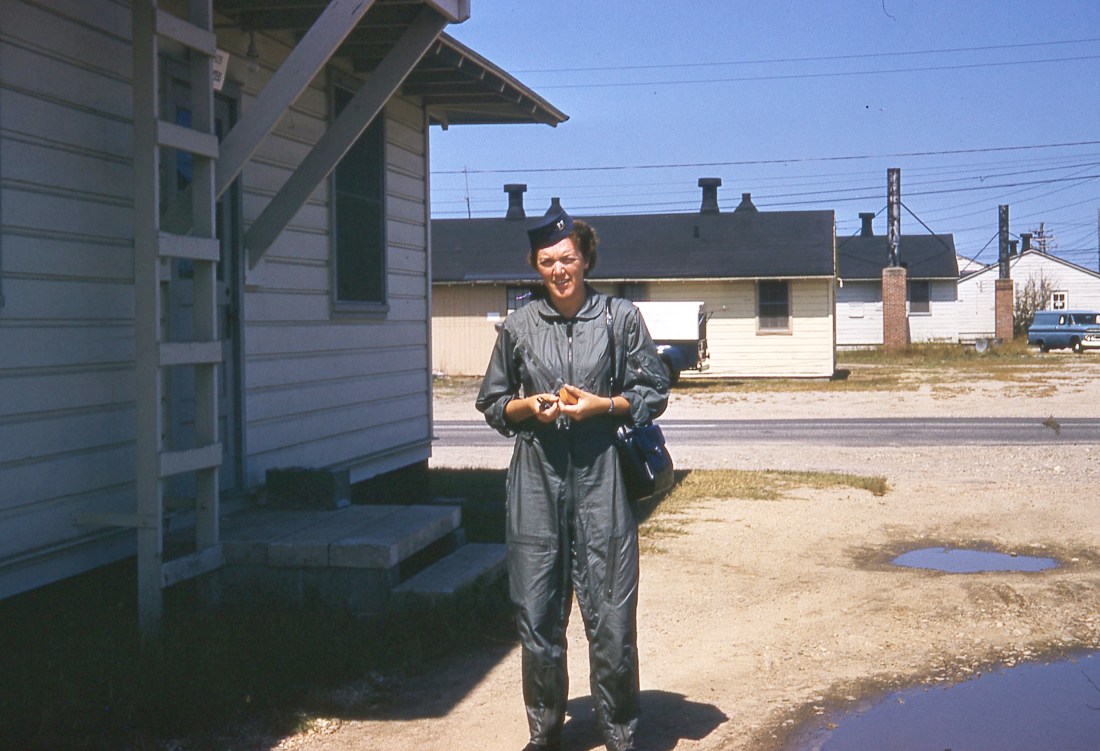
…or you could wear a flightsuit. (Don’t forget the purse)
Driving the C-119
“Looks like Florida to me…”
On final to NAS Key West. Thanks to google earth, I can state that this is Summerland Key…
…and this is Cudjoe Key
Key West at last. Another tough mission hacked.
Now that they’ve made it, fishin’ is the mission. And, anyone who has been to Key West in the last 40 years will stare in amazement at the quiet highway.
“Charcoal Broiled Steaks” – I checked: this joint is long gone. Too bad, it looks good.
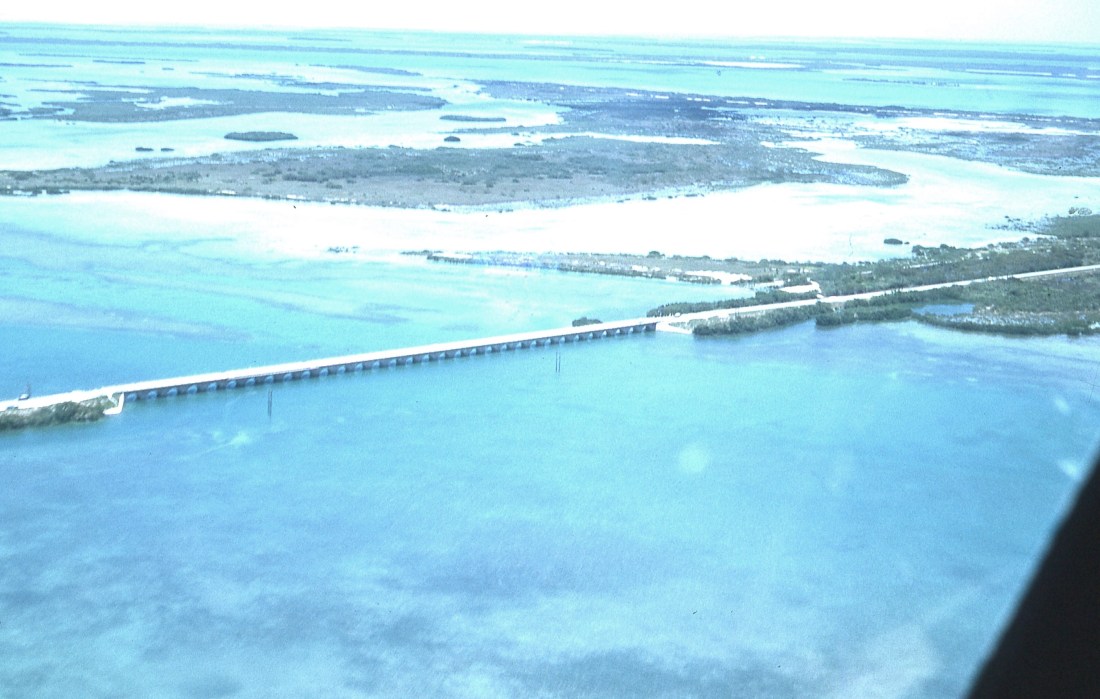
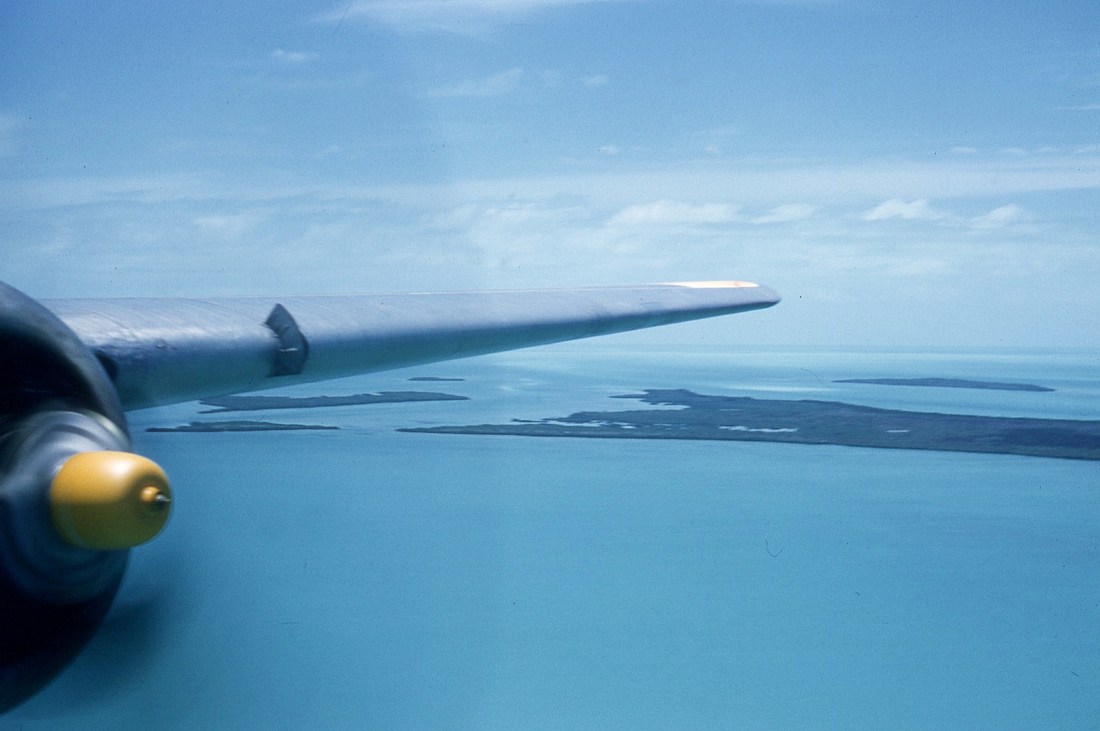
Having caught all the fish, and eaten “Charcoal Broiled Steaks“, it’s time to take the gals back north. Passing Little Pine Key.
BTW: I spent an hour on google earth staring at the Keys of Florida to figure out which was where. Using the C-119’s altitude helped narrow it down. This photo is a good example. Climbing in the hot sun in a heavy C-119, they couldn’t be too far from Key West. Bingo: Little Pine Key.
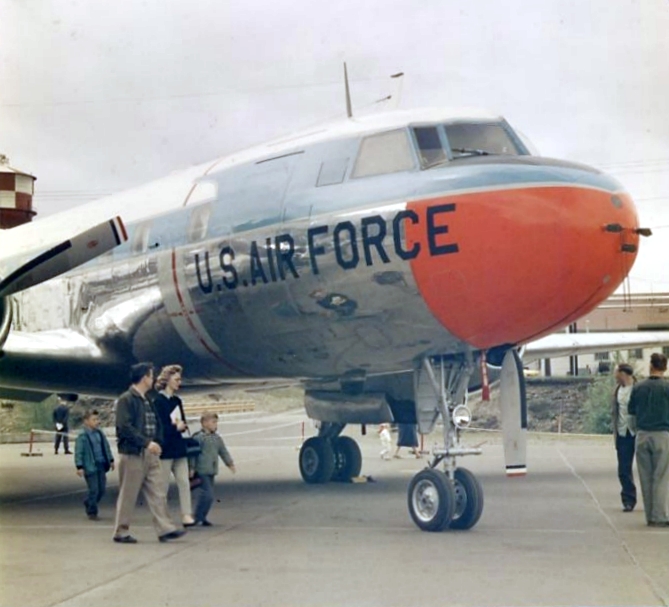
With that huge vertical stabilizer, whatever was lacking in the yaw department on the B-29 was apparently compensated for when they modified it in to the B-50. Well, the B-50 also had much more powerful engines to deal with.
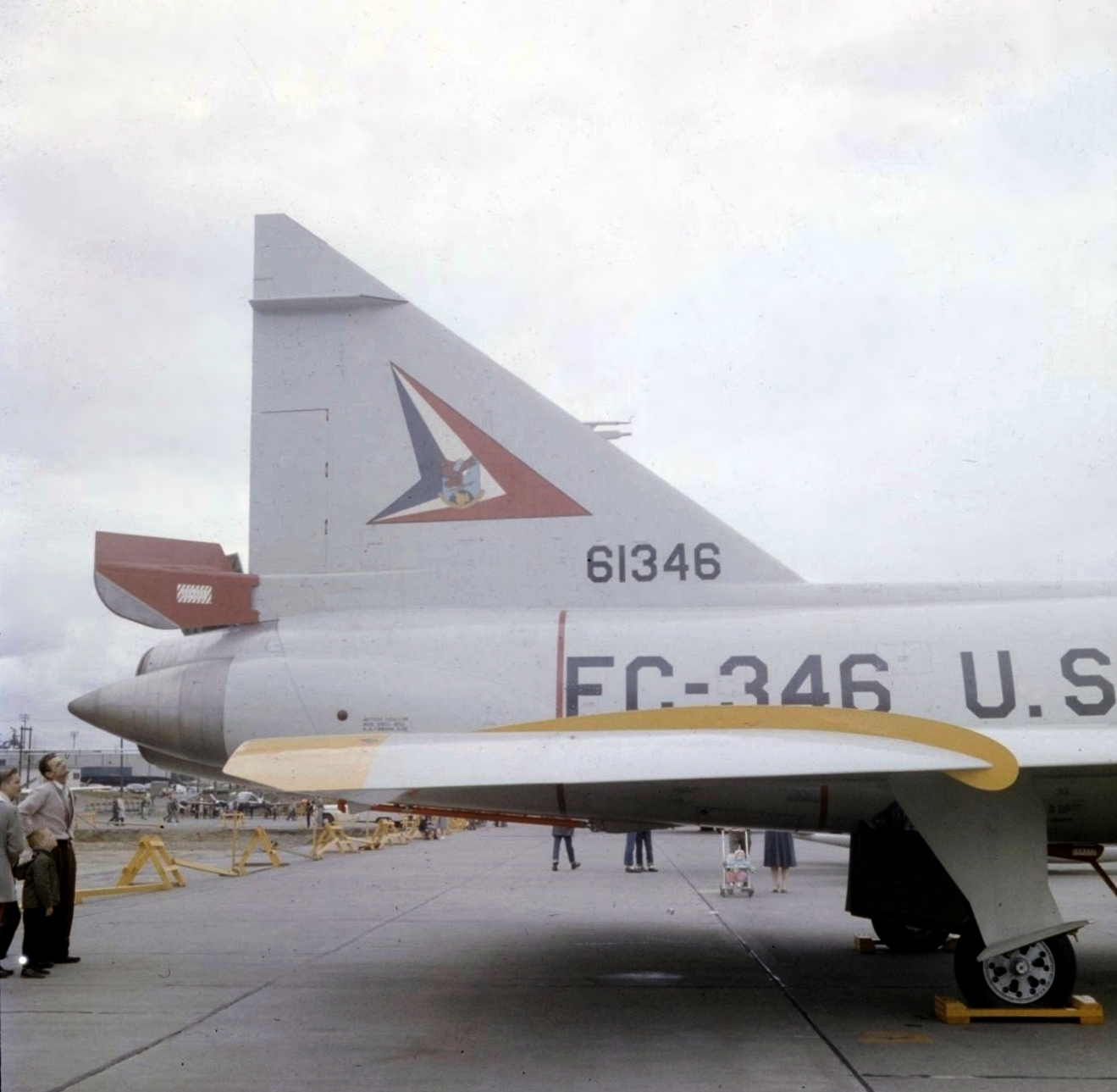
This aircraft crashed on 21 Dec 1961. The pilot, Major Joe Passantonio, Ops officer of the 498th, ejected and survived. Note the F-89’s of the 116th FIS, WA ANG.
Pictured at Paine AFB, WA in the early 1960’s. the H-43 was designed to provide firefighting and rescue in close proximity to its bases. The Huskie was a real workhorse back in the day when aircraft mishaps were a more routine event. Interestingly, the Huskie had no tail rotor; it’s twin, intermeshing rotors provided the required stability.