

Category: US Air Force
C-47 and B-36’s at Carswell AFB
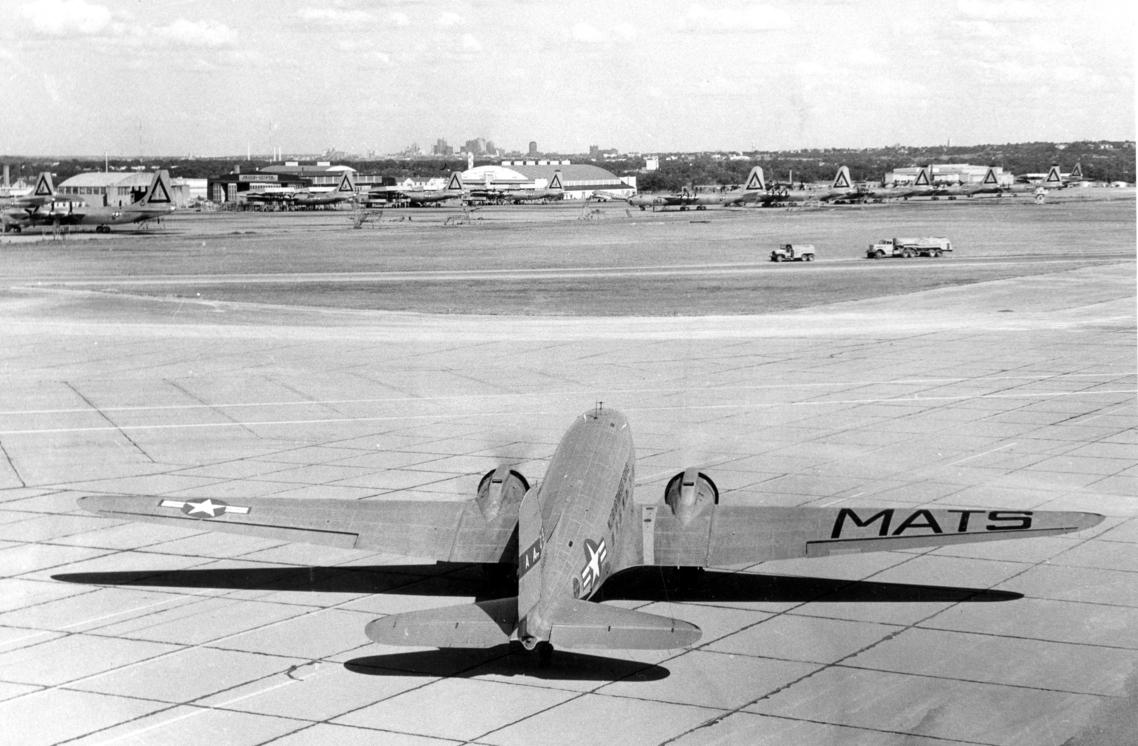
This photo, among other things, illustrates just how flat the world can be – that is downtown Dallas in the far distance. The C-47 says MATS (Military Air Transport Service), but is also assigned to Airways and Air Communication Service (AACS). MATS was higher up the totem pole than AACS, hence the wing markings) The B-36’s are of Carswell’s 7th Bomb Wing.
F-106A 56-0464 & F-106B 57-2510
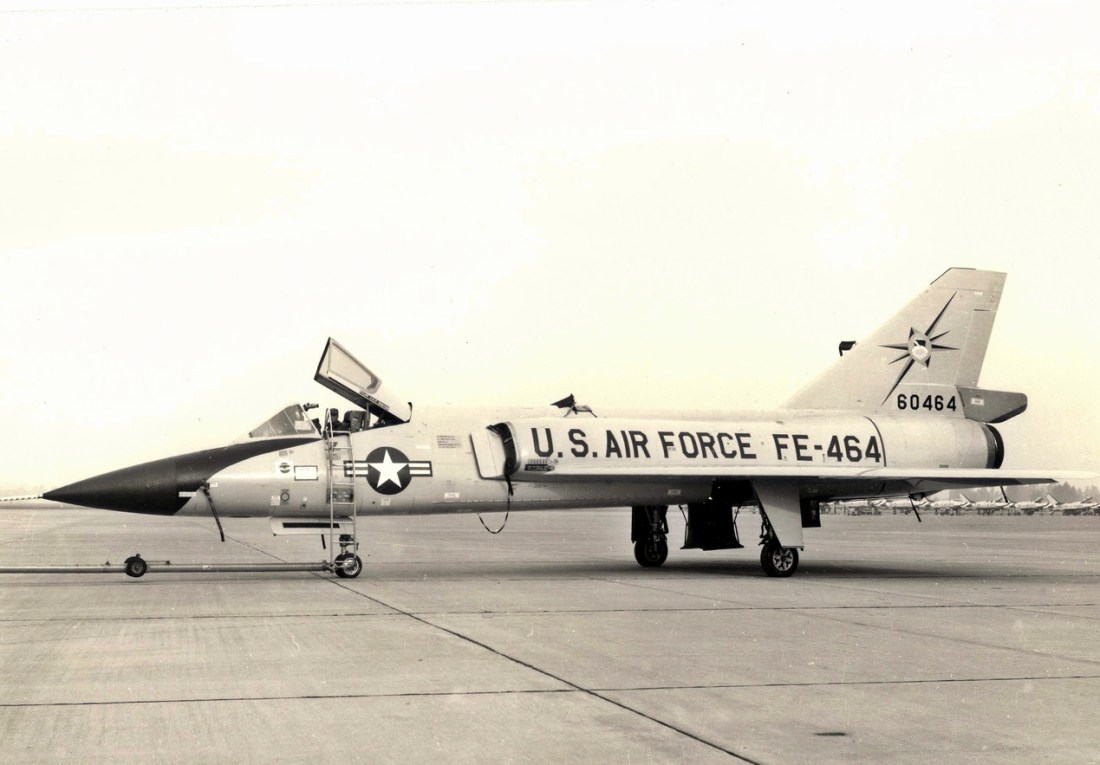
Sporting the insignia of the 325th Fighter Wing (Air Defense), 464 was photographed at McChord AFB on 19 Oct 1963. F-100’s of the USAF Thunderbirds lurk in the background. 56-0464 crashed 6 Aug ’64, the pilot ejected safely. The wreckage is still scattered in the woods today.

57-2510 is pictured here early in its life wearing the markings of the Air Research and Development Command. It had a long career before going to the boneyard in 1984.
C-119’s at Hickam AFB

Schilling AFB B-47
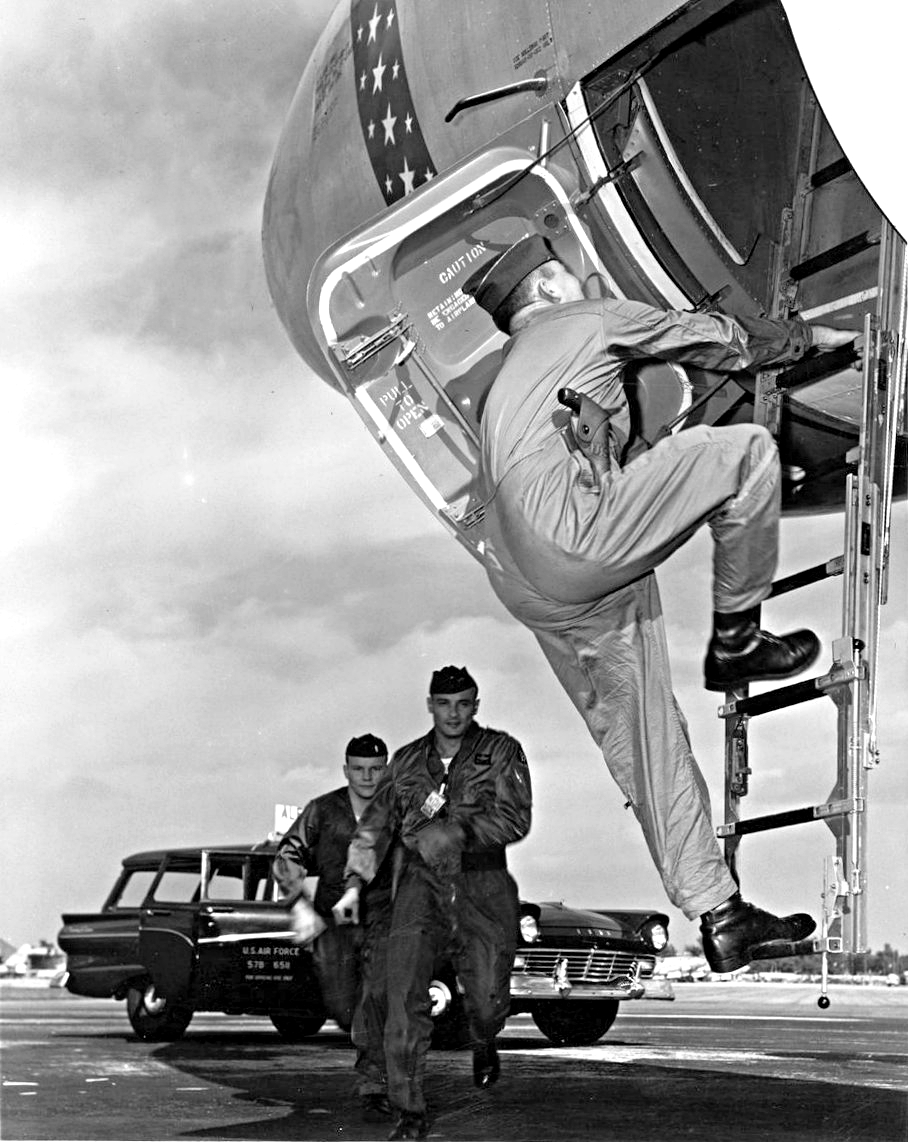
Men of the 40th Bomb Wing race to their aircraft. Someone else gets to move the station wagon.
Vivian Gersema, US Air Force Nurse Corps, 1953
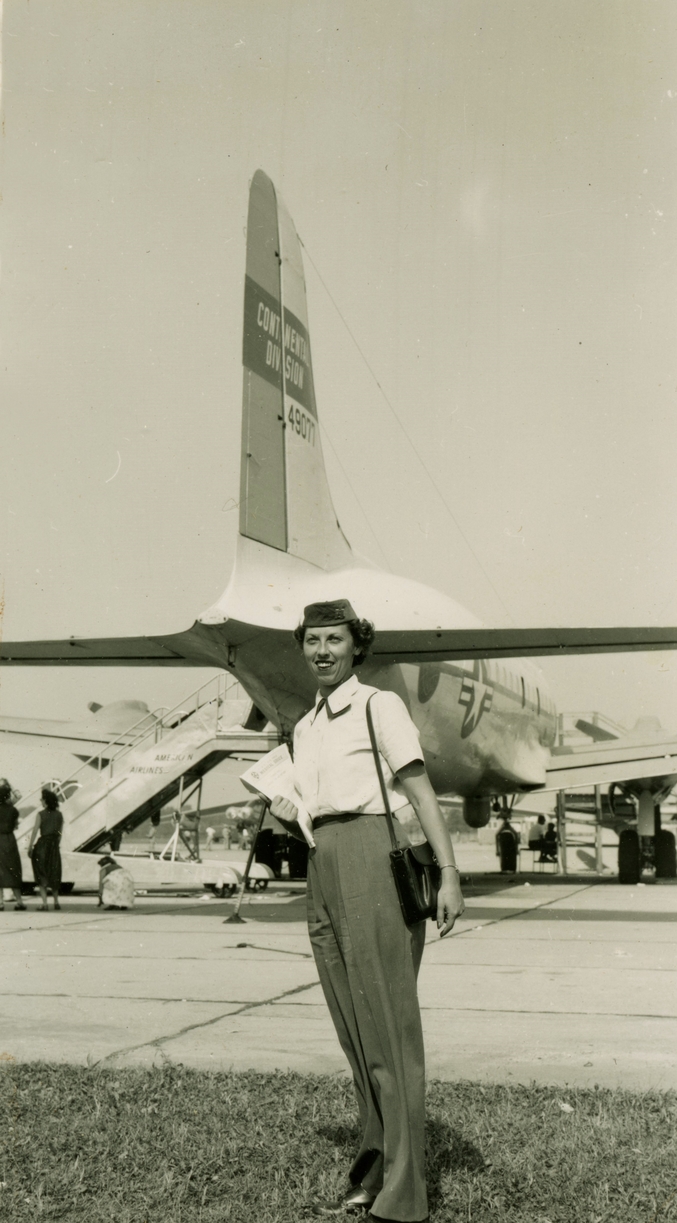
Captain Vivian M. Gersema at Offutt AFB with her flying hospital, a C-54. 44-9077 was dubbed an “MC-54M” due to its medical role. Gersema started her military service as a flight nurse in WWII. She eventually attained the rank of colonel.
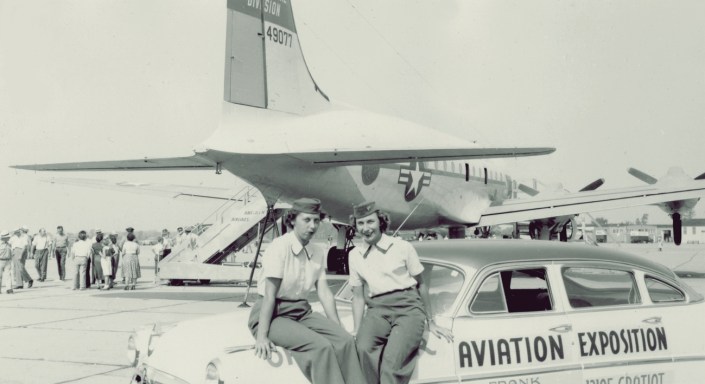

Having flown a medevac missions myself, there is always room for flight nurses in the cockpit.

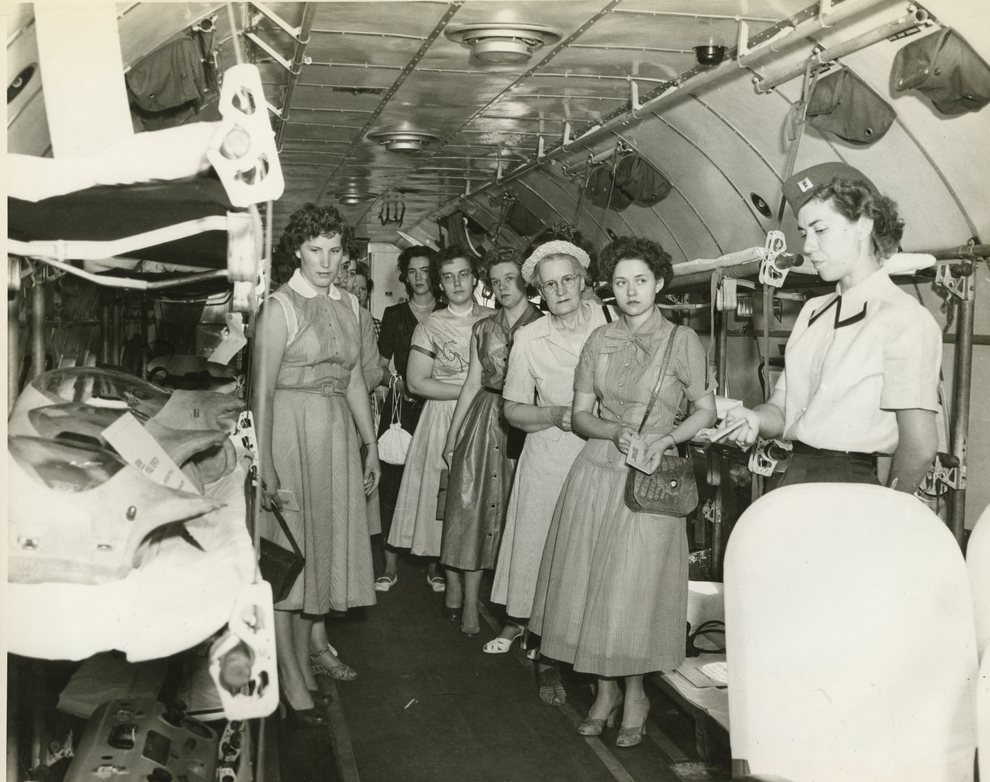
Civilian nurses are briefed on the finer points of aeromedical care.

President Kennedy at Homestead AFB, 1962

On November 26 1962, Kennedy visited Homestead for an inspection and to award citations to the units that had participated during the Cuban Missile Crisis. Chief among these was the 363rd Tactical Reconnaissance Wing whose RF-101’s can be seen in the distant right background. Closer to view, F-102’s of the 325th and 326th Fighter Interceptor Squadron get the once over by Kennedy. Note the pilot wearing his full pressure suit.
B-36A, June 1948
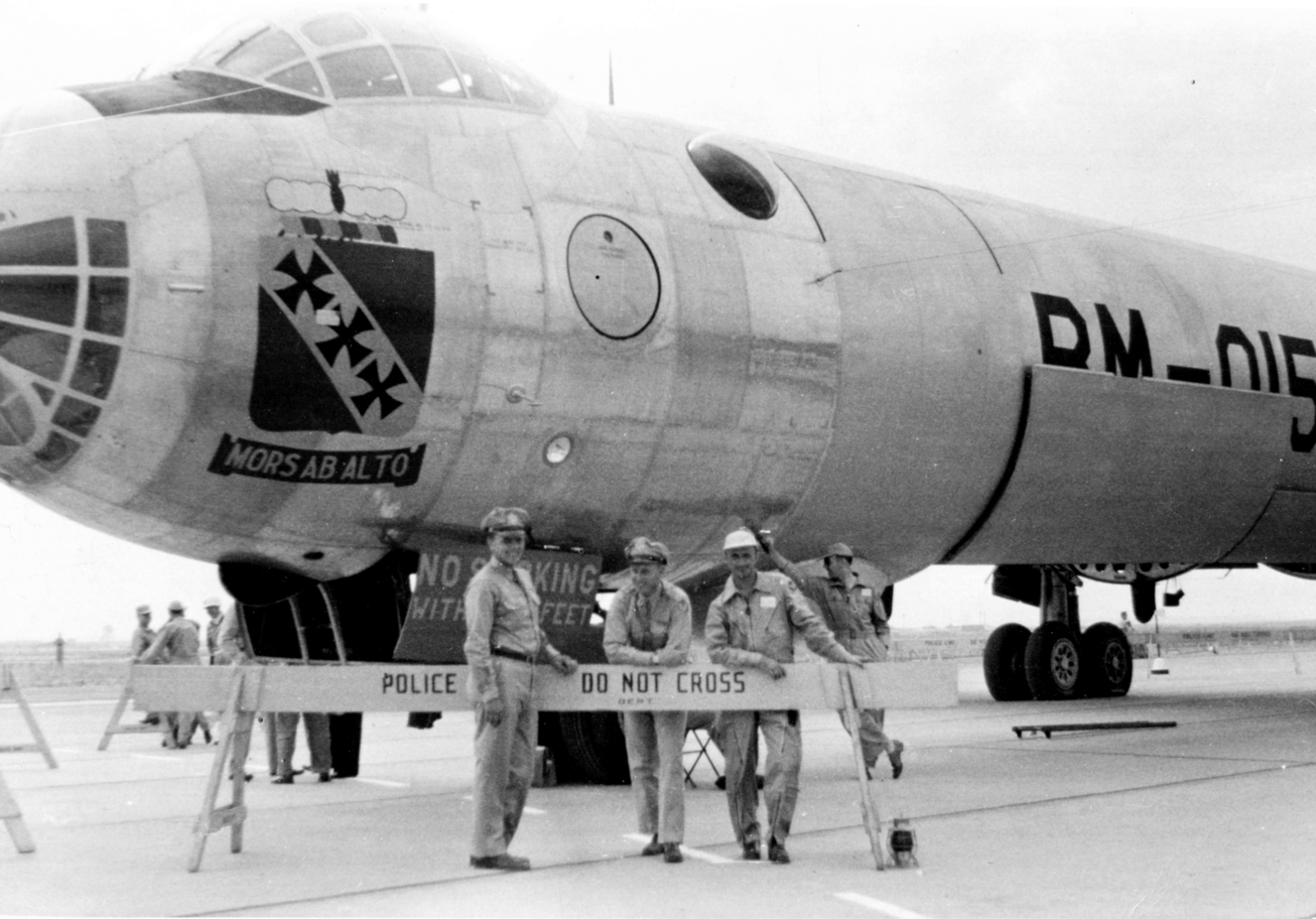
This aircraft (44-92015) was the first B-36 delivered to an operational unit, in this case the 7th Bomb Wing of Carswell AFB. Given that the Convair factory was right across the runway, the aircraft was taxied to its new home where it was soon christened “The City of Fort Worth.”
So, it’s June of ’48, and the USAF is about nine months old. This explains the army uniforms. It would be another year or so before the Air Force unveiled its own uniform design.
9th Air Division (Defense), 1954-58

Based at Geiger Field, WA, in the mid-1950’s, the 9th Air Division controlled the fighter interceptor squadrons of Larson AFB, WA that guarded the skies of Eastern Washington & Oregon, and all of Idaho. They were also in charge of the various radar squadrons in the region.
Of note on this big patch is the Ground Observer Corps watchtower superimposed over the radome. Even in the mid-1950’s, the radar coverage of North America had gaps that still required eyes, and not electronics.
85th Fighter Interceptor Squadron, Scott AFB, 1952-59


From my closet. L-1B flightsuit with 85th FIS patch. The same type baseball cap is worn by the pilots in photo #1.
195th Fighter Interceptor Squadron

Based at Van Nuys California, the 195th flew various models of the F-86 Sabre from 1953-61. Sometimes you’ll see this patch with the pilot’s name on a bottom tab, sometimes you won’t. Either way, it’s not a common patch.
F-4D’s of the 62nd Tactical Fighter Squadron, Macdill AFB 1978-80
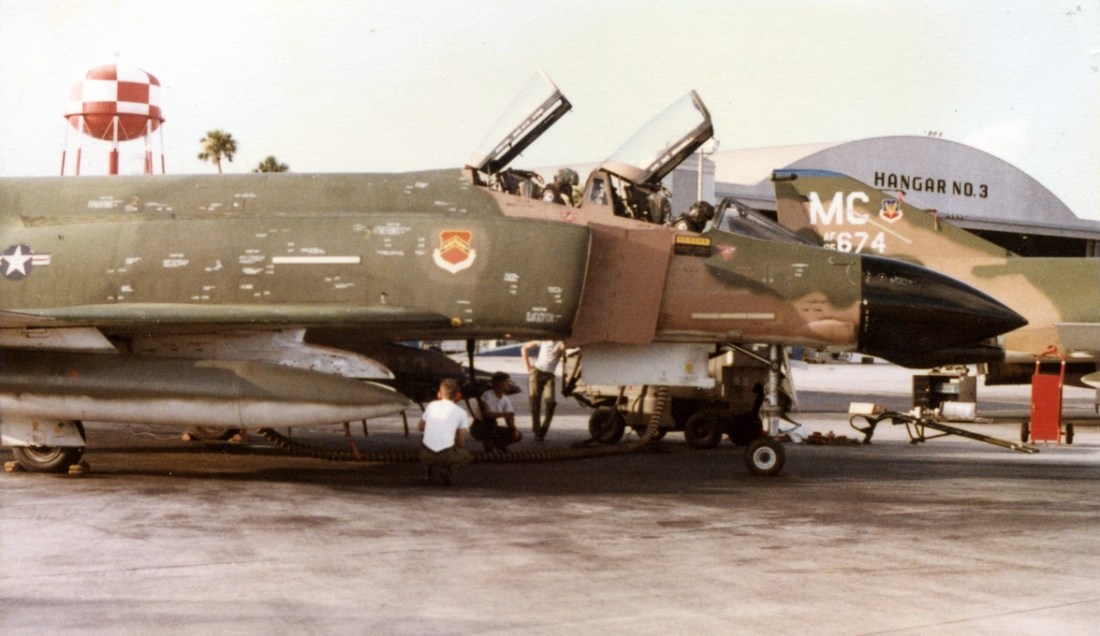
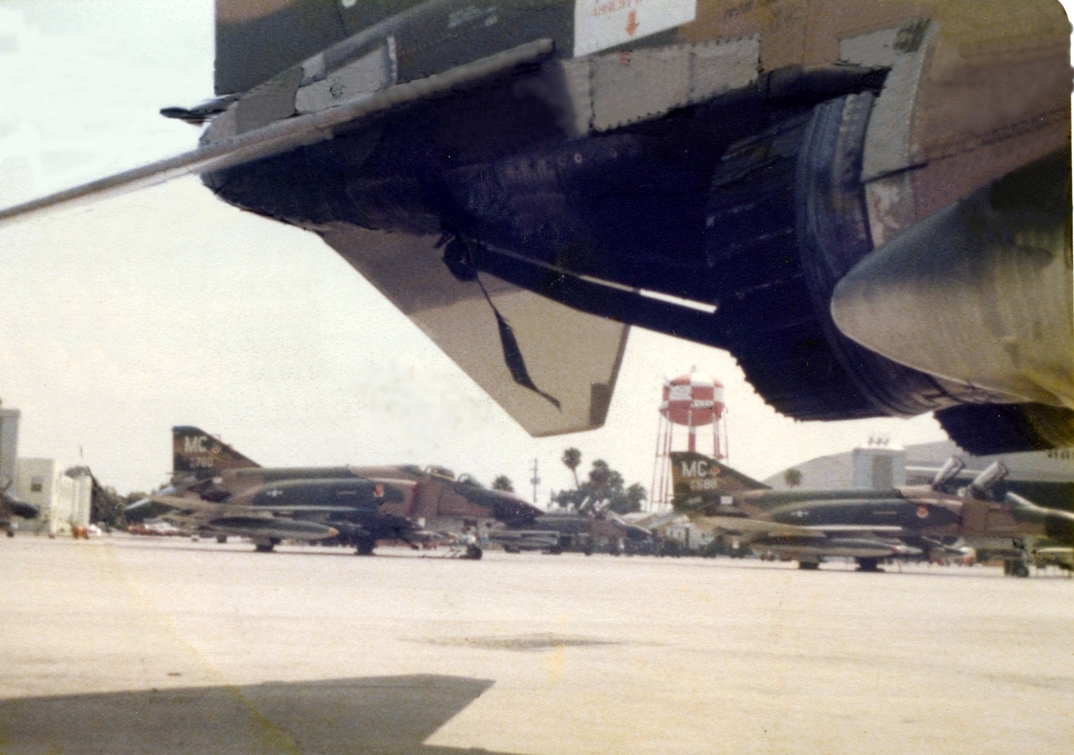
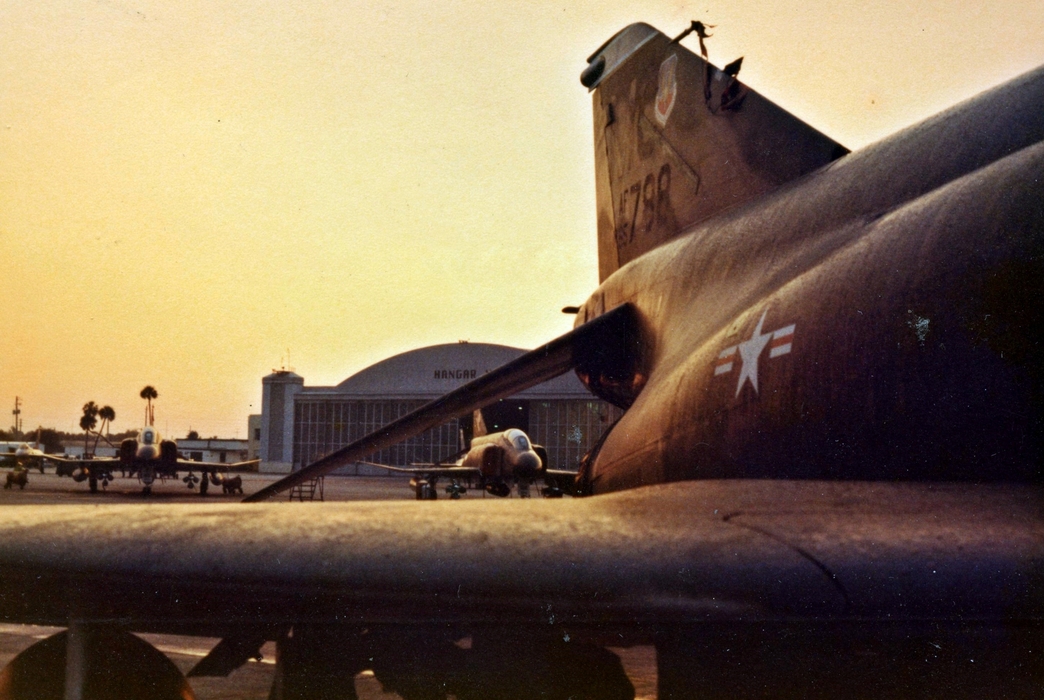

Took these myself way back when. Only had a cheap camera, but I took it in to work almost every day. Looking at the first photo of 65-0707 and 674, I am struck by the amount of stenciling they carried. The last Phantom (65-0794) is from the 13th TFTS. Their squadron tail stripe was white, but they changed that to black when the Wing added the white borders on the fin.
F-94 crews of the 449th Fighter Interceptor Squadron, Ladd AFB

Dressed for the Alaskan cold, the pilots and radar observers of the 449th say “cheese” in front of F-94 49-2526. Photo is undated, but given that 49-2526 (in the background) crashed in 1954, it is safe to assume it was taken sometime before.
RF-80 over the Alps
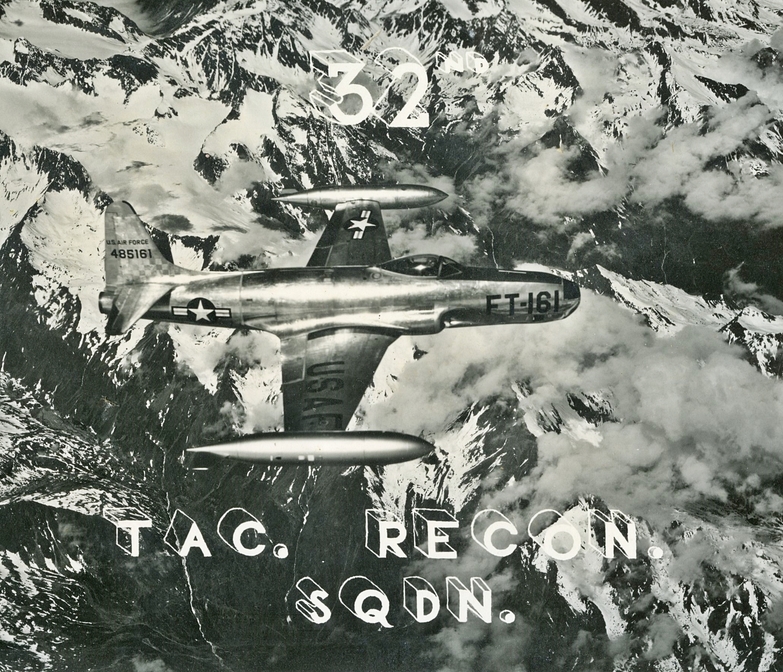
The aircraft (44-85161) began life as a P-80 but was later modified as a reconnaissance platform. This is the cover of a book of bound photos put together by the squadron when they were based at Spangdahlem, Germany, 1953-57.
146th Fighter Interceptor Wing, Van Nuys, Calif.
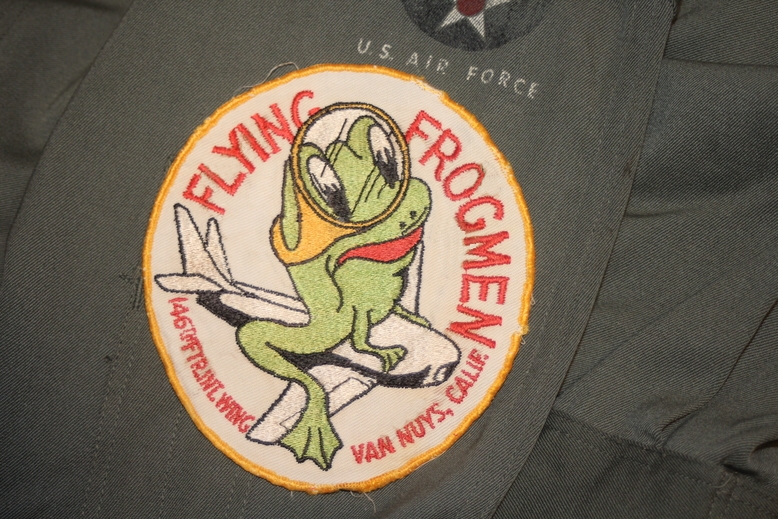
Story goes that in the late 50’s the new sport of scuba diving was so popular in the 146th that they formed a club and took to calling themselves the “Flying Frogmen.”
Winter’s day at the Thule Air Base Greenland alert barn, and one very frozen F-89 Scorpion

The F-89D (53-2606) is from Thule’s 74th Fighter Interceptor Squadron. This aircraft went to the boneyard in 1960.
432nd Tactical Reconnaissance Wing

The title “Ftr/Recon” refers to the fact the 432nd had more fighter squadrons than they did reconnaissance. Udorn Air Base, Thailand.
F-4E, 469th Tactical Fighter Squadron

The most obvious difference between the F-4E and its predecessors was the gun in the nose that radically altered the front end of the Phantom. It is only fitting that when the 469th TFS got the E model they designed a patch that illustrated that they were now armed to the teeth.
514th Fighter Bomber Squadron
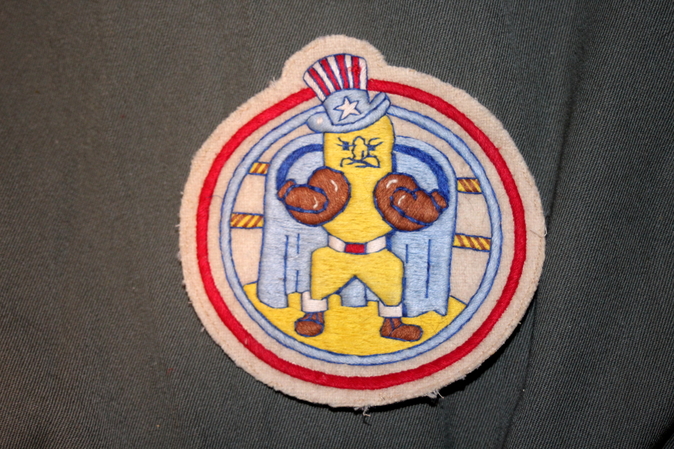
Early 1950’s patch when the 514th flew the F-84 Thunderjet & F-86 Sabre at RAF Manston.
RB-26 Invader of the 363rd Tactical Reconnaissance Wing
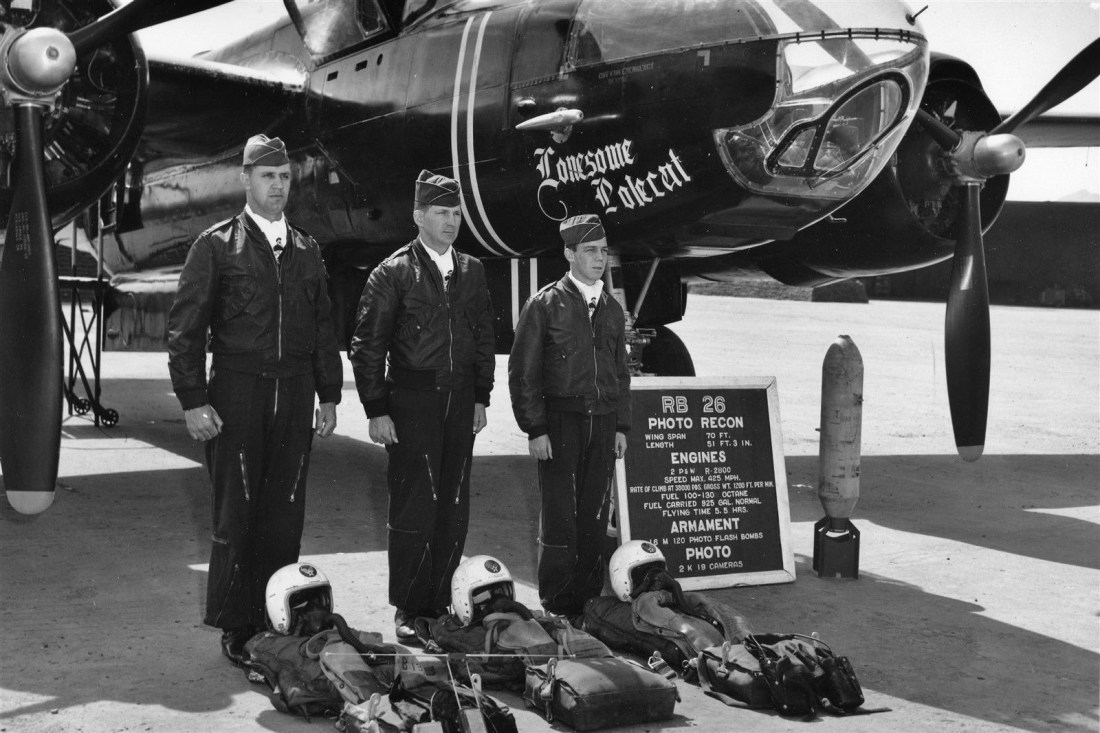
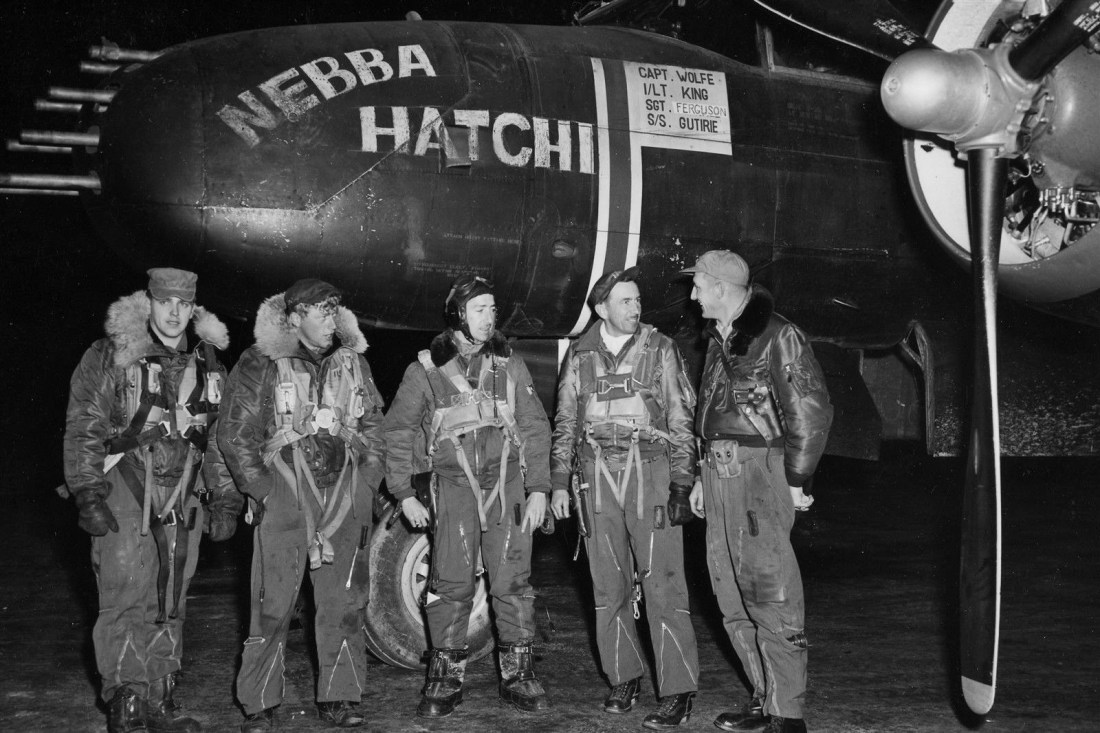
B-26 Invader and crew, 3rd Bomb Group
147th Fighter Interceptor Squadron, Pennsylvania Air Guard

With its ray gun-toting martian/spaceman receiving earthly transmissions via his magical emerald helmet all while zooming through the heavens on his zippy jet, this patch is total 1950’s. The 147th flew F-84 Thunderstreaks when this patch was worn. The unit lost their air defense role in 1961, and with it, this fantastic patch.
The “Martian” is a character known as “Ovacron”, the creation of a Pittsburgh disc jockey in the 1950’s. Given that the 147th was based at Pittsburgh AP, the pieces start falling in place. This info also dovetails with my thoughts: it looks like a cartoon character, and not just something thrown together in the squadron.
336th Fighter Interceptor Squadron…with an interesting tale