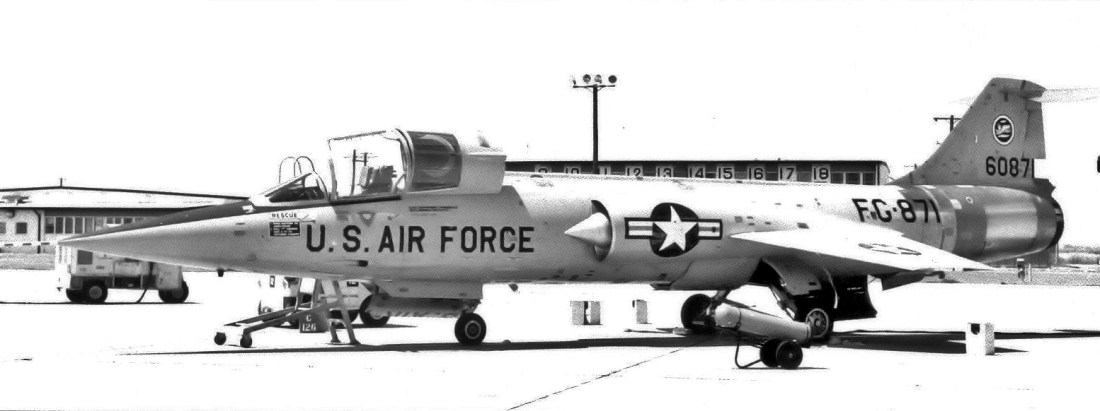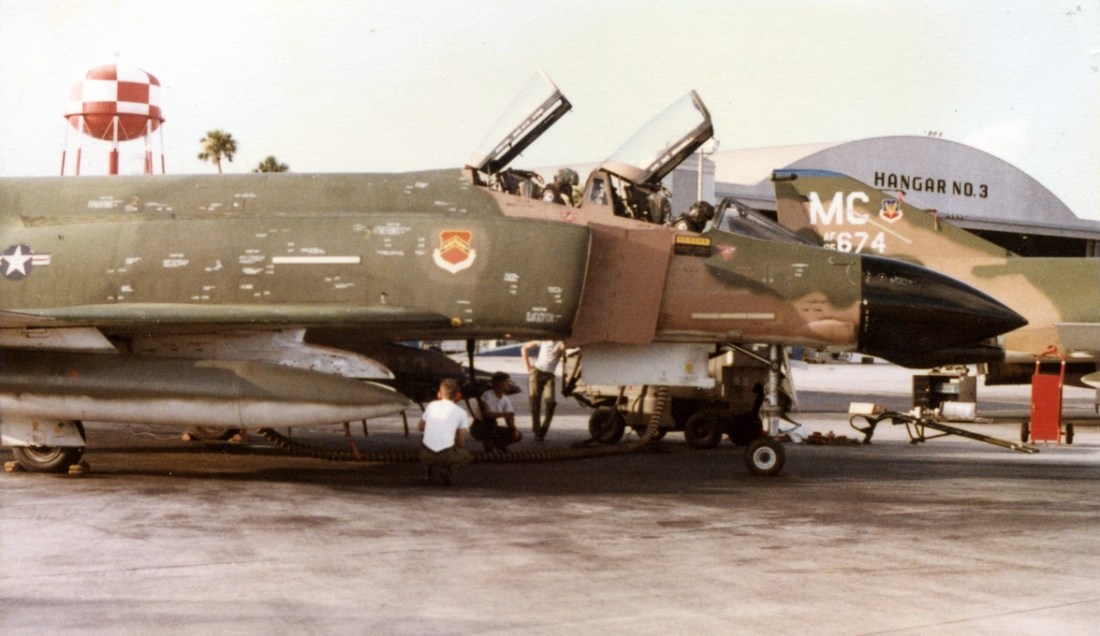
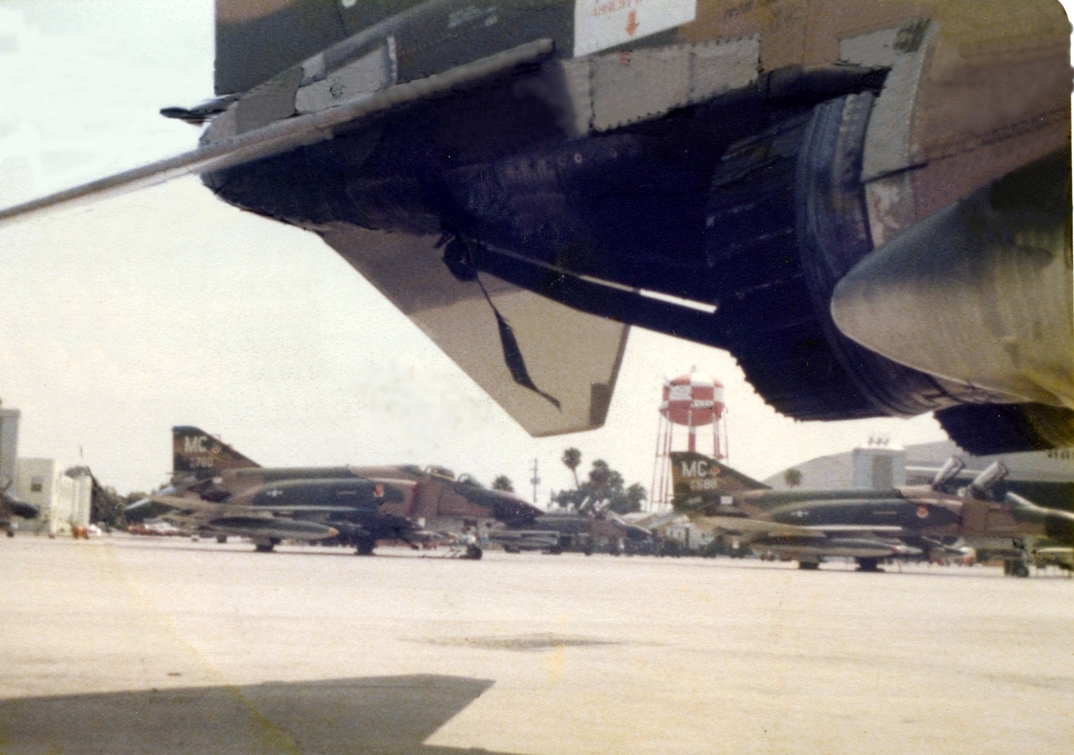
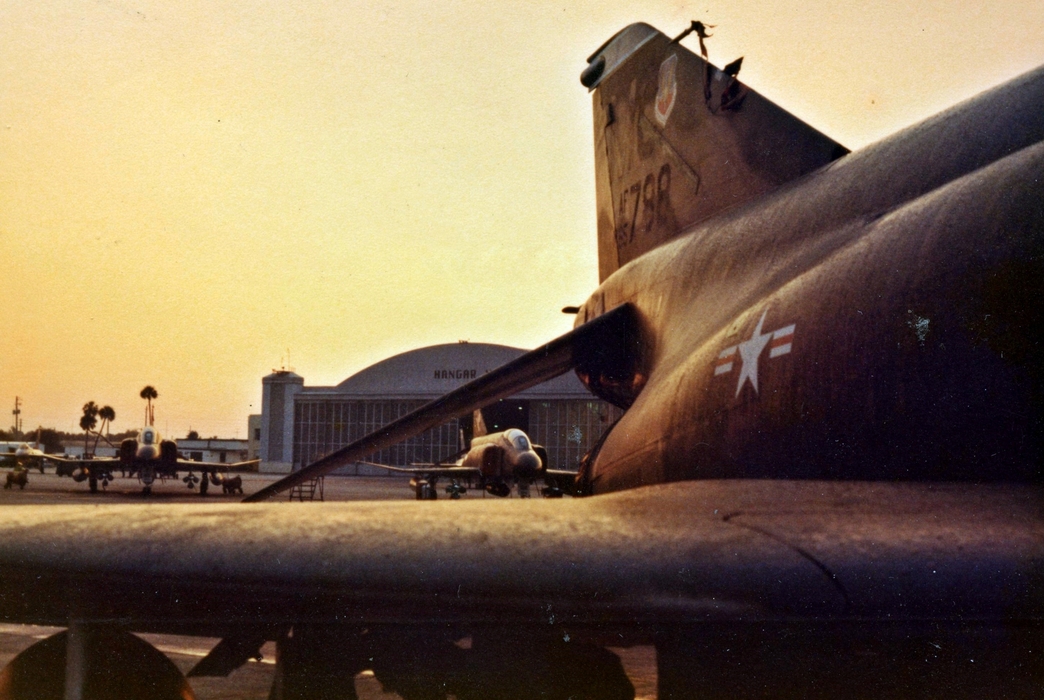
F-4D’s of the 62nd Tactical Fighter Squadron, Macdill AFB 1978-80

Webp.net-resizeimage (2)Webp.net-resizeimage (3)Webp.net-resizeimage (5)Webp.net-resizeimage (6)

Took these myself way back when. Only had a cheap camera, but I took it in to work almost every day. Looking at the first photo of 65-0707 and 674, I am struck by the amount of stenciling they carried. The last Phantom (65-0794) is from the 13th TFTS. Their squadron tail stripe was white, but they changed that to black when the Wing added the white borders on the fin.

 

147th Fighter Interceptor Squadron, Pennsylvania Air Guard

IMG_4858

With its ray gun-toting martian/spaceman receiving earthly transmissions via his magical emerald helmet all while zooming through the heavens on his zippy jet, this patch is total 1950’s. The 147th flew F-84 Thunderstreaks when this patch was worn. The unit lost their air defense role in 1961, and with it, this fantastic patch.

 The “Martian” is a character known as “Ovacron”, the creation of a Pittsburgh disc jockey in the 1950’s. Given that the 147th was based at Pittsburgh AP, the pieces start falling in place. This info also dovetails with my thoughts: it looks like a cartoon character, and not just something thrown together in the squadron.

336th Fighter Interceptor Squadron…with an interesting tale

IMG_4816

Jim Van Scyoc (pronounced “sock”) was to achieve unsought notoriety when, in 1961, while flying F-100’s in the New Mexico Air Guard, he accidentally shot down a B-52 while on a practice intercept. That tragic story is all over the internet, and Van Scyoc was not to blame; an electronic glitch was the culprit. Given the circumstances, it is unfortunate that this aerial “victory” represents the only air-to-air “kill” for an F-100. Suchlike, that has been the only B-52 air-to-air shootdown. In Vietnam, it was all SAM’s.

The 336th patch dates from earlier days when Van Scyoc flew F-86’s in Korea.

431st Fighter Interceptor Squadron, Wheelus Air Base, late 1950’s

IMG_4749431st

Stationed in the less than salubrious clime of Libya, the 431st buzzed the North African skies in the mighty F-86 Sabre. 51-13168 was an F model in this squadron. Humorous anecdote: A day or so after I got this patch, I came home to find it in the mouth of my dog who was busily gnawing away. Luckily, he had only succeeded in getting it soaking wet with dog slobber – no holes or damage. Nonetheless, I aged ten years on the spot.

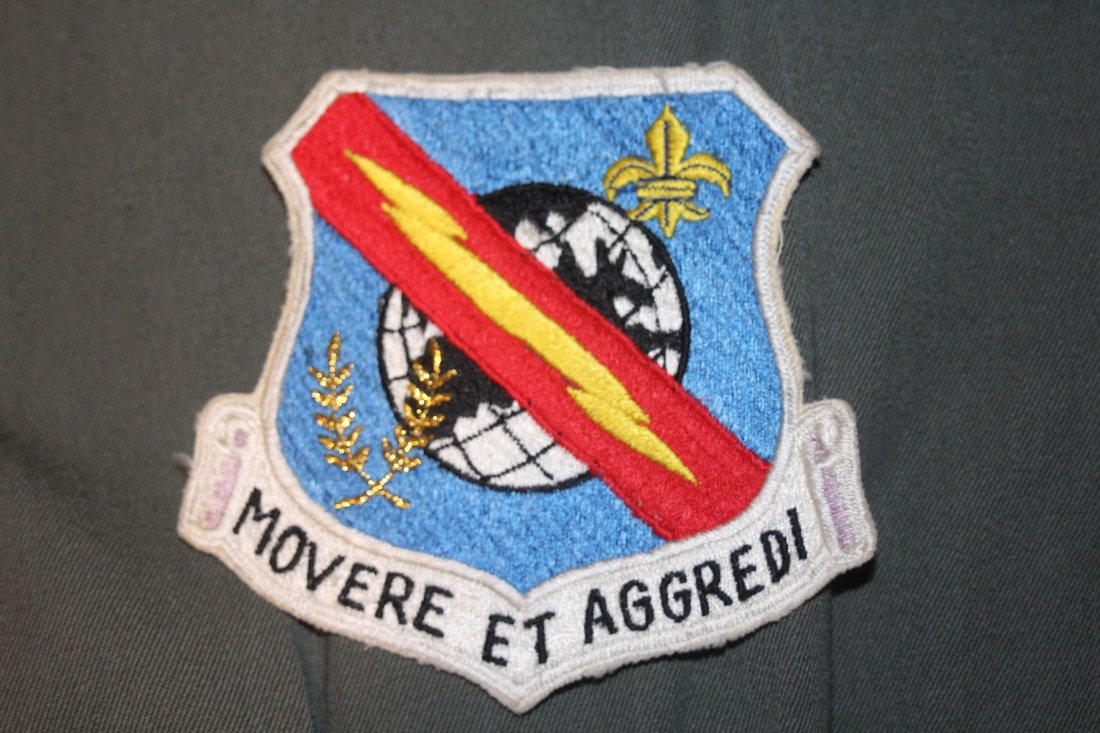
405th Fighter Wing, Clark Air Base, circa 1962

IMG_4764

Massive patch; belonged to an F-102 pilot of the 509th Fighter Interceptor Squadron, 405th Fighter Wing.

In 1962, the term “Fighter Wing” was rather unusual; that was the age of “Fighter Interceptor” and “Tactical Fighter” Wings (squadrons, groups, etc.) that oversaw a particular fighter with a particular mission. However, the 405th at Clark Air Base was somewhat different in that it oversaw both interceptor and tactical fighters (along with a host of other aircraft) and the generic name of the Wing reflected that fact.

General Frederic H. Smith arrives at Itazuke Air Base, 1956

Webp.net-resizeimage (4)

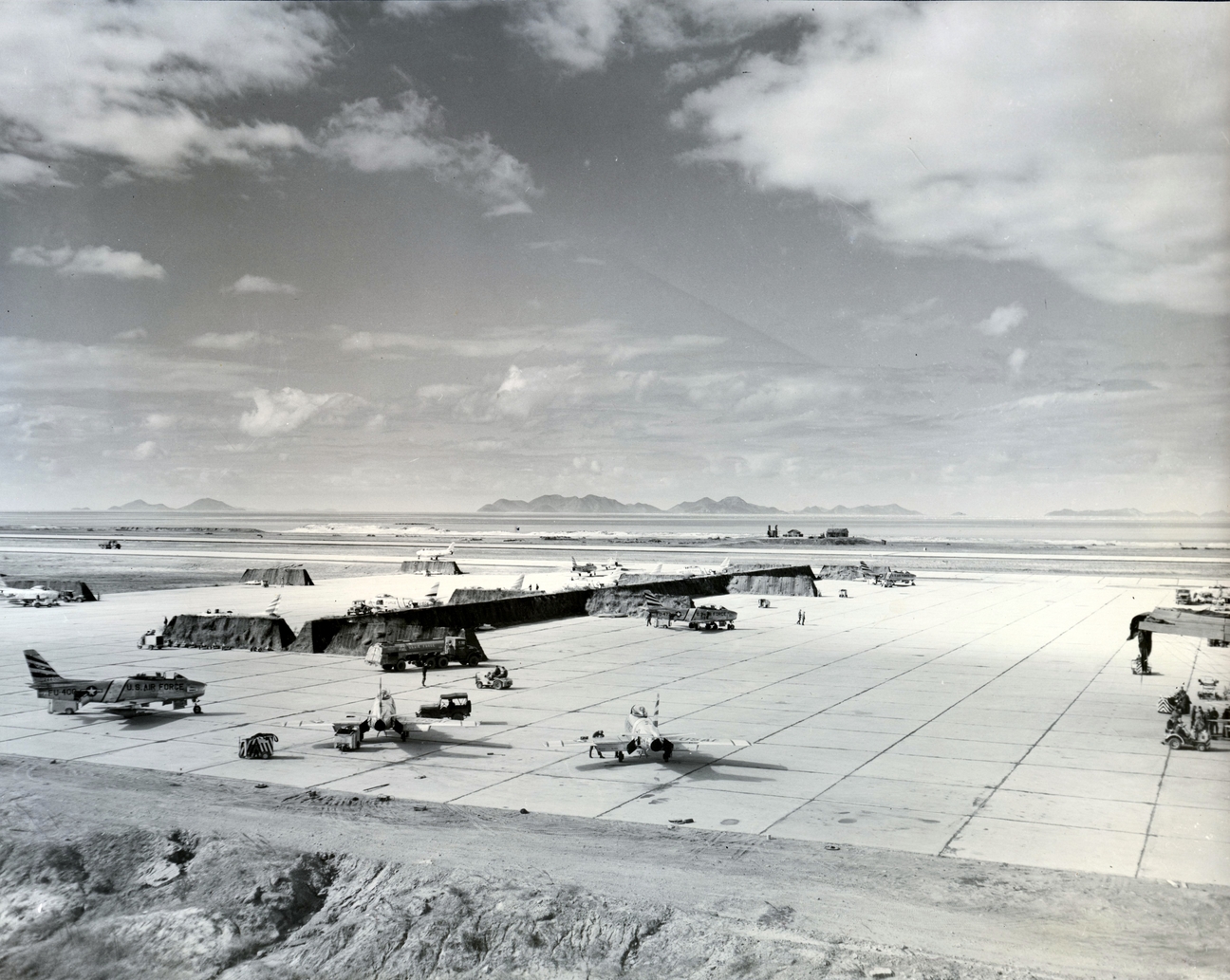
The general (and the Missus) are warmly greeted on the Itazuke ramp. T-33’s stowed in revetments are in in the background.  General Smith was commander of the 5th Air Force at this time.  An old-time pilot from the open cockpit days of the Air Corps, Smith eventually retired as a 4-star after serving as Vice-Chief of Staff, USAF.

Indicative of aviation’s quantum leap – from biplanes to B-58 Hustlers in one man’s career – Smith had seen it all.