Vought VE-9

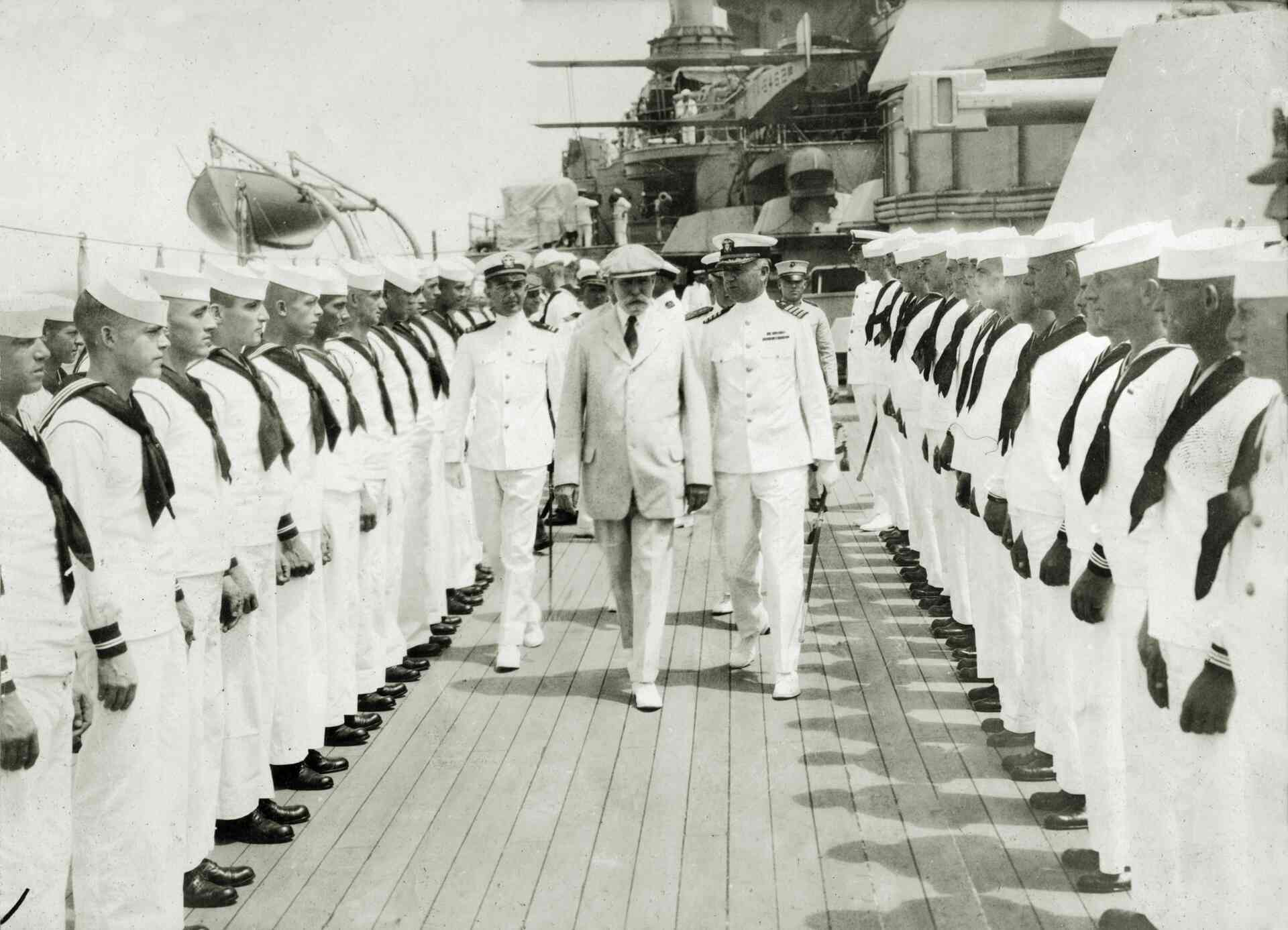
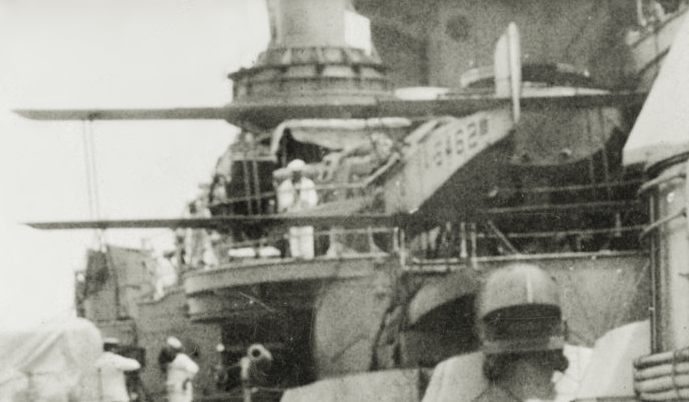
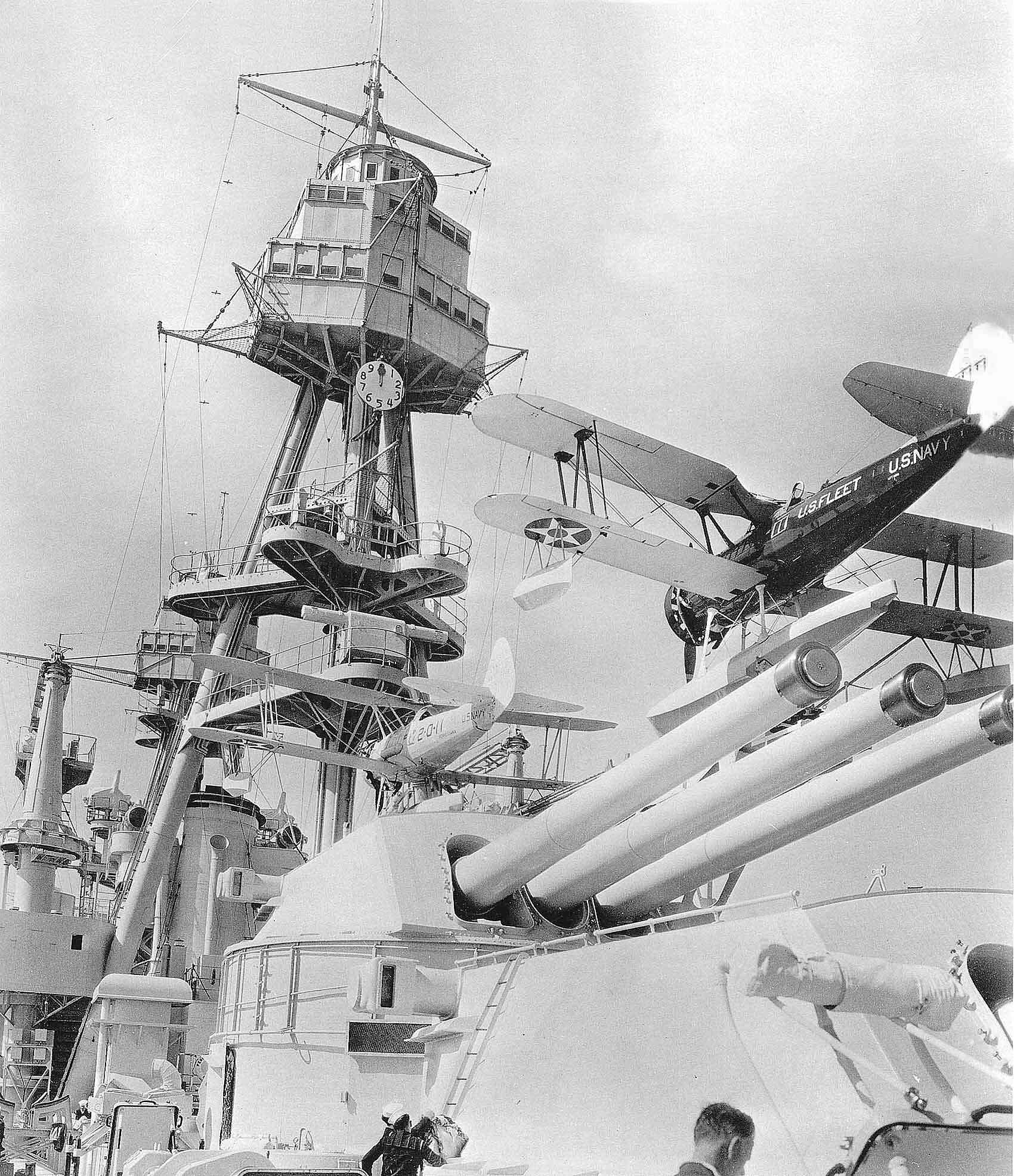
Tucked away in the background aboard the battleship USS Maryland is a Vought VE-9 (BuNo 6462), one of early naval aviation’s often-overlooked aircraft. Popularly known as the “Bluebird”, it was a slightly improved version of Vought’s VE-7, an incredibly historical machine that acquired several important “firsts” for the US Navy, one of them being the Navy’s first fighter.

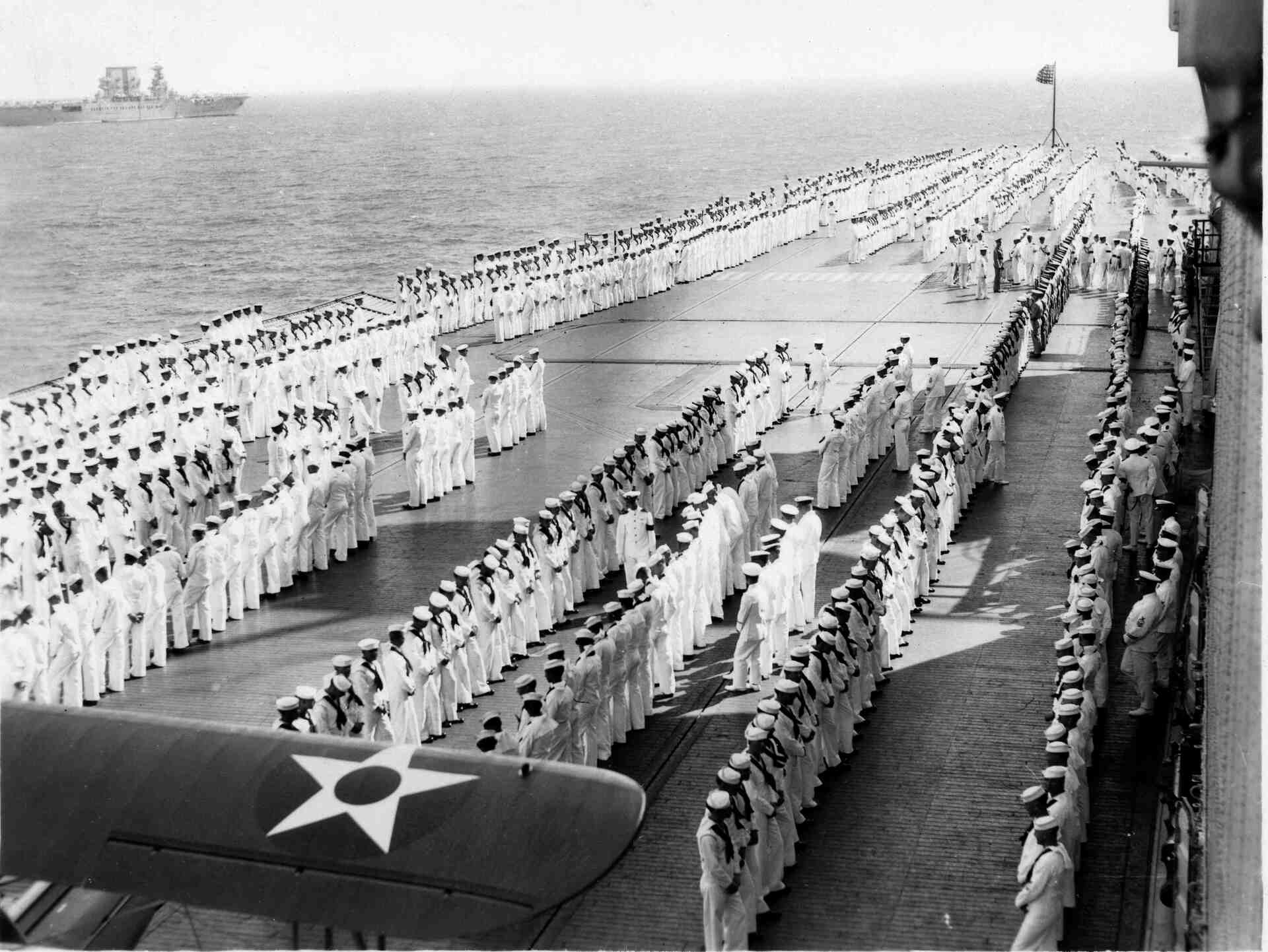
The occasion for the main photo is the arrival of Secretary of State Charles Evans Hughes (the austere, bearded gentleman, center). On the right is the skipper of the Maryland, Captain D.F. Sellers (later, Commander-in-Chief, United States Fleet). Hughes was aboard the battleship for a trip to Rio de Janeiro, August-September, 1922. Earlier that same year, Secretary Hughes led the American Delegation at the Washington Naval Conference, where he successfully argued for reducing the number of battleships (a somewhat ironic position given his choice of transport seen here). Nonetheless, the Navy still had enough battle boats on hand to provide Secretary Hughes a ride to Rio.

Here is something that may give one a moment’s reflection:

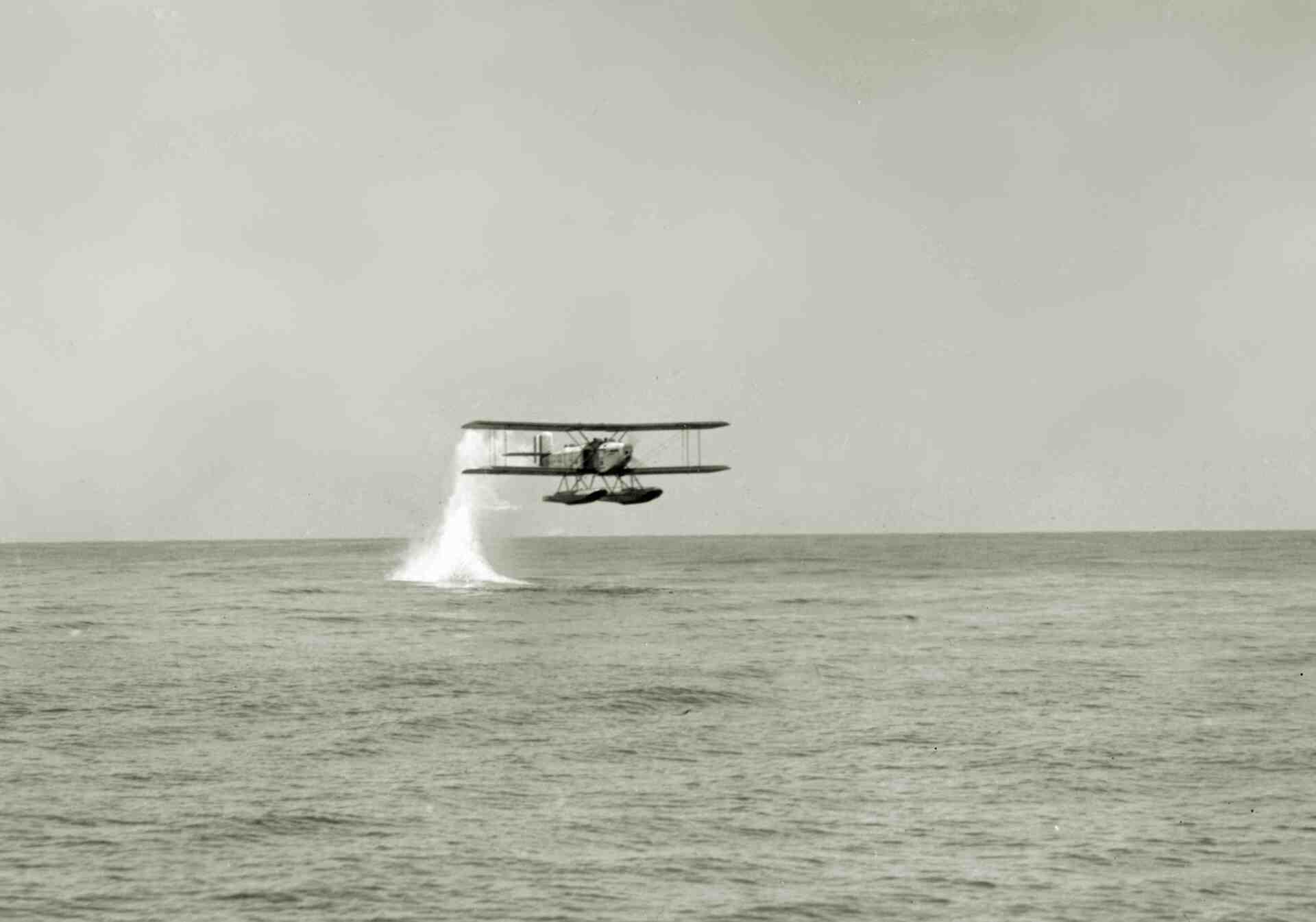
As the Maryland sailed southward, she kept busy launching her planes in order to fetch mail, scout, etc. While all that aerial activity was going on, interestingly enough, the first takeoff from a US aircraft carrier had yet to occur. That historic achievement (October 17, 1922)  was another of the “firsts” for Vought and their VE-7.

Rival Torpedo Bombers

In the 1920s, Martin and Curtiss competed to supply the US Navy with torpedo bombers. They fielded two very similar designs: the Martin’s T3/4M and the Curtiss CS (seen here left and right, respectively). It was a tough choice, as the rival aircraft were similar in both appearance and performance. In the end, the Navy threw some business to both manufacturers, but it was Martin that won a bigger contract. It was a wise choice: the T4M (despite its bulky looks) became a highly effective machine and was the primary strike aircraft of the US Navy for nearly a decade.

An Army Air Service Photo Album

Taken a century ago, these photos came from a “soldier of the air” stationed at Langley Field and Maxwell Field in the early/mid-1920s.  Aircraft seen in these photos include the DH-4, NBS-1, JN-4, and a couple others. Enjoy!

Curtiss’s CT-1 Torpedo Bomber: One Of Many One Of A Kinds Of The 1920s

Like other aircraft of that period, the Curtiss CT-1 of the early 1920s had a short life (1921-23) and an even shorter production run (one example built). That single aircraft is seen here in 1922 while undergoing tests for the US Navy. 

Enroute To Arizona, Via Arizona

When these Vought O3U-1s of the battleship USS Arizona arrived at the “Fly Field” airport in 1931, there was good reason to take their photo. Namely, the place then called Fly Field (now known as Marine Corps Air Station Yuma) is located in the state of Arizona. The reason for the visit was that these aircraft were factory-fresh from Vought’s plant in Connecticut and were flying cross-country to join the USS Arizona at its homeport in California. Looking at the pilots, one can see by their weather-beaten faces that they have indeed been doing their share of open cockpit aviating. Once the planes complete their journey, their wheels will be replaced by floats, and markings will be applied to the fuselages denoting these planes were now officially part of Arizona’s observation squadron.

Naturally, no local photographer could resist taking a picture of a plane that bore his state’s name and this was especially true in Arizona, where the state’s 1931 population was about 1/19th of what it is today. In other words, seeing the name “Arizona” on anything was a big deal back in the day.

The logbook entry is from another Arizona airport, Davis-Monthan Field. The depicted page shows that these same airplanes had arrived at Davis-Monthan a few days earlier. The page is from a book that can be viewed online at dmairfield.org.

Fact: “Fly Field” was not just an appropriate name for an airport, it was an eponymous one as well – Colonel Benjamin Franklin Fly.

Naval Air Station San Diego

As seen in these two photos, the area around Naval Air Station (NAS) San Diego in the 1930s was a busy place where ships, boats, and airplanes all vied for position on the harbor waters of the base’s namesake city. The navy, of course, later changed the name of their San Diego air base to its present title, NAS North Island. Even though the base’s land was not an island, that designation came about. At one time, it had been an island, but that enclave no longer existed, having been connected to the rest of California in the 1940s by ample loads of sand and gravel.

Nevertheless, what has not changed is that NAS San Diego/North “Island” is still a bustling locale; its nearby waters remain a swirl of ships, boats, and, though fewer in numbers from the seaplane-rich era of the 1930s, aircraft.

Random Seaplanes, Flying Boats, And Other Things That Float And Fly

Corsairs & Seagulls

Here are two aircraft that had ridiculously long service lives by the standards of their time: Vought’s many variations of the O2U Corsair and the Curtiss SOC Seagull. In an era when an aircraft was here and gone in only a few years, the Corsair and Seagull served the US Navy for 19 and 14 years, respectively (and approximately).

Devastators

Flagship Corsairs

PA

Perched on their catapult atop the No. 3 turret of the USS Pennsylvania, a pair of Vought O3U-3s of Observation Squadron Two (VO-2) stand by to carry out another assignment. The O2U/O3U Corsair was the standard observation aircraft for the USN for about ten years (1927-1937) – a most notable achievement in an era when the life expectancy of almost every design type was measured in only a few years. Pennsylvania was the flagship of the U.S. Fleet during the interwar years, reflected in the immaculate condition of the ship and its aircraft.

World War 1 USN Airship Operations

P2Y of VP-19, circa 1939

Webp.net-resizeimage

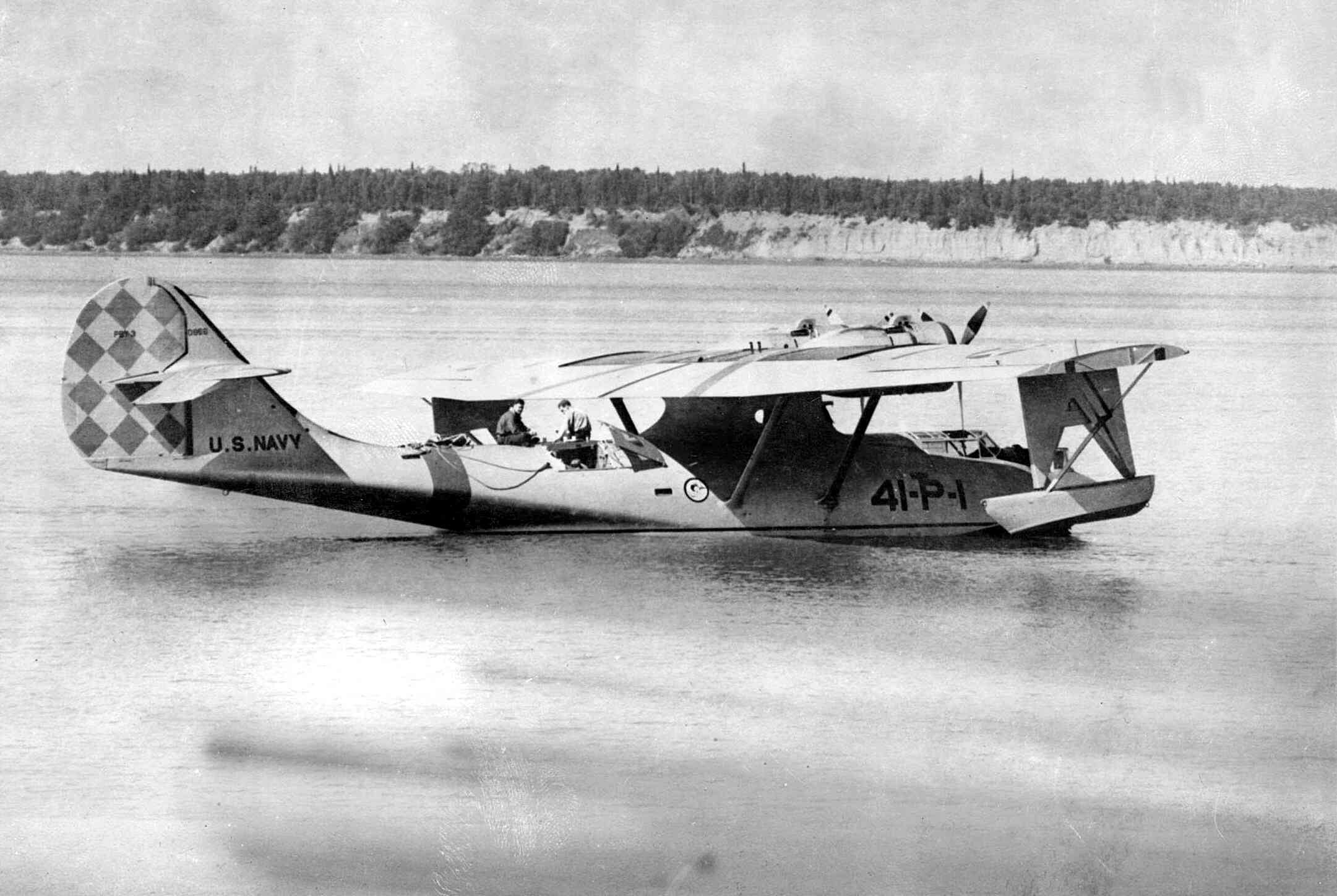
Some eighty years ago, the Consolidated P2Ys of Patrol Squadron 19 were a familiar sight skimming across the waters of Lake Washington, along whose shore was located Naval Air Station Seattle. The P2Y was an ungainly looking contraption but looks belie the fact it was a very sturdy and reliable performer. 

Postscript…

Many of the officers and men in this photo were local reservists. A ribbon on the men’s cap states they are part of “Patrol Squadrons, USN” (one man is from the USS Teal, a seaplane tender assigned to the base). 

PBY Catalina Day

USS Los Angeles in Puerto Rico

Webp.net-resizeimage

In May of 1925, the mighty airship USS Los Angeles (ZR-3) paid a call to the steamy waters of Puerto Rico where, as it swung lazily from its tender, USS Patoka, it attracted quite a crowd. Judging by the number of rowboats, I would guess a tidy business was underway where, for the right price, one could get a closer look at the giant airship.

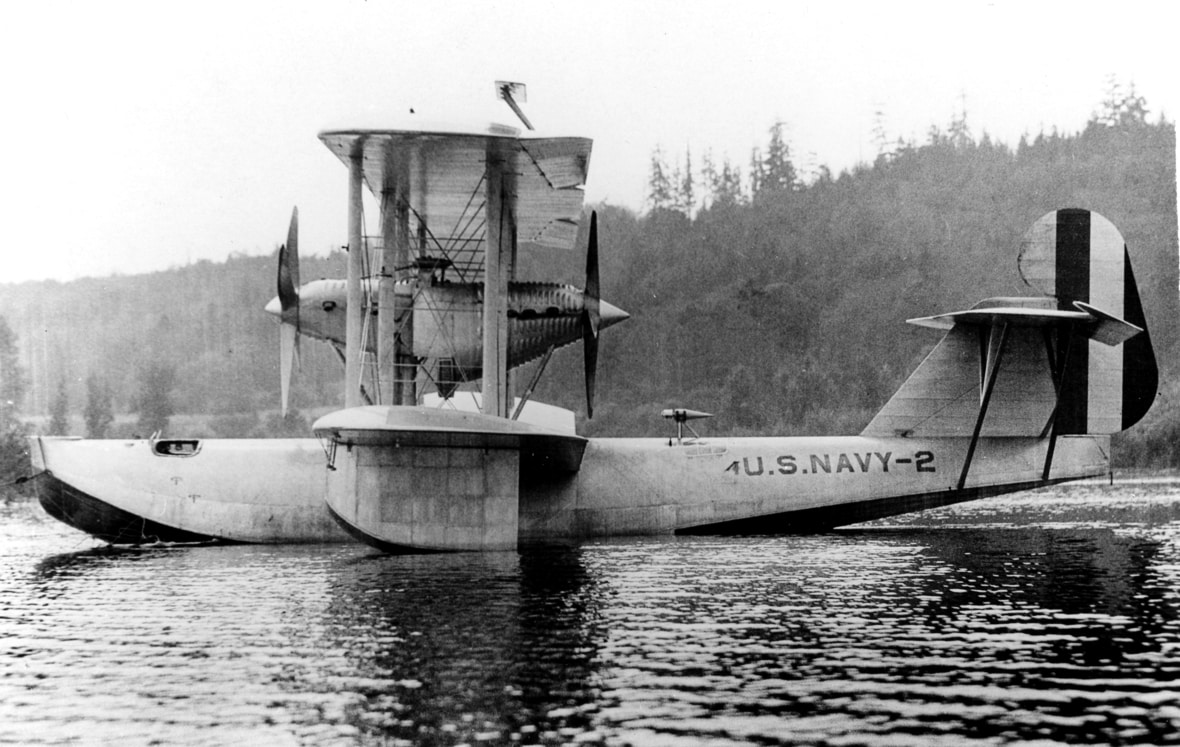
Boeing XPB-1

Webp.net-resizeimage (3)

First flown in 1925, the XPB-1 with its all-metal hull seemed promising enough, but was plagued by difficulties with its liquid-cooled engines.


Webp.net-resizeimage

Despite the engine problems, the rugged XPB-1 was retained for testing purposes by the navy who eventually replaced the original motors with radials. Still, there was only one built.


VP-101, Philippines, 1941

Under the tropical skies of the Olongapo Seadrome on Subic Bay, men of Patrol Squadron 101 stand before one of their PBY-4 aircraft. When this photo was taken in late 1941, war clouds were gathering over the western Pacific. In response, VP-101 has hastily camouflaged their aircraft; this is easily seen on the OS2U Kingfisher on the right. Soon, the squadron would be at war. Very few of the men pictured will avoid death or capture in the coming weeks and months.