Author: thejivebombers

85th Fighter Interceptor Squadron, Scott AFB, 1952-59


From my closet. L-1B flightsuit with 85th FIS patch. The same type baseball cap is worn by the pilots in photo #1.
O-1 Falcons of the 5th Observation Squadron

September 1932, Mitchel Field. One was taking off, the other landing. The result: an eventful take-off, and an eventful landing.
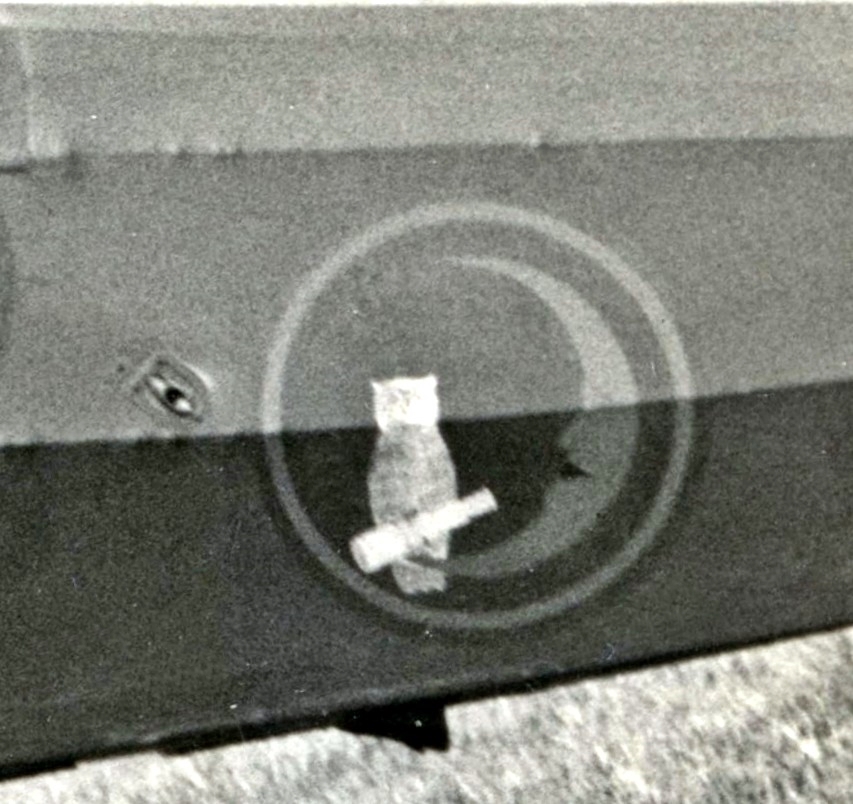
Close-up of the insignia of the 5th Observation Squadron.
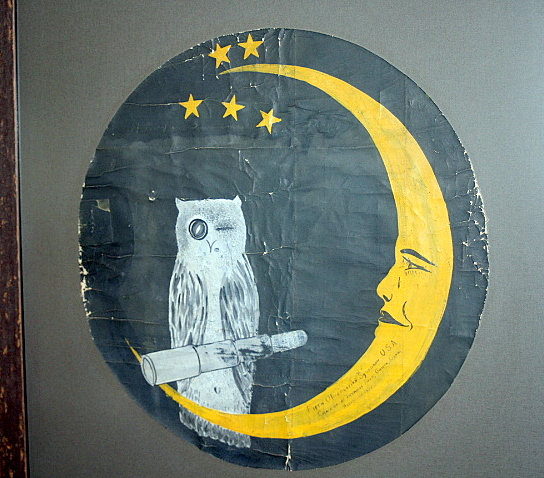
But wait – there is more to the story. The above photos are near & dear to me because a piece of an O-1 of the 5th Observation adorns my wall. Scrawled on it: “Fifth Observation Squadron, U.S.A. Crack-up at Trumbull Field, Groton Conn., August 21, 1931.” Research reveals that Lt. Elmer Tapley was the pilot and that he crashed on landing (but he walked away).
Given the time frame, the insignia seen on the mishap aircraft and on my wall were probably painted by the same man.
195th Fighter Interceptor Squadron

Based at Van Nuys California, the 195th flew various models of the F-86 Sabre from 1953-61. Sometimes you’ll see this patch with the pilot’s name on a bottom tab, sometimes you won’t. Either way, it’s not a common patch.
F-4D’s of the 62nd Tactical Fighter Squadron, Macdill AFB 1978-80
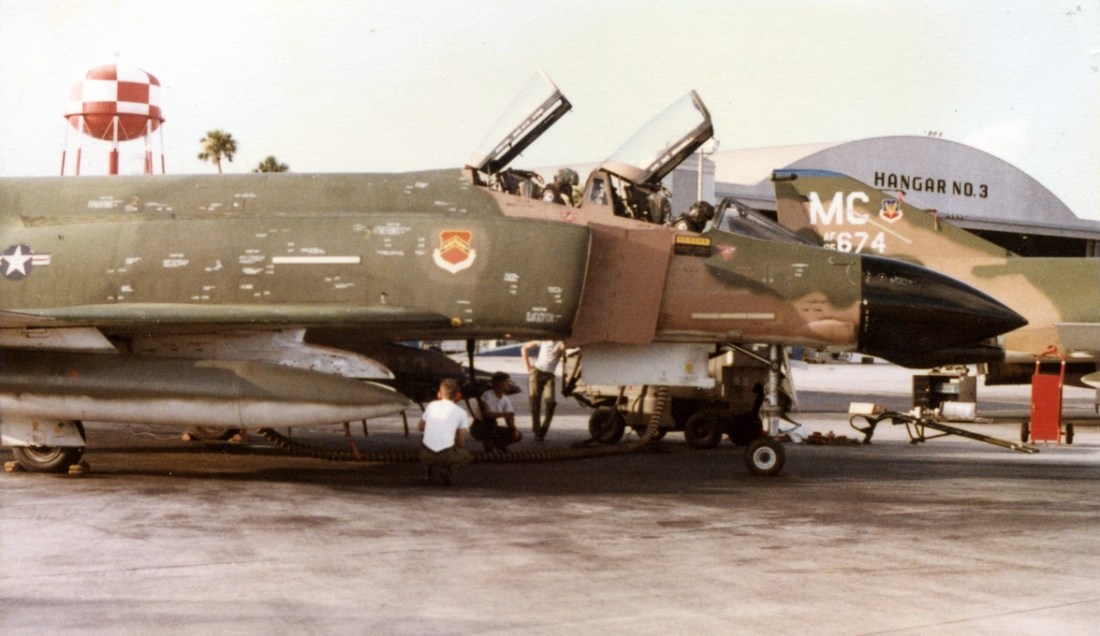
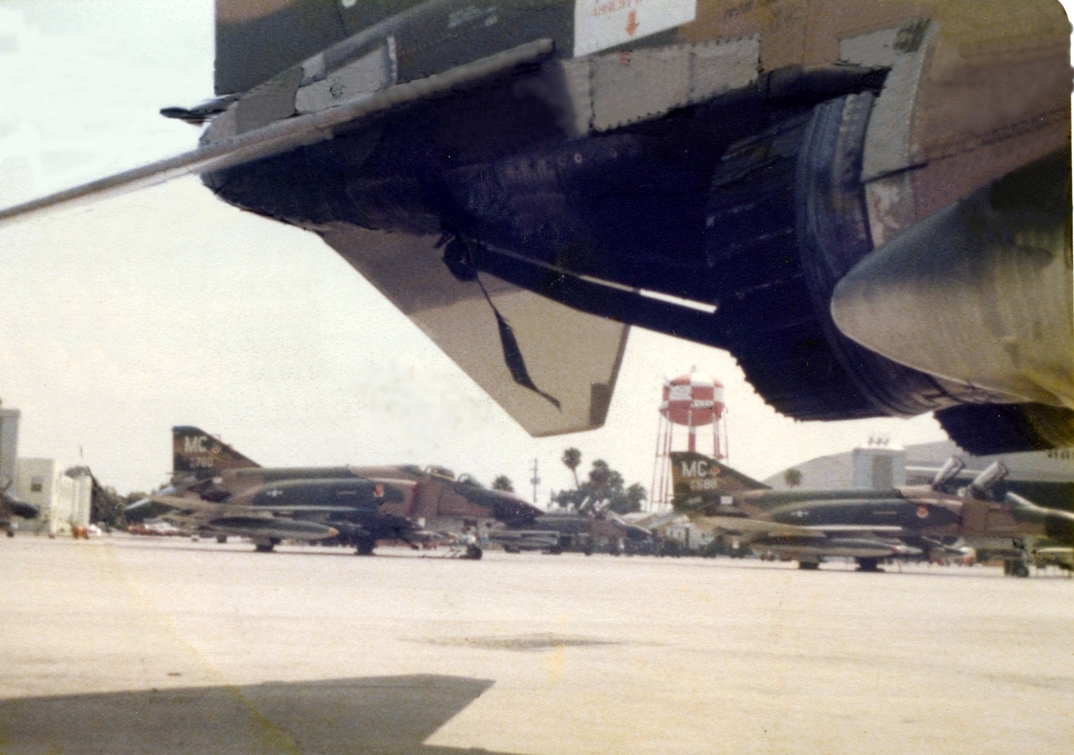
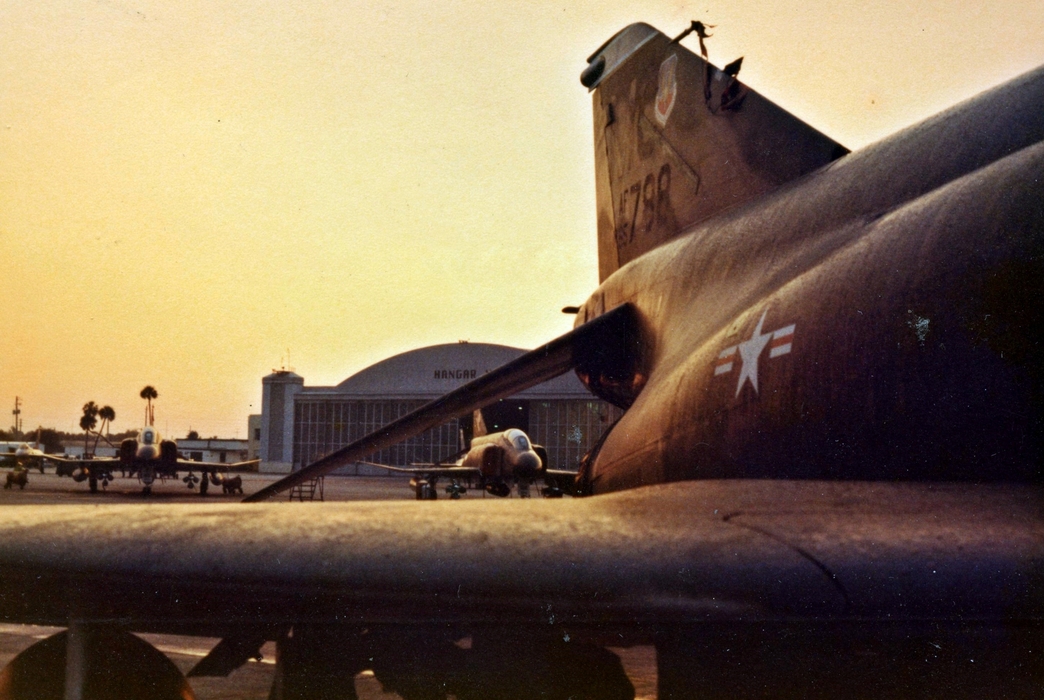

Took these myself way back when. Only had a cheap camera, but I took it in to work almost every day. Looking at the first photo of 65-0707 and 674, I am struck by the amount of stenciling they carried. The last Phantom (65-0794) is from the 13th TFTS. Their squadron tail stripe was white, but they changed that to black when the Wing added the white borders on the fin.
Keystone B-3’s of the 28th Bomb Squadron

Given that the 28th was stationed at Nichols Field in the blazing hot Philippines, it’s no surprise the rest of the bomber’s crew are taking a siesta under the wing.

The locals come to gawk at the the largest aircraft that they (and pretty much everyone else) had ever seen. They join the crew in taking advantage of the shade offered by the 74-foot wingspan of the B-3. Both photos were taken circa 1933.
F-94 crews of the 449th Fighter Interceptor Squadron, Ladd AFB

Dressed for the Alaskan cold, the pilots and radar observers of the 449th say “cheese” in front of F-94 49-2526. Photo is undated, but given that 49-2526 (in the background) crashed in 1954, it is safe to assume it was taken sometime before.
Frederick Martin, the Douglas DWC, and the first flight around the world.
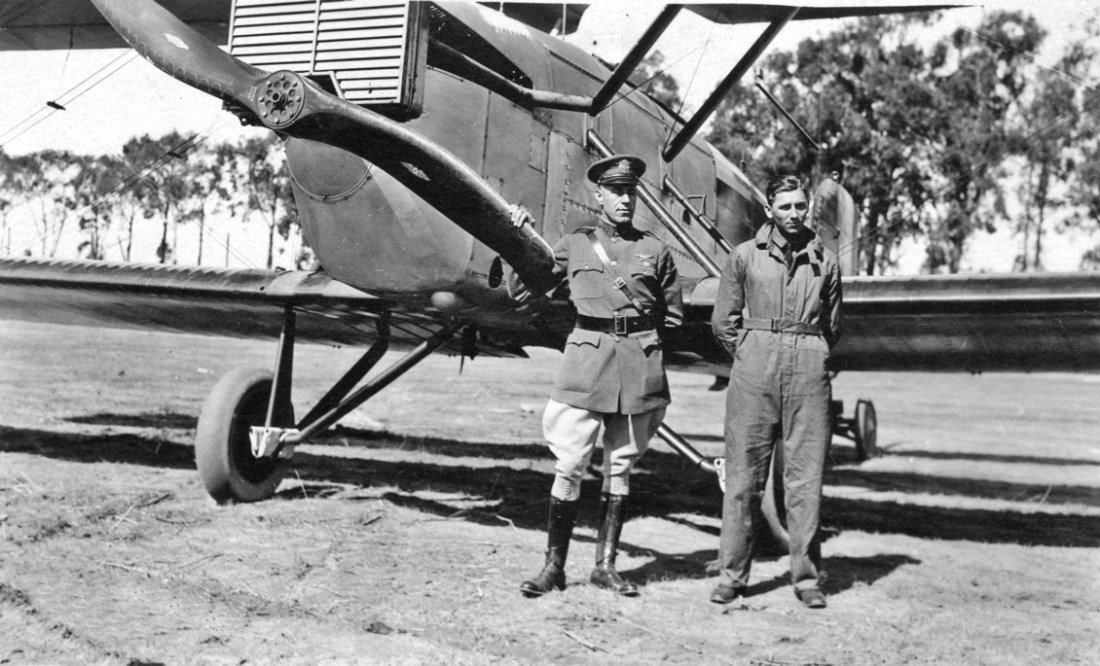
Major Frederick L. Martin and his crewman, S/Sgt Alva L. Harvey. They are about to set off in the “Seattle” to begin the famed first flight around the world in 1924.
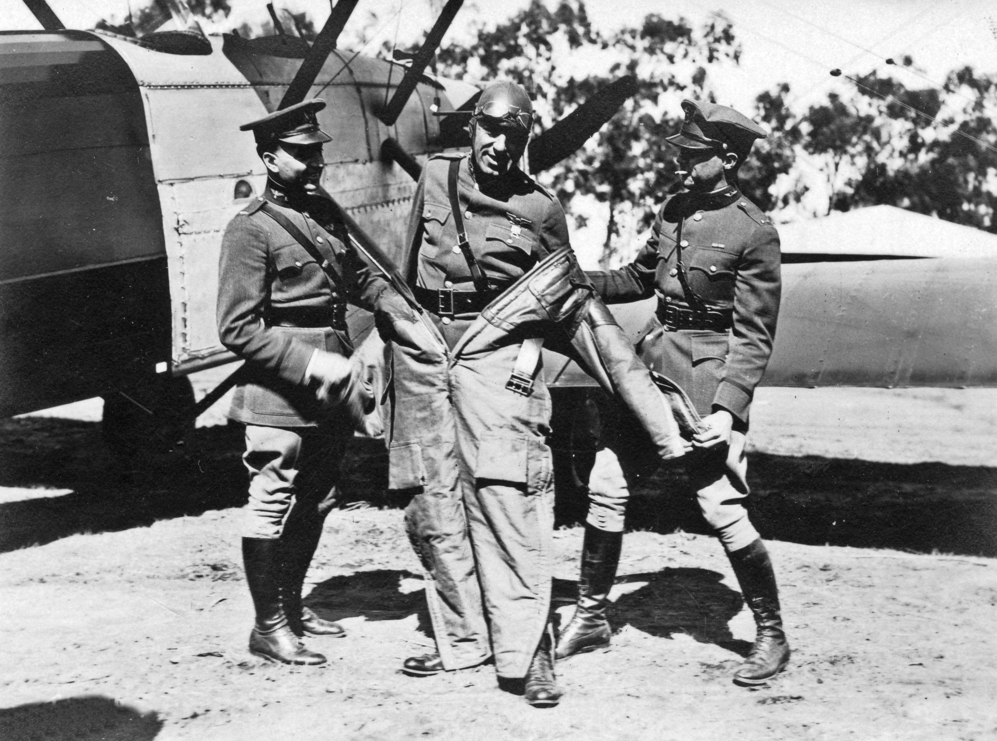
Fellow pilots on the upcoming journey, Lt.’s Lowell Smith and Leigh Wade, assist Frederick.
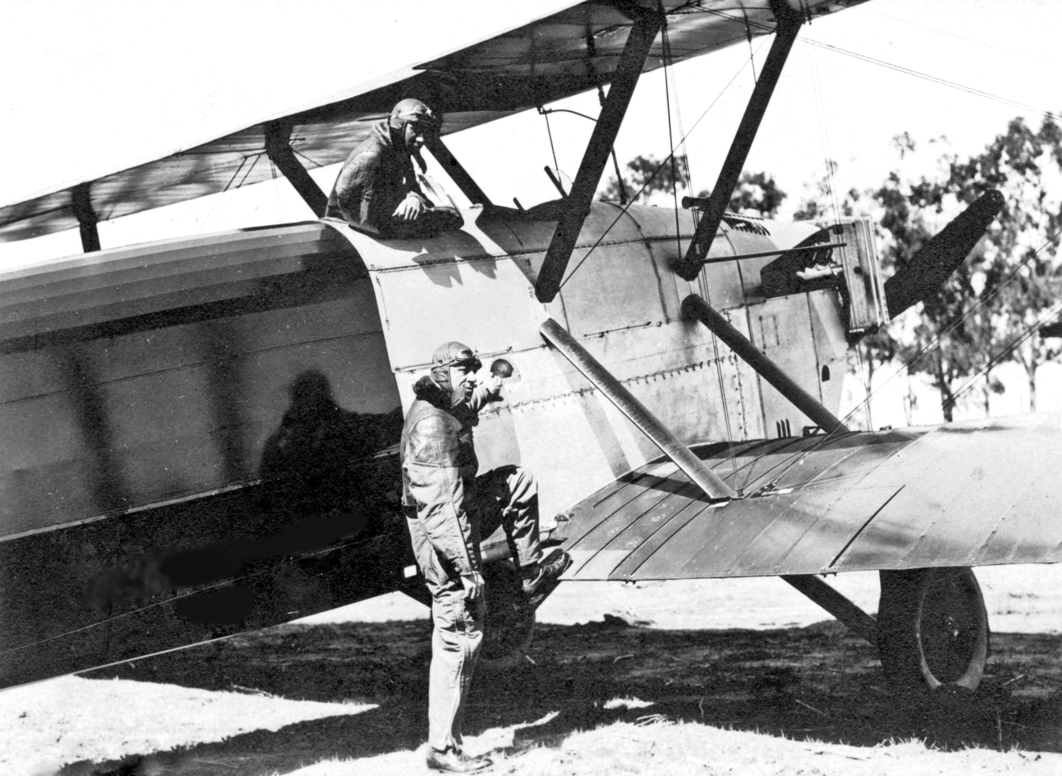
Harvey & Frederick. Alva Harvey retired as a full colonel in the USAF. Frederick was moving smartly up the ladder until December 7, 1941 when it was his misfortune on that fateful day to be in command of the Hawaiian Air Forces.
Harvey and Frederick crashed in Alaska on the first leg of the world flight. After an eventful 10 days in the wilds, they returned.
Avro Vulcan, XM652

Based at RAF Waddington with 50 Squadron, XM652 was nearing the end of its days when photographed by yours truly at Decimomonnu Air Base on Sardinia in 1983. The first Vulcan I ever saw, the howl it made on take off impressed me for all time. (I didn’t know at the time that this “howl” was a signature of the mighty Vulcan.) I understand that XM652 was to be preserved, but the civilians who bought it screwed that up, and sadly the aircraft was subsequently scrapped. The nose section survives.
Mechanic of the 86th Observation Squadron, Wheeler Field Hawaii, 1941

The aircraft is an O-47B which the 86th had received the previous year. On December 7th, the 86th and it’s 7 O-47’s were located at Bellows Field, southeast of Wheeler. This would be one of those aircraft, and, one of the men. Check out the wood tool chest – very nice.
P-6 pilots of the 2nd Wing, Langley Field

Byron Q Jones, center, acquired his wings in 1914 and was one of the early birdmen in the Aeronautical Division, U.S. Signal Corps. Saw service chasing Pancho Villa, won the MacKay Trophy, and was also the first army pilot to perform a loop (and live to tell about it). All of these men went on to important assignments – Nugent and Longfellow attaining general’s stars.
RF-80 over the Alps
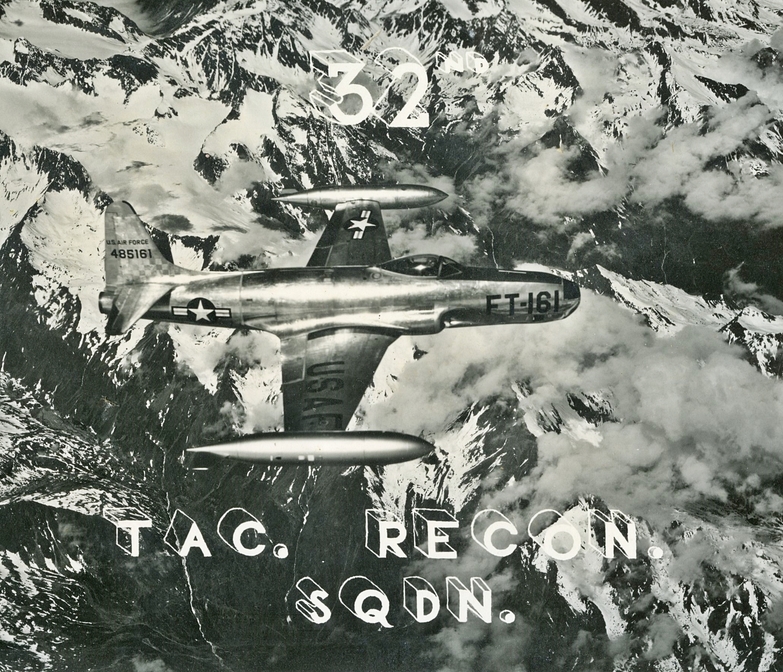
The aircraft (44-85161) began life as a P-80 but was later modified as a reconnaissance platform. This is the cover of a book of bound photos put together by the squadron when they were based at Spangdahlem, Germany, 1953-57.
146th Fighter Interceptor Wing, Van Nuys, Calif.
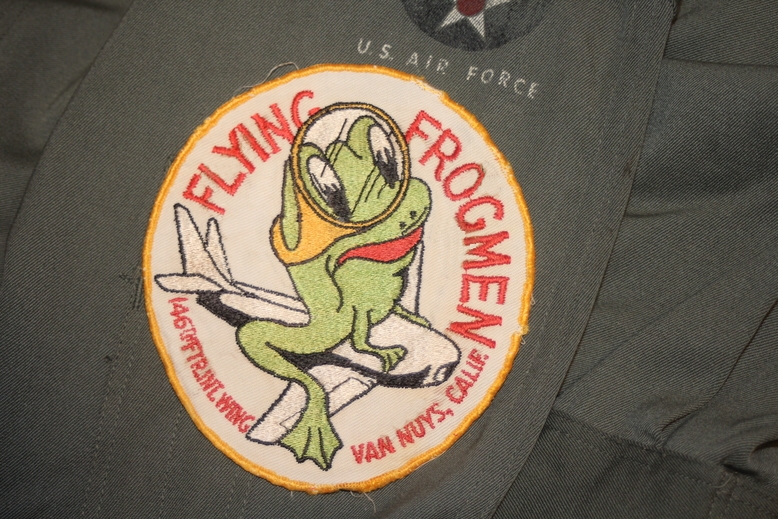
Story goes that in the late 50’s the new sport of scuba diving was so popular in the 146th that they formed a club and took to calling themselves the “Flying Frogmen.”
Douglas O-38, Washington National Guard
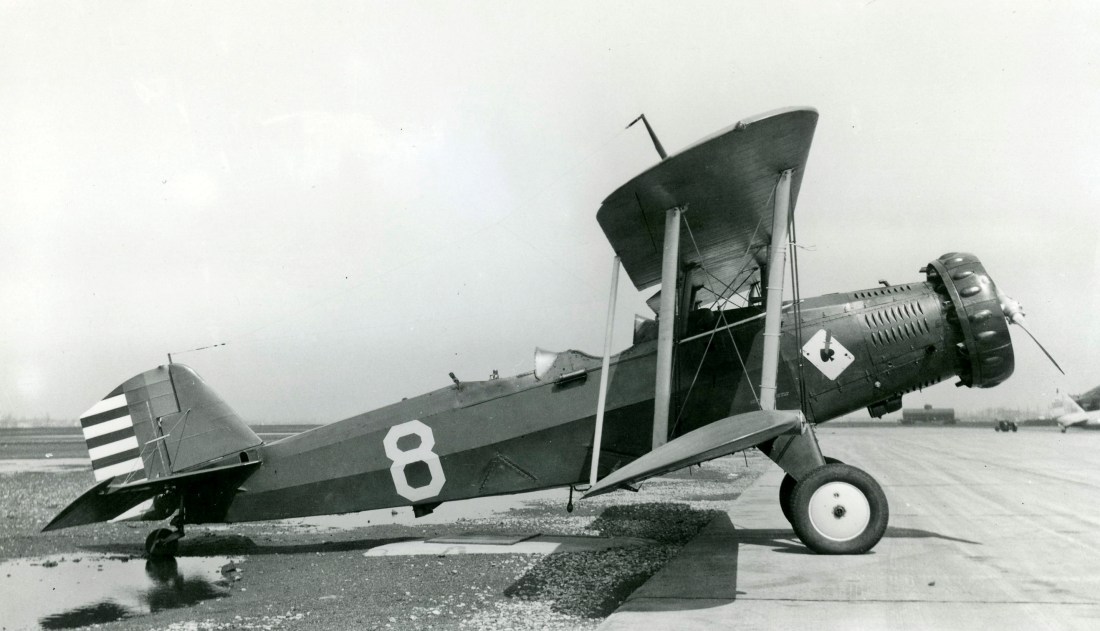
Washington’s 116th Observation Squadron flew the O-38 from 1931-40.
Winter’s day at the Thule Air Base Greenland alert barn, and one very frozen F-89 Scorpion

The F-89D (53-2606) is from Thule’s 74th Fighter Interceptor Squadron. This aircraft went to the boneyard in 1960.
S2F-1 Tracker, early 1960s


Up from its home base at NAS Seattle, this “Stoof” (133303) paid a call at the NAS Whidbey Island airshow back in the day when international orange paint was sold to both the USN and USAF by the barrel.
91st Observation Squadron, Crissy Field, 1931

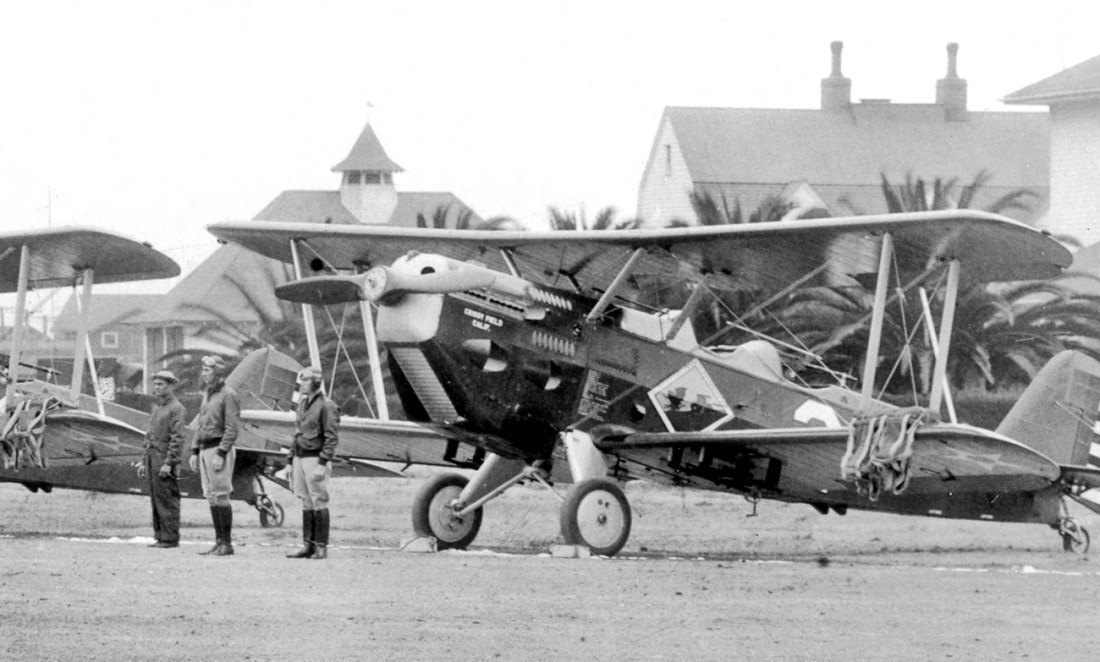
The squadron had just received the new Douglas O-25, and the aircraft are immaculate. Serials visible are: 31-169, 170,171,172.
Men of the 17th Bomb Group, McChord Field,1941
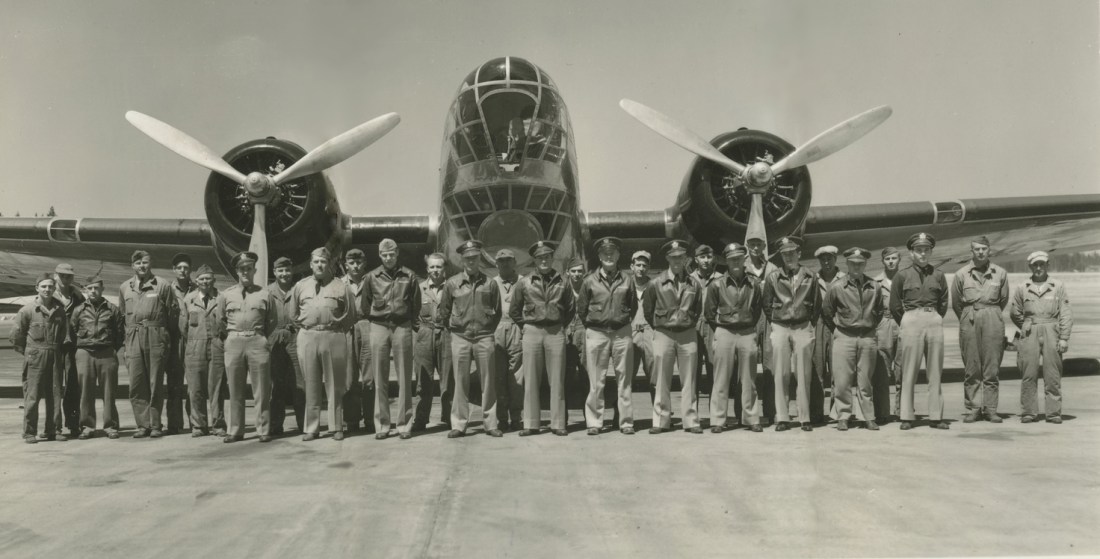
The 17th soon transitioned to the B-25 whereupon they attained eternal glory for taking part in the Doolittle raid. Several of these men will take part in that historic mission. (I recognize some of the faces)
The aircraft is, of course, a Douglas B-18. Try as I might – and I’ve really given it a go – I can find no angle to view the B-18 which does anything to improve its appearance.
Ohio National Guard O-38’s over Camp Perry
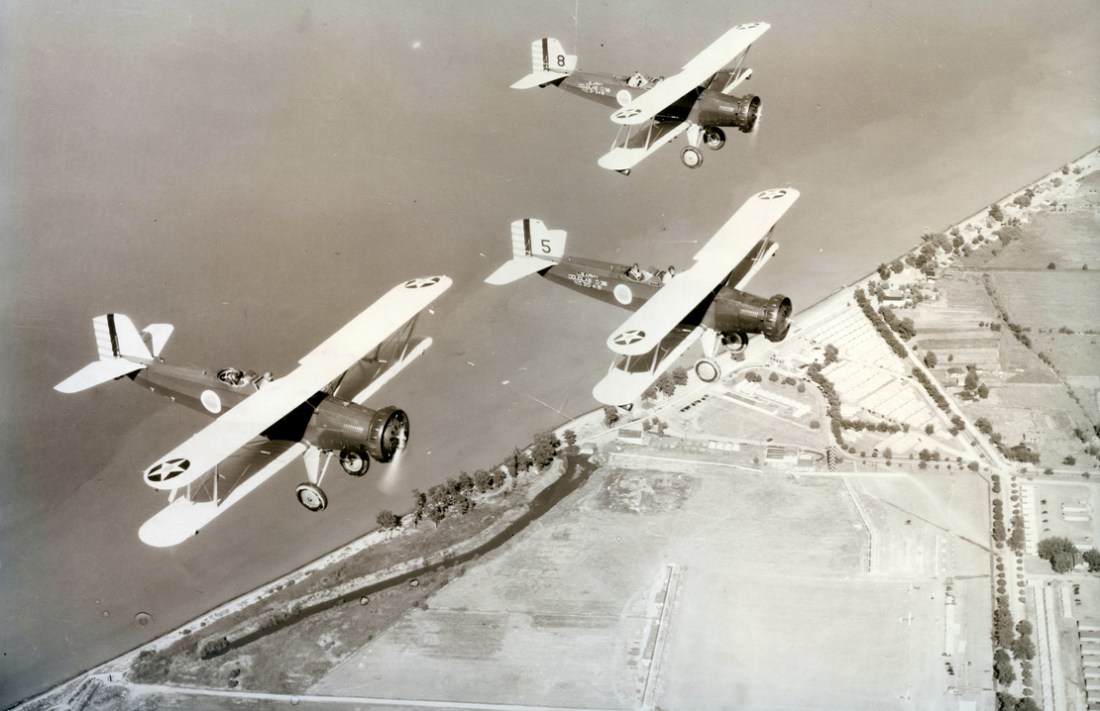
Aircraft belong to the 112th Observation Squadron. Serials are 30-418, and 31-349. First plane carries no extra markings other than the insignia of Ohio’s 37th Infantry Division. This leads me to believe the aircraft was recently painted or overhauled. All their wheels are muddy, so you know what their runway is made of. The photo is almost 2 x 2 feet – must have hung on a squadron wall somewhere back when.
Night photo of Barksdale Field, May 24, 1940

Who needs NVG’s? Photos such as these were, of course, taken with illuminating flares. The effectiveness of this method is seen here – even from 5,000 feet one can see pretty much everything worth looking at.
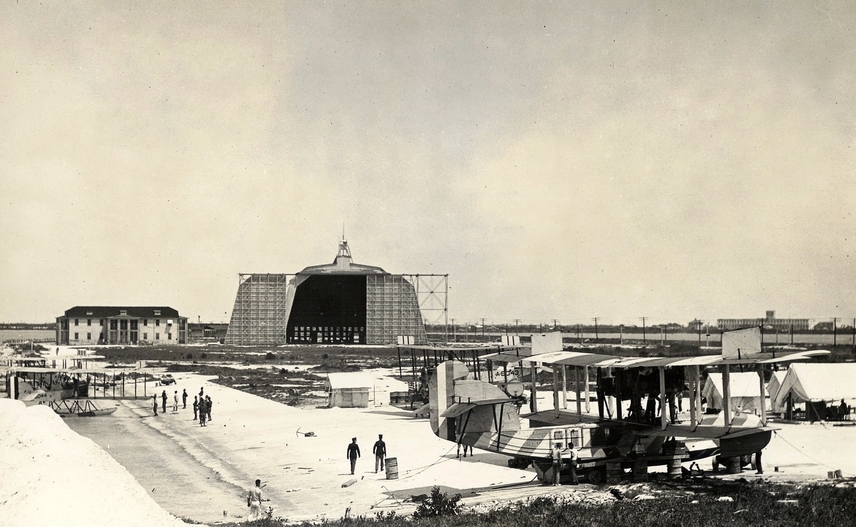
Busy Beach at NAS North Island in WWI
Original ads: Fokker and Zenith
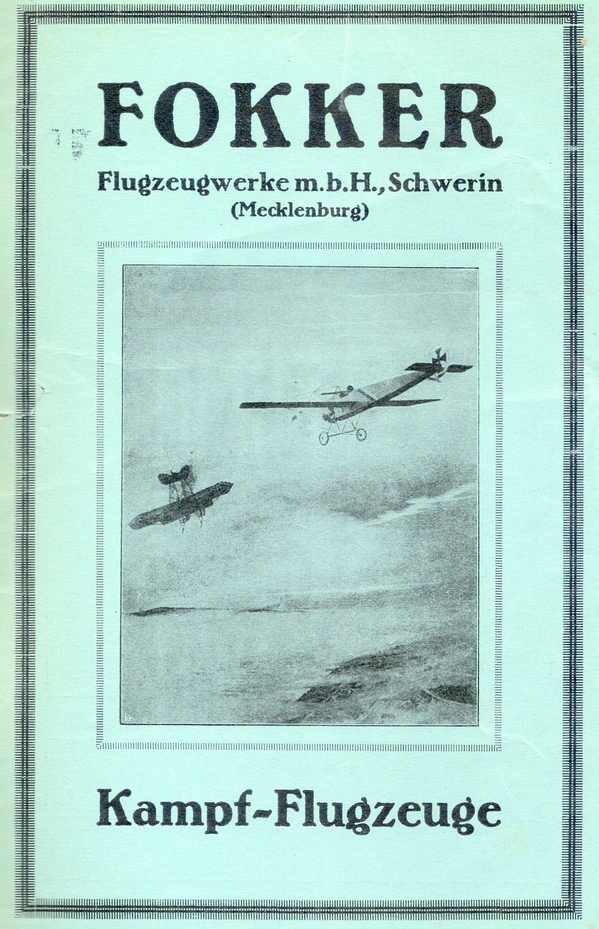
As one can see from the pictured Fokker Eindecker, this ad is an early one indeed.
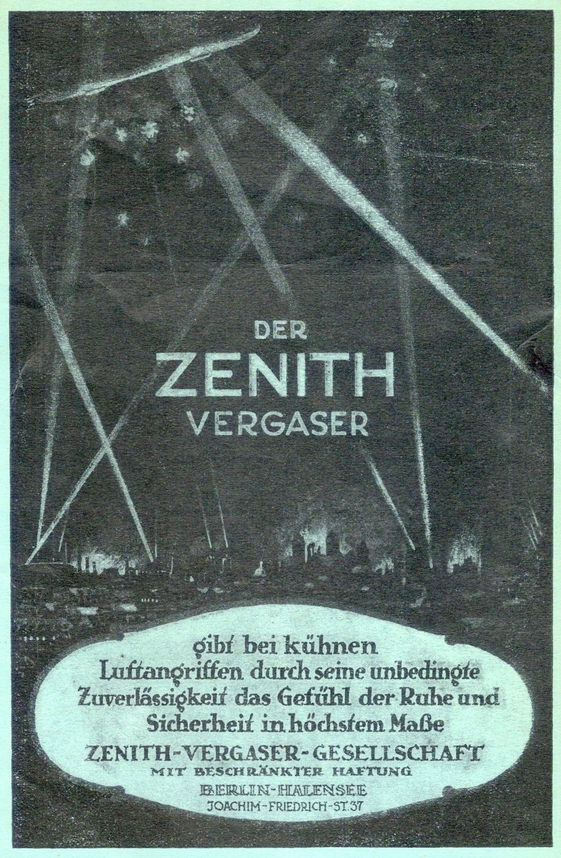
The Zenith Vergaser (carburetor) features a marauding Zeppelin high over London.
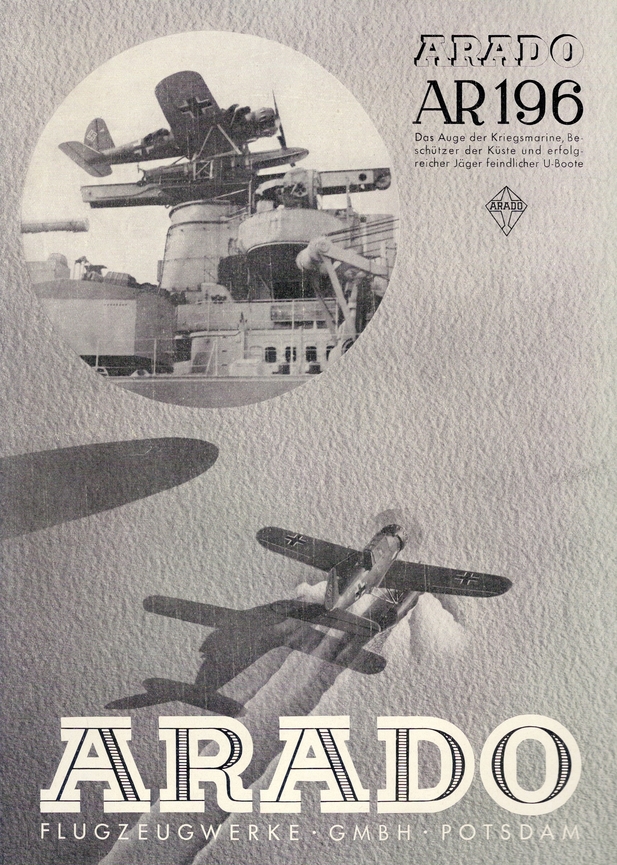
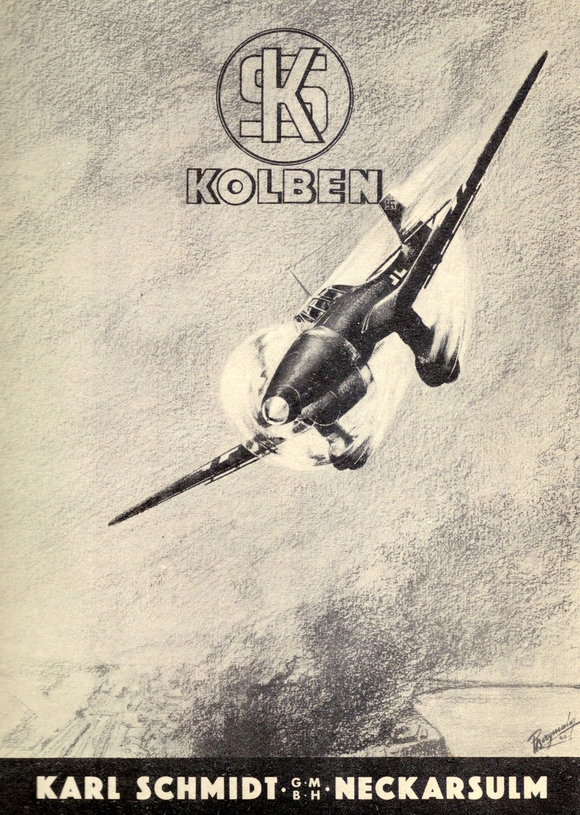
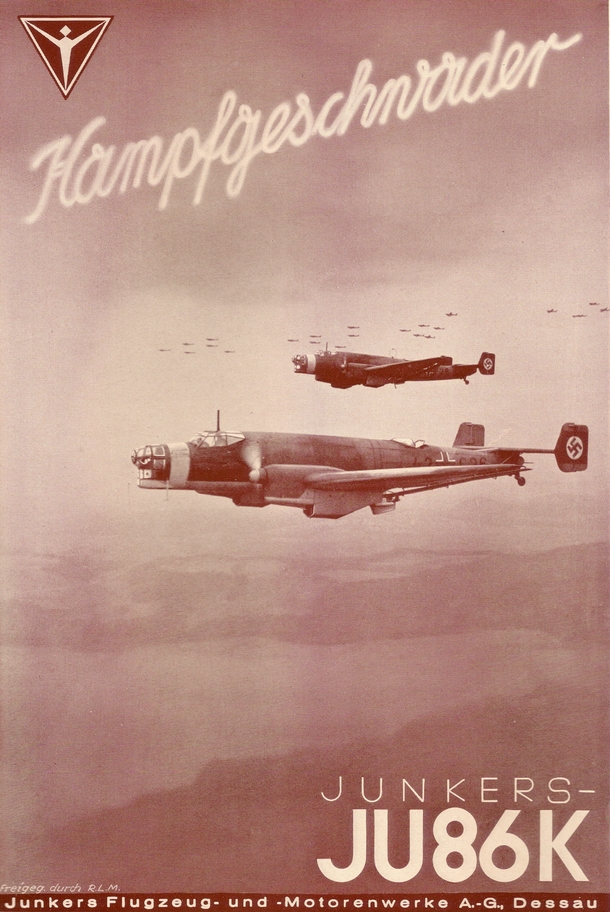
Arado 196, JU-87 Stuka, and JU88K
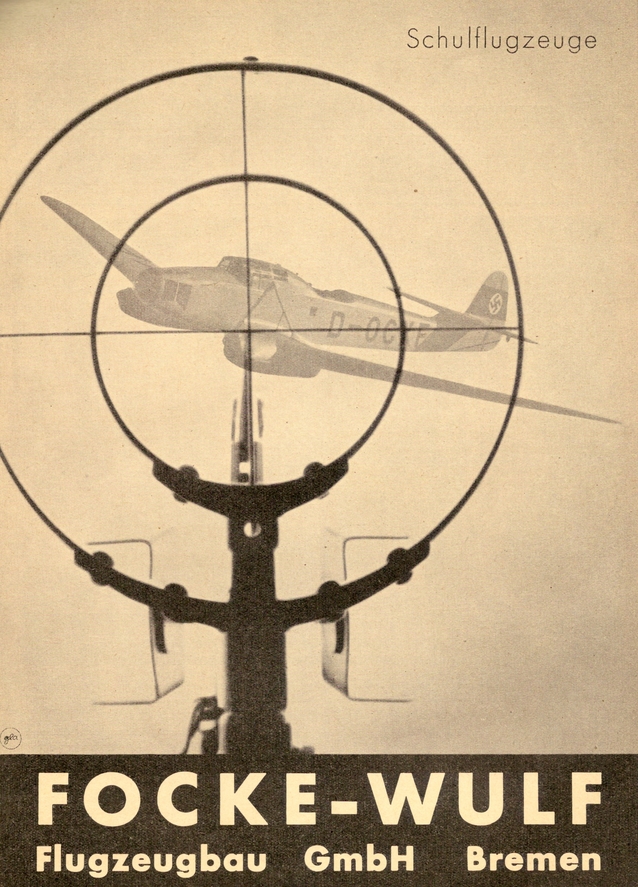
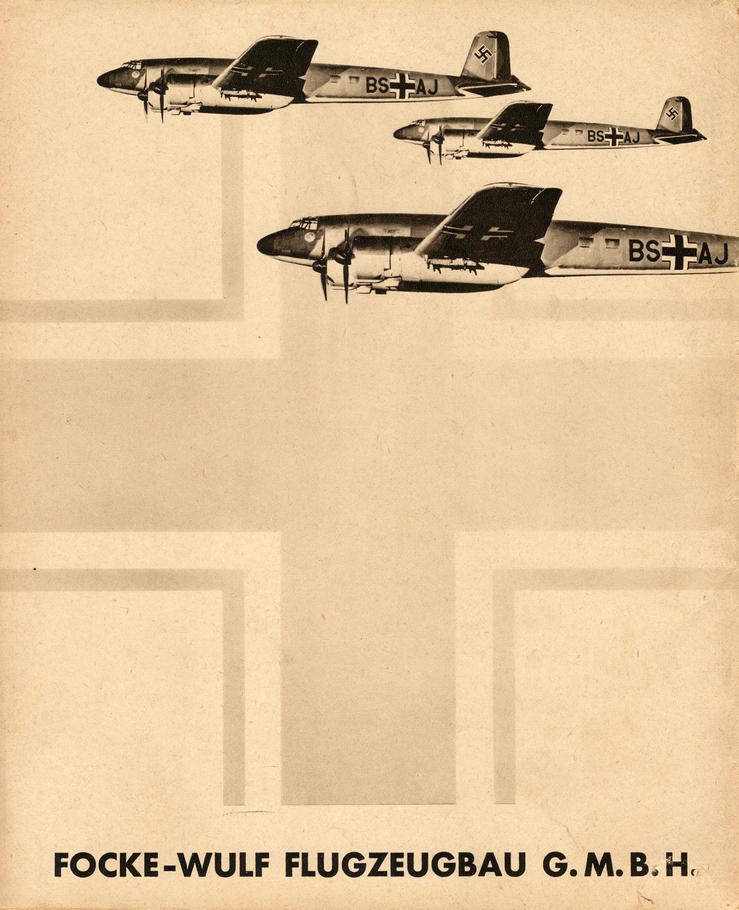
Focke-Wulf FW 58 and the FW 200

 The Jive Bomber