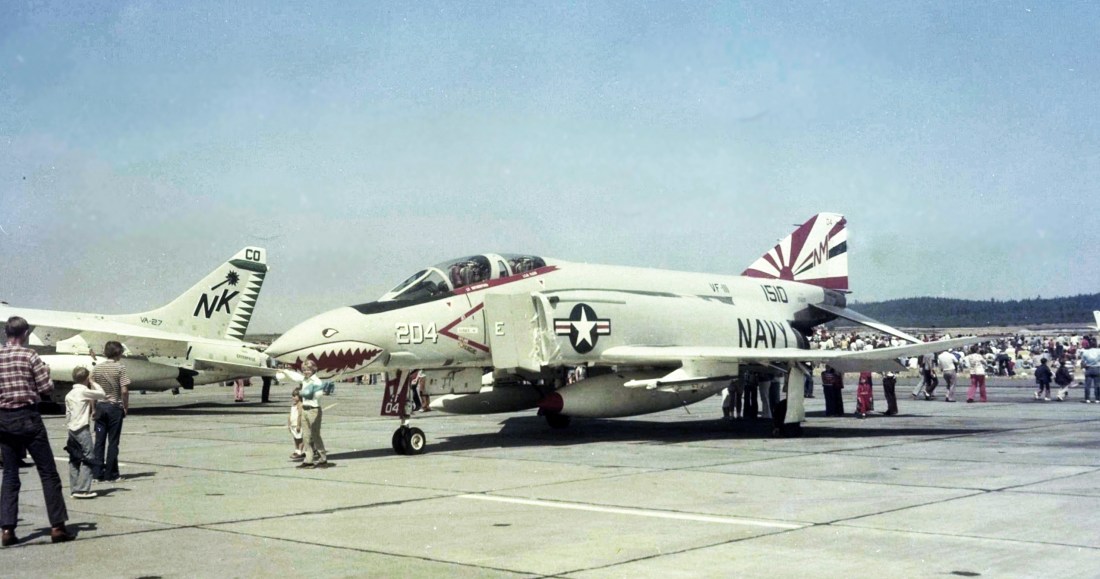
F-4N of VF-111 visits NAS Whidbey open house in the 1970’s.
Douglas O2-H
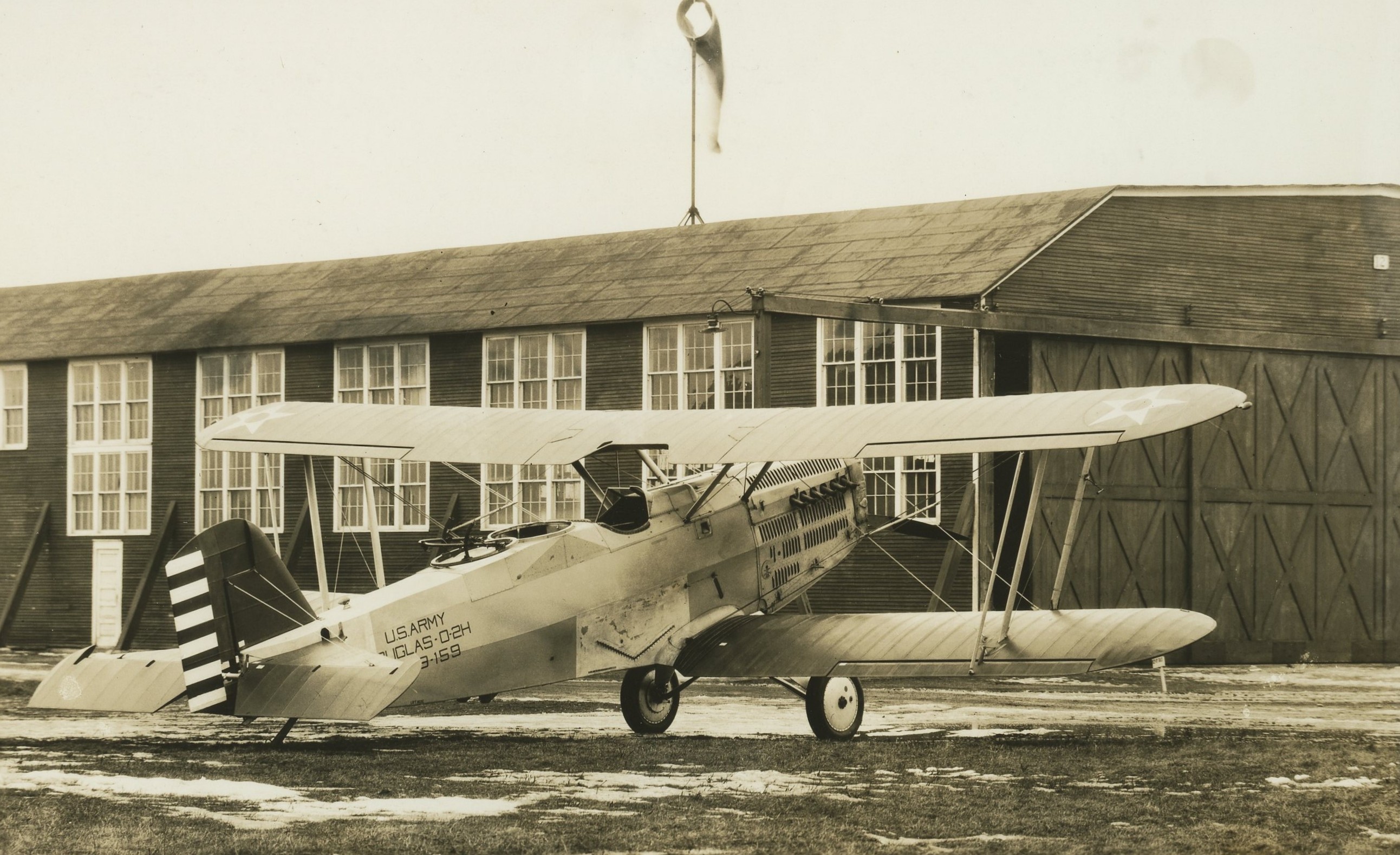
Serial 29-159. I believe this aircraft was assigned to the 91st Observation Squadron.
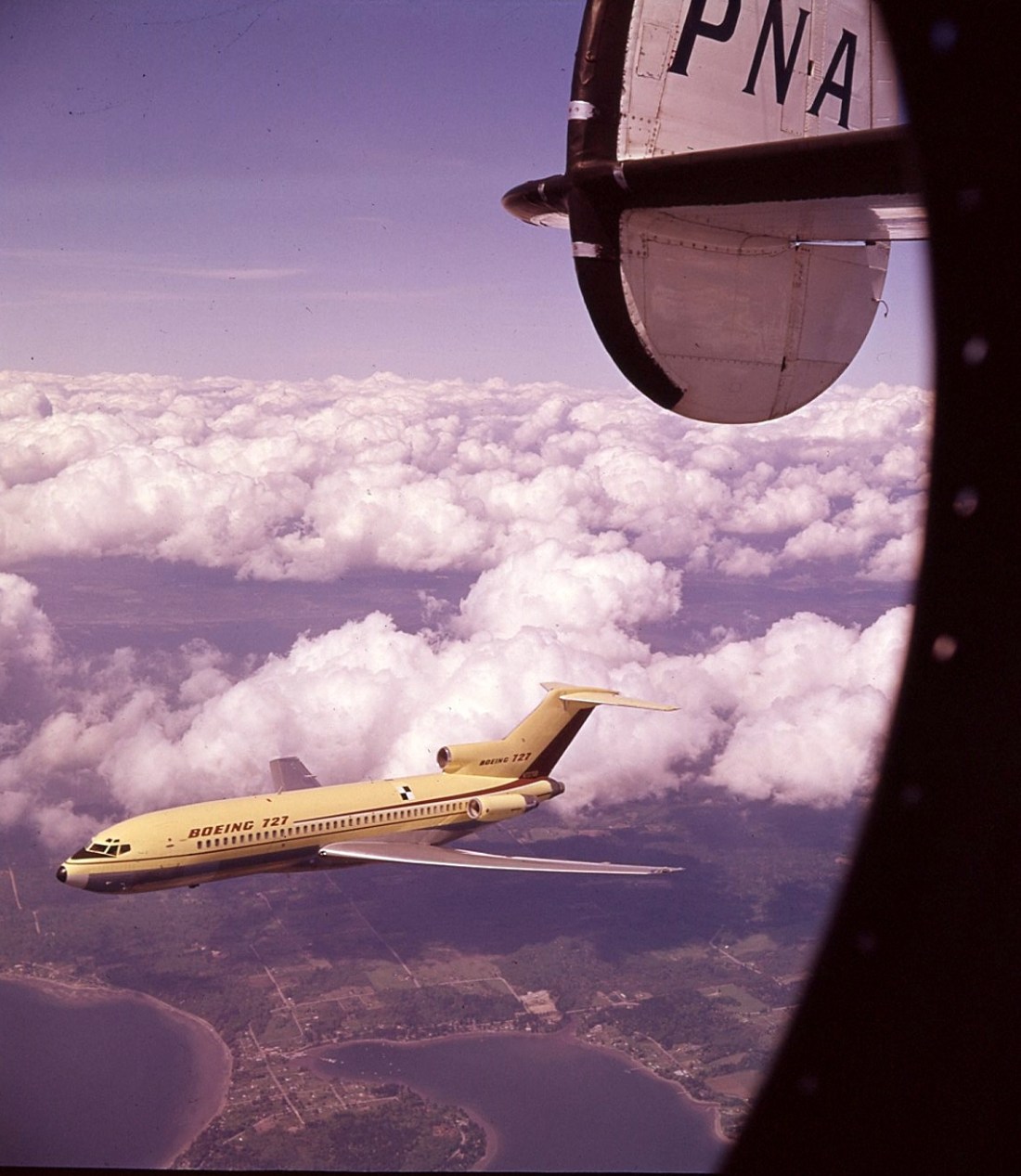
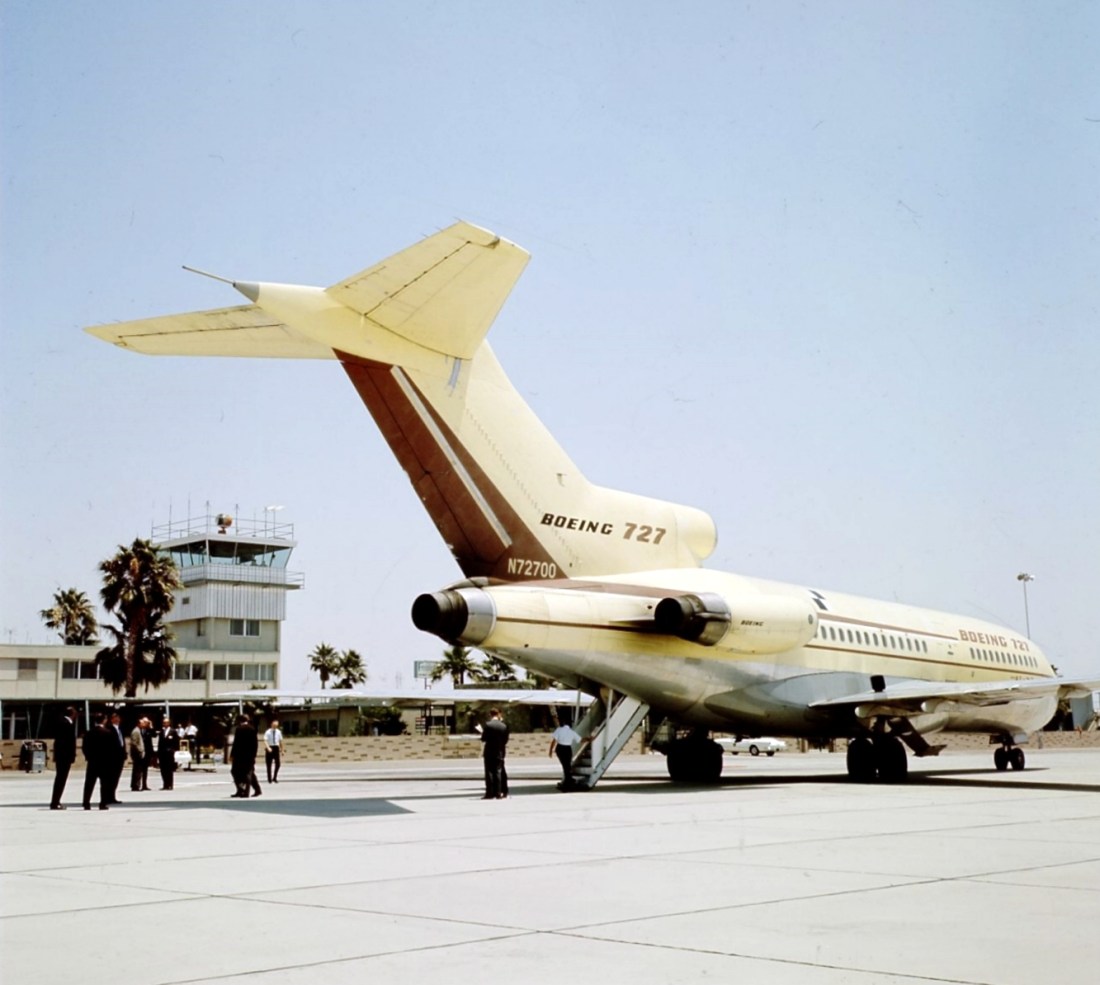
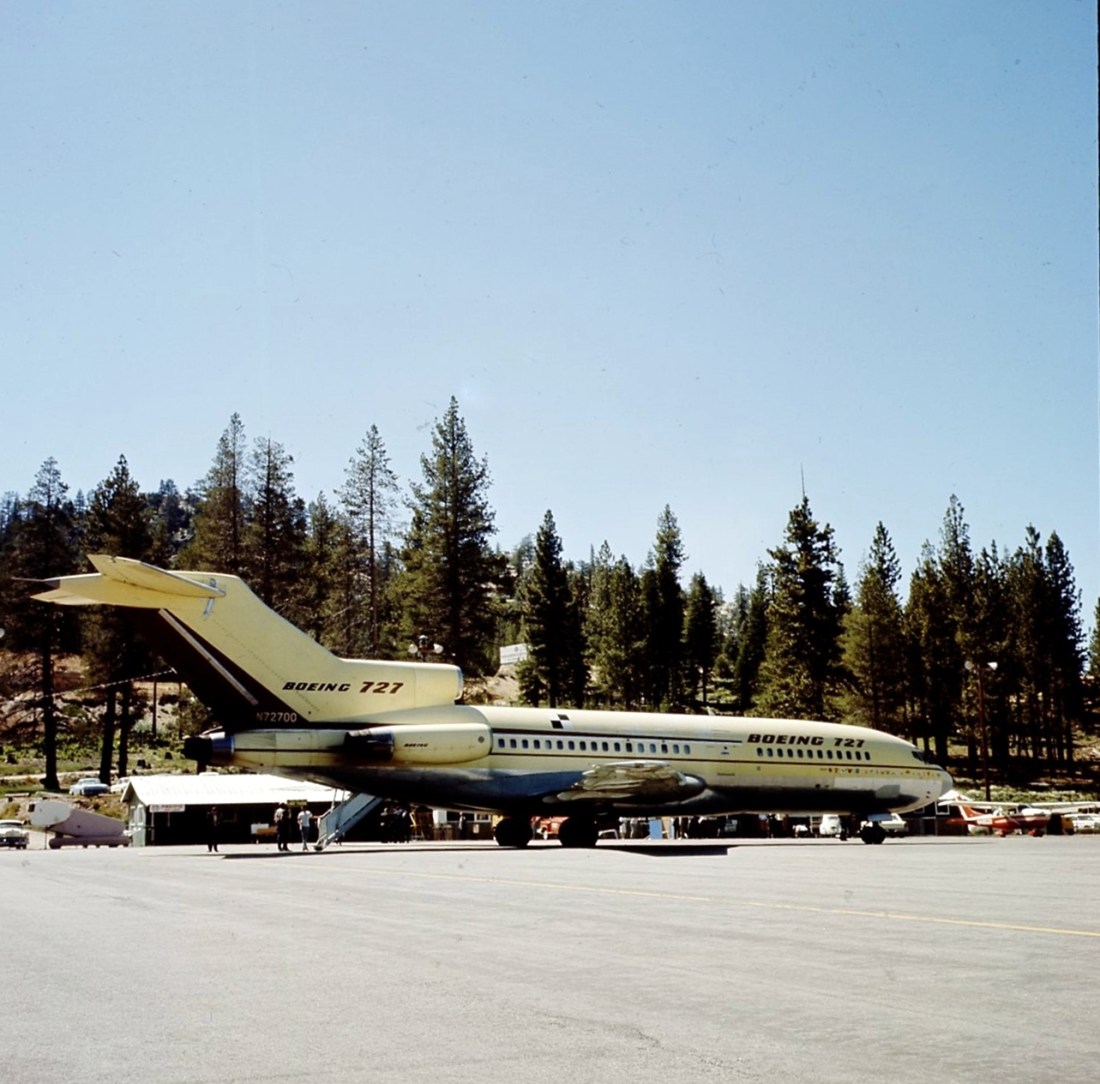
The First Boeing 727


Corsairs of Naval Air Station Seattle.

Aeromarine 30B

Drifting in over USS Langley in 1922. Note the number of fore and aft wires. The aircraft of the time would/should be guided by those wires to a traverse wire which would/should stop the plane. Also of note is that Langley is not underway.
It’s the 1940 Portland Rose Festival Queen


Her Majesty Queen Virginia Rothenberg and Her Court posing with a Northwest Airlines DC-3. Check out the paint job both on the cars and the aircraft.
AD-6 Skyraider of VA-95

Taking a vacation from the USS Ranger to grace the ramp at the NAS Whidbey open house in the early 60’s is 135376, later transferred to South Vietnam’s air force.
F-106 of the 498th Fighter Interceptor Squadron, Geiger Field WA
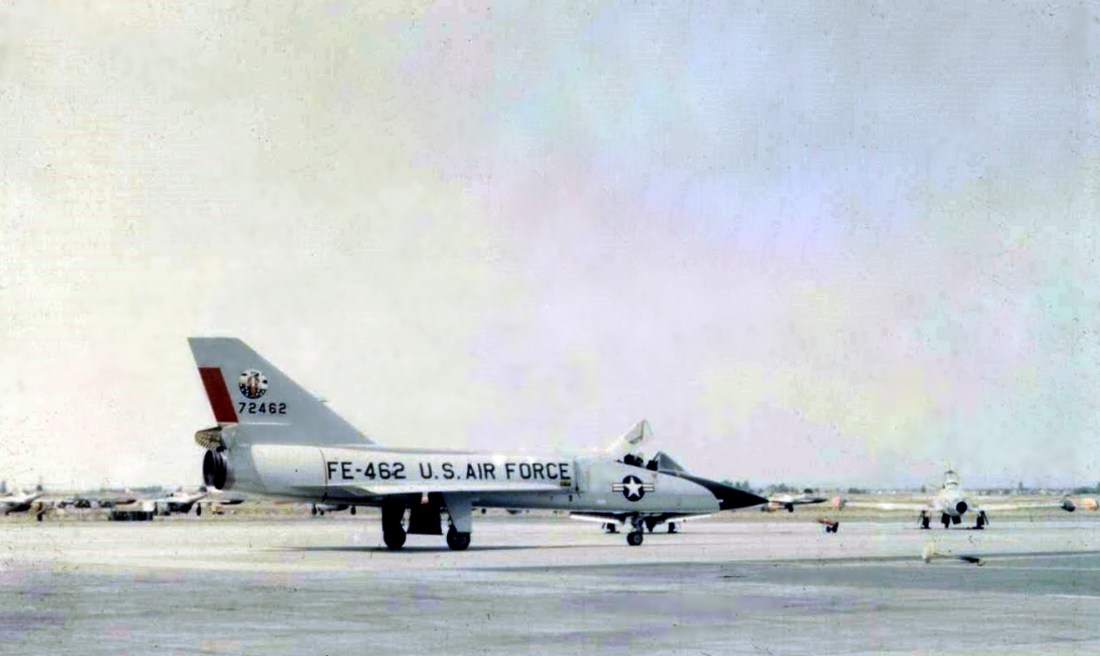
This aircraft crashed on 21 Dec 1961. The pilot, Major Joe Passantonio, Ops officer of the 498th, ejected and survived. Note the F-89’s of the 116th FIS, WA ANG.
F-102 Delta Dagger
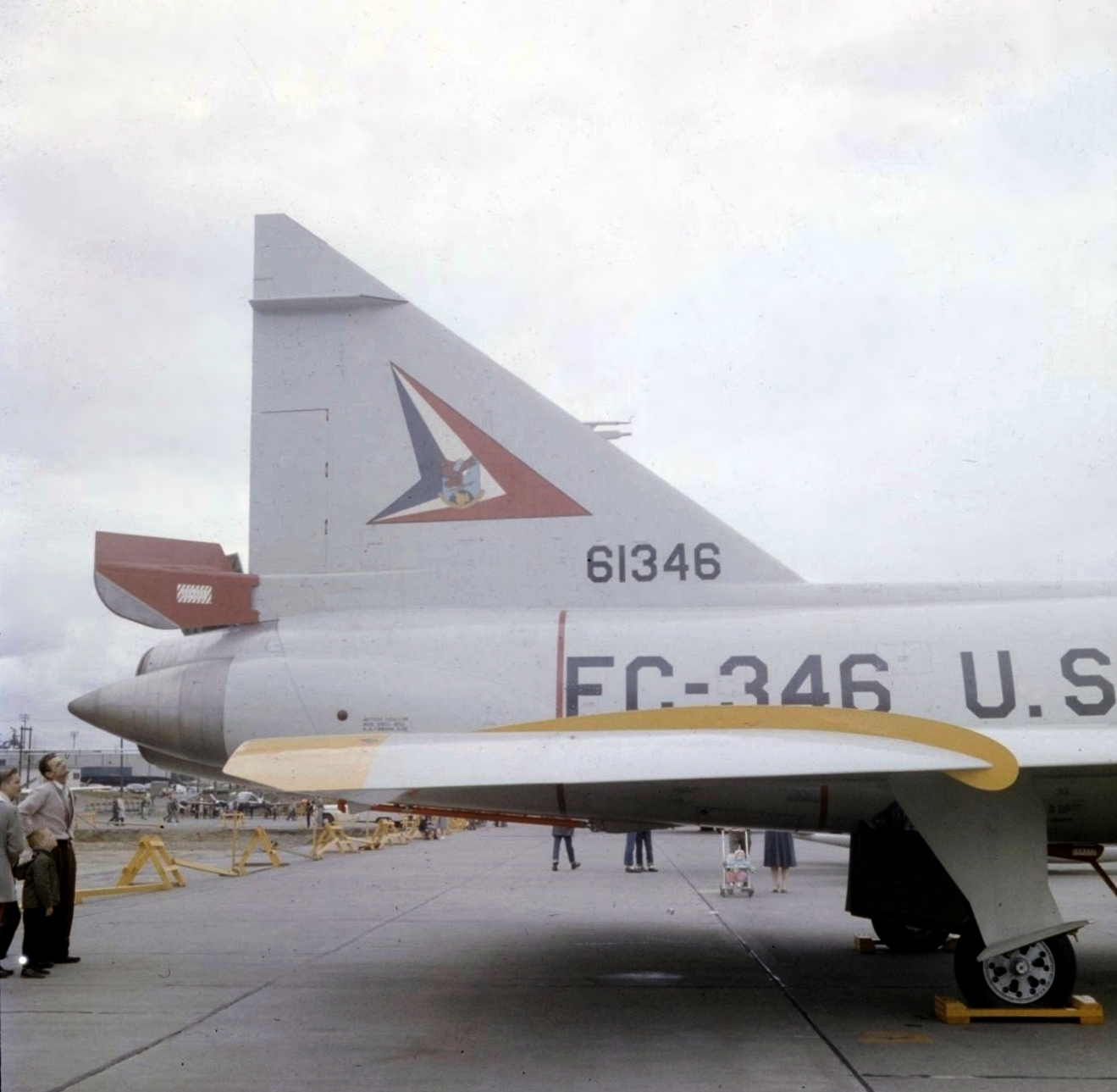
64th Fighter Interceptor Squadron, Paine AFB, WA, early 1960’s. 56-1346 flew for many years, but ultimately met its fate as a drone in 1981.
Neyen’s Schraubenflieger
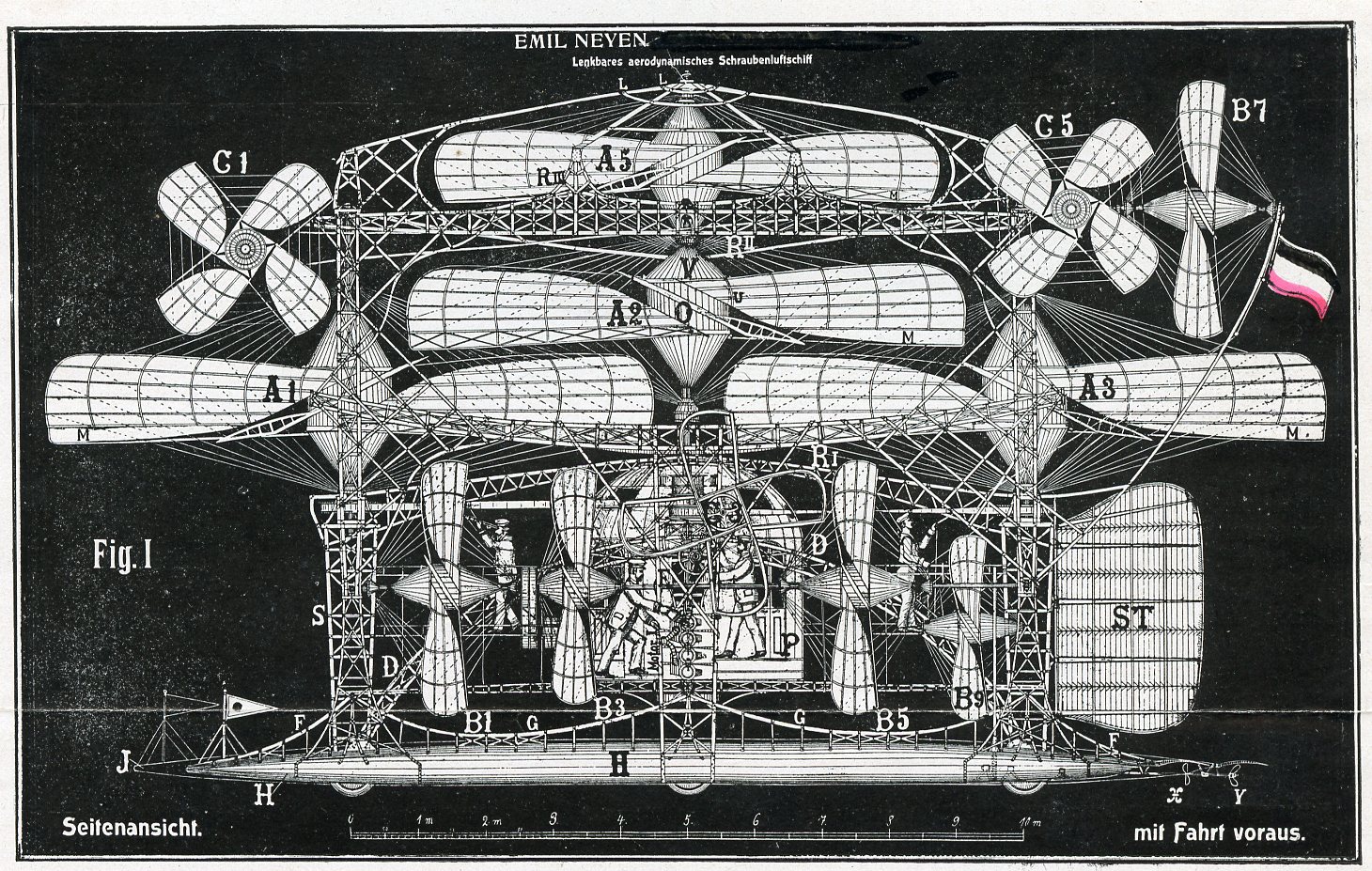
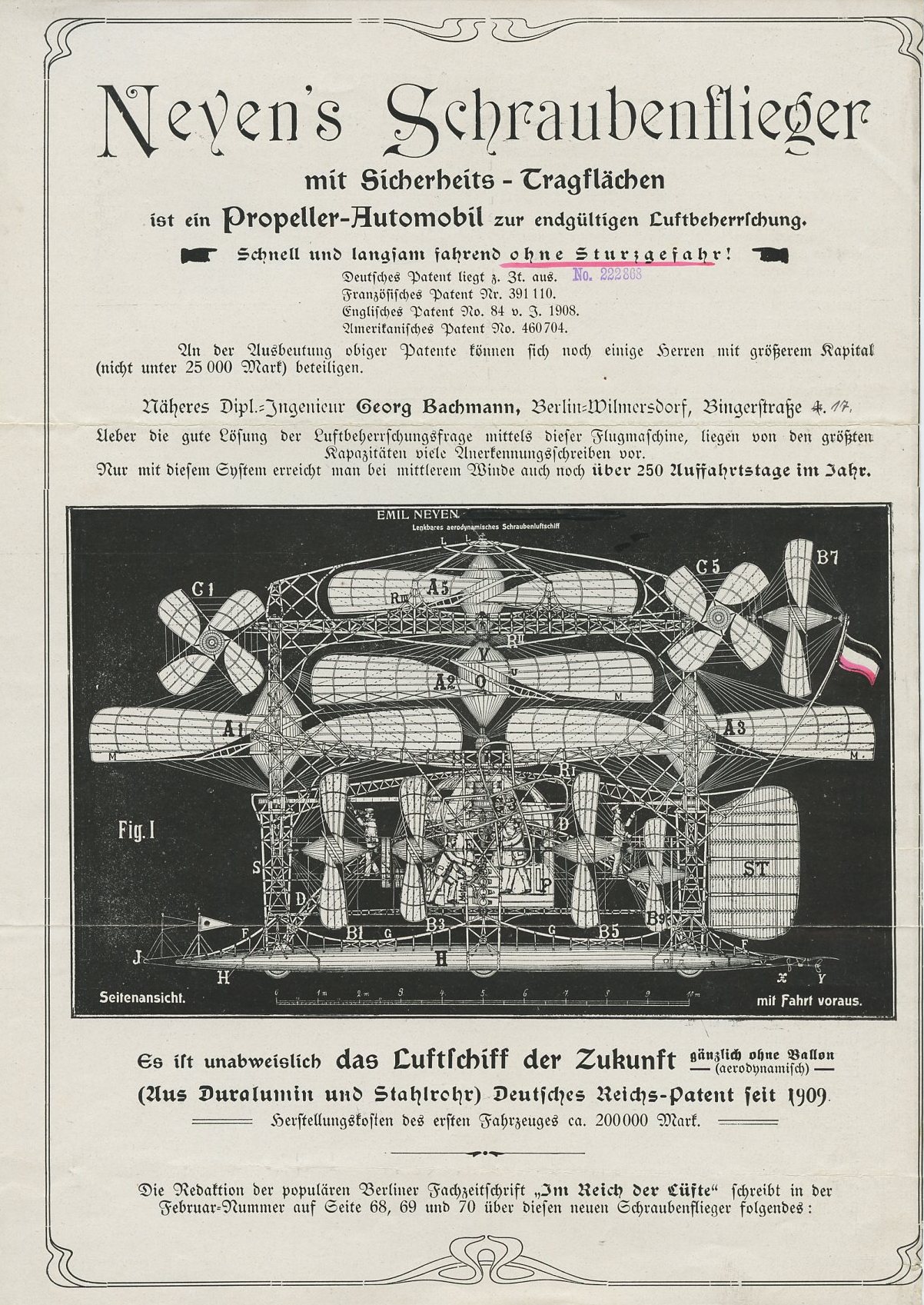


Emil Neyen’s “Schraubenflieger” was by far one of the crazier looking contraptions devised by mortal man. Despite the machine’s awkward design, prospective passengers are assured they may travel “ohne sturzgefahr!” (without risk of crashing).
“Neyen’s Schraubenflieger” – needless to say – never got off the ground, literally, and figuratively (the design was politely described in a 1910 Polytechnisches Journal article as “problematic”). The purpose of this brochure is to drum up investors; interested gentlemen need inquire only if they bring in more than 25,000 Reichmarks per annum. This is an original brochure – I can’t find much else regarding this venture.
I am grateful to Felix Wander of the Deutsches Museum for providing additional information on this “flying” machine.
Pan Am 707 “Jet Clipper Gladiator”

“Clipper Gladiator.” Who the hell was the genius who invented these names? Whoever he was, he was not paid enough. Taken on the ramp at Renton, WA in early 1963. The noseless KC-135 above it, 62-3538, is still flying today.
AT-6 Texan of the Washington Air National Guard

Taken at Ellensburg WA in 1953, two general’s stars adorn the fuselage – the big cheese himself was flying that day.
And here is how you build KC-135’s in the summer of 1959
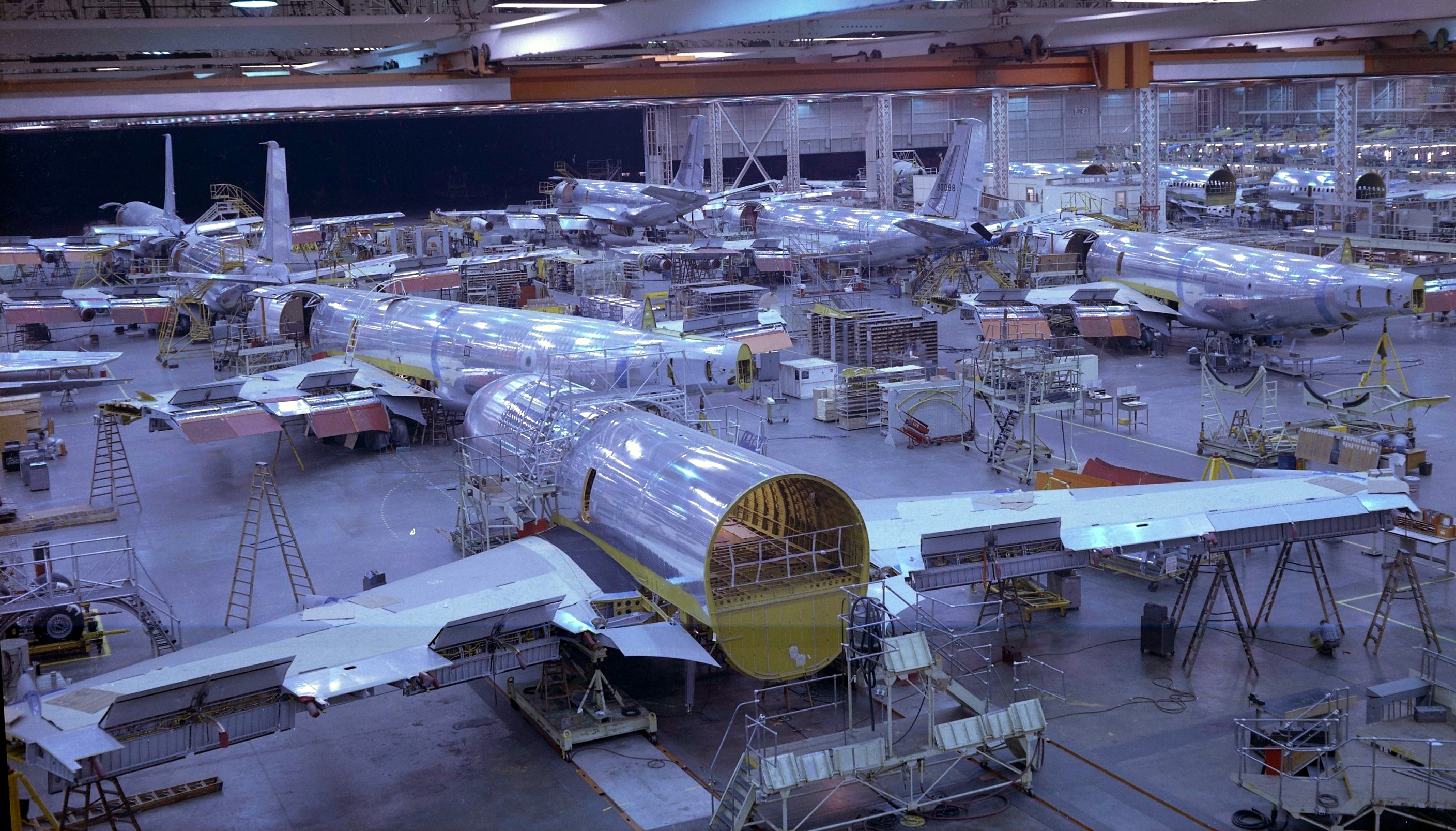
A close look at the tail numbers in the back row reveals 58-0098, a tanker still flying today with the Maine ANG.
Kaman H-43 Huskie

Pictured at Paine AFB, WA in the early 1960’s. the H-43 was designed to provide firefighting and rescue in close proximity to its bases. The Huskie was a real workhorse back in the day when aircraft mishaps were a more routine event. Interestingly, the Huskie had no tail rotor; it’s twin, intermeshing rotors provided the required stability.
Back seat driver
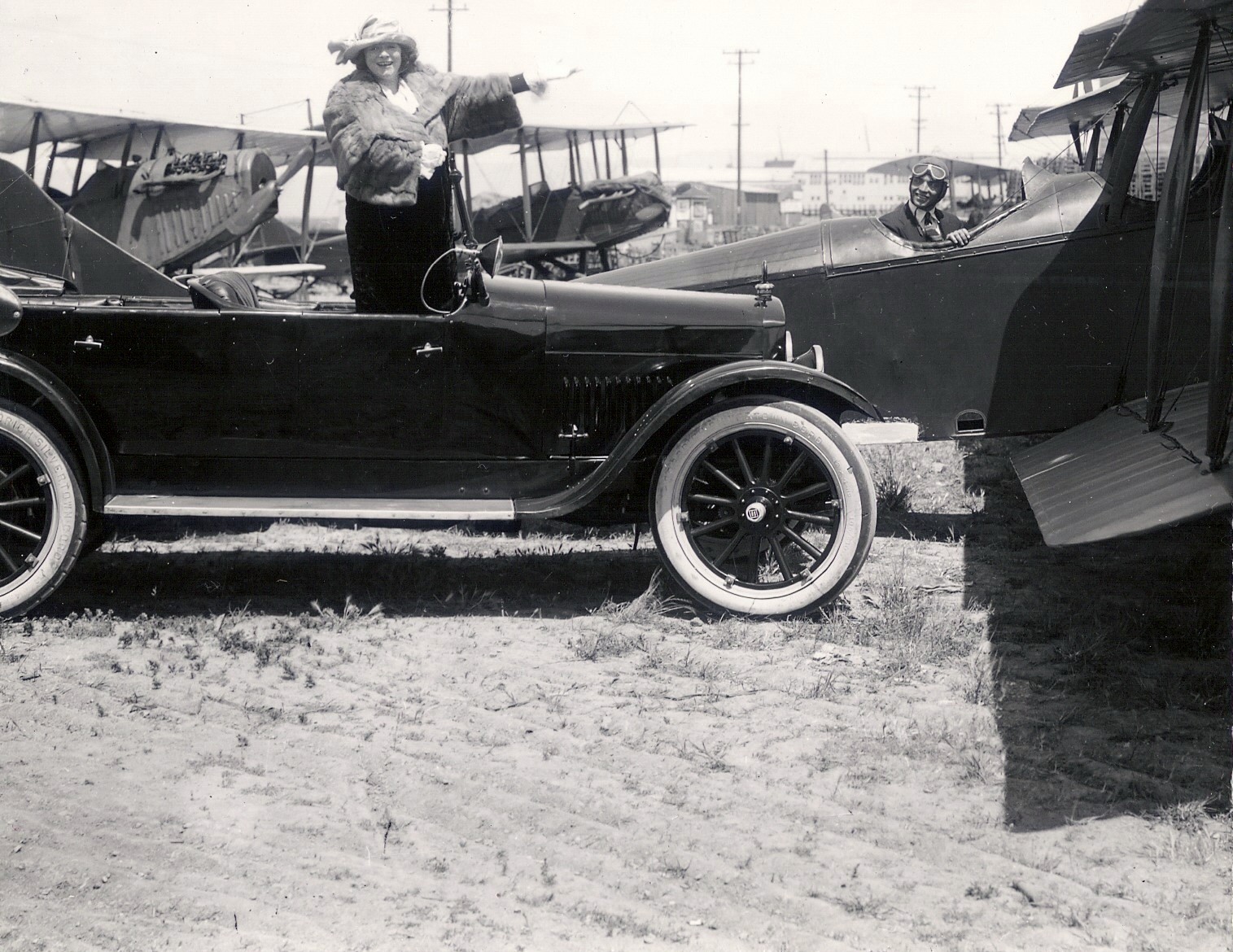
The aircraft is a Curtiss Jenny, and the auto is a Studebaker. The place, San Francisco. The brassy broad is “Trixie Friganza.” (No, I didn’t make that up.) Trixie, a noted vaudevillian in days of yore, was born Delia O’Callaghan. I guess an Italian name got you better notice in show biz than an Irish one.
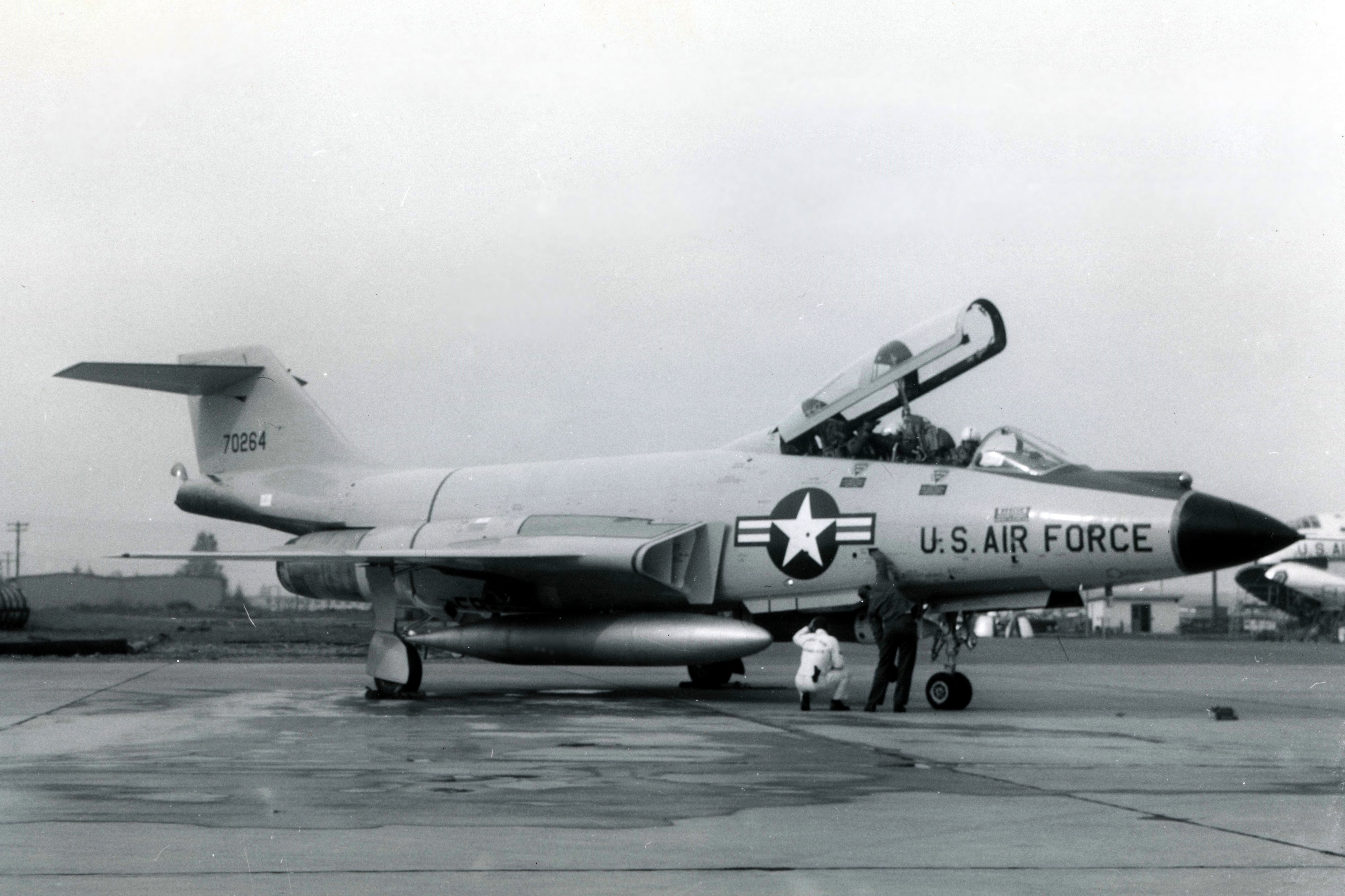
F-101 Voodoo
 The Jive Bomber