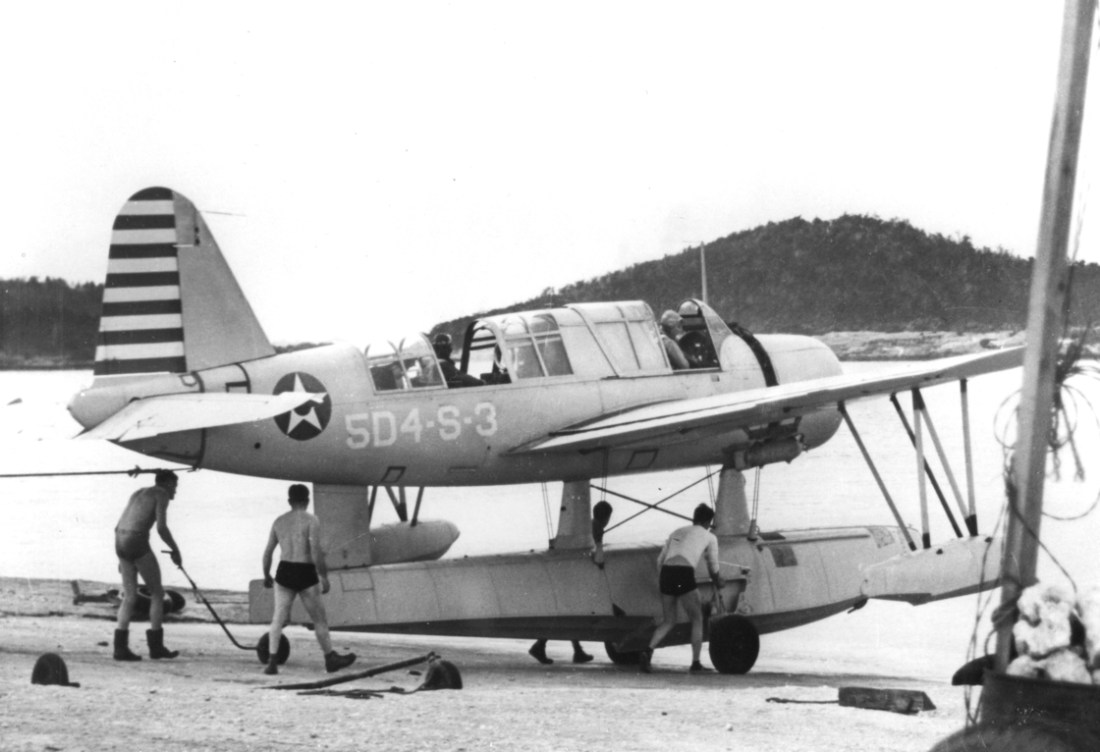
I showed this photo to my dad – a former OS2U pilot – and all he did was shake his head and laugh: “If you don’t want to get wet, don’t fly a Kingfisher.” When asked why he didn’t close the canopy, he replied: “because with all the spray, you couldn’t see through it.” Pretty logical guy, my dad.
Taken from the radio compartment of an accompanying PBY, the pair patrol the vast Aleutian skies from their base on Adak Island. Depth charges hang from the wings
Wildcats being armed up aboard USS Enterprise during the early days of the war in the Pacific. Of note is the over-sized US insignia – an aid to not being shot down by your own guys.
The bad news is that this TBM Avenger is heading forever to the bottom of the Pacific Ocean. Good news is that the crewmen are on the wings and the aircraft will make that deep sea journey on its own.
The plane crashed at the base of Old Women’s Mountain on Kodiak Island Alaska in 1945. Of the 15 crew and passengers were aboard, 8 were killed. The aircraft, after several failed approaches in the weather, flew in to rising terrain and stalled while attempting to climb out of the situation. Upon stalling, the aircraft plunged nose-first in to the ground. Photos taken at NAS Kodiak.
In my dad’s 40+ years of flying, first for the Navy, then United Airlines, there was only one plane he managed to destroy, and that would be an OS2U Kingfisher, as follows. NAS Corpus Christi, 1942, and dad is getting checked out in an OS2U. He landed in the bay and had slowed to about 25 knots when the aircraft lurched to one side and started sinking fast – the main float mounts had broken. He and the instructor inflated their Mae West’s and headed for shore. Dad was sure his career was over. The instructor, paddling on his back, seemed non-fazed by the experience. He only said, “It’s not the first swim I’ve taken, but hell, I just got these shoes last week.”
PS. They hauled the wreck from the bottom of the harbor, and it was discovered that the float attach bolts were corroded to dust.
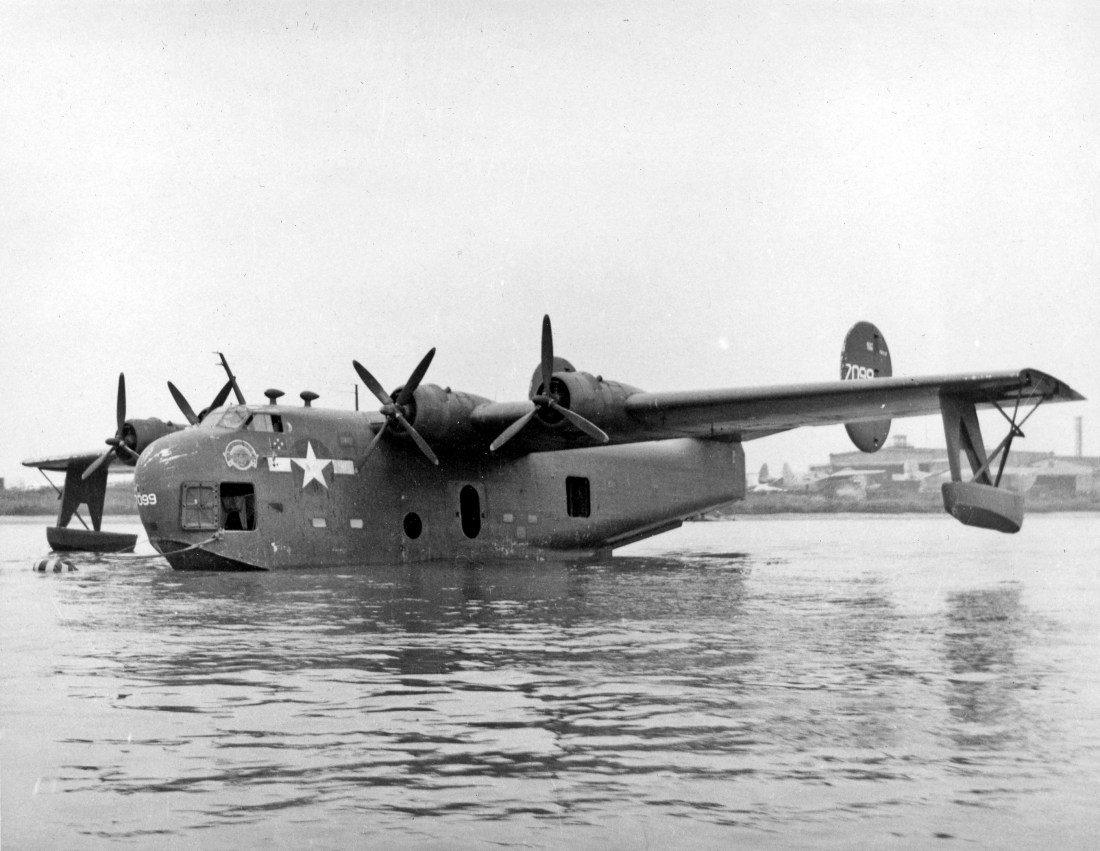
This one, 7099, was the personal aircraft of Admiral Chester Nimitz. He flew in this to accept the Japanese surrender aboard USS Missouri. The aircraft is now the sole survivor of its type, and is on display at the Naval Air Museum.
My first thought was that the man on the left was the aircraft’s navigator using a drift sight. (One can be mounted at the waist blisters.) But nope, he has a gun.
For those unfamiliar with the term, “hurry up & wait” refers to what is a large portion of military service: frantic haste followed by seemingly pointless delay. These guys decided to pitch a few pennies next to their PBY as they idle away the time before they hit the skies. In my Air Force days, we called this portion of the mission “the mill-around checklist.”
My grandmother’s kid brother, Uncle Jack was flying that day to photograph the rescue of a downed P-38 pilot. No pictures of that, because someone else rescued him first. But, Jack did take some of the photos you see on this website.












 The Jive Bomber