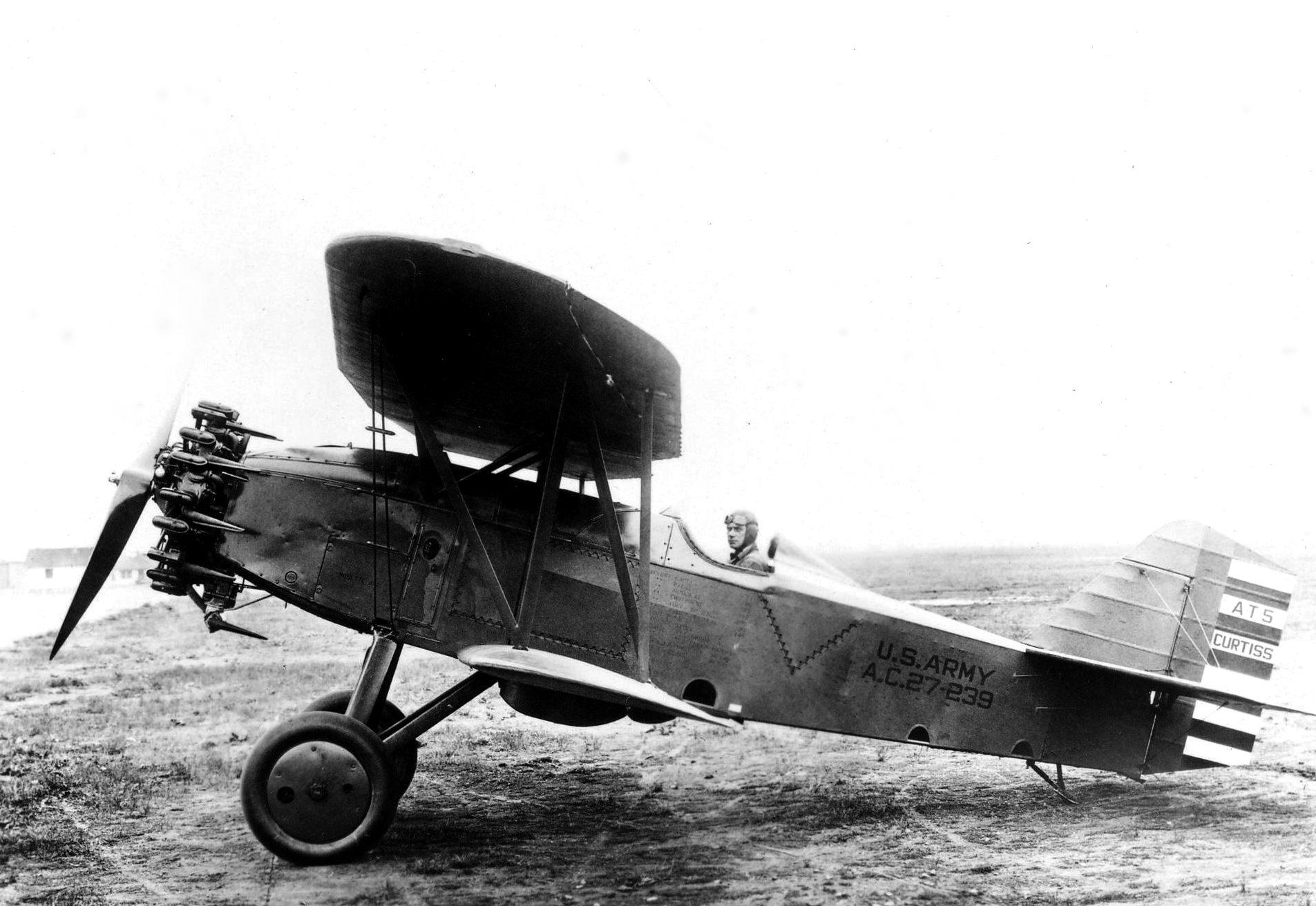
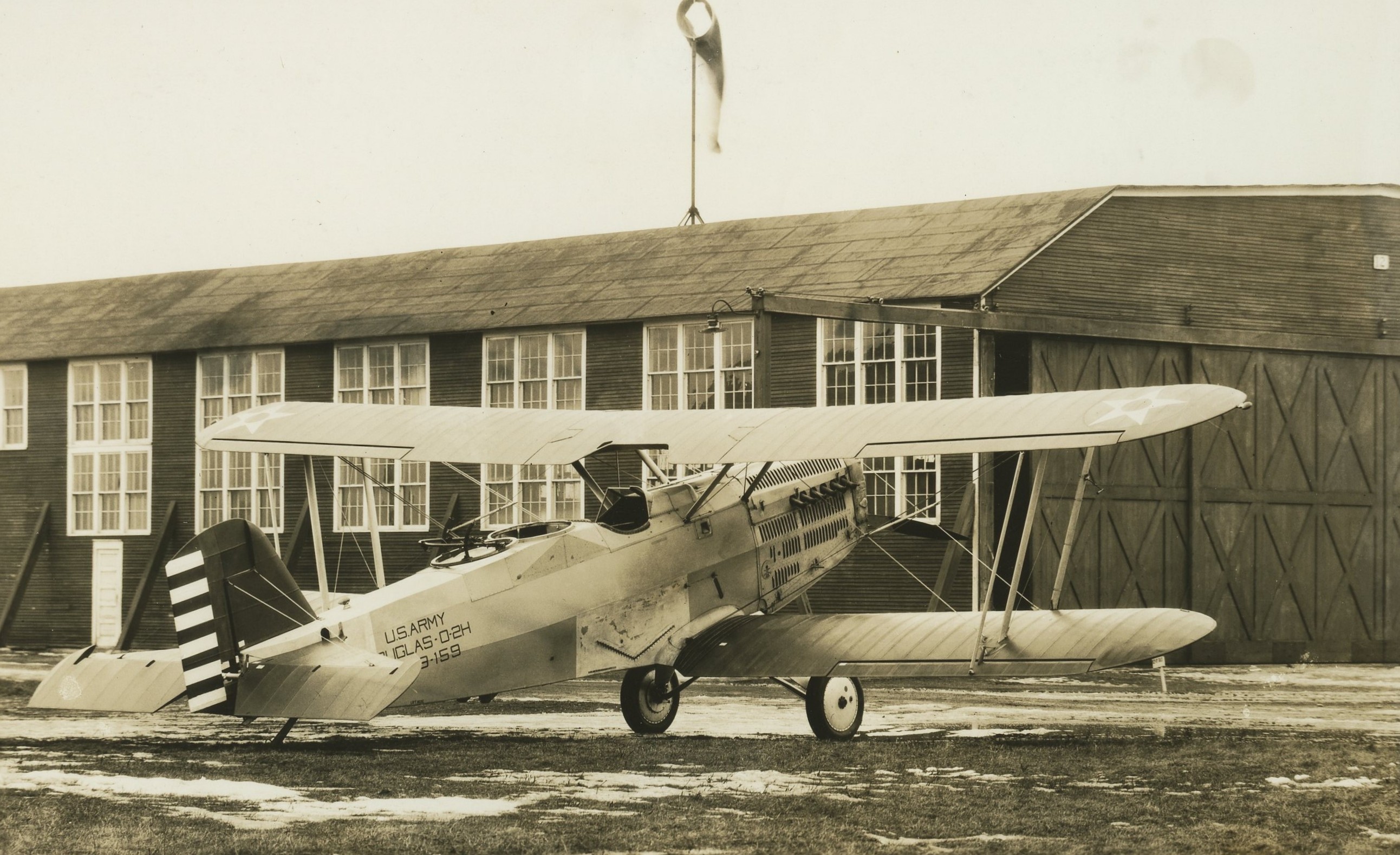
The O-38 was ubiquitous in the 1930’s Air Corps observation squadrons. Later versions such as the E model this had fully enclosed cockpits as seen here.
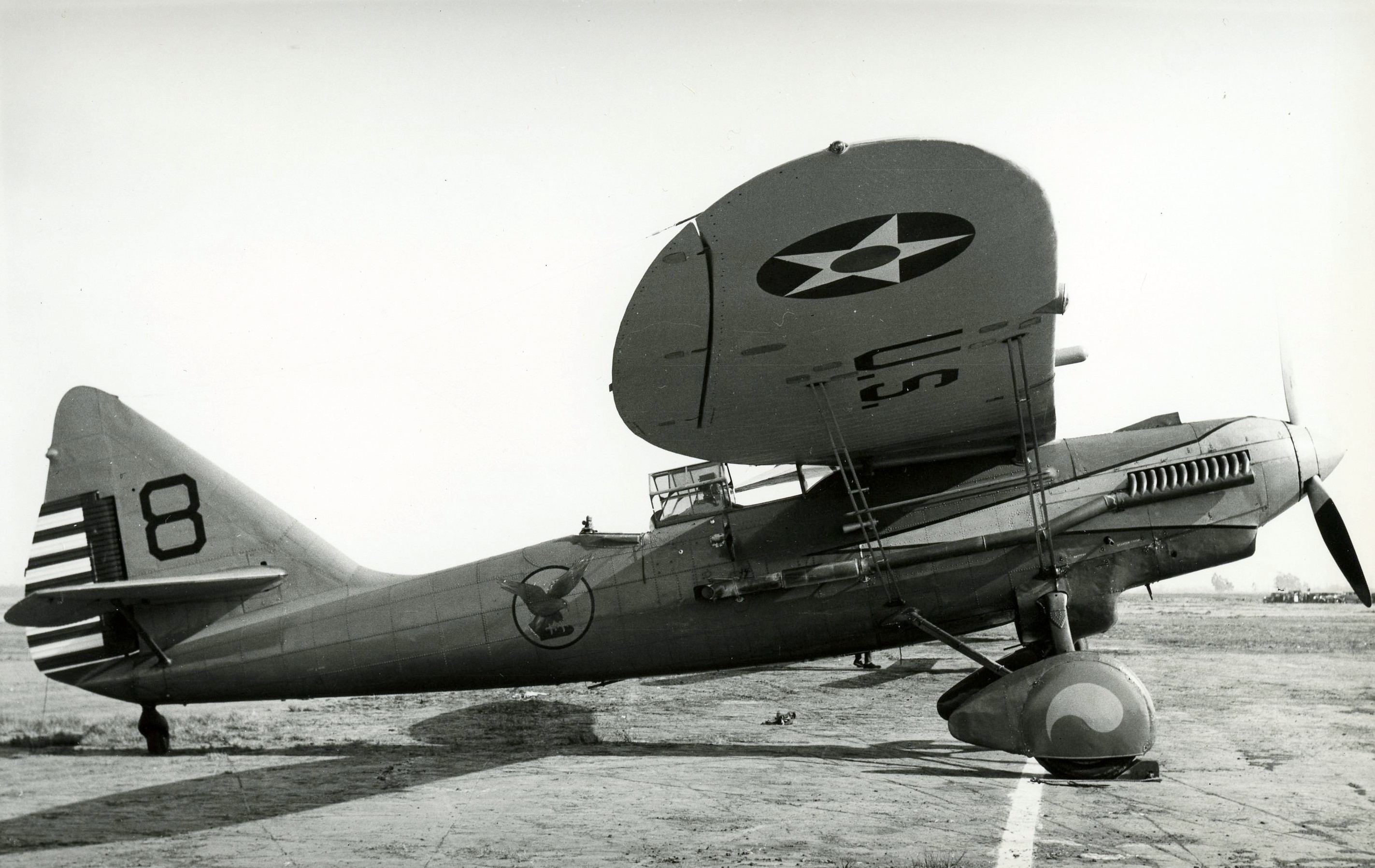
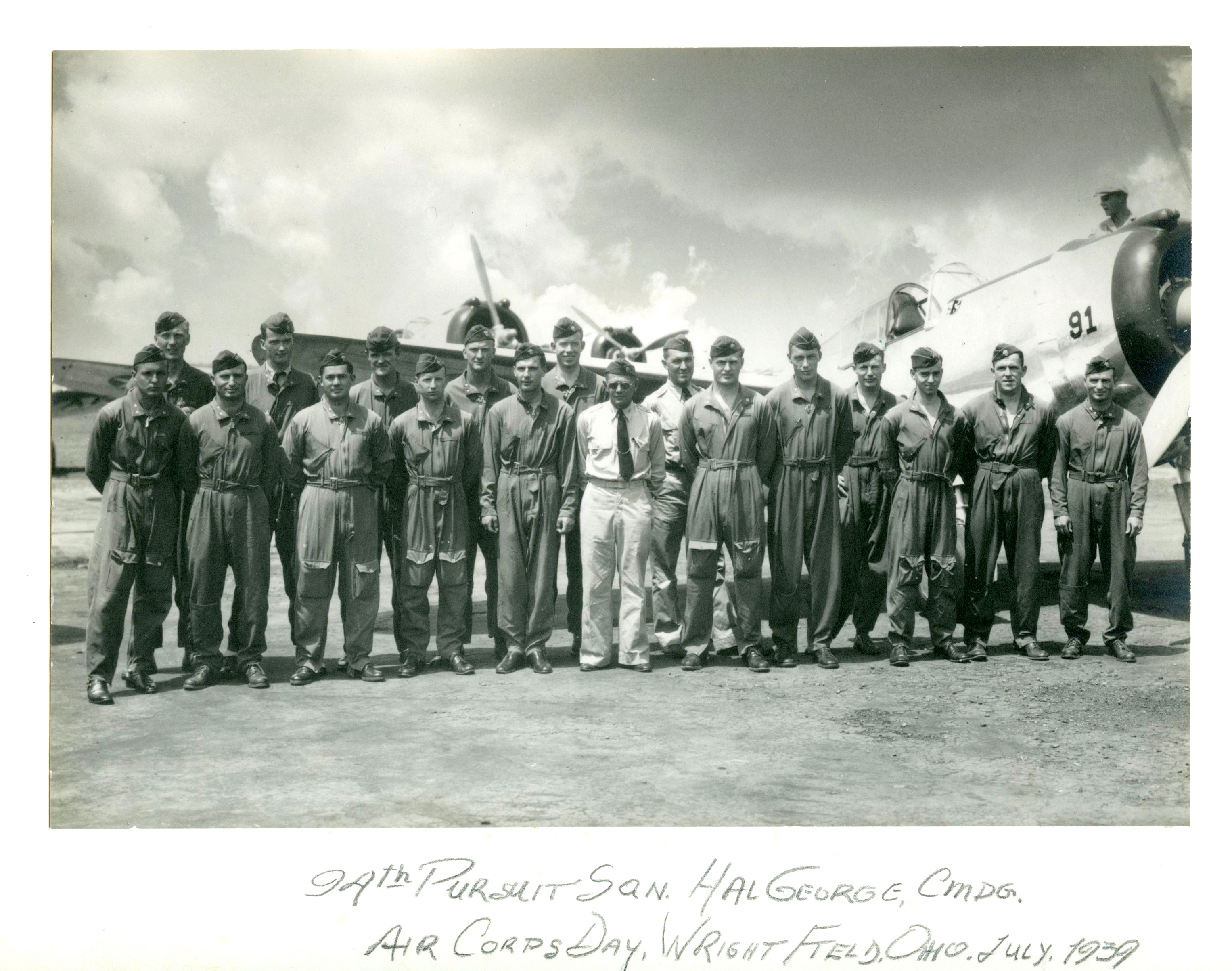
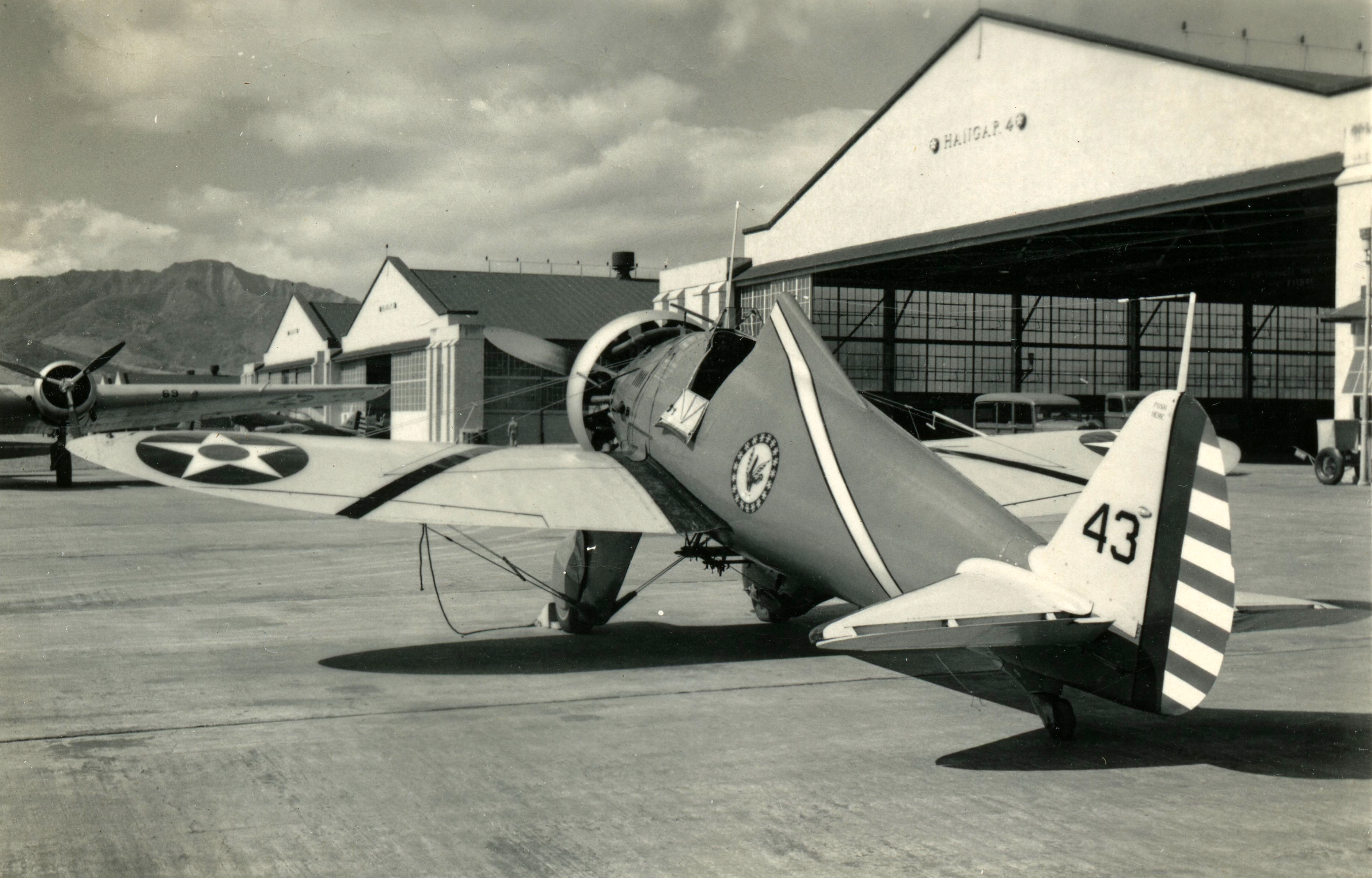
P-36 forms the backdrop for Major Hal George and his boys in the summer of ’39. If I had a way-back machine, one of my time travel stops would be Air Corps Day 1939 at Wright Field.
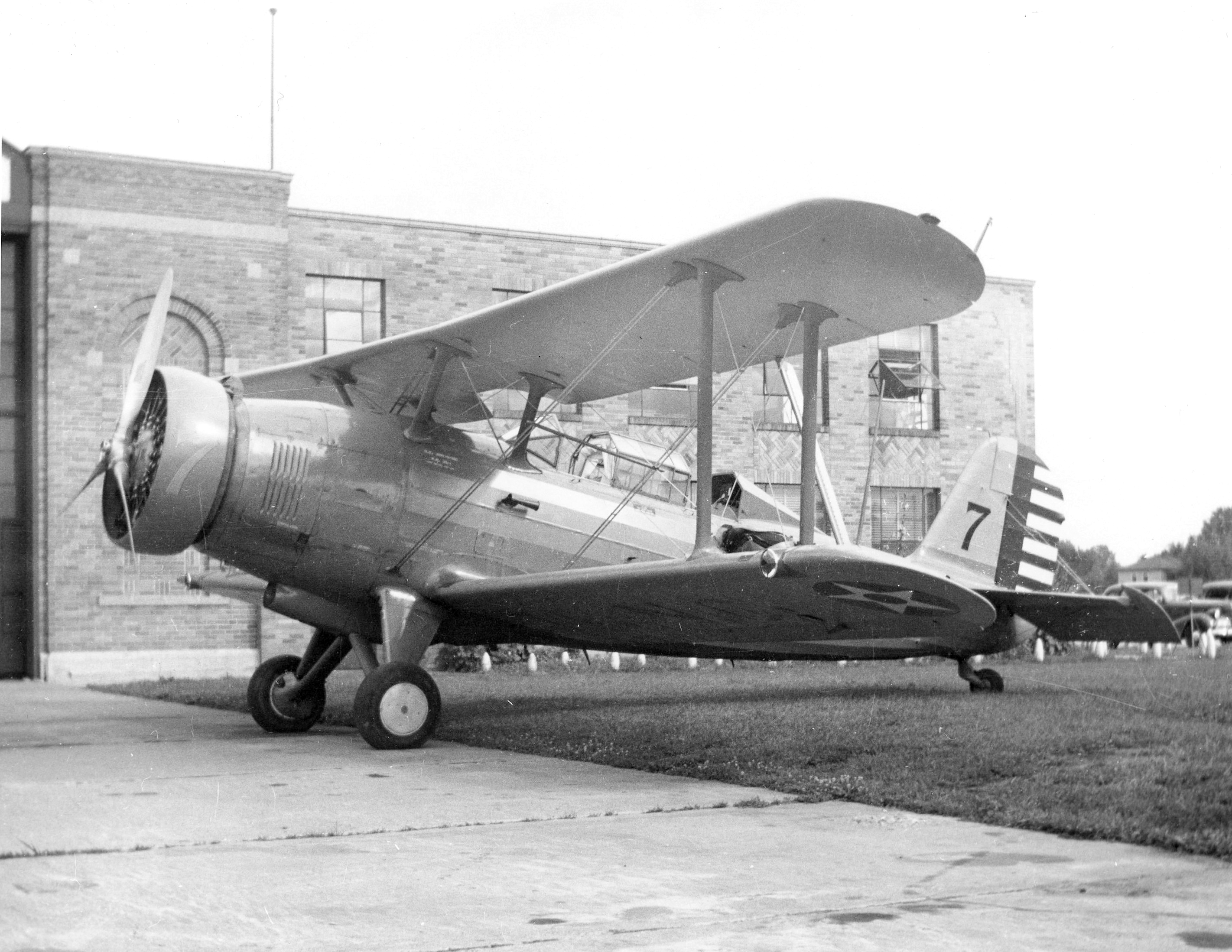
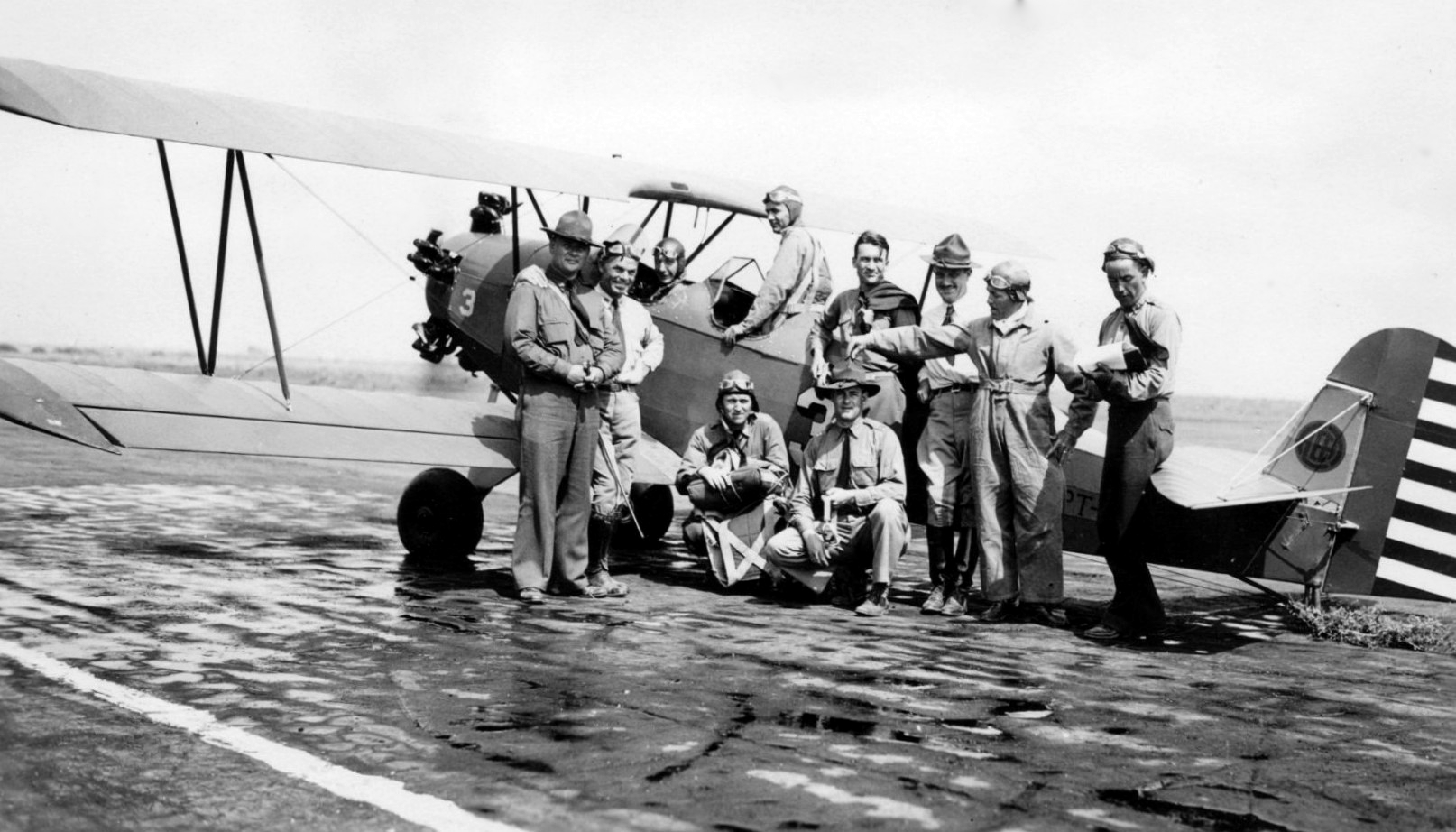
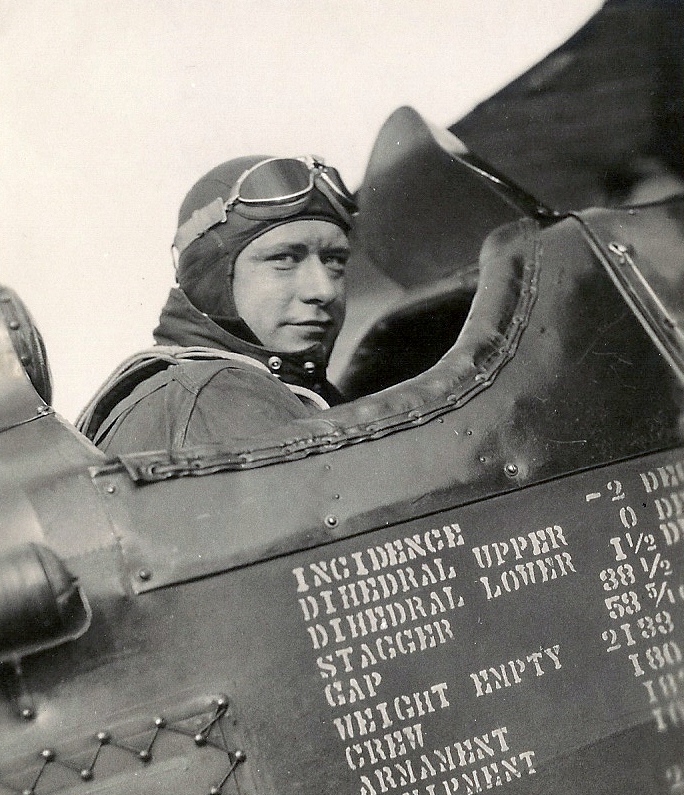
PT-6 has just landed: engine is running, and there are weeds snagged in the tail skid. Check out the pilot 2nd from right.
Pilots pose with the famed Roscoe Turner, center.
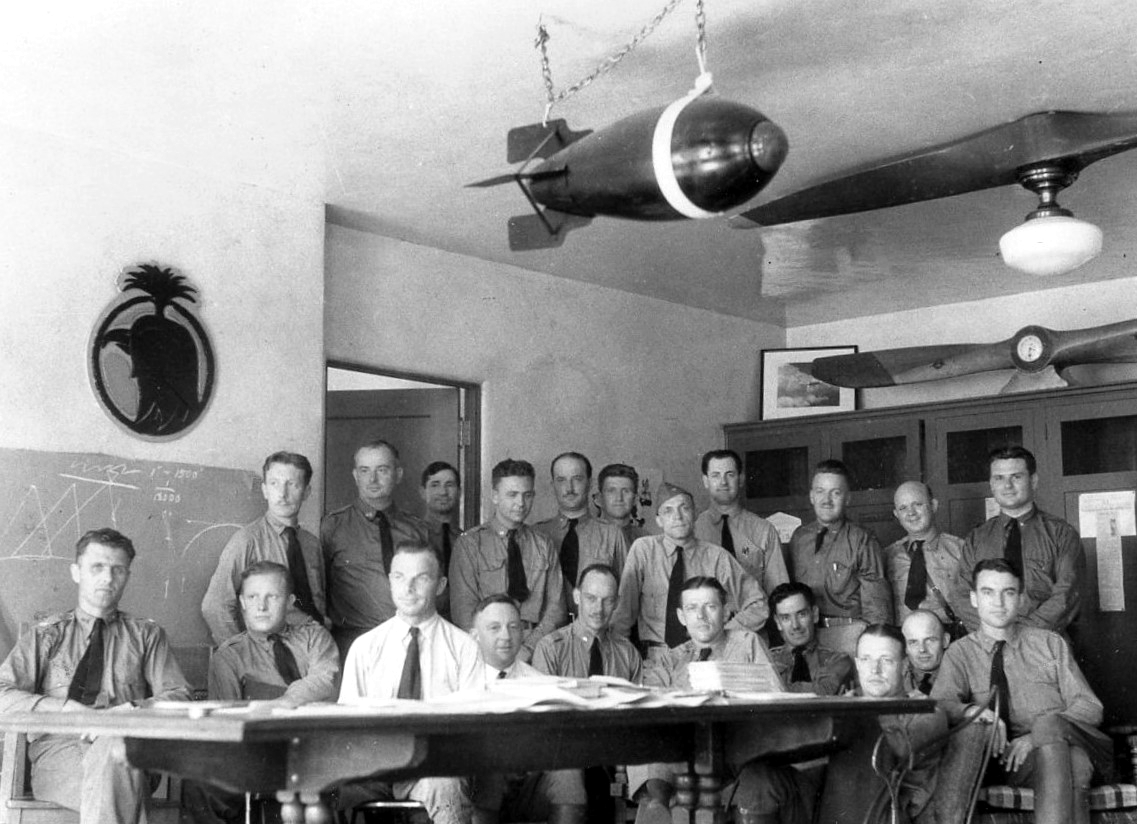
Now this is what I call decor. Emblem of the 476th Pursuit Squadron “The Black Falcons” adorns the wall.
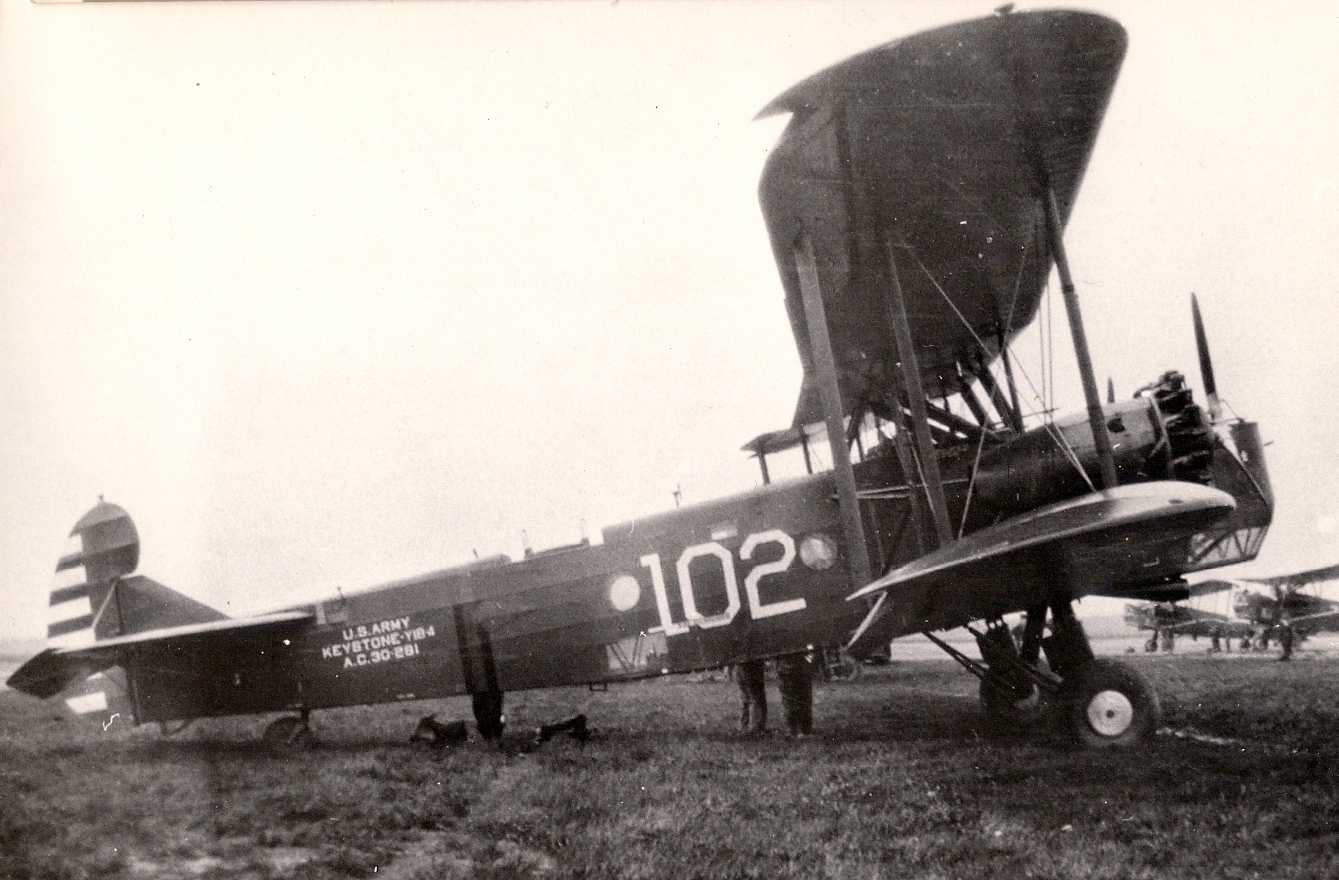
A Curtiss B-2 Condor of the 11th Bomb Squadron. The name “Rockwell Field” is painted on the oil drum like radiator atop the nacelle.
Airfields have improved since 1931. The Condor almost looks as if it was forced to land in the middle of Wyoming.
Officers of the 476th at March Field. The building is the officer’s club, and is still in use today as the “Hap Arnold Club”. The list of famous names who have bent an elbow at the bar is too long for counting. (Been there a time or two, and to Sally’s Alley out back.)
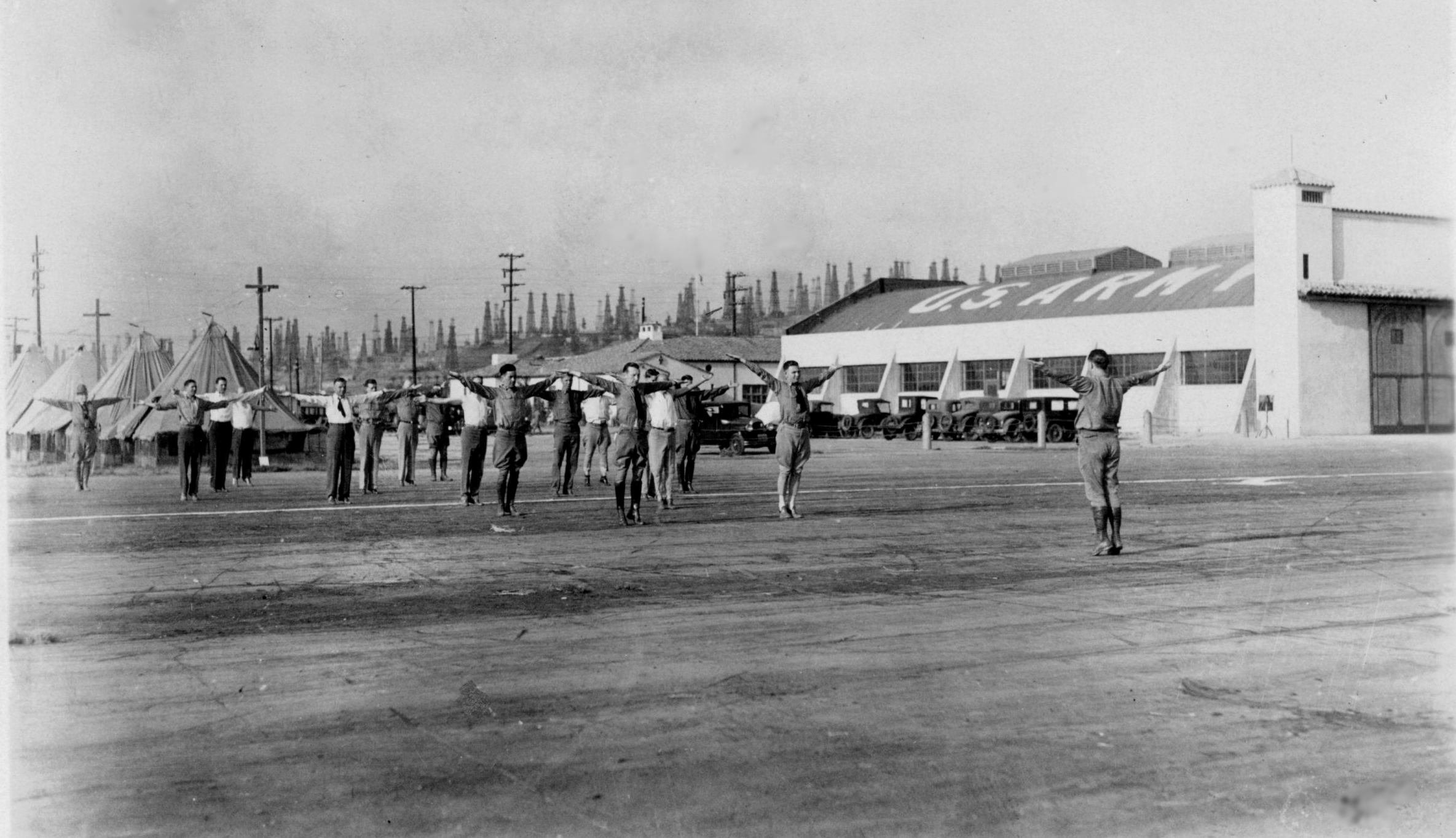
“And on the plane, we call these ‘wings’.” Some basic flying techniques are taught next to the Air Corps hangar at Long Beach. The oil rigs on Signal Hill in the background gave it the nickname “Porcupine Hill.”
The 476th was a reserve squadron stationed at Long Beach airport. These photos were taken there, and at March Field.
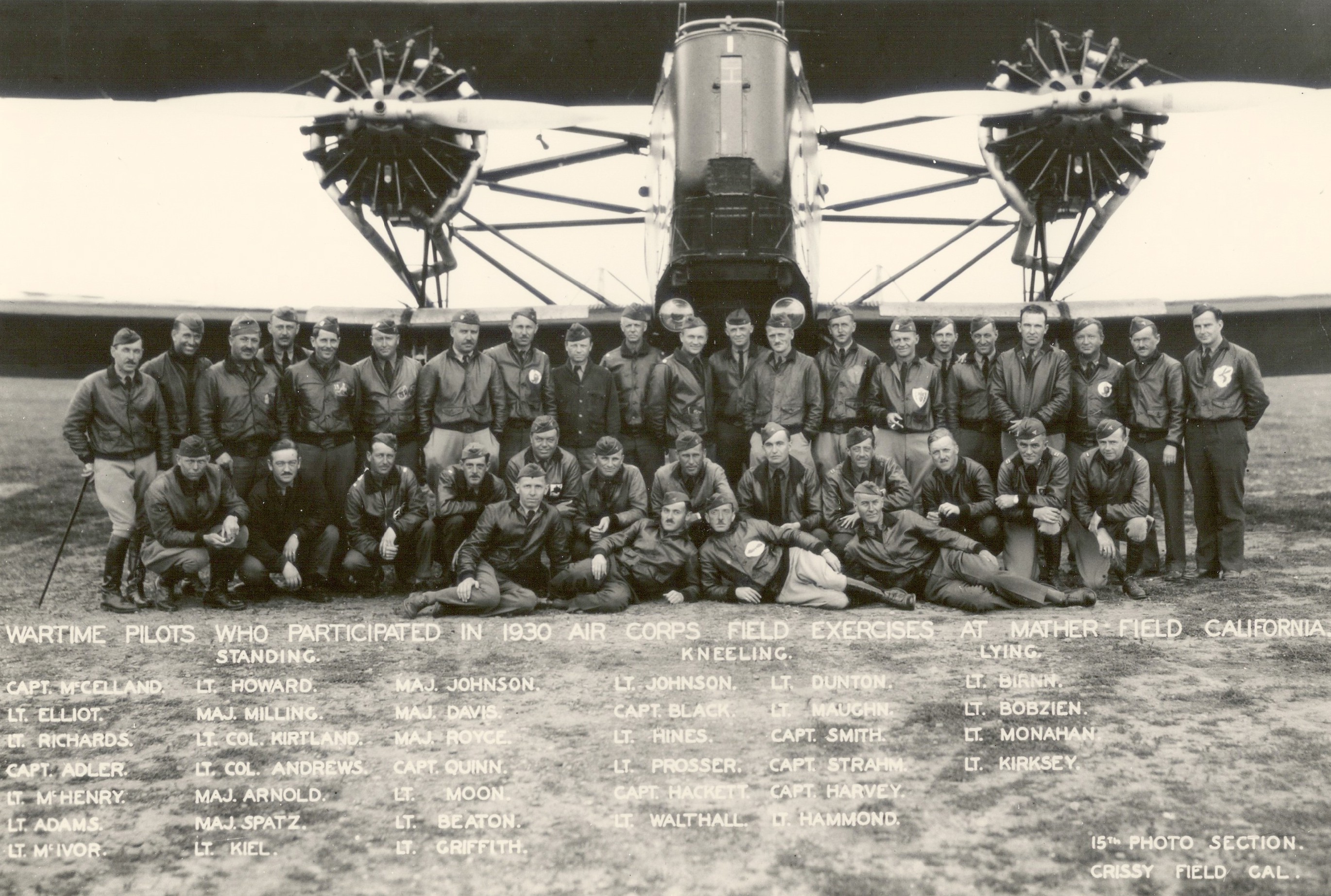
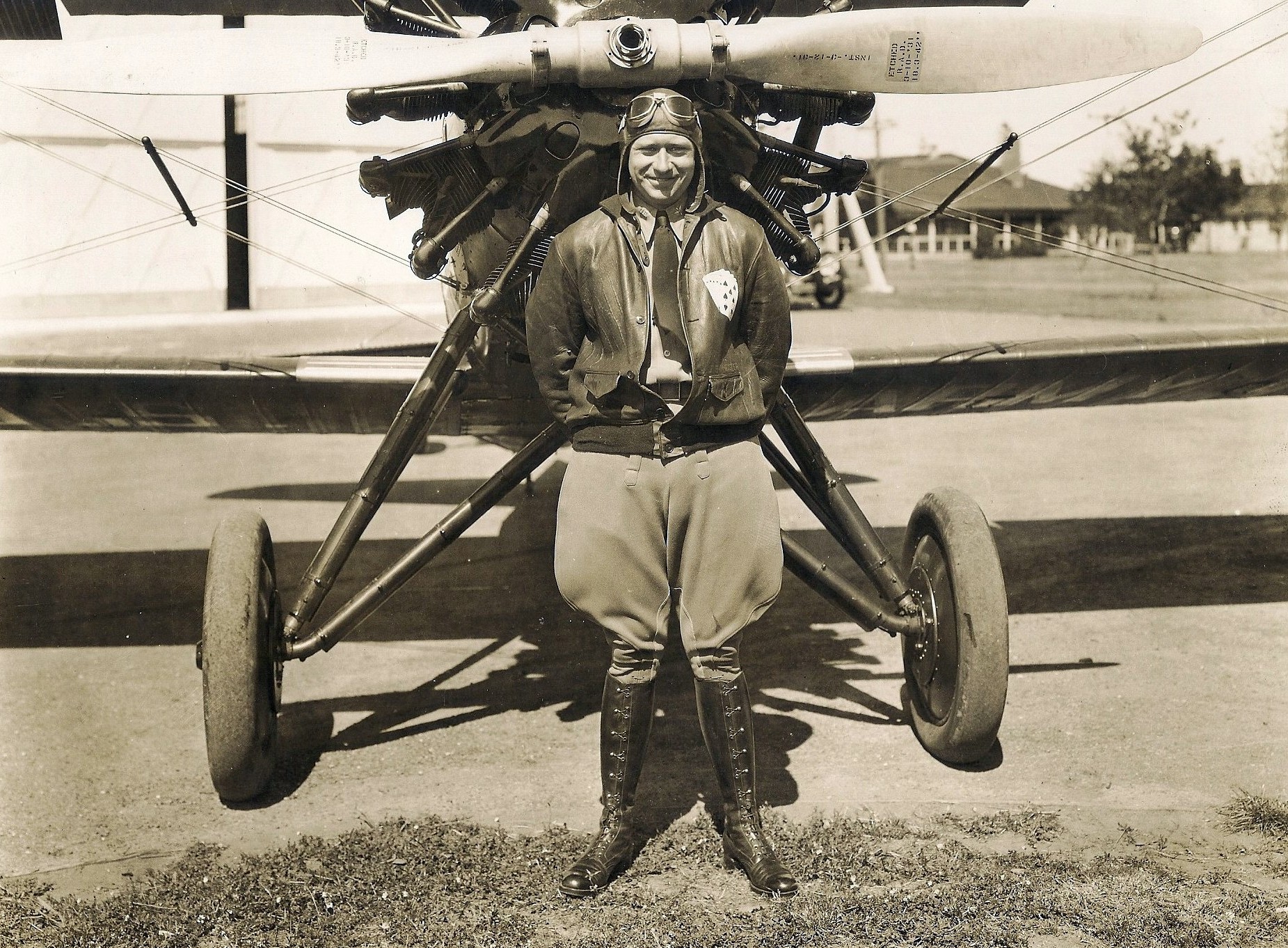
Taken in front of a Keystone bomber at Mather Field in 1930, this photo was provided by the 90 y/o son of one of these men. That son grew up with the likes of Spaatz, Arnold, Kirtland, and Andrews hanging around the dinner table.











 The Jive Bomber