Boom to Bust: The Alexander Aircraft Company

In the late 1920s, the future looked promising to J. Don Alexander and his aircraft business. In the years 1928-29, Alexander sold more planes than anyone else in the world, but unfortunately, the company became plagued with troubles. A 1928 fire destroyed their manufacturing plant killing eleven workers (J. Don Alexander and his brother were found liable), and even after constructing another facility,  new aircraft projects ran into problems as well. The Great Depression finished off Alexander in 1932. The company’s most successful product, the Eaglerock, is seen in these photos.

No Secrets Here

The Air Force/U.S. Government has long insisted that the U-2 is a reconnaissance aircraft, not a “spy plane”. That sounds very nice and pretty too. But back in 1957, the U-2 seen here belonged to the CIA and that meant it was very much in the business of spying. No doubt the CIA would call that “intelligence gathering”, but to scoop up such info, they still needed to do what is known as the age-old act of “spying”. 

Thanks to Max Pashnev for this photo taken from the original negative.

The “Hoppi-Copter”

On this Pentecost Day, it is only fitting we mention a man whose name is linked with taking to the heavens and returning to earth: Horace T. Pentecost. In the postwar era, Pentecost toiled on what he thought was sure to be an invention of great value to the people and the military, a lightweight/personal helicopter. A fine idea, but their were difficulties.  Among those challenges confronting Pentecost and his HX-1 backpack helicopter was the fact anything less than a perfect takeoff or landing resulted in a disastrously dangerous event involving shards of rotor blades screaming in a hundred different directions.  The HX-1 was also very difficult to control, so much so, the only flights made had the machine and its pilot tethered to the earth.

Later models were more stable due to the incorporation of wheels and place to sit, but the late 1940s public (and military) were drawn to the helicopters that were coming off the line from such big name companies such as Bell and Sikorsky.

Mr. Pentecost was no crank inventor; he was an educated man, a wartime Boeing engineer. His dream of a small, lightweight personal means of flight was no different than those who later invented the Ultralight.

The HX-1 was donated to the Smithsonian, and is now on display at the Pima Air & Space Museum in Arizona.

Boeing’s Forgotten Bomber, the B-50

Although a solid aircraft in every respect, the B-50 was overshadowed (figuratively and literally) by the giant B-36, and the newer and more exciting jet aircraft then taking to the skies.  

World War 1 USN Airship Operations

Boeing Model 40

c179E oakland

Skyraiders Before The Storm

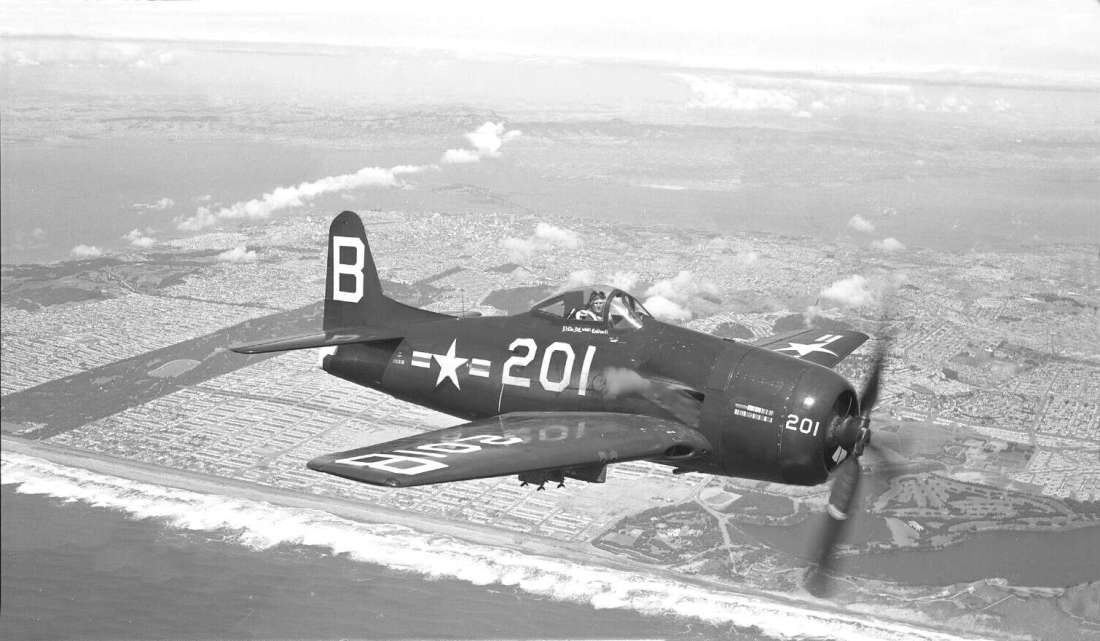
Pictured in peacetime, none of these Skyraiders survived the 1960s or the Vietnam War.

The “Flying Whale”

Despite its unflattering name, the Martin B-10/12 was an absolutely outstanding aircraft for its time. This is especially so when one considers the bombers it replaced: The Keystone series with its (standard for the period) fabric-covered, open cockpit and double-winged aircraft. Whereas most aircraft eased into the transition from the earlier designs (thinking of the P-26), Martin dispensed with the in-between and went next generation.

“Miss Sonic Boom”

d - Copy

According to this photo’s caption, actress Debra Paget was in Las Vegas, and when asked if she would like a tour of nearby Nellis AFB  she simply could not resist. (Obviously, she would only take part in the tour if she could wear a bathing suit and high heels.) Upon her arrival, the Nellis pilots were so impressed with their visitor that they immediately named her “Miss Sonic Boom.” Miss Paget/Sonic Boom was quite the starlet back in the day featuring in films like The Ten Commandments and a movie opposite Elvis. She is now 90 years old.

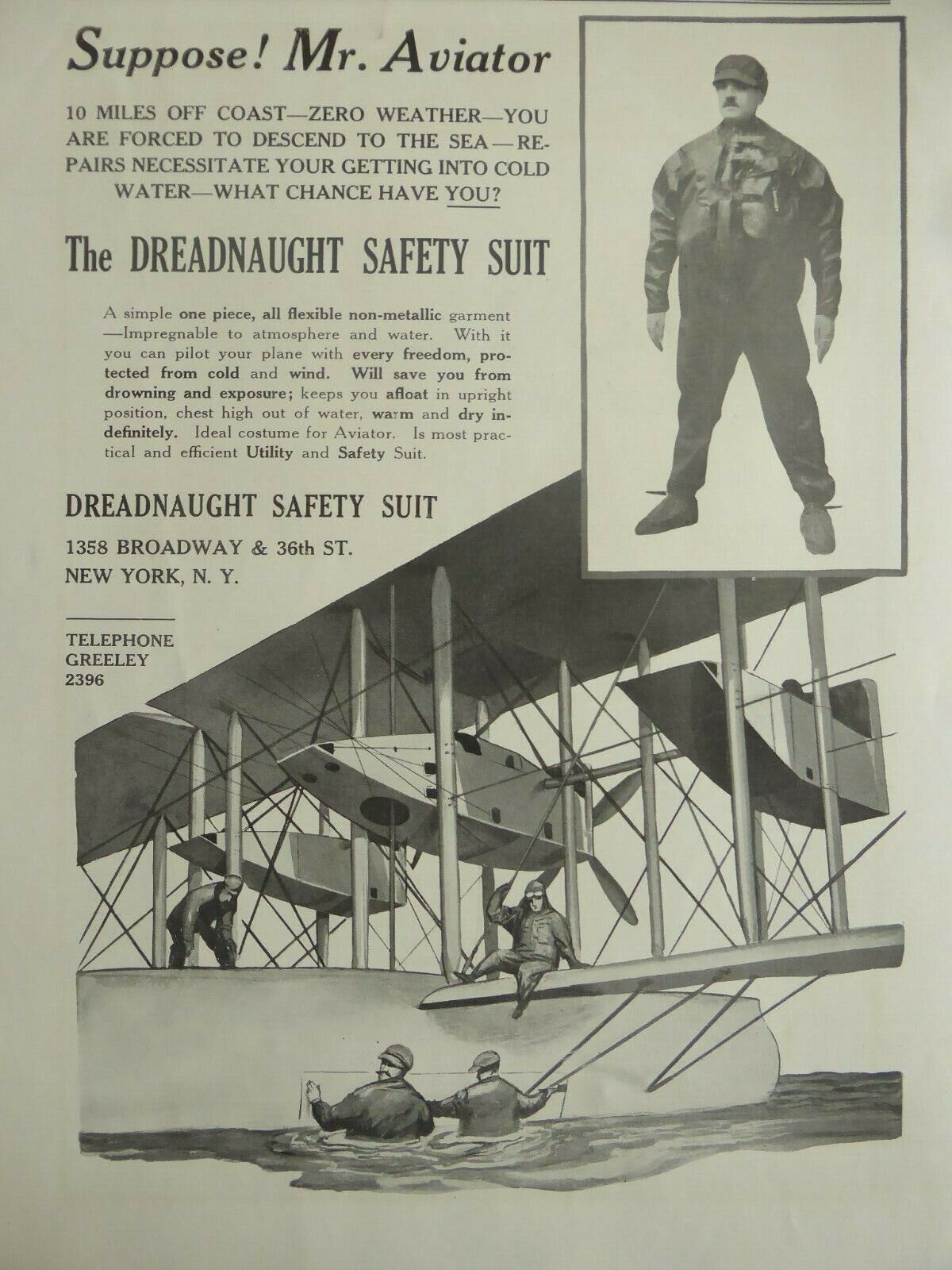
The “Ideal costume for Aviator”

Dreadnaught Safe Suit 1919

Such survival suits are still in use today with the Air Force, Navy, etc. (“Poopy Suits,” we called them). This ad poses a bit of a question: what type of mechanical difficulties might necessitate “getting into cold water” some “10 miles off coast” to effect repairs to your aircraft? You would be in the open sea; what are you going to fix bobbing around like a cork?  But this ad dates from 1919; flying machines had a bad habit of suddenly not working, and one had to be ready for anything.

The “Aluminum Overcast”

An aluminum suppliers dream, a single B-36 rolled and flattened to the thickness of household aluminum foil, would cover over 20 million square feet of property. Many thanks to Mr. Del Chasteen, a good ol’ Texas boy, who supplied most of the photos.