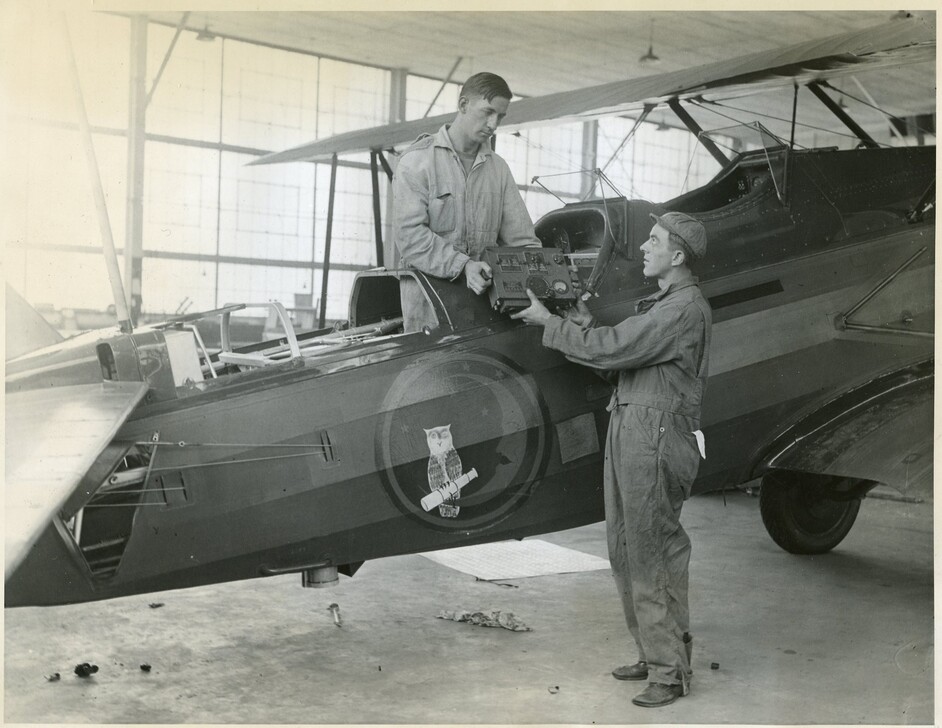
Mitchel Field, NY, 5th Observation Squadron, 1930s. Some avionics maintenance for one of the handful of Curtiss O-39s purchased by the Army Air Corps.
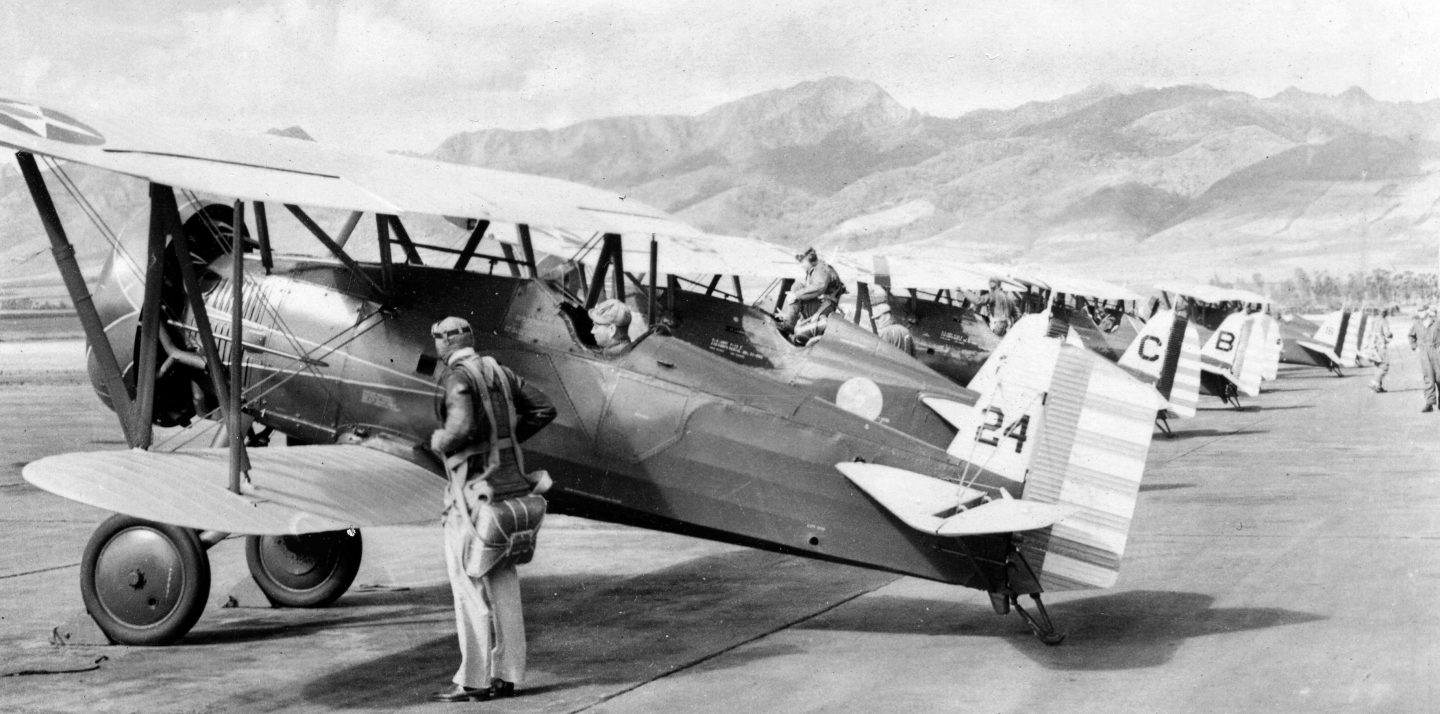
With only 10 built, the Curtiss O-39 Falcon was another low-production airplane of the 1930s. Those scant numbers are usually blamed on the lack of Depression-era funding, but two other critical factors also contributed.
Factor #1. The 1930s saw rapid change in aircraft design and performance. Advances in aviation technology came so fast that production could often not keep up with the latest ideas. It became common for a prototype (or a small number of planes) to be built only to be made obsolete by a new aerial innovation.
Factor #2. The envisaged role for military aircraft kept shifting. As aviation technology leapfrogged ahead, militaries worldwide watched and wondered what might come next. Strategy and tactics fluctuated, changed, or were thrown in the trash as aircraft capabilities kept rising. Therefore – and this brings us back to Factor #1 – it made no sense to spend a fortune on a large fleet of warplanes only to find that its type suddenly had no practical function because its intended role had been eclipsed by an entirely new type of design.
The US Army Air Corps attack planes of the 30s come to mind. Dedicated attack planes were all the rage for a few years, but were soon enough overtaken by the concept of the multi-role fighter-bomber.


A Rara Avis indeed!
LikeLike