America’s Healthiest Girl and Miss America Finally Meet

UPDATE! *

s-l1600 (153)

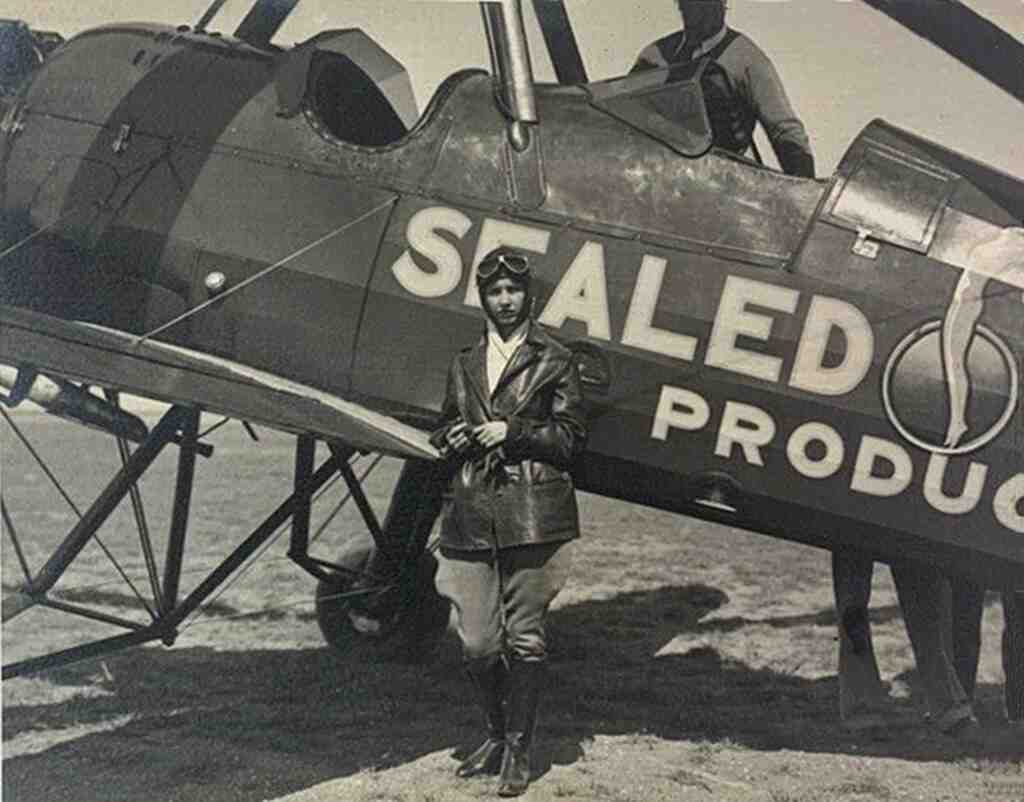
I do not know the identity of the lovely “Healthiest Girl in America”*, but I do know that “Miss America” was a young beauty named Margaret Ekdahl. It should be mentioned that the quotation marks bracketing her title are not solely for the purpose of appellation: Miss Ekdahl was not the Miss America but rather Miss Florida. However, when this photo was taken in 1930, the Miss America Pageant had been dormant for several years. This lapse provided an opportunity for the City of Miami to create its own contest of the same name. After conveniently disqualifying all out-of-state frontrunners, such as Miss Texas and Miss California, Florida girl Margaret Ekdahl took the prize.


The be-goggled fellow on the left is indeed the pilot, Mr. Jerome Waterhouse (He was also president of Maas Bros. Department Stores). His aircraft of choice looks to be a Brunner-Winkle Bird with a Kinner B5 engine.


Pity the poor sash-less woman next to Mr. Waterhouse – she is the only female in the photo who does not wear a title.

*Update! “Miss Healthiest Girl in America” has been identified by a distinguished visitor to this site, and an impeccable source: Her own proud granddaughter.  Grandma’s name: Miss Florence Irene Smock of Eustis, Florida.

At the time she was awarded the “Healthiest Girl” title, she was still a high school student. Young she may have been, but she had already figured out what was good and bad for one’s body. This is evidenced by a New York Times article dated July 23, 1930,  where it was declared that “Physicians, nerve specialists and experts in mental and social poise” had proclaimed Miss Smock’s health to be “98.7 per cent perfect.”

Florence Smock lived to be nearly 100 years old. 
Explorer Admiral Byrd

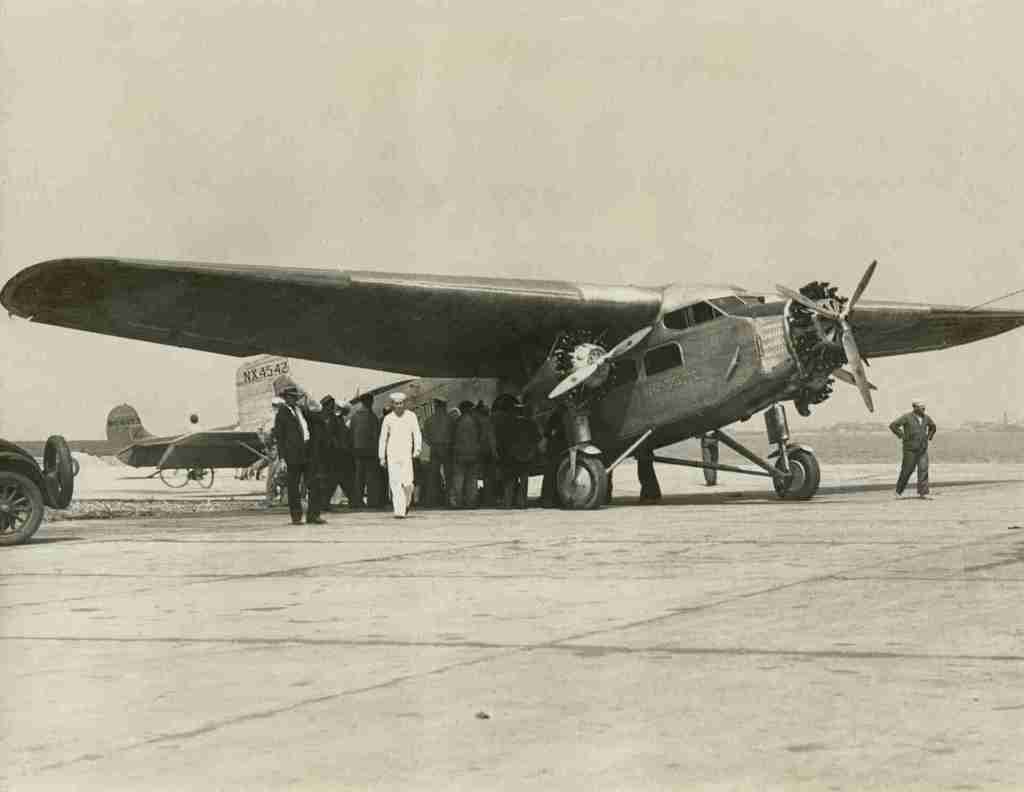
Two aircraft about to embark on Admiral Richard Byrd’s 1929 Antarctic Exploration are seen at NAS Norfolk. Prominent, of course, is the unmistakable Ford Trimotor. Peeking out behind its tail is a Fokker Super Universal. The latter airplane crashed on the Antarctic ice cap and is presumed still buried there today. The Trimotor, NX 4542, (Nicknamed “Floyd Bennett”) can be seen today at the Henry Ford Museum in Michigan.

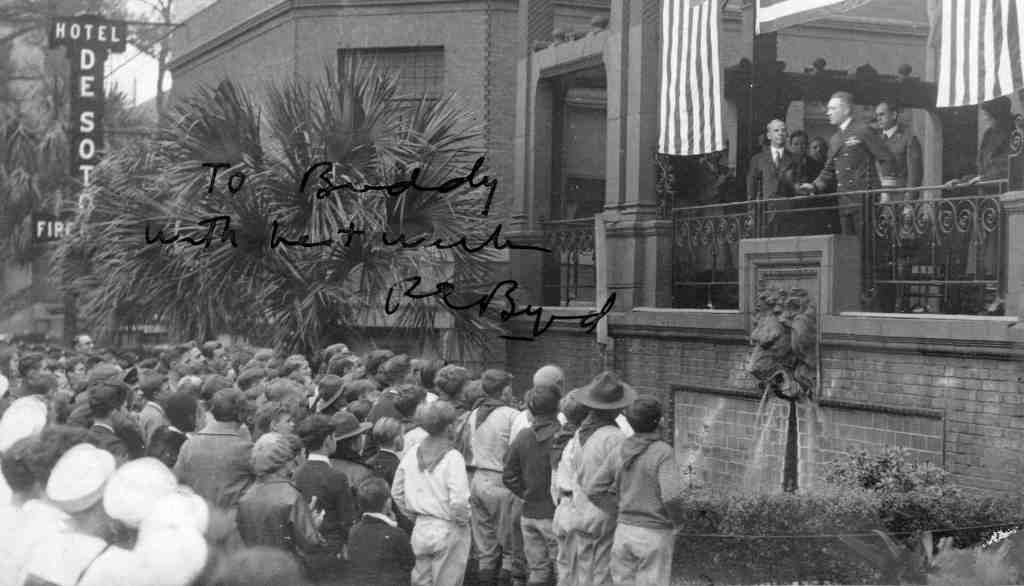
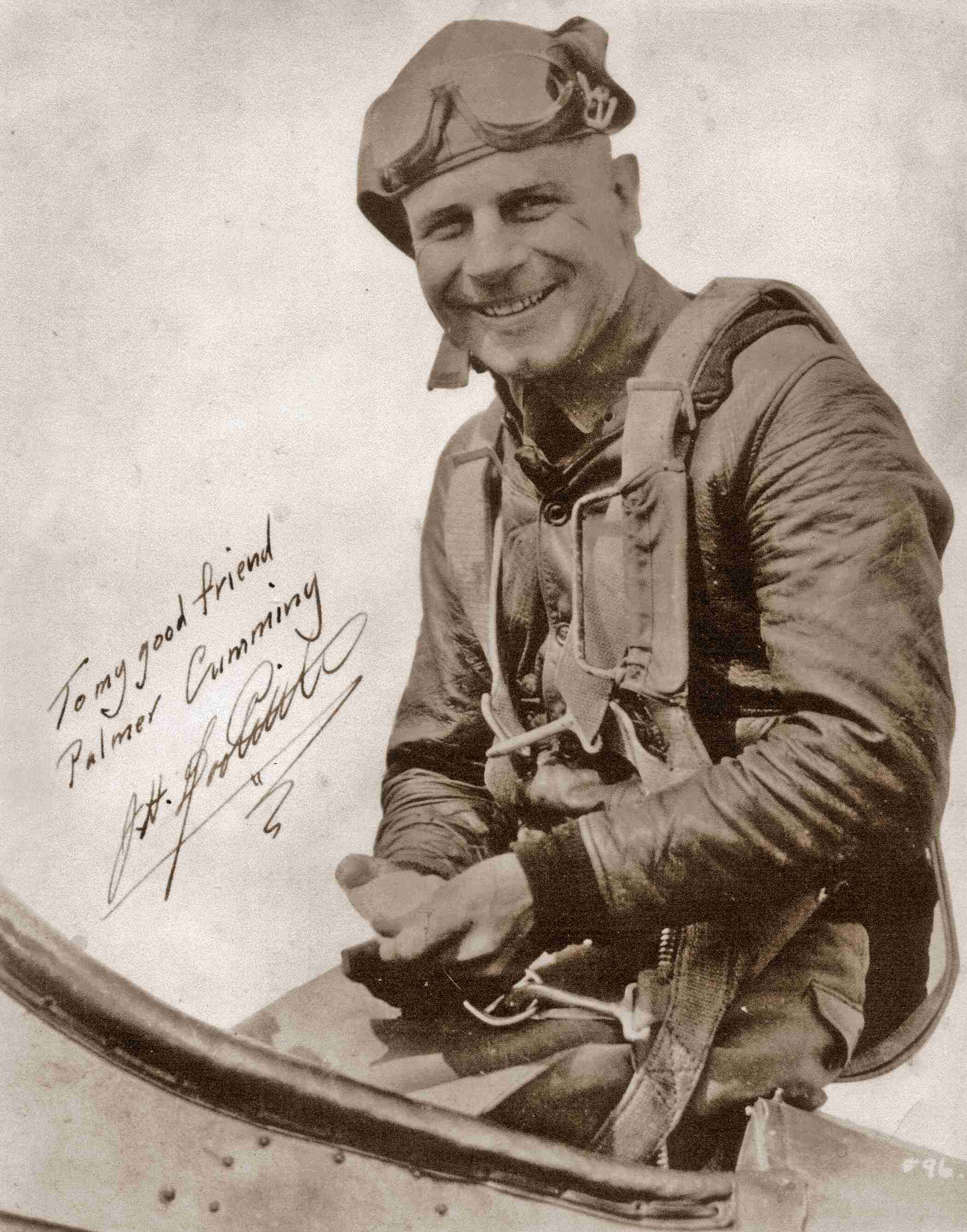
The autographed photo was taken in Savannah, Georgia. Byrd is seen on the balcony addressing an admiring crowd.

“Mystery Airfield” is actually…

Myst

Had a couple of good guesses at our mystery airfield, but…

It is Bellingham Airport, in Washington State.

And said airport has grown a bit over the years.

A couple of classics are parked on the ramp: A P-51 Mustang on the right, and, of course, a DC-3 on the left. The latter wears the livery of West Coast Airlines (who called their DC-3s the ScenicLiner).

West Coast Airlines is kind of/sort of still around today. It merged with Pacific Airlines +Bonanza Airlines to make Air West which became Hughes Airwest which was then taken over by Republic Airlines which was acquired by Northwest which became part of Delta. It’s that simple.

Jimmie Mattern’s Vega

What started as a great airplane – the Lockheed Vega – became famous due to its usage in various aerial exploits in the 1930s. One such act of aviation derring-do came from Jimmie Mattern, who used the Vega in his attempts to circumnavigate the globe in 1932 and 1933. Alas, Mattern flew great distances and even set records, but he never made it around the globe; both of his attempts ended with a wrecked Vega in the Soviet Union.

Despite these setbacks, Mattern was one of the great contributors to aviation progress. This is reflected by the fact that when Apollo 11 went to the moon, Jimmie Mattern’s pilot license was carried aboard.

Random Seaplanes, Flying Boats, And Other Things That Float And Fly

Weldon Cooke’s 1913 Tractor

Cooke 1913 Tractor (1)

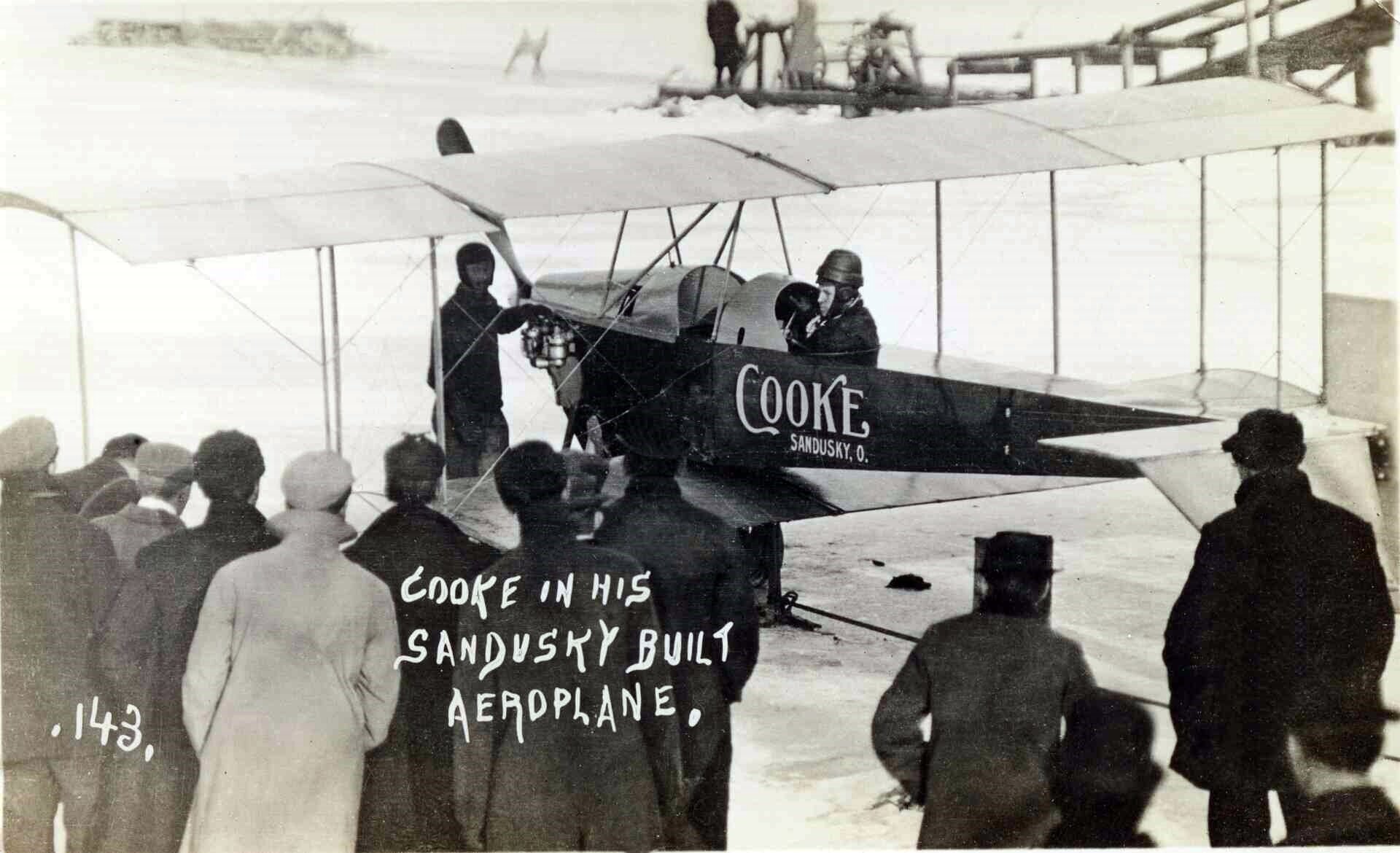
Weldon B. Cooke, seen in the cockpit of his 1913 Tractor Biplane, readies for what will prove to be a successful flight from the lengthy runway of a (conveniently) frozen Lake Erie near Sandusky, Ohio.
Mr. Cooke’s machine was of an advanced design. In the 1913 world, where pilots and passengers perched on the wing of pusher aircraft such as those built by Wright or Curtiss, Cooke’s airplane had two real cockpits and an engine up front. In addition to placing the motor in a position to pull his aircraft, Mr. Cooke found that inverting said aeroplane motor improved both performance and the pilot’s visibility. Many consider this an aviation first (and by far, not an aviation last). Perhaps this is not surprising given that Mr. Cooke, unlike many other aviation pioneers, had a solid engineering background. He was a self-taught pilot as well.
Unfortunately, like many innovative devices, Cooke’s airplane never attracted customers, and Sandusky, Ohio, never became a mecca for aviation manufacturing. This setback did not dissuade Weldon B. Cooke, who persisted in advancing aviation technology until his untimely demise in an aircraft crash in 1914.

From the “Looks are Deceiving” Dept.

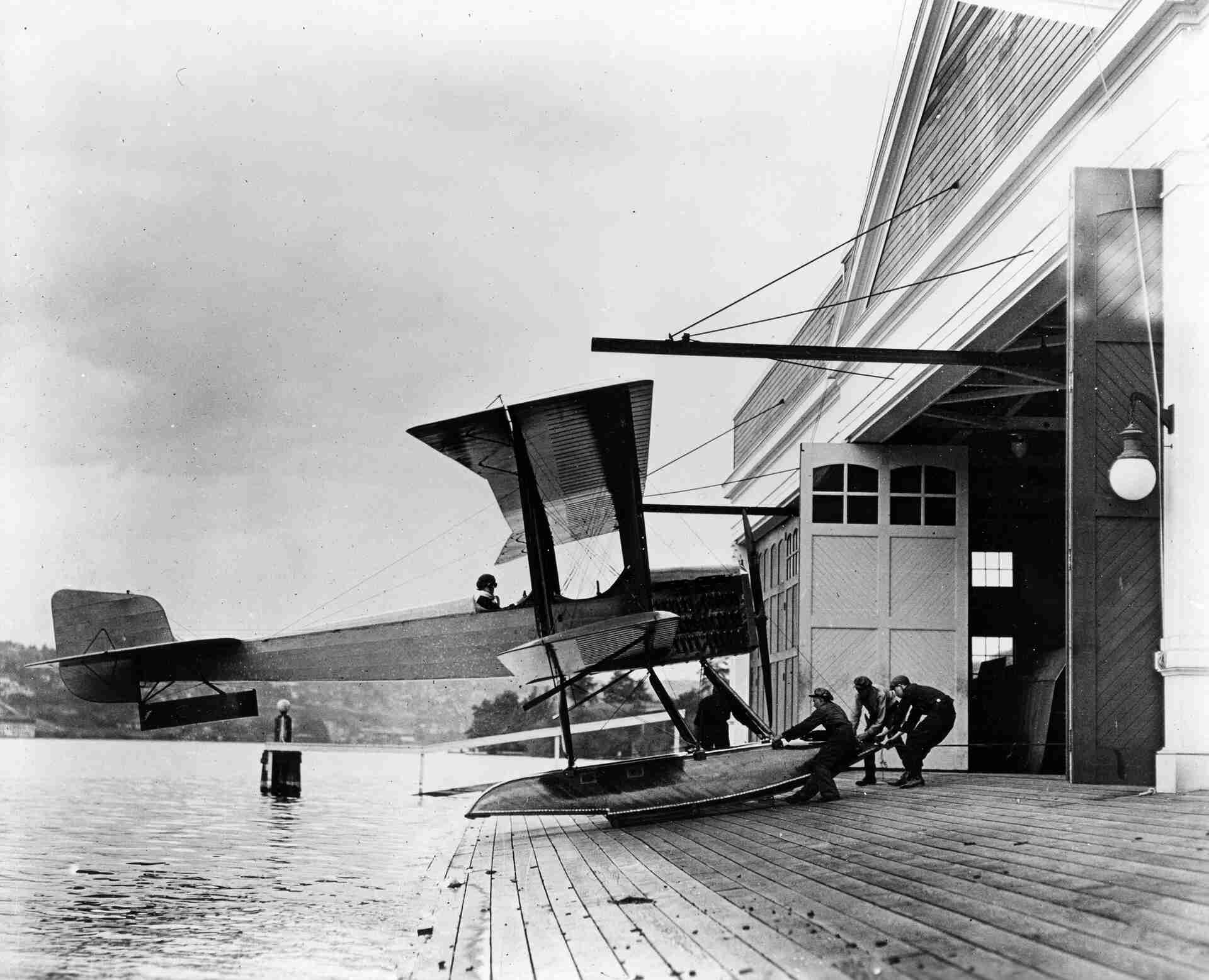
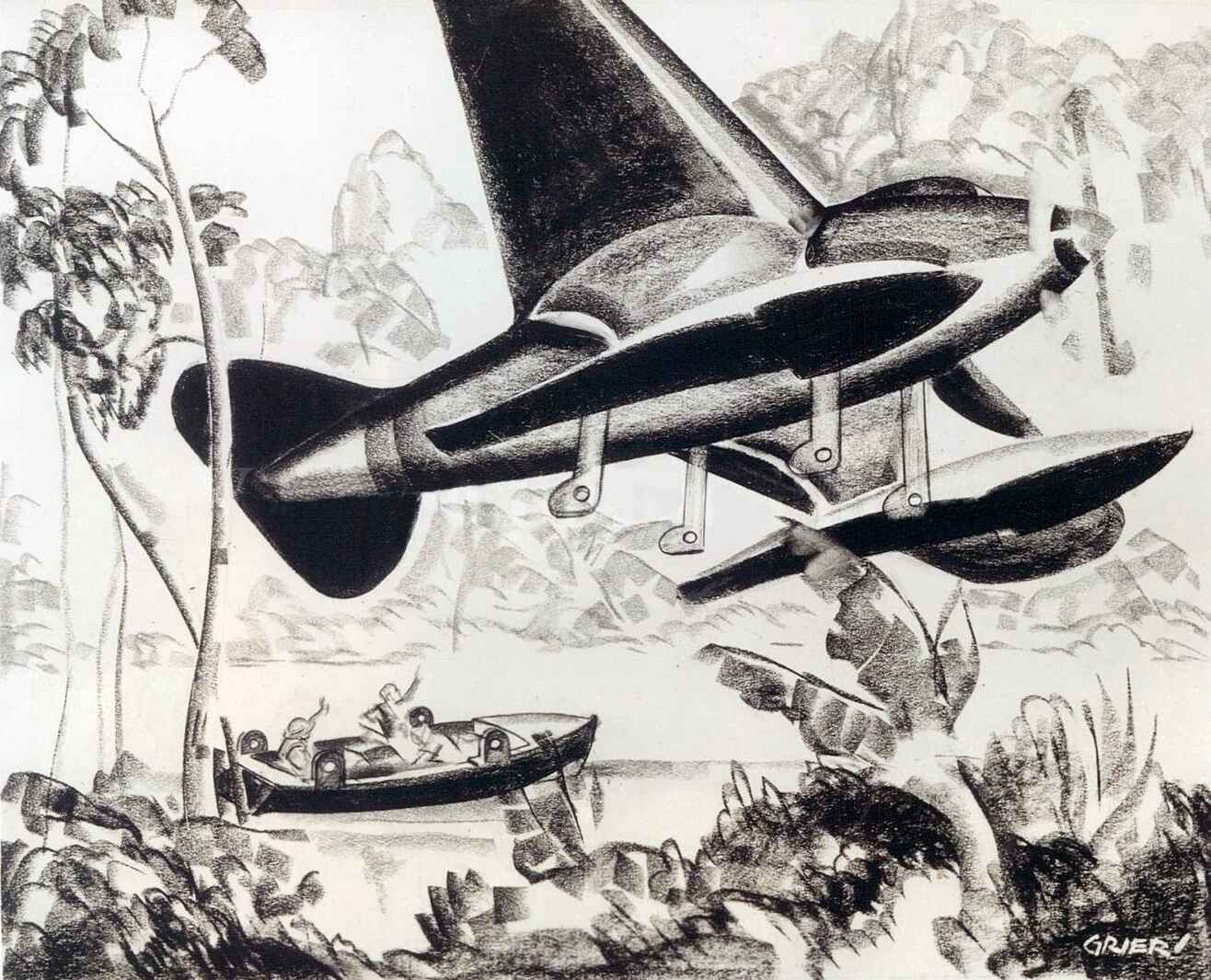
The Loening Model 23/S-1 of the early 1920s is a testament that one cannot judge an aircraft solely by its appearance. Yes, the Model 23 looked somewhat ungainly in its design. Yes, it looked far more hydrodynamic than aerodynamic (This outward form would explain the origins of the Model 23’s official name:  “The Flying Yacht”). 

But, as they say in the Looks are Deceiving Dept…

In actuality, the awkward-appearing “Flying Yacht”, was an amazingly efficient airplane. First taking to the sky in 1921, Loening’s bird won multiple awards for its design – including the Collier Trophy. It also set world records for speed, distance, and altitude. To top it off, the Model 23 was one of the first monoplane-configured seaplanes to go into production. 

Loening’s “Flying Yacht” was quickly eclipsed by the rapid advances in 1920s aviation, but for a brief shining moment, it was unquestionably among the top seaplanes in the world. 

Boeing 314 #1

img057

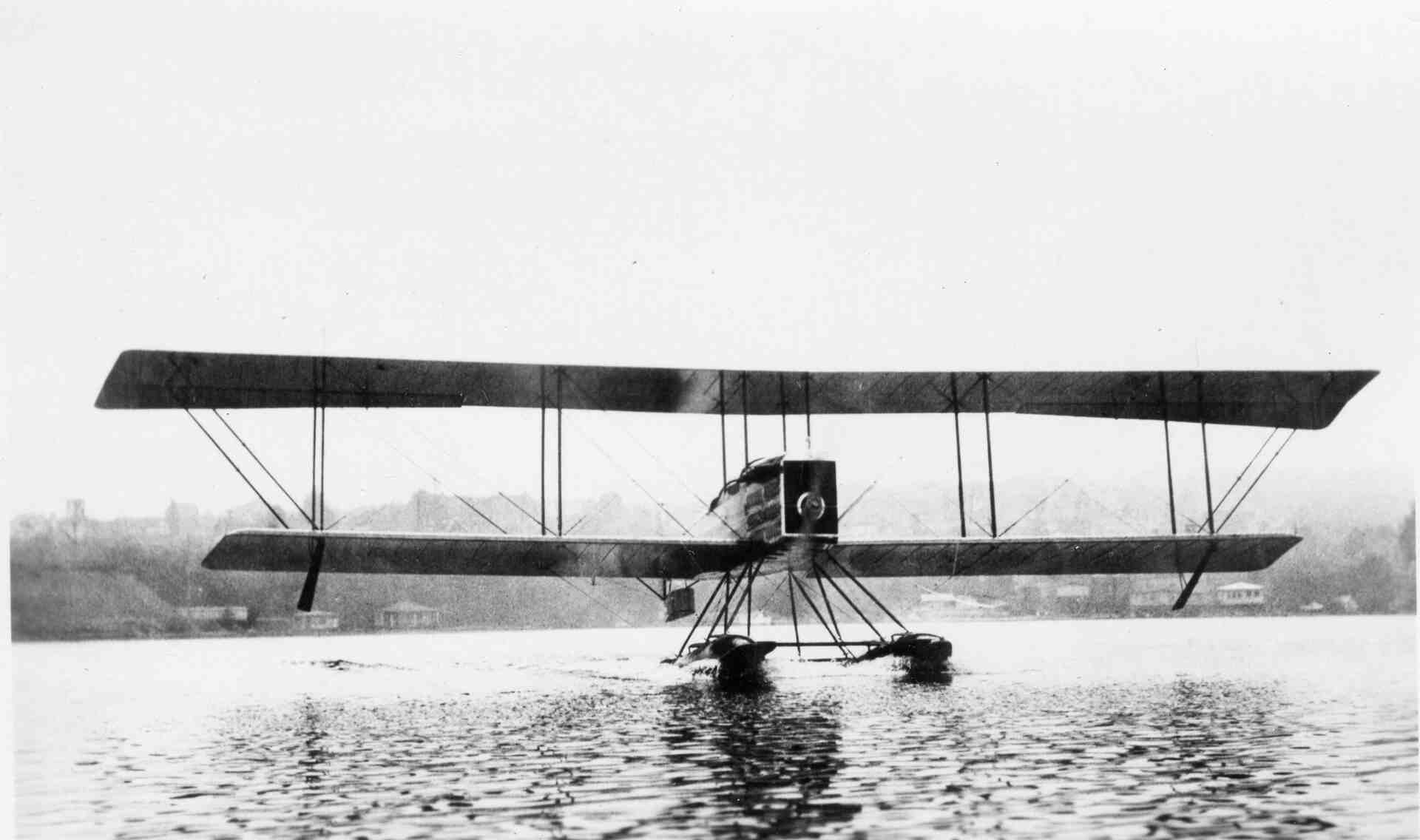
These photographs feature the first Model 314 produced by Boeing (later registered as NX18601). As with most prototypes, the first 314 model encountered some challenges during its development. One of the primary issues was related to lateral control. Although the aircraft was built with a standard single centerline vertical fin, early test flights revealed a need for more lateral control. To address this problem, a growing number of vertical stabilizers were installed on the aircraft. Initially, the solo center tail was removed and replaced with a pair of endplates. However, this dual arrangement proved insufficient, and a centerline fin was once again added to the aircraft, which proved to be effective in providing the necessary lateral stability. once again the 314 was provided with a centerline fin (Hey, good thing they didn’t throw that item away when they did the initial redesign of the tail)

Goodyear’s Ducks

First flown in 1944, Goodyear’s GA Duck was a very handsome and well-performing aircraft, but (alas) it never went into major production. Of the less than two dozen GAs built (in various configurations), one, a four-seat “Drake”, survives today.

Update: Three months ago, a man in Kalamazoo, Michigan, wrote to me after reading this  post on the GA Duck. In his email, he informed me that he had, since the death of his grandfather, come into possession of four Goodyear GA Ducks, all sitting in sheds and barns, and he was wondering if I had any ideas on what to do with them.

One often hears of old planes sitting in barns, but these are always tales too good to be true. Despite thinking this was one of those scenarios, I did, with some skepticism, ask for a few photos. Here is one of those pictures, and it pretty much says it all.

Still in their original paint, the Goodyear Ducks had been gathering dust for decades.

The man who bought the aircraft way back when never got around to restoring them for flight or display. They remained secreted away in two locations, unknown to the public until just a few months ago.

When the gentleman contacted me, hoping to find a home for these planes, he was talking to the right guy because, by chance, I just happen to be affiliated with an aircraft museum. Did we need such aircraft in our collection? Not really. Such aircraft as the Ducks are outside our museum’s focus. It was therefore decided to allow another museum to have a chance. That facility is the Military Aviation Preservation Society (MAPS) museum in Ohio, home to Goodyear, and where the GA Ducks were built. They are also home to what was previously the lone example of a Goodyear GA, the “Drake”. That bird will be in great company, a whole flock of Ducks.

PS. When I called MAPS to inform them of the find, they must of thought Christmas had arrived in March.

The Last Thing Seen by Many a Bug or Caterpillar

stear (1)

And…For the sake of the photographer’s health, one hopes he got all he needed with a single pass by the chemical-spewing Stearman. The good news for him is that by the time this picture was taken in the 1950s, the crop dusters were no longer using what had proven highly effective in the past: a liquid mixture of lead and arsenic. Seems like a bad idea now, but it didn’t at the time. We humans are like that – we only learn by experience (when does the city put up a stop sign at an unmarked intersection, before a bad car wreck, or after?).

The location is Washington state, the target, apple trees, and the critters and caterpillars that love them.

Boom to Bust: The Alexander Aircraft Company

In the late 1920s, the future looked promising to J. Don Alexander and his aircraft business. In the years 1928-29, Alexander sold more planes than anyone else in the world, but unfortunately, the company became plagued with troubles. A 1928 fire destroyed their manufacturing plant killing eleven workers (J. Don Alexander and his brother were found liable), and even after constructing another facility,  new aircraft projects ran into problems as well. The Great Depression finished off Alexander in 1932. The company’s most successful product, the Eaglerock, is seen in these photos.

No Secrets Here

The Air Force/U.S. Government has long insisted that the U-2 is a reconnaissance aircraft, not a “spy plane”. That sounds very nice and pretty too. But back in 1957, the U-2 seen here belonged to the CIA and that meant it was very much in the business of spying. No doubt the CIA would call that “intelligence gathering”, but to scoop up such info, they still needed to do what is known as the age-old act of “spying”. 

Thanks to Max Pashnev for this photo taken from the original negative.

Peter O. Knight Airport, 1938

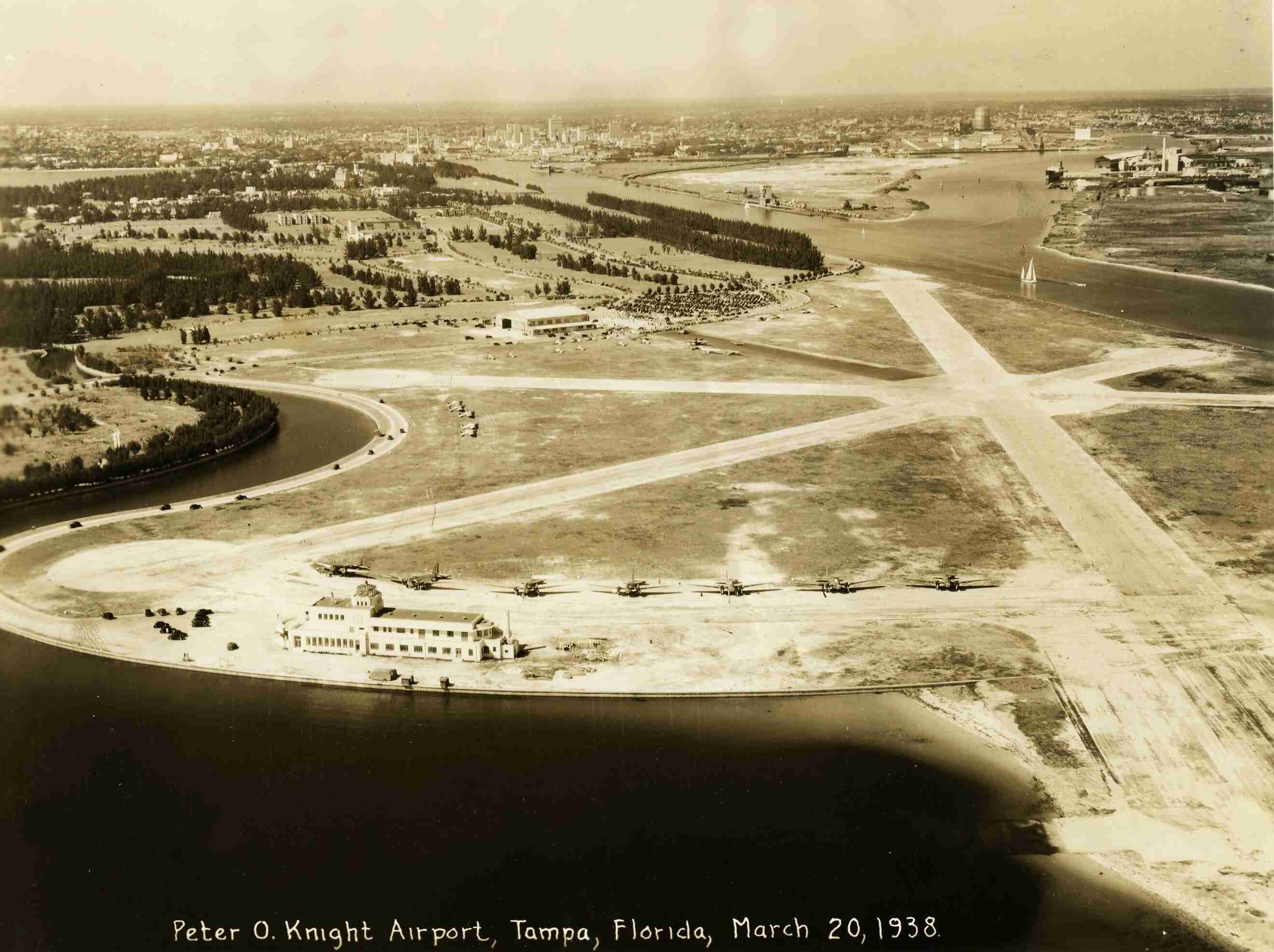
Still busy today with general aviation, Peter O. Knight opened in 1935 as Tampa’s principal airport and remained so until 1945. One of many airports built under the auspices of the Works Progress Administration (WPA), the field boasted multiple paved runways, could handle seaplanes, and had a very nifty art-deco terminal seen in the foreground (unfortunately, now long-gone). When this photo was taken in March of ’38, the main attraction was the bevy of Air Corps planes dotting the field: B-18s, P-26s, P-35s, and a lone B-10.

Early aeroplanes and aeronauts

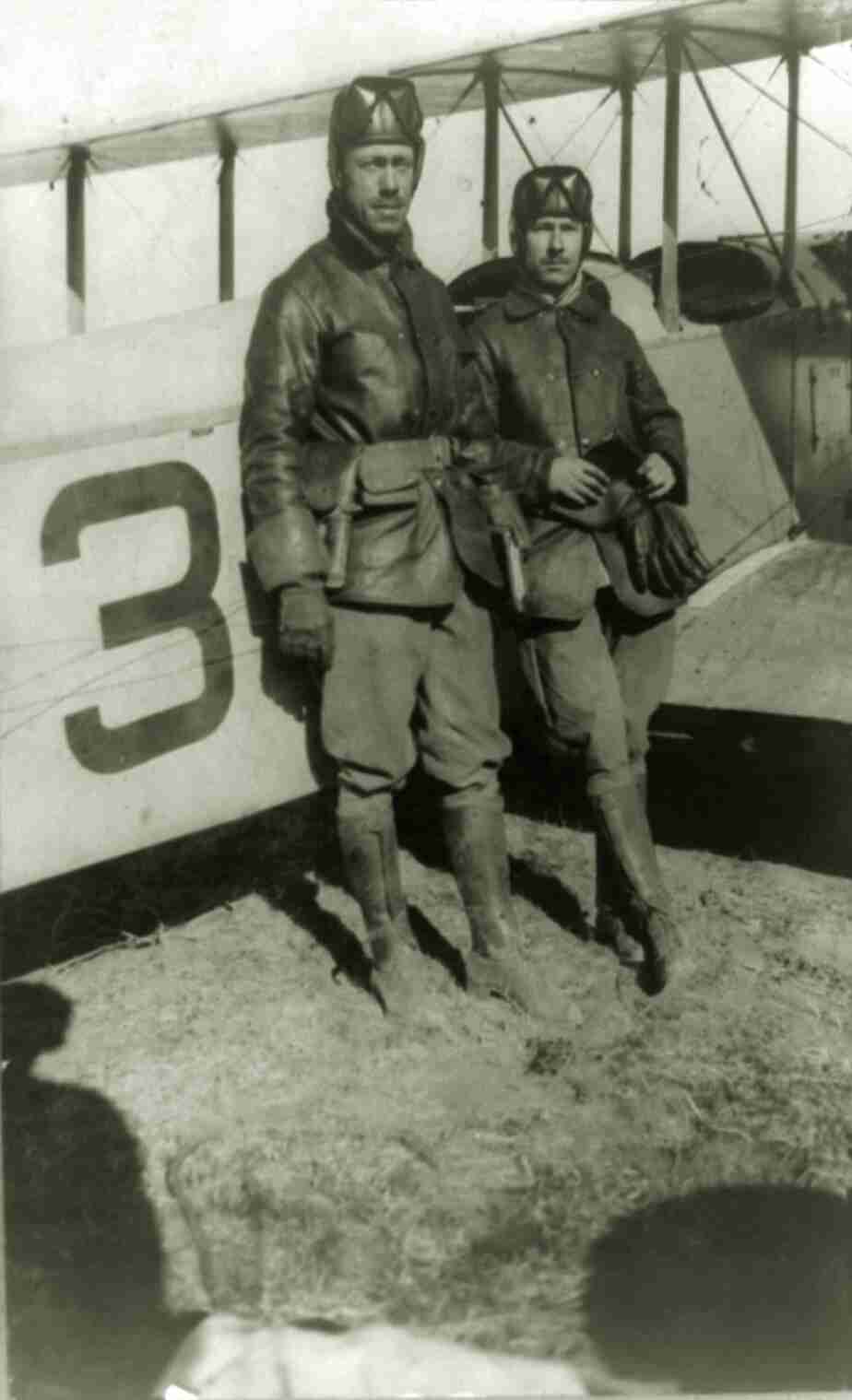
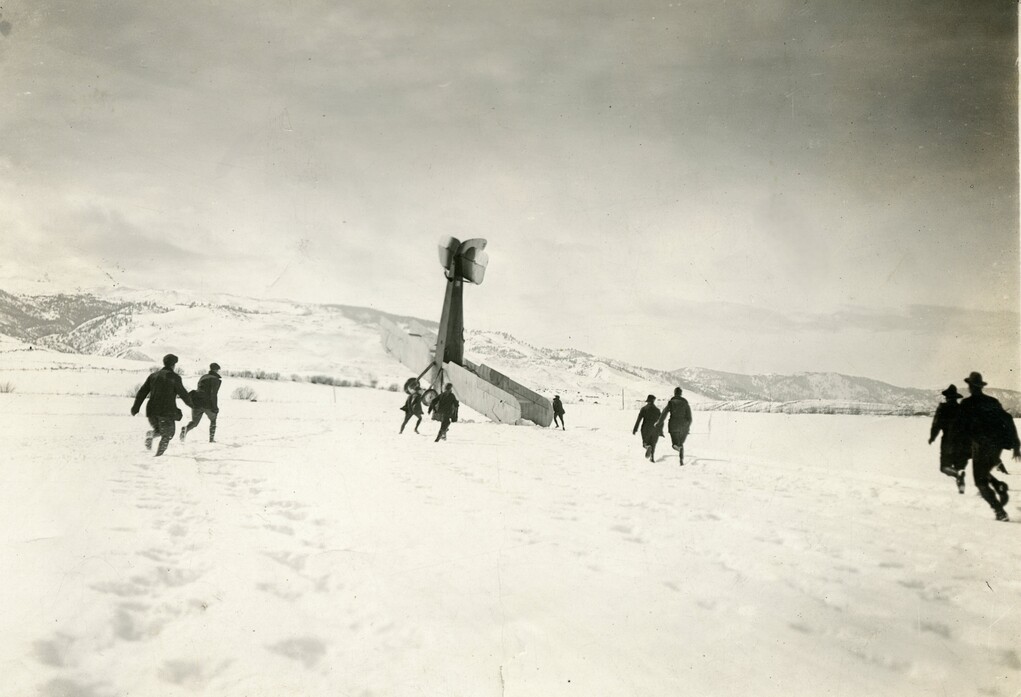
Note: These images may not be the ultimate in quality, but they are original photos that are over 110 years old.
PBY Catalina Day