Aviation Section, U.S. Signal Corps, Army Air Service, Army Air Corps, Army Air Forces.
One of the unsung trailblazers of flight, Major General John Bernard Brooks initially served in the U.S. Cavalry (the kind with horses) along the Mexican border hunting banditos way back in 1915. He went off to pilot training, then returned to the border in 1916 with the Punitive Expedition chasing Pancho Villa & co.
He went on to serve in Hawaii, where he was among the first aviators in the islands, as well as the commander of Luke Field on Ford Island in Pearl Harbor. He also spent time in the Philippines and Alaska. In fact, “Johnny” Brooks wore just about every title one could back in the early years of American military aviation. His is a story worth studying.
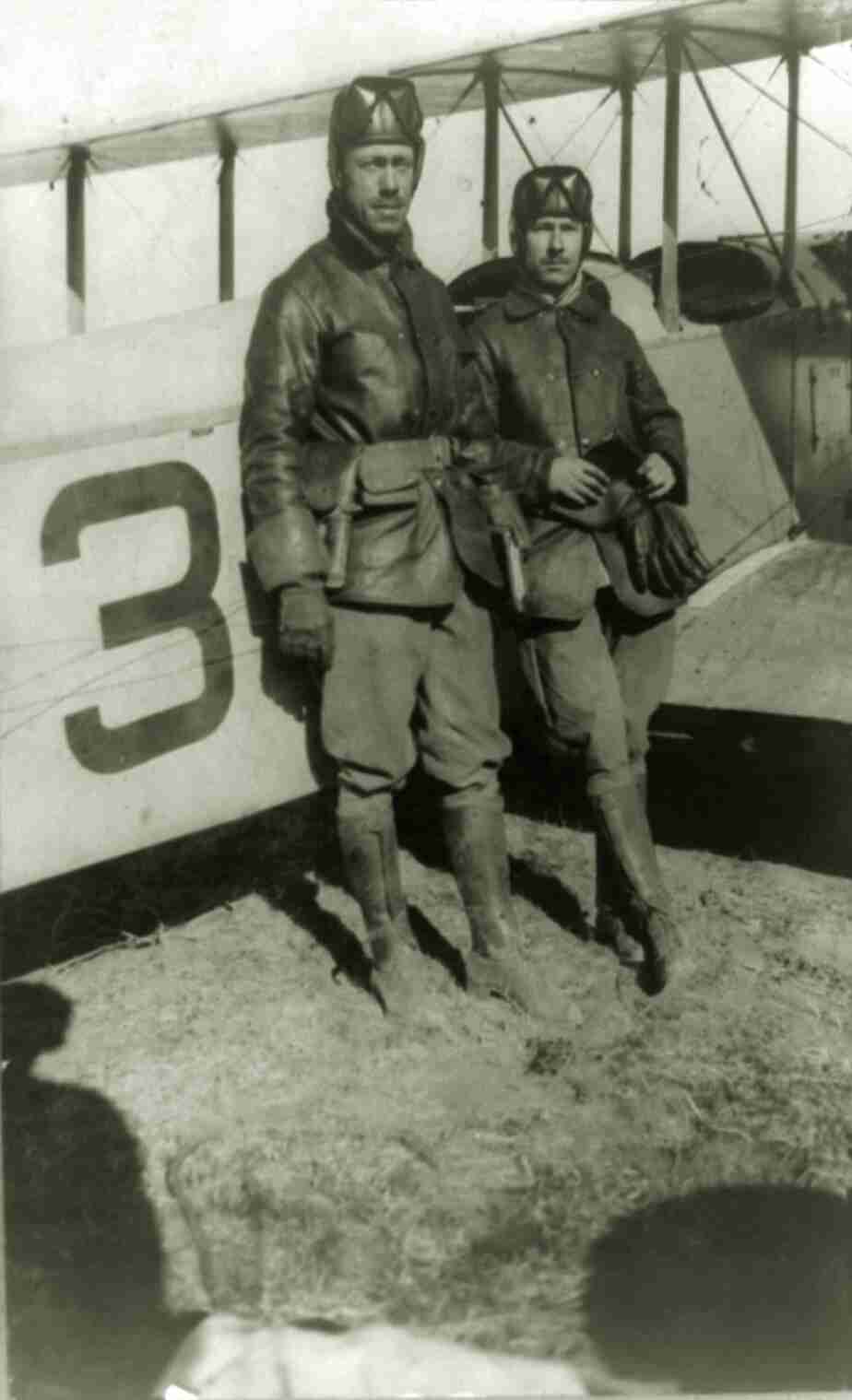
This Curtiss JN-2, Signal Corps No. 43, was the first aircraft assembled and flown after the 1st Aero Squadron arrived in Columbus, New Mexico, in March, 1916.
The man astride the Harley Davidson (one of six brought on the expedition) carries a dispatch bag bearing the markings of the 1st Aero Squadron.
The 1916 mission to bring Pancho Villa and his desperadoes to justice was the first military operation for the Aviation Section, U.S. Signal Corps. Despite the primitive conditions and seemingly frail aircraft, the 1st Aero Squadron proved invaluable for the Army’s operations.
Beginning in mid-March, 1916, the aircraft seen here, Signal Corps No. 43, flew many of the 1st’s early missions. Usually piloted by Lt. Herbert A. Dargue, No. 43 was considered one of the more reliable machines. However, aircraft reliability in 1916 was measured in weeks: No. 43 developed engine trouble on April 19, 1916, was forced to land in hostile territory, and was subsequently destroyed to prevent its capture. Hiking through the badlands of Mexico without food or water for two days and nights, Lt. Dargue and fellow pilot Robert H. Willis managed to avoid capture.








 The Jive Bomber