Jane Adams: 1940s Actress, Glamour Girl, and (obviously) Jet Test Pilot

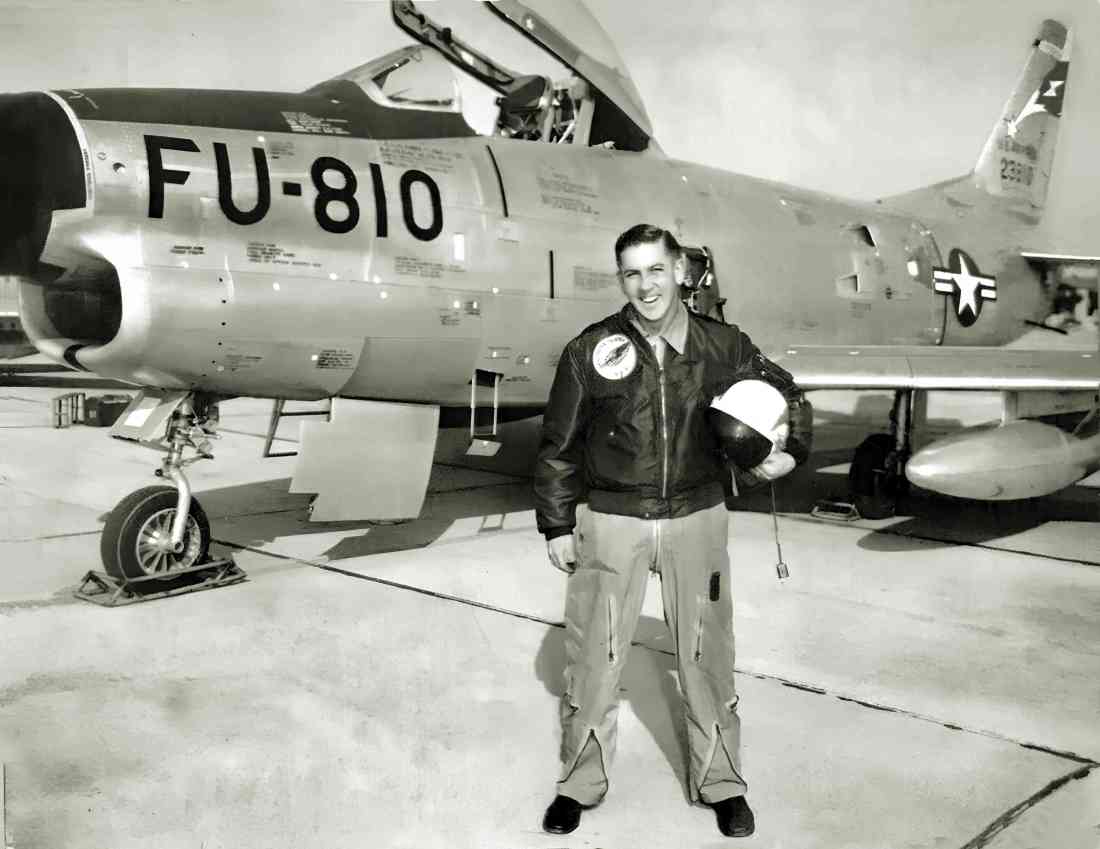
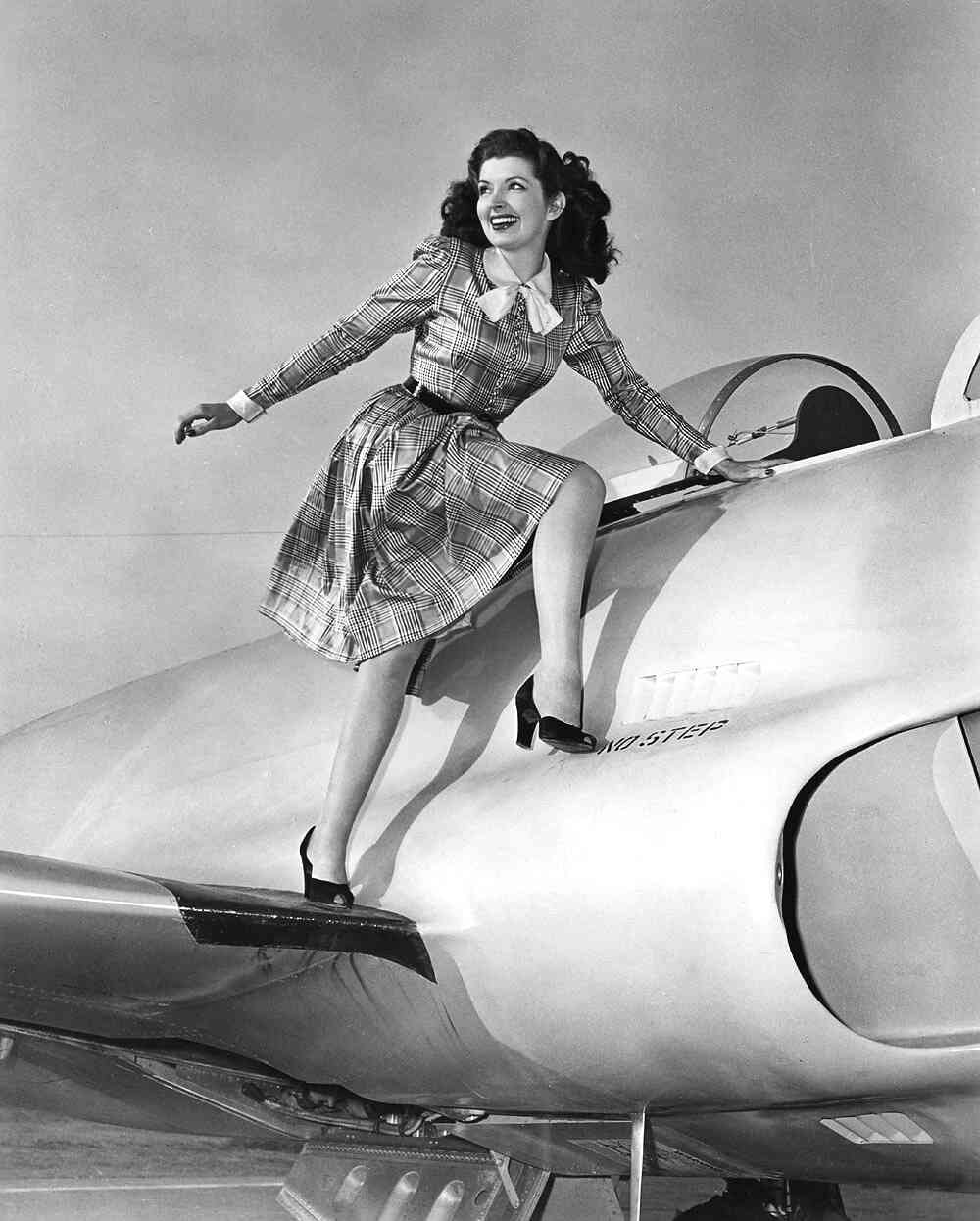
Lockheed P-80 Jane Adams - Copy (1)

If avid fans of outrageously inexpensive films were to go back in time to the late 40s & early 50s, one actress they would instantly seek out would be Jane Adams, queen of the B-film screen. Whatever picture genre one fancied – westerns, horror, sci-fi, or romance, to name but a few – Jane Adams was your gal.

Alas, her career in more mainstream pictures never materialized, but that’s okay; she was easy to look at and made movies that, with a ready supply of cocktails, still make great late-night entertainment. (Hard to go wrong with features such as House of Dracula, Rustler’s Round-Up, and Tarzan’s Magic Fountain)

As seen in this publicity photo, Adams (real name Betty Bierce) was another of the charming women that aircraft manufacturers considered vital in selling flying machines.

 

Jane Adams House of Dracula 1945

Jane Adams as “Nina, The Hunchbacked Nurse” in House of Dracula (1945).

The Brave B-47

Baseball history fans will undoubtedly know what occasion caused these men in the autumn of 1957 to decorate one of their planes and then throw their hats in the air. For those who don’t know the significance of the situation, here’s a hint: the Milwaukee Braves had just won the World Series. The photo was taken at Davis-Monthan AFB in Arizona, where, as seen in the picture, the men of the 303rd Bomb Wing’s 358th Bomb Squadron included more than a few Milwaukee fans.

Classy Bird

Copy Cessna LC-126A 10th ARRS_out - Copy (2)_out (1)

In the late 1940s, the USAF made a wise purchase when they ordered a militarized version of the Cessna Model 195 – the LC-126A. Outfitted with floats for service as a rescue bird in Alaska, the USAF never bought the plane in great numbers (only a dozen or so). Still, what it lacked in numbers, it made up for in style because the Cessna 195/LC-126, in this man’s opinion, is one of the most handsome aircraft ever built.

In the photo, 49-1949 of the 10th Rescue Squadron, Elmendorf AFB, Alaska, undergoes riverside maintenance out in the bush. It’s summer, but that only means hordes of mosquitoes – all of whom have a million children – are swarming unseen in the picture. This particular plane was saved for posterity by the Air Force and now resides in the USAF Museum, painted as seen here 75 years ago.

B-3A in the P.I.

Keystone PI - Copy

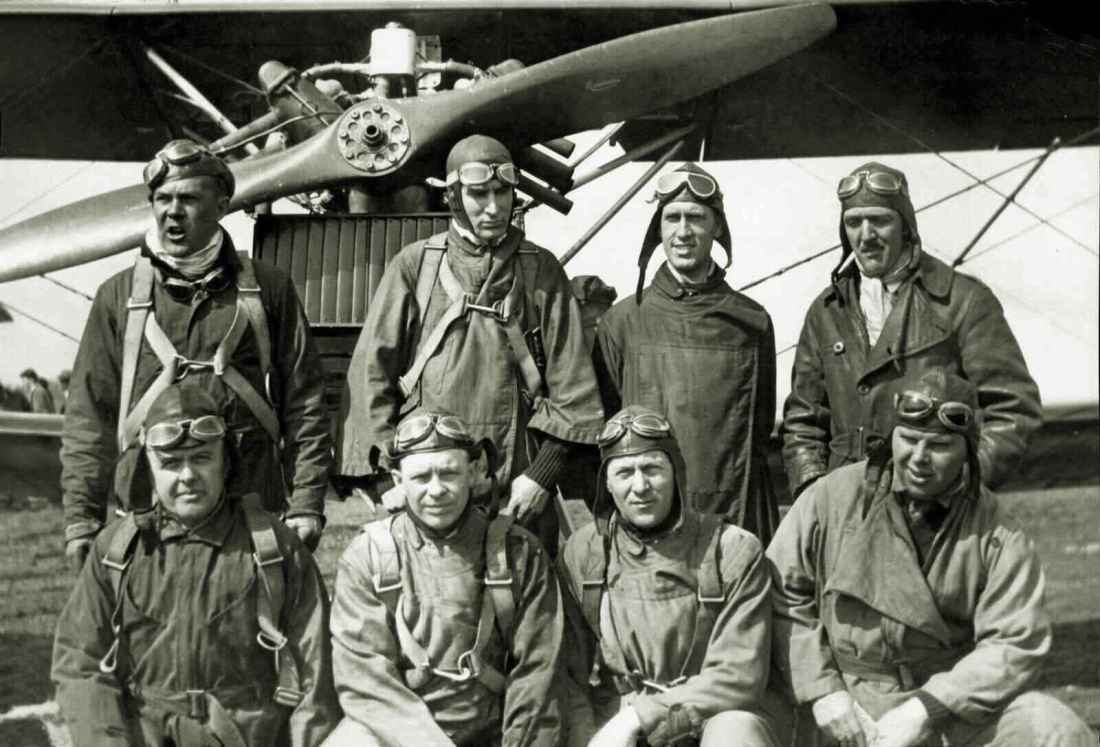
Judging by their dirty coveralls, these mechanics of the 28th Bomb Squadron at Nichols Field in the Philippines deserve some shady rest. And, as seen by the helmet and goggles of the nearest man to the camera, the mechanics did not spend all their time on the ground. The plane is a Keystone B-3, and these men, having gotten the plane ready for flight, will serve aboard as aircrew. 

Devastators

Flagship Corsairs

PA

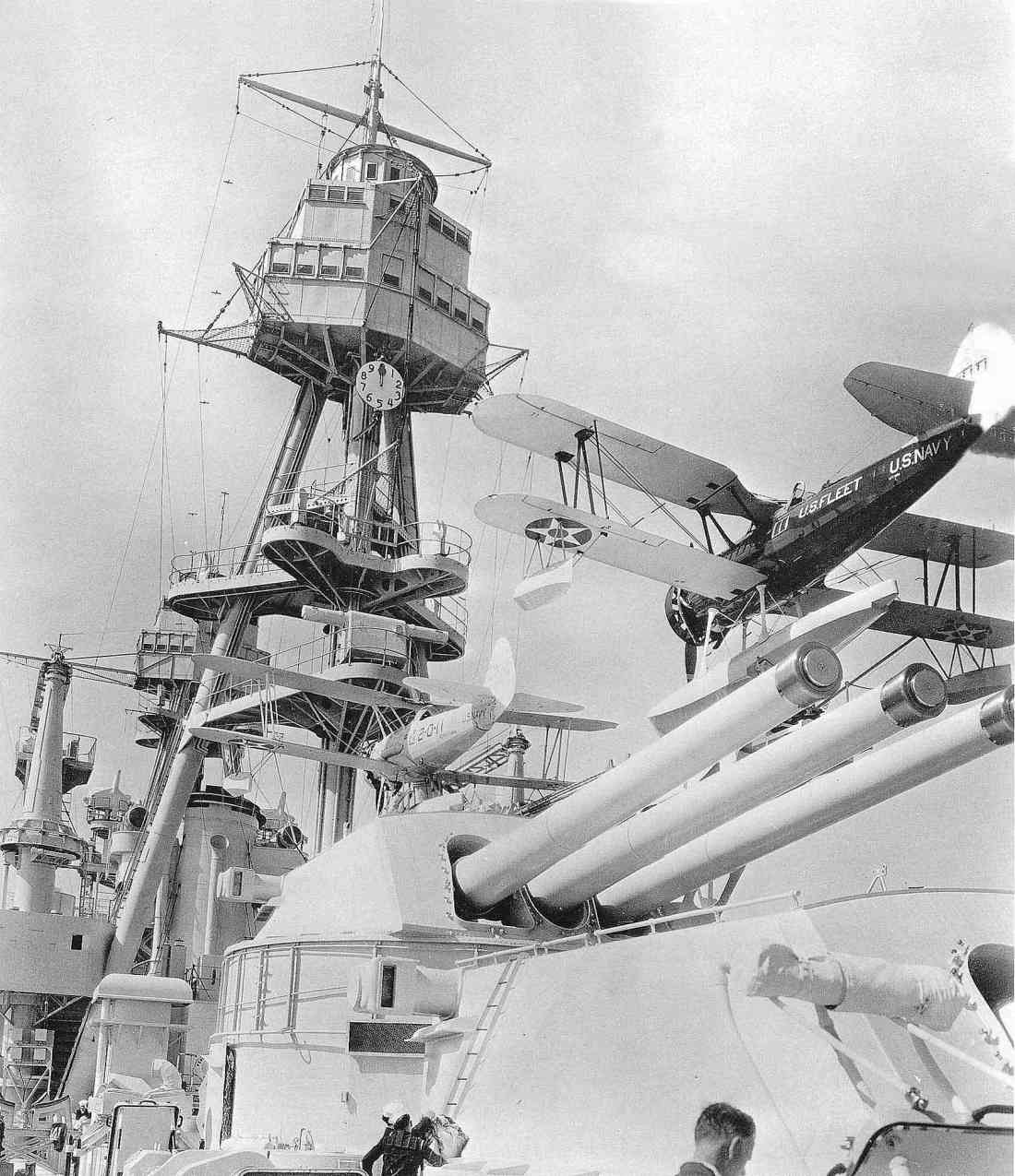
Perched on their catapult atop the No. 3 turret of the USS Pennsylvania, a pair of Vought O3U-3s of Observation Squadron Two (VO-2) stand by to carry out another assignment. The O2U/O3U Corsair was the standard observation aircraft for the USN for about ten years (1927-1937) – a most notable achievement in an era when the life expectancy of almost every design type was measured in only a few years. Pennsylvania was the flagship of the U.S. Fleet during the interwar years, reflected in the immaculate condition of the ship and its aircraft.

Lockheed TV-2, And Seattle’s Neighborhood Naval Air Station

What young man of the 1950s didn’t want to climb all over a real jet airplane? These boys are getting the grand tour of a TV-2 because they are top performers in sales and in excellence of service in their chosen profession. They are paperboys, and as a reward for their efforts, their employer, The Seattle Times, took them to both Naval Air Station Seattle and the nearby stadium for the University of Washington, where they were treated to a football game (Photo dated September 21, 1957: Washington v. Colorado ended in a 6-6 tie).

Smaller, straight-wing jets like the Lockheed TV were about all the 5,000-foot runway at NAS Seattle could handle. The base was on the shores of Lake Washington, and the runways had no overrun. If you landed long or short, you went swimming. Encroachment was also a serious issue: The city of Seattle had no problems permitting home construction right next to a military air base. And, as is always the case, those freshly arrived homeowners acted dumbstruck and indignant that a military runway could be rather noisy. Therefore, the local’s motto became NAS Seattle delenda est.

A Few Skyhawks From The 1960s

Skywarrior Airlines

img337

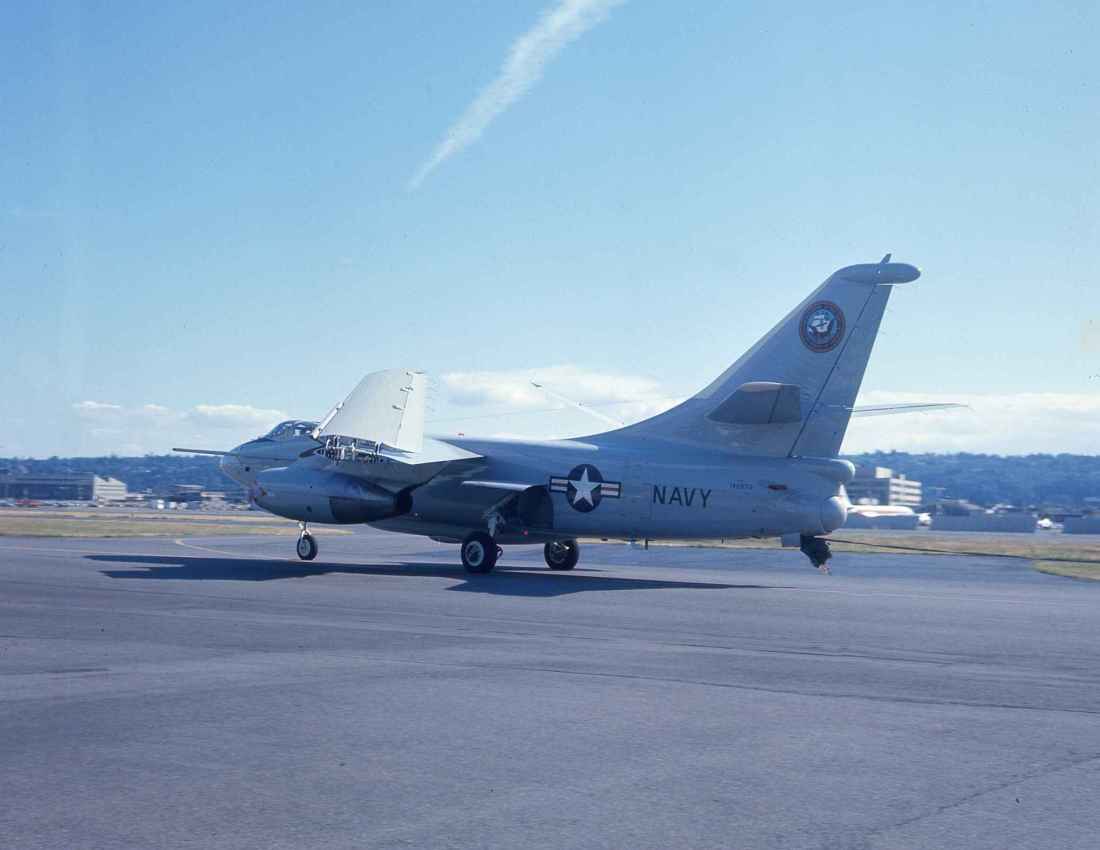
This A-3 (142672) was converted into a VA-3B soon after its delivery to the USN. The “V” in VA, of course, designates this aircraft for VIP usage, and that is what the bird did for many a year, including when this photo was taken in the 1960s. The plane is visiting Boeing Field, wings are folded, and the drag chute is tugging along behind just out of the picture. This airframe was retired for a while, then brought back into service for a more conventional electronic warfare role. In that role, the aircraft met its fate in 1985 when it crashed, killing all crewmen.

Nice Paint Job

The first photo shows a sporty-looking JD-1 Invader (89073) basking in the Hawaiian sunshine at NAS Barbers Point in the early 1950s. The aircraft belonged to VU-1, a utility squadron that flew a variety of props, jets, and helicopters. With that mixed bag of aircraft, the squadron pulled targets, took photos, performed rescue missions, and did pretty much anything else the Navy could think of.  The bird seen here was primarily a target tug. Its white wall tires nicely complemented an overall paint scheme that included blue, red, and yellow. The photo’s caption reads, “This is the crate I work on.” The JD-1(s) in the second photo belong to VU-7.

Loening OA-1A

COA1

“Grace and speed” are not adjectives that come to mind when one glances at a Loening OA-1. On the other hand, the aircraft was incredibly tough and reliable and saw far more years of service than your average airplane of the era. Seen here bobbing on the waters of Lake Gatun in Panama, this bird (26-436) is from the 7th Observation Squadron based at France Field in the Canal Zone. Judging by the smoke stains angling from the exhaust stacks toward the cockpit area, flying could be an aromatic and messy experience. (Like many aircraft of the 1920s, Loening’s OA-1 was not unique in that regard)

And The Name Of The Mystery Airfield Is…

Outlying Field, Mount Vernon, Washington. Today, it serves as Skagit Regional Airport, but when it was constructed during WWII, it was an auxiliary field for NAS Whidbey Island just a short hop away. It continued intermittently as a naval training field but was declared surplus in the late 1950s. 

No one had the correct guess, but a couple of frequent visitors to this website knew the name because I had previously shown them the photo. Gentlemen that they are, they kept their knowledge to themselves, refraining from trying to be the most brilliant guy in the room.

Next time you are in the area, stop by and visit the Heritage Flight Museum located at the airport.

LPs and Airplanes

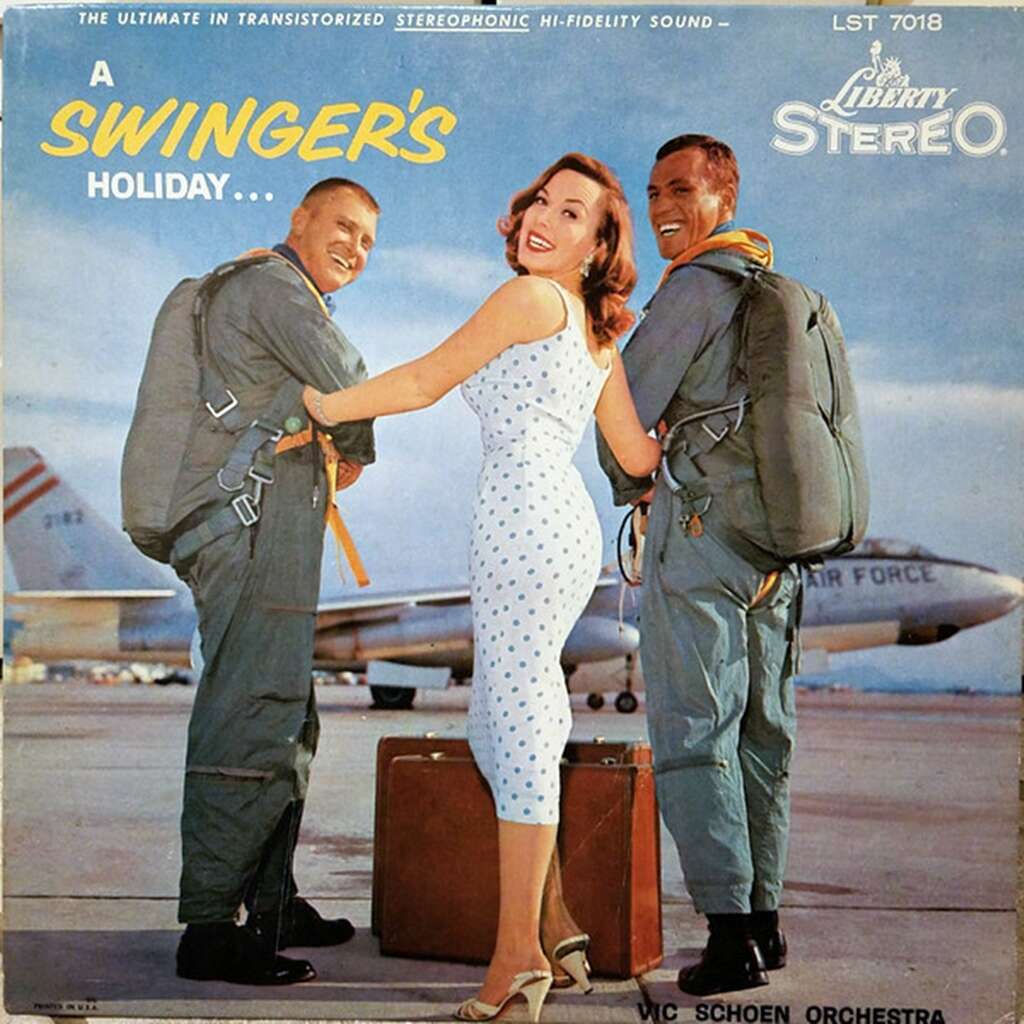
If you were in a band back in the day, it seems that all you had to do was phone your local Air Force base or airport, and they would cheerfully supply an airplane for your photo shoot.

Lots of excellent album art here, as well as great music (for the most part, but to each his own). 

Update: Here is a most worthy addition to the topic supplied by fellow aviation enthusiast Carrie.  Nothing says, “holiday romance” like a vacation adventure in a nuclear bomber. Thanks, Carrie!

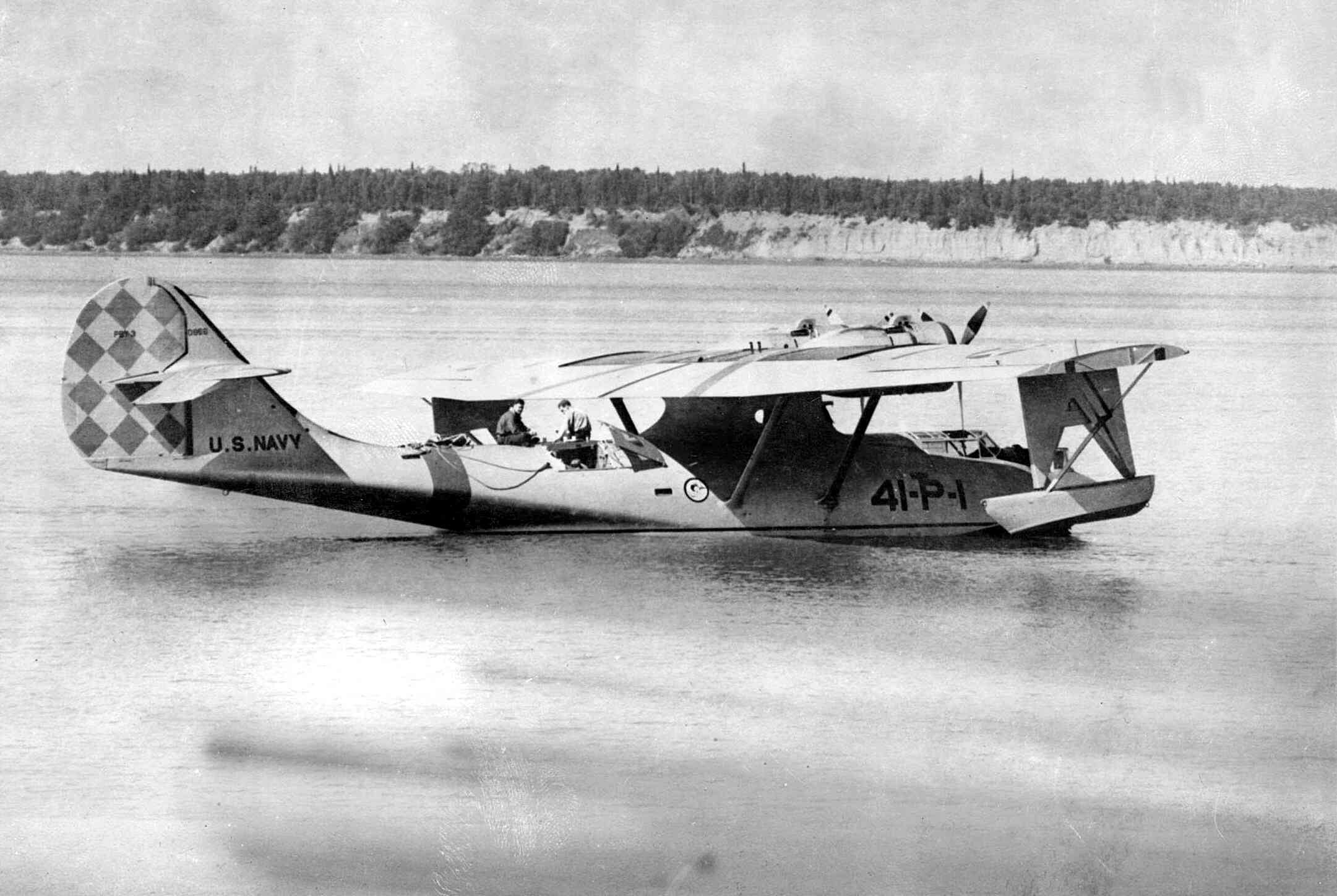
Post-War Life for Catalinas

And Now it’s Time to Play “Name That Airfield”

Update: We have a Winner! The base in question is Pendleton Field, Oregon. We tip our chapeau to “Guillaume” for being the first to correctly identify this week’s mystery airfield. 

This mystery airfield (looking as if it fell out of the sky and landed in the middle of nowhere) is this week’s challenge. So, be the first to name this place and you will win the undying admiration of your aviation-minded colleagues.

The Alabama Air National Guard in Europe, 1952

When the 117th Tactical Reconnaissance Group(TRG) of the Alabama Air National Guard was activated during the Korean War, its squadrons spent about six months in Europe. Initially deployed to Toul Rosières Air Base in France, the unit found the steel matting and dirt flightline less-than optimal for the 160th TRS and its FOD-sucking RF-80s. (It was fine for the 1st TRS – they had RB-26s). It was decided to send the 160th to Neubiberg Air Base in Germany, where they would share the facilities with the base’s host unit, the 86th Fighter Bomber Group, and their F-84Es. The 160th remained at Neubiberg until de-activated in July 1952. Loaded with souvenir beer steins and lots of memories, they returned home to Alabama.